Twelve Ingredients, One Sachet, and the Trial Nobody Has Run
All-in-one longevity formulas bundle a dozen compounds aimed at the hallmarks of aging. The strongest evidence belongs to individual ingredients — often at doses, and in combinations, that the sachet does not contain.
In a clinical research unit, the morning begins with a blood draw. The volunteers are older adults. The vials will be assayed for glutathione, for markers of oxidative stress, for the chemistry of mitochondrial function. Later there is strength testing, and a walk whose performance is measured and recorded. Then the intervention itself: a daily supplement combining two compounds, glycine and N-acetylcysteine, known in the literature as GlyNAC. When the randomized trial was published in The Journals of Gerontology in 2022, the supplemented group had improved across glutathione deficiency, oxidative stress, mitochondrial dysfunction, inflammation, physical function, and what the authors described as aging hallmarks.
It is one of the most striking ingredient-level results in the supplement literature, and it hangs over every all-in-one longevity formula — products such as NOVOS Core, which pack about a dozen compounds into a single daily sachet: calcium alpha-ketoglutarate, the flavonoid fisetin, pterostilbene, glycine, glucosamine sulfate, magnesium malate, L-theanine, Rhodiola rosea, a microdose of lithium, hyaluronic acid, ginger, and vitamin C. Each was chosen to address a distinct hallmark of aging — cellular senescence, mitochondrial and metabolic function, epigenetic regulation, oxidative stress.
Here is the precise question: can a sachet that touches many pathways at once deliver what the studies of single ingredients suggest? The most defensible answer is narrower than the marketing. The GlyNAC trial used glycine doses far above what the sachets provide, and paired it with NAC, which the formula does not contain. The finished multi-ingredient product has never been tested in a controlled human trial. What follows is the honest state of the evidence — real, mostly early-stage, and belonging to the parts rather than the whole.
The strongest human evidence is a different recipe
Glycine is in the sachet, and the GlyNAC result is genuine randomized-trial evidence in older adults. But dose is the story. The improvements in oxidative stress, mitochondrial function, strength, and walking performance came at glycine doses well beyond the formula's content, alongside a second active compound the formula omits. Crediting the sachet with the GlyNAC result would be like crediting a multivitamin for the outcome of a drug trial because they share one molecule.
Mechanisms with pedigrees, people with question marks
The design leans on respectable mechanistic literature. A 2014 review in Ageing Research Reviews describes how Krebs-cycle intermediates — the family that includes alpha-ketoglutarate — regulate DNA and histone methylation, with epigenetic consequences for aging. A small retrospective analysis linked an alpha-ketoglutarate formulation to reduced DNA-methylation age, but the proper randomized trial is still underway. Other components sit a further step from human proof. Fisetin extended lifespan and reduced senescent-cell burden in mice, with human senolytic trials still in progress. Spermidine's induction of autophagy, documented in Nature Cell Biology in 2009, promoted longevity in experimental systems. The SIRT1 pathway that resveratrol-family compounds like pterostilbene are meant to engage has been reviewed extensively in the context of caloric restriction — again, largely mechanism, not outcome.
The observational layer is larger but weaker. Regular glucosamine use was associated with about 15 percent lower all-cause mortality in the 495,000-person UK Biobank cohort — an association that cannot prove cause. Low-dose lithium correlated with lower all-cause mortality in a large population; correlation again. Even adjacent single-ingredient science is early: the NMN trial in GeroScience in 2022 was randomized, double-blind, and placebo-controlled, but it was a dose-finding study in healthy middle-aged adults — and NMN is not in this formula at all.
The weak spots are specific
Pterostilbene, the methylated resveratrol analog, raised LDL cholesterol by about 17 mg/dL in one randomized trial, and combined with nicotinamide riboside it did not improve muscle recovery in elderly volunteers. Magnesium modestly lowers blood pressure in pooled trials — real, but small. And the doses, the combination, and the long-term safety of this exact stack have never been validated.
What a reader should take from this
An all-in-one formula is a bet that a dozen small, plausible mechanisms will add up to something a trial has never measured. Some ingredients carry genuine early evidence; at least one carries an adverse lipid signal; several rely on animal or mechanistic work. If you are considering such a product, the rational frame is not 'the science says this works' but 'the science says some of these molecules are interesting, at doses and pairings this product may not match.'
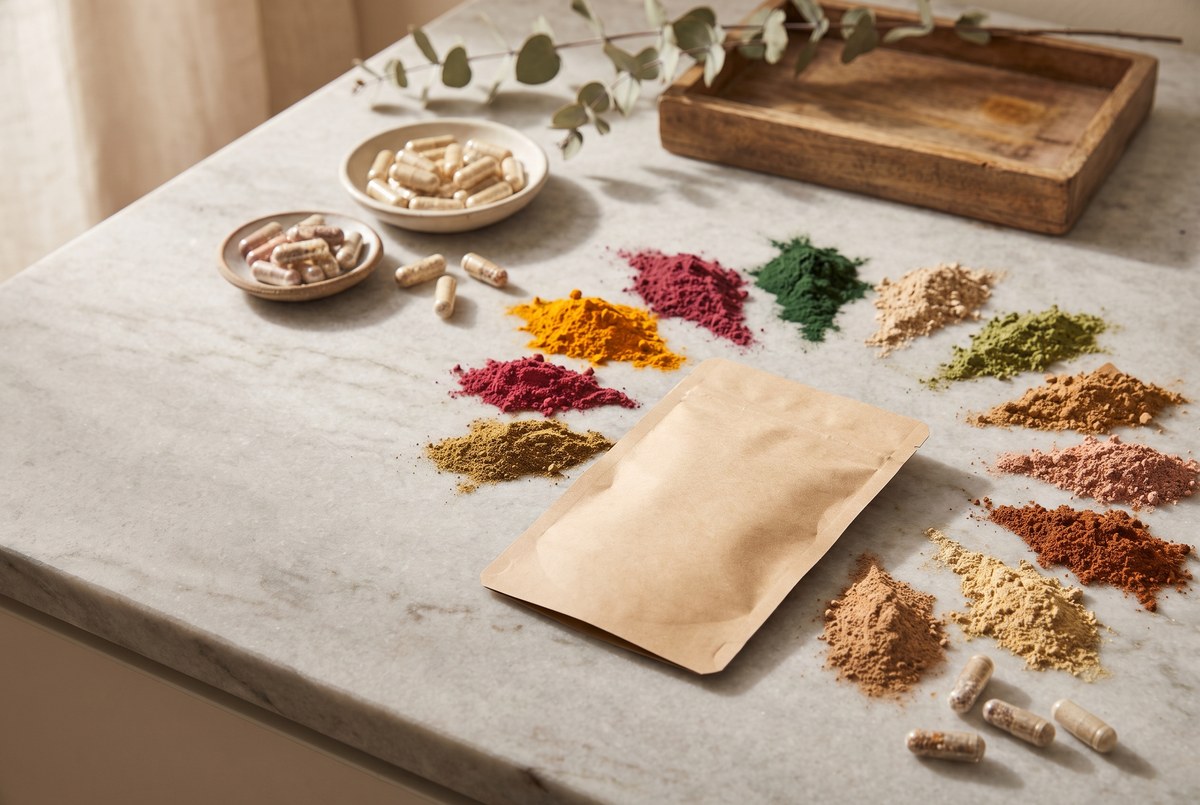
Back in the research unit, the blood vials have been spun and frozen, the walking data entered. That trial answered one question about two compounds at specific doses. The sachet on the kitchen counter asks a dozen questions at once — and waits, still, for its first controlled answer.
Educational, not medical advice.
The takeaway
No controlled human trial has tested the finished multi-ingredient formula; the evidence is ingredient-level, mostly early-stage, and frequently involves doses far above what a daily sachet delivers.
References
5 peer-reviewed sources, published 2009–2022, across 5 journals. 5 of them have a full Magellan study write-up linked below.
- GeroScience · 2022 · PMID 36482258 · DOI 10.1007/s11357-022-00705-1Daily NMN supplementation up to 900 mg is safe and increases NAD levels, physical performance, and subjective health in middle-aged adults, with 600 mg showing the highest efficacy. Read our full write-up →
- Mechanisms of Ageing and Development · 2015 · PMID 25824609 · DOI 10.1016/j.mad.2015.03.008Caloric restriction, resveratrol, and melatonin may combat aging and age-related diseases by activating sirtuins and scavenging free radicals. Read our full write-up →
- Nature Cell Biology · 2009 · PMID 19801973 · DOI 10.1038/ncb1975Spermidine extends lifespan and reduces oxidative stress by triggering autophagy through epigenetic changes in various organisms and human cells. Read our full write-up →
- Ageing Research Reviews · 2014 · PMID 24910305 · DOI 10.1016/j.arr.2014.05.004Krebs cycle intermediates influence DNA and histone methylation, suggesting a link between metabolism, epigenetics, and aging. Read our full write-up →
- The Journals of Gerontology: Series A · 2022 · PMID 35975308 · DOI 10.1093/gerona/glac135GlyNAC supplementation in older adults can reverse several age-related health declines, including oxidative stress and mitochondrial dysfunction. Read our full write-up →
Mechanisms and molecules in this article
Each links to its Magellan monograph — what it is, what it does, and the studies behind it.
Related reading
Small trials reported sweeping benefits; a larger independent trial missed its main glutathione target.
Randomized trials and meta-analyses support alpha-lipoic acid for relieving diabetic-neuropathy symptoms,…
Blood ergothioneine falls with age, and low levels track with cognitive decline, cardiovascular disease,…
All Magellan articles → · More on Nutraceuticals & Cellular Energizers →
Prefer the interactive version? Open this article inside the Magellan app →