The Sound That Covers the Sound: White Noise, Traffic, and the Sleeping Artery
Nighttime traffic noise is a documented cardiovascular risk factor, and white-noise masking genuinely helps some sleepers in loud settings. But the most rigorous review graded the evidence very low quality, broadband noise is not physiologically neutral — and no study has tested whether masking noise protects the heart.
The bedroom in the sleep laboratory is dark and wired for sound. Through concealed speakers comes the night traffic of a city that is not there — a truck downshifting, a train's long approach, an aircraft crossing overhead, each event placed on a schedule held by a technician in the next room. Under the sheets a subject sleeps, or tries to. In the morning a cuff inflates on the arm, an ultrasound probe traces the artery, and the machines record what the recorded night did to the endothelium. Nobody speaks above a murmur. The experiment lives in the sounds, and in the silence between them.
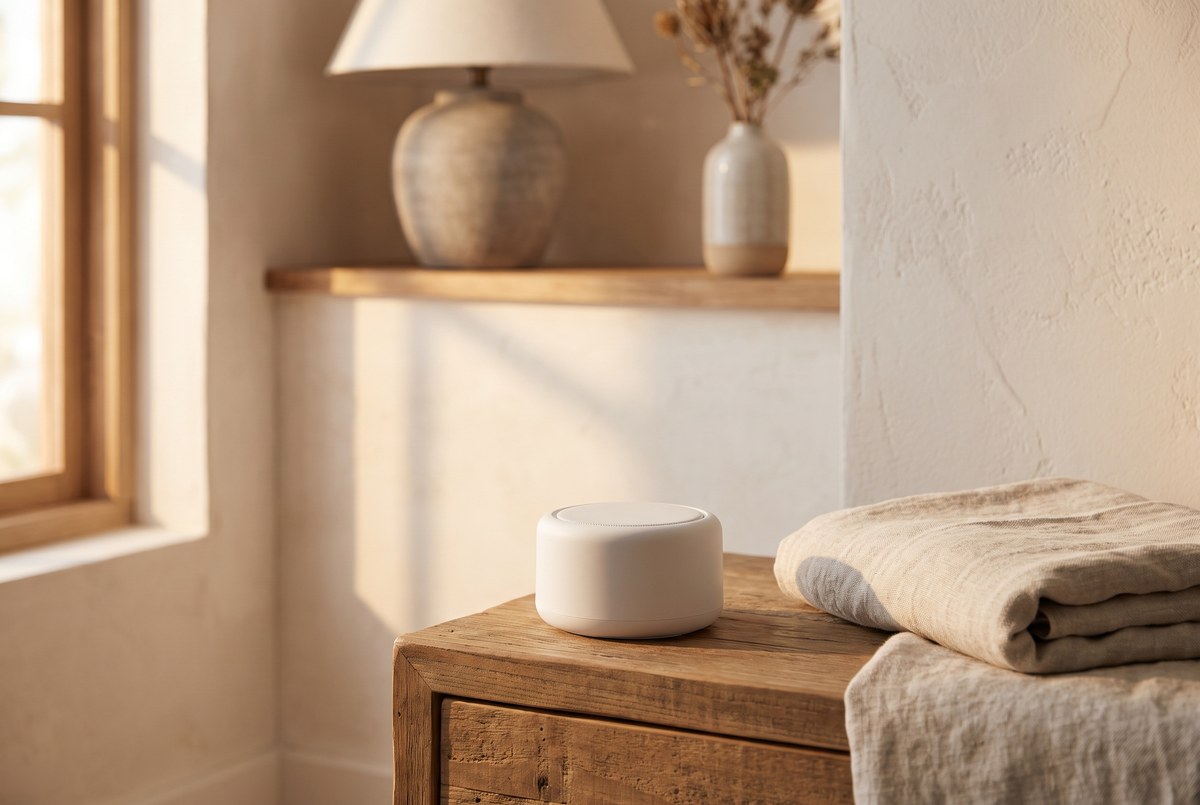
On another bench in the same literature sits the proposed remedy: a small machine that emits steady broadband sound — white noise — to blanket those abrupt acoustic events so they are less likely to fragment sleep. The question this article asks is precise. Traffic noise is a documented cardiovascular hazard; masking is a marketed fix; does covering the sound undo the harm?
The most defensible answer: the hazard is real and the masking helps some sleepers, but the masking evidence is weak, the noise machine is not physiologically neutral, and no study has ever tested whether it reduces cardiovascular risk.
The enemy is documented
Start with what is solid. A large epidemiological and mechanistic literature links chronic nighttime transportation noise to higher blood pressure and increased risk of ischemic heart disease: the WHO Environmental Noise Guidelines summarized the cardiovascular and metabolic effects in 2018; a 2015 meta-analysis in Environmental Research quantified the transportation-noise/ischemic-heart-disease relationship; a 2020 systematic review and meta-analysis in Environmental Pollution tied long-term traffic noise to mortality; reviews in Circulation Research (2024) and Deutsches Ärzteblatt International (2019) map the mechanisms. Human field and imaging studies show simulated nocturnal traffic noise can acutely impair endothelial function and raise arterial pressure — plausibly through sleep fragmentation, stress-hormone signaling and oxidative stress. This is association at the population level plus mechanism in the lab: a strong, coherent case that the noise matters.
What masking can do
On the remedy's side: a 2025 meta-analysis of 12 randomized trials found white noise improved subjective sleep quality in adults and prolonged sleep in infants, and laboratory studies show it reduces arousals in loud environments such as intensive care units. In a genuinely noisy bedroom, the blanket of sound does something real.
The complication: the blanket is also a sound
Here is what the product page leaves out. The most rigorous systematic review to date graded the evidence that continuous noise improves sleep as very low quality. Recent experimental work shows broadband noise is itself processed by the sleeping brain and can alter sleep architecture — the masker changes the thing it protects. In one experiment against traffic noise, earplugs outperformed noise masking outright. Masking, the literature says, is best reserved for genuinely noisy settings, at low volume. And the decisive trial — does masking traffic noise reduce cardiovascular risk — has never been run. This evidence concerns the exposures, not any specific commercial device.
Practical meaning
If your nights are interrupted by road, rail or aircraft noise, low-volume masking is a reasonable, low-risk aid with modest support; earplugs may do better. If your bedroom is already quiet, adding noise to it has no evidence behind it and a mechanistic case against.
In the laboratory, the speakers fall silent and the morning cuff inflates one last time. The artery answers for the night it had. Whatever machine stands on your nightstand, that is the exchange it is party to — sound for sleep, sleep for the heart — and the honest machine admits the trade is still being measured.
Educational, not medical advice.
The takeaway
Chronic nighttime transportation noise is linked to higher blood pressure and ischemic heart disease, and a 2025 meta-analysis of 12 randomized trials found white noise improved subjective sleep quality in adults — yet the evidence quality is very low, one experiment found earplugs outperformed masking against traffic noise, and masking is best reserved for genuinely noisy settings at low volume.
References
5 peer-reviewed sources, published 2015–2024, across 5 journals. 3 of them have a full Magellan study write-up linked below.
- Circ Res · 2024 · PMID 38662856 · DOI 10.1161/CIRCRESAHA.123.323584Transportation noise, especially at night, significantly increases cardiovascular disease risk by disrupting sleep, elevating stress, and causing oxidative stress. Read our full write-up →
- Int J Environ Res Public Health · 2018 · PMID 29470452 · DOI 10.3390/ijerph15020379Exposure to road traffic noise is associated with an increased risk of ischemic heart disease. Read our full write-up →
- Environ Pollut · 2020 · PMID 33307398 · DOI 10.1016/j.envpol.2020.116222Long-term road traffic noise may be weakly associated with ischemic heart disease mortality, but evidence for other mortality outcomes and traffic noise sources is generally weak. Read our full write-up →
- Environ Res · 2015 · PMID 25769126 · DOI 10.1016/j.envres.2015.02.023
- Dtsch Arztebl Int · 2019 · PMID 31092312 · DOI 10.3238/arztebl.2019.0245
Mechanisms and molecules in this article
Each links to its Magellan monograph — what it is, what it does, and the studies behind it.
Related reading
Ambulatory blood pressure — especially nighttime and 24-hour averages — predicts death and cardiovascular…
HEPA filtration demonstrably cuts indoor PM2.5 and nudges blood pressure down by a few millimeters of…
Evening blue light genuinely suppresses melatonin, but the best-controlled evidence — a Cochrane review of…
All Magellan articles → · More on Air, Water & Sleep Systems →
Prefer the interactive version? Open this article inside the Magellan app →