The Chamomile Molecule and the NAD+ Drain: Apigenin's Elegant Mechanism, Missing Human Trial
Apigenin inhibits CD38, the enzyme that drains NAD+ as tissues age — a beautiful mechanism demonstrated in animals and cells. In humans, the molecule has never been tested at supplement doses for sleep, NAD+, or aging.
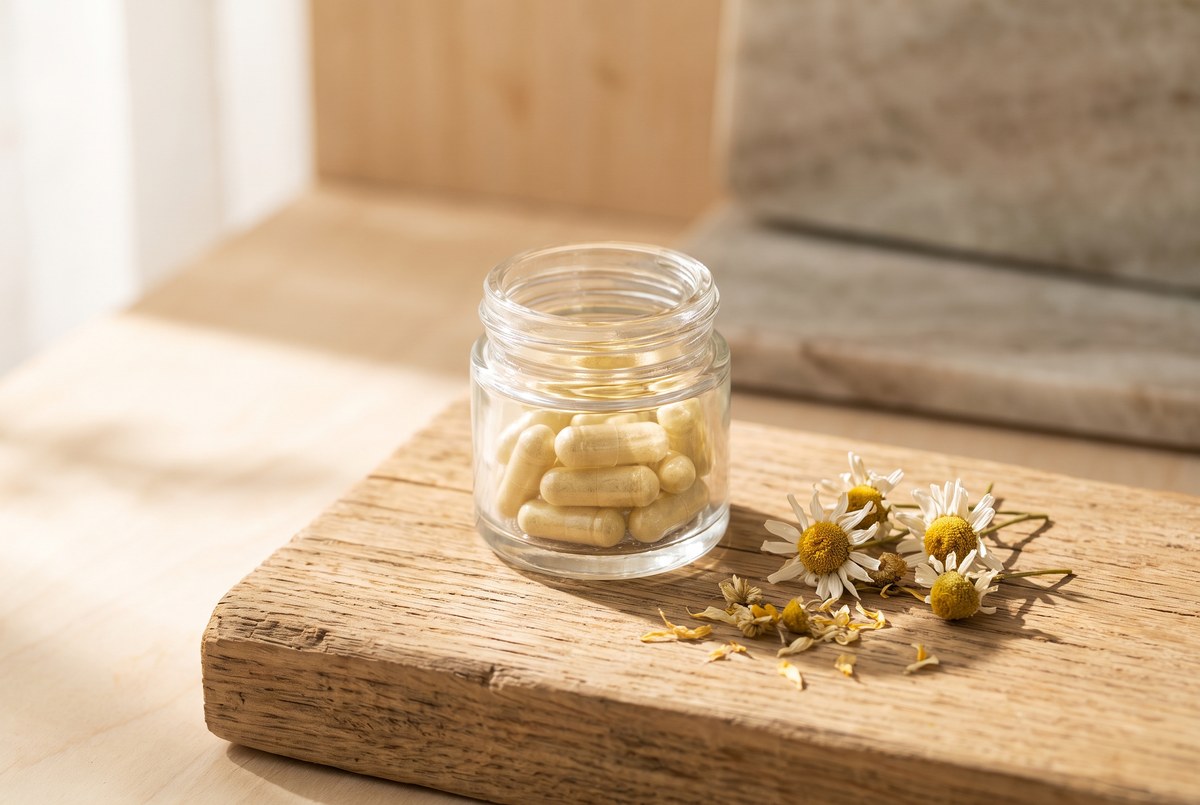
The assay is quiet. In the plate, an enzyme called CD38 goes about its work — consuming NAD+, the molecule that cells spend on energy metabolism, on DNA repair, on the sirtuin enzymes that aging research never stops talking about. In aging tissue, CD38 activity rises and NAD+ falls; a 2016 study in Cell Metabolism established that this single enzyme dictates the age-related NAD+ decline and the mitochondrial dysfunction that follows, through a mechanism dependent on the mitochondrial deacetylase SIRT3. Into this picture, in a 2013 study published in Diabetes, comes a small yellow flavone — apigenin, 4',5,7-trihydroxyflavone, abundant in chamomile and parsley — shown to inhibit CD38 and, by inhibiting it, to raise intracellular NAD+.
It is an elegant tableau, and it has made apigenin capsules a fixture of longevity stacks. The precise question: does the elegance survive contact with humans? The most defensible answer is no — not yet. The CD38 story is demonstrated in animals and cells; in people, apigenin at supplement doses has never been tested for NAD+, sleep, or any aging outcome.
The mechanism is genuinely well built
The preclinical record is unusually coherent. A 2020 study in Aging showed apigenin inhibiting CD38 and raising the NAD+/SIRT3 axis. A 2021 paper in the Journal of Neurochemistry found that inhibiting CD38 — alongside nicotinamide riboside — ameliorated neuroinflammation by increasing NAD+. A 2021 study in the American Journal of Chinese Medicine showed apigenin alleviating oxidative-stress-induced cellular senescence by modulating the SIRT1–NAD+–CD38 axis. Across these models, apigenin lowers CD38 activity, raises the NAD+/NADH ratio, restores SIRT3-dependent mitochondrial antioxidant defenses, and improves metabolic, vascular, senescence, and neuroinflammatory endpoints. This is what a promising preclinical program looks like. The rationale for pursuing it in aging is equally clear: because CD38 activity rises with age and drives the tissue NAD+ decline linked to mitochondrial dysfunction, inflammation, and cellular senescence, inhibiting the drain is a plausible preservation strategy.
The human layer is chamomile, not capsules
Here the picture thins dramatically. The human data come largely from chamomile extracts standardized to apigenin: a randomized trial in mild-to-moderate generalized anxiety disorder found chamomile modestly outperformed placebo. Real, but such extracts deliver far less apigenin than dedicated capsules, and anxiety is not an aging endpoint. No published trial has tested isolated apigenin at typical supplement doses for sleep, NAD+, or aging outcomes. Whether apigenin supplements raise NAD+ in people remains unproven — full stop.
The absorption problem
There is also a pharmacokinetic catch that stack-builders rarely mention. Human studies show the free aglycone is poorly absorbed: only about 0.5 percent of an oral dose is recovered in urine as metabolites. The glycoside forms found in chamomile are absorbed far better. So the supplement form that sells best — isolated apigenin — is also the form with the weakest demonstrated delivery, while the better-absorbed form arrives in doses too small to match the preclinical work. The molecule that inhibits CD38 so beautifully in the dish has to reach the enzyme first.
What a reader should take from this
Apigenin is a mechanistically beautiful bet, not a proven intervention. Chamomile tea and chamomile extracts carry the modest human evidence; capsules carry the hypothesis. If NAD+ biology interests you, the honest reading of this literature is that the target — CD38 — is validated in animal models, and the over-the-counter way of hitting it is not.
The assay plate sits under its quiet light, CD38 measured, NAD+ tallied, the flavone doing exactly what the diagrams promised. Between that bench and a capsule on a bedside table lies the oldest distance in this field: a mechanism waiting for its humans.
Educational, not medical advice.
The takeaway
Apigenin is a pharmacological CD38 inhibitor that raises NAD+ in animal and cell studies, but human evidence comes only from chamomile extracts (which deliver far less apigenin) — whether capsules raise NAD+ or affect aging in people is unproven.
References
5 peer-reviewed sources, published 2013–2021, across 5 journals. 3 of them have a full Magellan study write-up linked below.
- Aging · 2020 · PMID 32507768 · DOI 10.18632/aging.103410Inhibition of CD38 with apigenin can reduce diabetic kidney disease by improving the NAD/NADH ratio and Sirt3 activity. Read our full write-up →
- Flavonoid apigenin is an inhibitor of the NAD+ ase CD38: implications for cellular NAD+ metabolism ↗Diabetes · 2013 · PMID 23172919 · DOI 10.2337/db12-1139The flavonoid apigenin can inhibit the enzyme CD38, leading to increased NAD+ levels and improved metabolic health in obese mice. Read our full write-up →
- J Neurochem · 2021 · PMID 33871064 · DOI 10.1111/jnc.15367Inhibiting CD38 or supplementing with nicotinamide riboside can reduce brain inflammation by increasing NAD levels. Read our full write-up →
- Am J Chin Med · 2021 · PMID 34049472 · DOI 10.1142/S0192415X21500592
- Cell Metab · 2016 · PMID 27304511 · DOI 10.1016/j.cmet.2016.05.006
Mechanisms and molecules in this article
Each links to its Magellan monograph — what it is, what it does, and the studies behind it.
Related reading
One human infusion pilot mapped metabolism during a six-hour drip. It did not show better energy, cognition,…
Oral NMN reliably raises NAD+ in human blood — on that, the trials agree. Whether that rise buys anything a…
A look at the research behind NMN supplementation for healthspan and longevity.
All Magellan articles → · More on Nutraceuticals & Cellular Energizers →
Prefer the interactive version? Open this article inside the Magellan app →