ApoB Home Test Kit: Understanding Your Heart Disease Risk Better
The ApoB Home Test Kit measures apolipoprotein B, which may be a more accurate indicator of cardiovascular risk than traditional cholesterol tests.
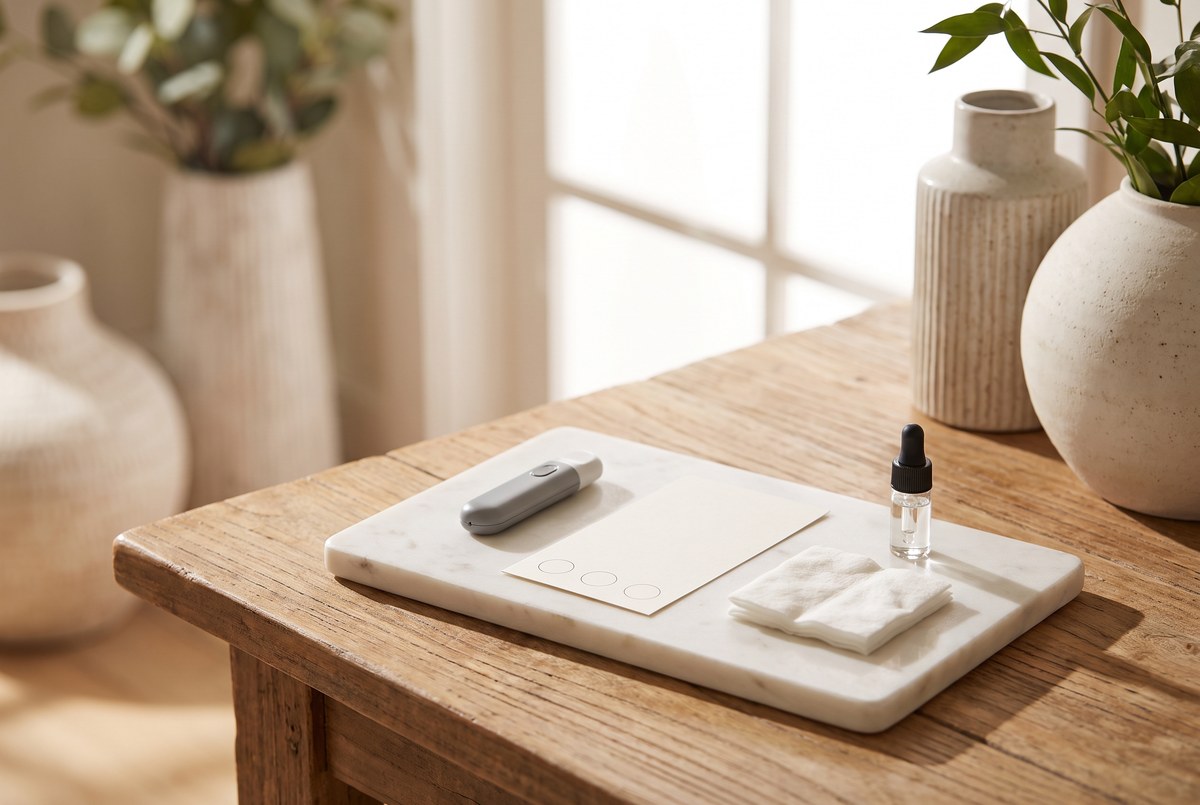
Heart disease rarely announces itself; mostly it accumulates, particle by particle, in people who feel fine. That is the quiet fear a home ApoB kit speaks to — the wish to count the atherogenic particles a standard cholesterol panel can understate. The defensible answer: apoB looks like the sharper risk marker — and the number is one input, not a diagnosis.
Why ApoB Matters for Heart Health
Recent studies have shown that apoB may be a more accurate predictor of cardiovascular risk compared to LDL cholesterol alone. A 2021 study published in the Journal of the American College of Cardiology found that apoB is a superior marker of all-cause mortality risk than LDL cholesterol. This is because apoB reflects the total number of atherogenic lipoprotein particles, which is a key determinant of cardiovascular risk.
Similarly, a 2022 study in the Journal of the American Heart Association emphasized that the total number of apoB particles is what drives cardiovascular risk, rather than just LDL cholesterol levels. Another study from 2018, published in Pathology, concluded that non-HDL-cholesterol and apoB are better predictors of cardiovascular risk than LDL-cholesterol.
While the ApoB Home Test Kit can provide valuable information about your cardiovascular risk, it is essential to interpret the results in the context of your overall health and in consultation with a healthcare professional. This test is not a diagnostic tool but rather a means to better understand your risk factors and make informed decisions about your health.
It is also important to note that while the evidence supporting apoB as a superior marker of cardiovascular risk is growing, more research is needed to fully understand its implications for longevity and healthspan. The studies mentioned above provide a strong foundation, but individual results may vary, and the test should be used as part of a comprehensive approach to health management. Educational, not medical advice.
The takeaway
The ApoB Home Test Kit, by measuring apolipoprotein B particle count, offers a potentially more accurate way to assess cardiovascular risk compared to traditional cholesterol tests, but it should be used as part of a broader health management strategy and in consultation with a healthcare professional.
Discussed here: ApoB Home Test Kit
Measurement toolWhat that grade means: A test or sensor. Graded on what the marker predicts and how reliably it measures it.
Typical listed price $79.00 — check the live price before buying.
Read the full evidence page → View on Amazon ↗
See every graded product in Diagnostics & Epigenetic Tests →
References
3 peer-reviewed sources, published 2018–2022, across 3 journals. 3 of them have a full Magellan study write-up linked below.
- J Am Coll Cardiol · 2021 · PMID 33736827 · DOI 10.1016/j.jacc.2021.01.027ApoB and non-HDL cholesterol are better indicators of residual risk for death and heart attack in statin-treated patients than LDL cholesterol. Read our full write-up →
- J Am Heart Assoc · 2022 · PMID 36216435 · DOI 10.1161/JAHA.122.025858ApoB is a better indicator of heart disease risk than LDL-C because it directly measures the number of harmful particles, which is more accurate than measuring only the cholesterol within them. Read our full write-up →
- Pathology · 2018 · PMID 30595507 · DOI 10.1016/j.pathol.2018.11.006Non-HDL-cholesterol and apolipoprotein B may be better indicators of heart disease risk than LDL-cholesterol, especially in certain individuals. Read our full write-up →
Mechanisms and molecules in this article
Each links to its Magellan monograph — what it is, what it does, and the studies behind it.
Related reading
Because every atherogenic particle carries exactly one apoB molecule, an apoB test counts plaque-forming…
Lp(a) is 80–90% genetically determined, elevated in roughly one in five people, and causally linked to heart…
High-sensitivity CRP measures the faint background inflammation that tracks with heart attack, stroke,…
All Magellan articles → · More on Diagnostics & Epigenetic Tests →
Prefer the interactive version? Open this article inside the Magellan app →