A Pea-Sized Sample of the Truth: the Promise and Blind Spots of Portable Food-Allergen Sensors
With roughly 15% of 'gluten-free' foods contaminated in meta-analysis and accidental exposures running near 14% per year in peanut-allergic children, handheld sensors offer a real but limited extra layer — erratic in some ranges, blind to fermented gluten, and never a guarantee.
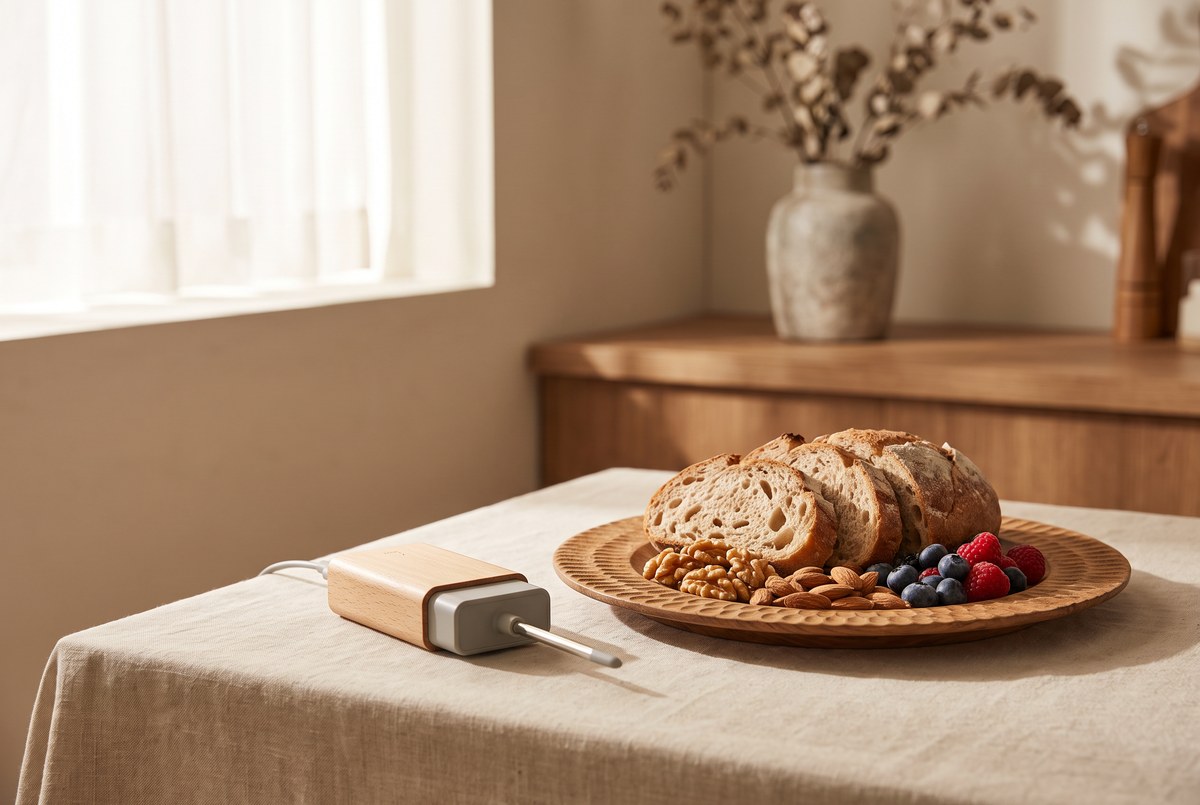
Picture the moment, because it happens thousands of times a day in restaurants everywhere: the plate arrives, the person across from you has celiac disease or a serious food allergy, the server has assured everyone — sincerely, and probably accurately — that the kitchen was careful, and yet the whole table knows, the way you know things you cannot verify, that 'gluten-free' on a menu is a promise made by a supply chain, and supply chains have kitchens, and kitchens have shared fryers and shared tongs and shared flour dust hanging in the air.
The evidence for that quiet anxiety is, frankly, worse than the anxiety. A systematic review and meta-analysis spanning low-, middle-, and high-income countries found gluten in roughly 15% of foods labeled or assumed gluten-free overall; in U.S. testing, about a third of gluten-free restaurant dishes contained gluten. In one prospective cohort, children with peanut allergy suffered accidental exposures at a rate of about 14% per year — with most moderate-to-severe reactions managed, alarmingly, without epinephrine. For this population, avoidance is the only effective management. There is no pill. There is just vigilance, repeated at every meal.
So the precise question: can a portable sensor — a pea-sized food sample, a disposable capsule, an antibody-based reaction, a 'found' or 'not found' answer within minutes — actually lower the odds? The defensible answer: sometimes, for some foods, as a supplement to vigilance. Never as a replacement for it.
What the best-studied sensor can do
Handheld devices of this type extract proteins from the sample and run an immunoassay against the same allergenic proteins measured by laboratory ELISA methods — gluten peptides from wheat, barley, and rye, for instance. Laboratory validation of the best-studied handheld gluten sensor found reliable detection at or above the 20 ppm regulatory threshold — about 6% failures, few false positives. That threshold matters: it is the line regulators draw between 'gluten-free' and not. And a randomized pilot in celiac patients judged a portable sensor an acceptable aid to gluten-free-diet adherence and quality of life — the device tasting the restaurant dish before the person does, one disposable capsule at a time.
The reliability ceiling, in plain terms
But the same research tradition sets the ceiling, and one study states it with unusual candor in its very title: a portable gluten sensor may not always be reliable depending on the food and the user. Results are erratic between 2 and 20 mg/kg. Fermented or hydrolyzed gluten can evade the antibodies entirely. A pea-sized sample cannot represent a whole plate — the sauce tested is not the bite eaten, and the corner sampled is not the center. Cost and capsule supply are real barriers to using the device at every risky meal.
And a single negative is not a safety guarantee
Narrative reviews of gluten-free cross-contamination make the structural point: contamination is episodic and unevenly distributed, so one clean test does not certify the meal — and one dirty test does not always mean the whole plate is dirty. These devices supplement label reading, staff communication, and — for those prescribed it — epinephrine preparedness. They replace none of it.
Practical meaning
For someone with celiac disease, a validated sensor can be a reasonable extra layer for high-risk meals out, understood as a spot check with known blind spots. This evidence concerns the detection technology, the biomarkers, and the contamination epidemiology — not this specific retailer's product.
The capsule says 'not found,' and the table exhales a little — correctly, mostly, but with the asterisk the evidence insists on: the test is one pea-sized sample of the truth, and dinner is the whole plate. Educational, not medical advice.
The takeaway
A validated portable gluten sensor can be a reasonable spot check for high-risk meals — as a supplement to label reading, staff communication, and epinephrine preparedness, never a replacement.
References
3 peer-reviewed sources, published 2021, across 3 journals. Every citation links to its PubMed record.
- Front Nutr · 2021 · PMID 34355010 · DOI 10.3389/fnut.2021.712992
- Br J Nutr · 2021 · PMID 34753529 · DOI 10.1017/S0007114521002488
- Nutrients · 2021 · PMID 34210037 · DOI 10.3390/nu13072244
Related reading
Consumer wearables now measure sleep, heart rate and HRV well enough to survive comparison with laboratory…
In diabetes, continuous glucose monitoring cuts time in hypoglycemia by 38% to roughly half and trims HbA1c…
A look at what consumer wearables like the Garmin Forerunner 265 can and can’t tell us about healthspan.
All Magellan articles → · More on Biometric Wearables & Sensors →
Prefer the interactive version? Open this article inside the Magellan app →