The Methionine Load: Inside the Quiet Science of Betaine
Betaine (trimethylglycine) reliably lowers the amino acid homocysteine in human blood — a real, dose-dependent, well-replicated effect on a lab number. Whether lowering that number protects the heart, the liver, or a lifespan is a different question, and the trials so far say: unproven, with trade-offs.
The methionine load goes down in the morning — a measured drink of amino acid, swallowed in the clinic under supervision. Then the waiting begins. At timed intervals the nurse draws blood: fasting, then after the load, the tubes labeled and laid in the rack. The centrifuge spins. The plasma comes off pale and clear, and in a refrigerated analyzer down the corridor a number is slowly assembled: homocysteine, micromoles per liter. This is the ritual at the heart of betaine science. Nobody raises a voice in this room. Everything claimed for the jar of white powder on the supplement shelf has to survive what happens here.
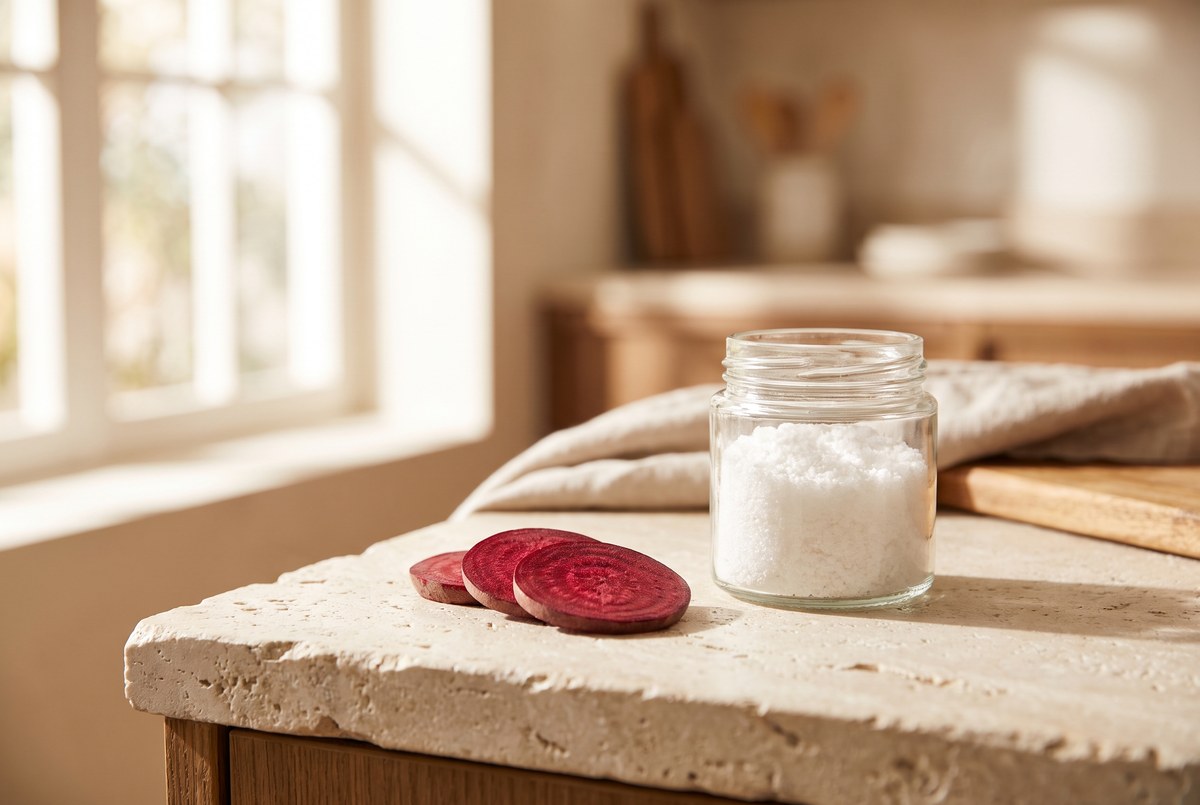
Betaine — trimethylglycine, TMG to its devotees — is found in wheat bran, spinach, beets and seafood, and the body makes its own from choline. It does two jobs. It is an osmolyte, shielding cells from osmotic stress. And it is a methyl donor: through the enzyme betaine-homocysteine methyltransferase, it hands a methyl group to homocysteine and turns it back into methionine — an alternative route to the folate- and B12-dependent pathway.
The question the clinic room exists to answer is simple: does swallowing betaine lower homocysteine, and does lowering homocysteine matter? The most defensible answer: yes to the first, reliably; unproven to the second, with a cholesterol trade-off attached.
A real effect — on a number
Few supplement claims are this solid. Human trials and meta-analyses consistently show oral betaine lowers both fasting and post-methionine-load plasma homocysteine, dose-dependently, by about 1.2 µmol/L on average at doses of 4 g/day and above. A 2006 study in the Journal of Nutrition demonstrated the acute, dose-dependent effect on serum betaine and plasma homocysteine in healthy volunteers. A 2021 systematic review and meta-analysis in Critical Reviews in Food Science and Nutrition pooled the cardiovascular-marker data. A 2019 randomized controlled trial in PLoS Medicine tested a betaine-containing supplement in nonpregnant women in The Gambia and reduced plasma homocysteine. The response is even genetically patterned: a 2024 trial in Nutrition Research found betaine supplementation modulated betaine concentrations by MTHFR genotype in healthy active males. And for the rare genetic disorder homocystinuria, a prescription form of betaine is FDA-approved — the compound's one undisputed clinical home.
The complication: a surrogate that never delivered
Here the room goes quiet again. Homocysteine lowering has never itself been shown to reduce cardiovascular events — the number is a surrogate, and surrogates have disappointed cardiology before. Worse, at doses around 4 g/day and above, betaine modestly raises total cholesterol, trading one marker against another. A 12-month trial in NASH — the fatty, inflamed liver — was negative. A meta-analysis found no body-composition benefit. Some data even link betaine to higher risk when the gut-derived metabolite TMAO is high. The one favorable population finding — higher dietary betaine intake associated with lower cardiovascular mortality in a coronary-artery-disease cohort — is observational: association, not causation, and diet is not a capsule.
Who this is actually for
The benefits appear confined mainly to people with elevated homocysteine or specific methylation defects — a group that can be identified with a blood test, which is precisely how the science itself works: load, draw, spin, measure. For everyone else, the capsule treats a lab value they may not have. This evidence describes the compound and its methylation mechanism, not any specific commercial product.
Back in the clinic, the analyzer finishes its run and the number prints out lower than last time. On the surrogate, the powder delivered. What that number means for a heart, a liver, a life — the room, for all its humming precision, cannot yet say.
Educational, not medical advice.
The takeaway
Oral betaine lowers fasting and post-load homocysteine in a dose-dependent way (about 1.2 µmol/L on average at 4 g/day and above) and a prescription form is FDA-approved for homocystinuria — but homocysteine lowering has never been shown to reduce cardiovascular events, and doses around 4 g/day modestly raise total cholesterol.
References
5 peer-reviewed sources, published 2006–2024, across 5 journals. 2 of them have a full Magellan study write-up linked below.
- Eur J Nutr · 2023 · PMID 36717385 · DOI 10.1007/s00394-023-03087-yDaily low-dose B vitamins and betaine supplementation can reduce high homocysteine levels in Chinese adults. Read our full write-up →
- Nutr Res · 2024 · PMID 38876040 · DOI 10.1016/j.nutres.2024.05.003Betaine supplementation boosts betaine and lowers homocysteine in active men, with MTHFR genotype potentially influencing betaine levels. Read our full write-up →
- Crit Rev Food Sci Nutr · 2021 · PMID 33764214 · DOI 10.1080/10408398.2021.1902938
- J Nutr · 2006 · PMID 16365055 · DOI 10.1093/jn/136.1.34
- PLoS Med · 2019 · PMID 31408467 · DOI 10.1371/journal.pmed.1002870
Mechanisms and molecules in this article
Each links to its Magellan monograph — what it is, what it does, and the studies behind it.
Related reading
L-methylfolate is the already-active form of folate, and trials show it raises folate status and lowers…
All-in-one longevity formulas bundle a dozen compounds aimed at the hallmarks of aging. The strongest…
Glycine is a building block for collagen, glutathione, creatine and heme, and small trials show 3 grams…
All Magellan articles → · More on Nutraceuticals & Cellular Energizers →
Prefer the interactive version? Open this article inside the Magellan app →