Capsaicin Cream for Pain: What the Evidence Says
A look at whether topical capsaicin cream like Capzasin-HP actually relieves pain, based on scientific studies.
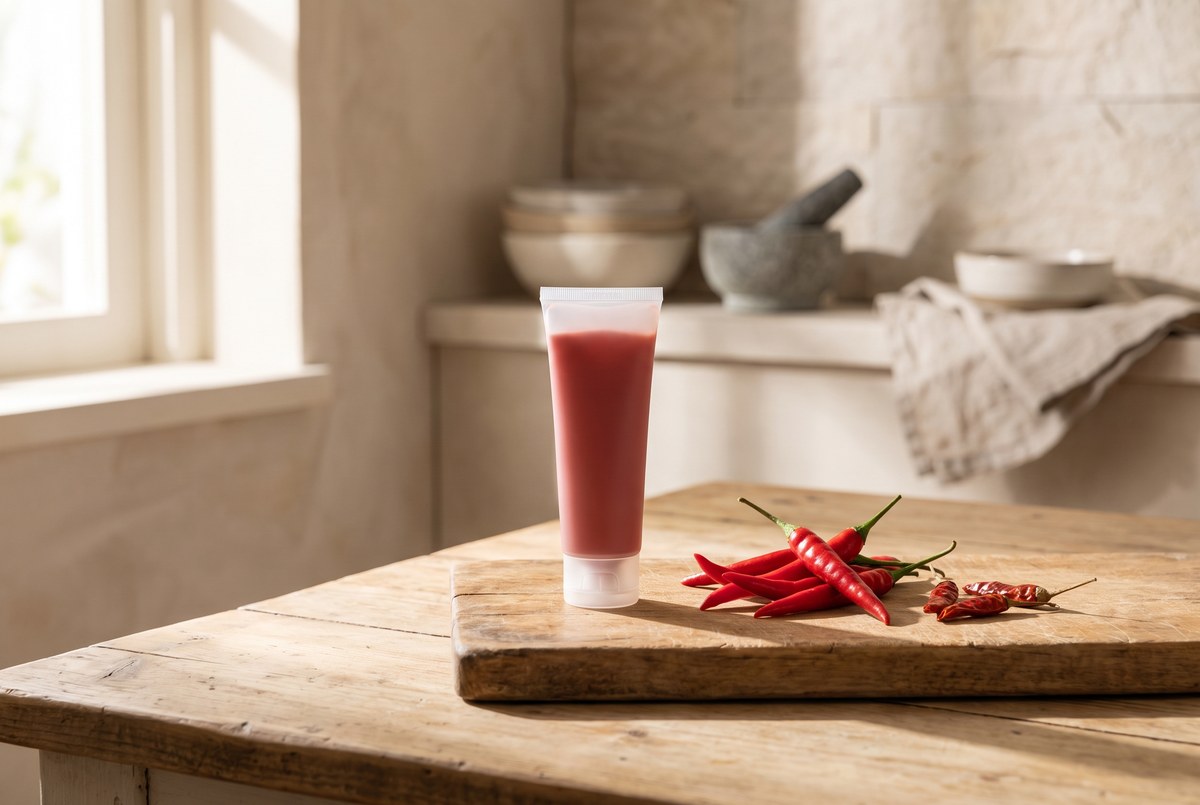
Chili-pepper chemistry, straight into the skin! Capsaicin—the compound that makes peppers hot—binds pain-sensing nerve fibers, triggers an initial release of the pain neurotransmitter substance P, then depletes the supply until the signal quiets. First it burns. Then it goes quiet.
So does a 0.1% over-the-counter cream like Capzasin-HP actually ease minor musculoskeletal and arthritis pain? Yes, for some people—modestly, and with effects that vary from person to person.
How it works
Capsaicin, the compound that makes chili peppers hot, works by binding to pain-sensing nerve fibers in the skin. This triggers an initial release of the pain neurotransmitter substance P, followed by depletion of substance P and a reversible desensitization of the pain-signaling nerves with repeated use.
Evidence for pain relief
Studies show topical capsaicin can provide moderate pain relief for osteoarthritis. A 2014 review found capsaicin treatment resulted in a 0.44 point greater reduction in pain score compared to placebo over 4 weeks. Individual responses can vary - a 2021 study found 59% of people with knee osteoarthritis had a greater response to either capsaicin cream or ibuprofen gel. Overall, a 2004 review calculated that 8 people would need to be treated with capsaicin for one person to experience pain relief.
For chronic neuropathic pain conditions like postherpetic neuralgia and diabetic neuropathy, high-concentration (8%) capsaicin patches applied by a doctor have shown substantial pain relief in more participants than a control treatment, according to a 2017 review. However, low-concentration creams like 0.1% capsaicin are not typically used for neuropathic pain. Educational, not medical advice.
The takeaway
Low-concentration capsaicin creams like 0.1% can provide modest, temporary pain relief for osteoarthritis and other minor musculoskeletal pains for some people, but individuals may respond differently and effects are not dramatic.
Discussed here: Capzasin-HP Capsaicin 0.1% Pain Relief Cream (Pack of 3)
Moderate evidenceWhat that grade means: Several human studies point the same way, but with limits — size, duration, funding, or mixed results.
Typical listed price $45.99 — check the live price before buying.
References
5 peer-reviewed sources, published 2004–2021, across 5 journals. 1 of them has a full Magellan study write-up linked below.
- Cochrane Database Syst Rev · 2017 · PMID 28085183 · DOI 10.1002/14651858.CD007393.pub4High-concentration topical capsaicin offers some pain relief for certain neuropathic conditions, but the overall benefit is modest and the evidence quality is low. Read our full write-up →
- Rheumatology (Oxford) · 2021 · PMID 33197270 · DOI 10.1093/rheumatology/keaa561
- Prog Drug Res · 2014 · PMID 24941673 · DOI 10.1007/978-3-0348-0828-6_11
- BMJ · 2004 · PMID 15033881 · DOI 10.1136/bmj.38042.506748.EE
- Osteoarthritis Cartilage · 2018 · PMID 30172837 · DOI 10.1016/j.joca.2018.08.008
Mechanisms and molecules in this article
Each links to its Magellan monograph — what it is, what it does, and the studies behind it.
Related reading
A look at the evidence for Biofreeze Menthol Pain Relief Gel’s effects on pain and its implications for…
Evidence suggests the Salonpas Pain Relieving Patch can provide temporary relief for minor musculoskeletal…
Creams, gels and patches all promise fast relief — here is which mechanisms hold up in human trials, ranked…
Prefer the interactive version? Open this article inside the Magellan app →