21,000 People Ate Cocoa Extract for Years. Here Is What the Capsules Could — and Couldn't — Prove
The giant COSMOS trial gave cocoa flavanols the fairest test any supplement has had. The headline outcome was null; the secondary results were intriguing; the honest reading is 'component of a healthy diet,' not treatment.
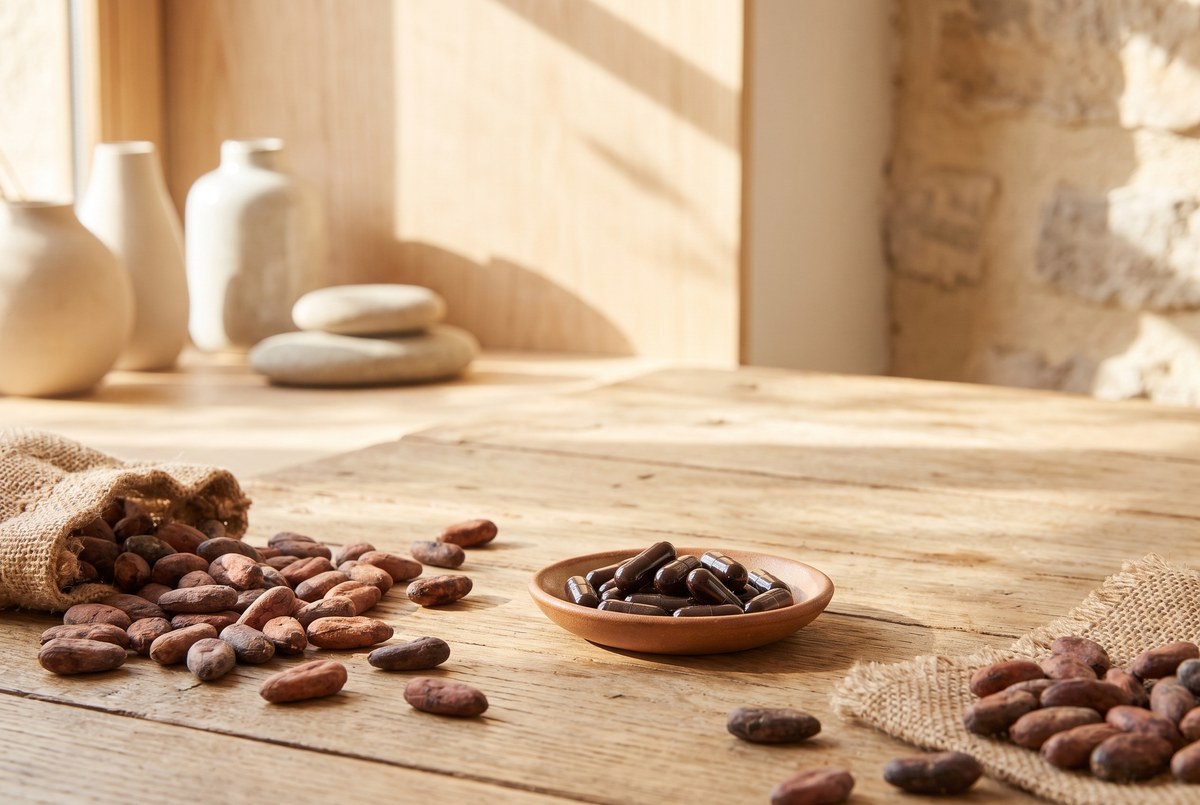
The capsule is brown and anonymous. Each morning, in kitchens across the country, an older adult enrolled in a randomized trial swallows one with breakfast. Inside is a cocoa extract: about 500 milligrams of flavanols, including roughly 80 milligrams of (-)-epicatechin, the polyphenol monomer concentrated from the beans of Theobroma cacao and stripped of chocolate's sugar and fat. Elsewhere in the trial's machinery, blood is drawn for the inflammatory marker hsCRP. In a clinic subcohort, participants sit for cognitive testing. The events that matter — heart attacks, strokes, deaths — are adjudicated and logged. This is COSMOS, the COcoa Supplement and Multivitamin Outcomes Study, and it is what a serious test of a supplement looks like.
The precise question: do cocoa flavanols, taken daily for years, prevent cardiovascular disease? The most defensible answer the trial permits: not the primary outcome, no — with a secondary signal worth describing carefully, and a supporting literature of small vascular effects that is real but modest.
The headline result was null
Published in the American Journal of Clinical Nutrition in 2022, the COSMOS cardiovascular result was that daily cocoa extract did not significantly reduce the primary composite of total cardiovascular events. That is the sentence the marketing rarely quotes. In secondary analyses, cardiovascular death was 27 percent lower — a finding in the right direction, but secondary analyses in a null-primary trial are hypothesis-generating by definition, not proof. An ancillary analysis found hsCRP rose about 8 percent per year more slowly in the extract group, a mechanism-consistent murmur rather than an outcome.
The smaller-trial literature: modest and vascular
A meta-analysis of randomized trials found improved flow-mediated vasodilation — about 1.2 percentage points — and meta-analyses of shorter trials find a small blood-pressure-lowering effect, around 2 mmHg. The mechanism is plausible: flavanols increase endothelial nitric oxide production, promoting vasodilation, with antioxidant and anti-inflammatory effects on the vasculature. A 2018 systematic review in Sports Medicine examined cocoa flavanol supplementation and exercise; a 2020 study in Scientific Reports found dietary flavanols improved cerebral cortical oxygenation and cognition in healthy adults — acute, small-scale work.
The nulls deserve equal billing
The COSMOS trial showed no benefit for global cognition, and when the clinic subcohort results were published in 2023 — cognitive function measured properly, in person — the extract again did not move the needle. There was no reduction in incident type 2 diabetes. Chronic use in pregnancy is unstudied for benefit. A 2022 paper in Alzheimer's & Dementia speaks to the vascular-flavanol and cognition question, but the largest trial's answer on cognition was no. The pattern across the whole file: strongest for vascular function and blood pressure, modest everywhere, absent on the outcomes people most hope for.
What this means for a reader
Cocoa flavanols are best understood as one component of a healthy diet — the same family of plant polyphenols you get from actual cocoa, fruit, and tea — rather than a treatment. A concentrated extract removes chocolate's sugar and fat, which is a real formulation advantage, but it does not convert a dietary pattern into a drug. It is also worth remembering who was studied: COSMOS enrolled older adults, so its answers apply most directly to that group. If your goal is cardiovascular prevention, the evidence supports the boring fundamentals first — movement, diet, sleep, and prescribed therapy where indicated — with flavanol-rich foods as a pleasant supporting player.
The brown capsules kept their secret well: years of mornings, thousands of participants, adjudicated endpoints. The answer they returned was quieter than the hope that funded the question — a vascular whisper, a death-rate signal awaiting confirmation, and a primary outcome that said, plainly, no.
Educational, not medical advice.
The takeaway
In the COSMOS randomized trial, daily cocoa extract did not significantly reduce total cardiovascular events, though cardiovascular death was 27% lower in secondary analyses; smaller trials show modest vascular benefits (+1.2 points of flow-mediated dilation, ~2 mmHg blood pressure), and cognition and diabetes-prevention outcomes were null.
References
5 peer-reviewed sources, published 2018–2023, across 4 journals. 3 of them have a full Magellan study write-up linked below.
- Alzheimers Dement · 2022 · PMID 36102337 · DOI 10.1002/alz.12767Daily multivitamin-mineral supplementation, but not cocoa extract, improved global cognition, memory, and executive function in older adults over three years. Read our full write-up →
- Sci Rep · 2020 · PMID 33235219 · DOI 10.1038/s41598-020-76160-9Dietary flavanols can enhance brain oxygenation and improve cognitive function in healthy young adults, especially during demanding tasks. Read our full write-up →
- Sports Med · 2018 · PMID 29299877 · DOI 10.1007/s40279-017-0849-1Cocoa flavanols may help with exercise-induced oxidative stress and metabolism, but don't seem to boost athletic performance directly. Read our full write-up →
- Am J Clin Nutr · 2022 · PMID 35294962 · DOI 10.1093/ajcn/nqac055
- Am J Clin Nutr · 2023 · PMID 38070683 · DOI 10.1016/j.ajcnut.2023.10.031
Mechanisms and molecules in this article
Each links to its Magellan monograph — what it is, what it does, and the studies behind it.
Related reading
Behind every beetroot shot is a person watching a blood-pressure reading edge upward with age. The nitrate…
Grape seed extract pools to a systolic blood-pressure reduction of roughly 2–6 mmHg across meta-analyses —…
Citrus hesperidin improves endothelial function and inflammatory markers in small human trials and trims…
All Magellan articles → · More on Nutraceuticals & Cellular Energizers →
Prefer the interactive version? Open this article inside the Magellan app →