The Squeeze That Predicts the Future — and the Caveat That Keeps It Honest
Across cohorts totaling millions, weaker grip strength tracks higher all-cause and cardiovascular mortality as well as or better than systolic blood pressure — a powerful marker of physiological robustness, not a proven cause of longevity.
There is a moment, in many families, that nobody marks on a calendar: the first time the jar does not open. The hand that once fixed bicycles and swung children now hesitates on a lid, and the person attached to the hand feels something larger than inconvenience — a small, private lurch of recognition, because grip is never just grip. It is the body's most honest handshake with the future: independence, the ability to carry the groceries, to catch oneself in a fall, to remain, in the deepest sense, oneself.
Medicine has quietly taken that intuition seriously. Grip strength — measured with a handheld dynamometer, one maximal isometric squeeze, reported in kilograms or pounds — reflects overall skeletal-muscle strength and the coordinated health of muscle, tendon, joint, and nervous system. It rises through early adulthood, peaks around ages 30 to 39, and declines thereafter — a loss that accelerates with age and physical inactivity, and that no one negotiates with. Low grip strength now anchors consensus definitions of sarcopenia, the age-related loss of muscle mass and function.
The question the research answers is whether this one squeeze predicts what families actually fear. The defensible answer: as a population marker, astonishingly well. As a lever you can pull to change your own fate, unproven.
The squeeze versus the sphygmomanometer
The PURE study — the Prospective Urban Rural Epidemiology cohort, published in the Lancet — found grip strength predicted death and cardiovascular outcomes as well as or better than systolic blood pressure. A systematic review and meta-analysis of data from approximately 2 million men and women reached the same directional conclusion for all-cause mortality in apparently healthy people. A 2022 meta-analysis derived mortality thresholds for all-cause, cancer, and cardiovascular death; a 2018 BMJ analysis and a 28-country cohort of the oldest old published in 2024 land in the same place: weaker grip, higher risk of death, cardiovascular disease, disability, and in some studies cognitive decline and depression.
Reference ranges for the rest of us
The test is quick, inexpensive, and non-invasive — and, unusually, interpretable: reference ranges from more than 125,000 healthy adults in 21 countries allow one home measurement to be compared against age- and sex-specific norms. Researchers have proposed grip strength as a new vital sign of health. That proposal is not hype; it is a summary of unusually consistent epidemiology.
The crucial caveat: marker, not cause
Now the part honesty requires. Grip strength is a proxy for underlying physiological robustness — the residue of a lifetime of activity, nutrition, illness, and luck — not a proven cause of longevity. Nobody has shown that training the forearm alone extends life. Associations with some outcomes, such as longitudinal cognitive change, are weaker or inconsistent — the signal fades the further you get from muscle and mortality. And normal cut-off values differ by sex, age, and population, which is why the norms matter more than any single round number.
Practical meaning
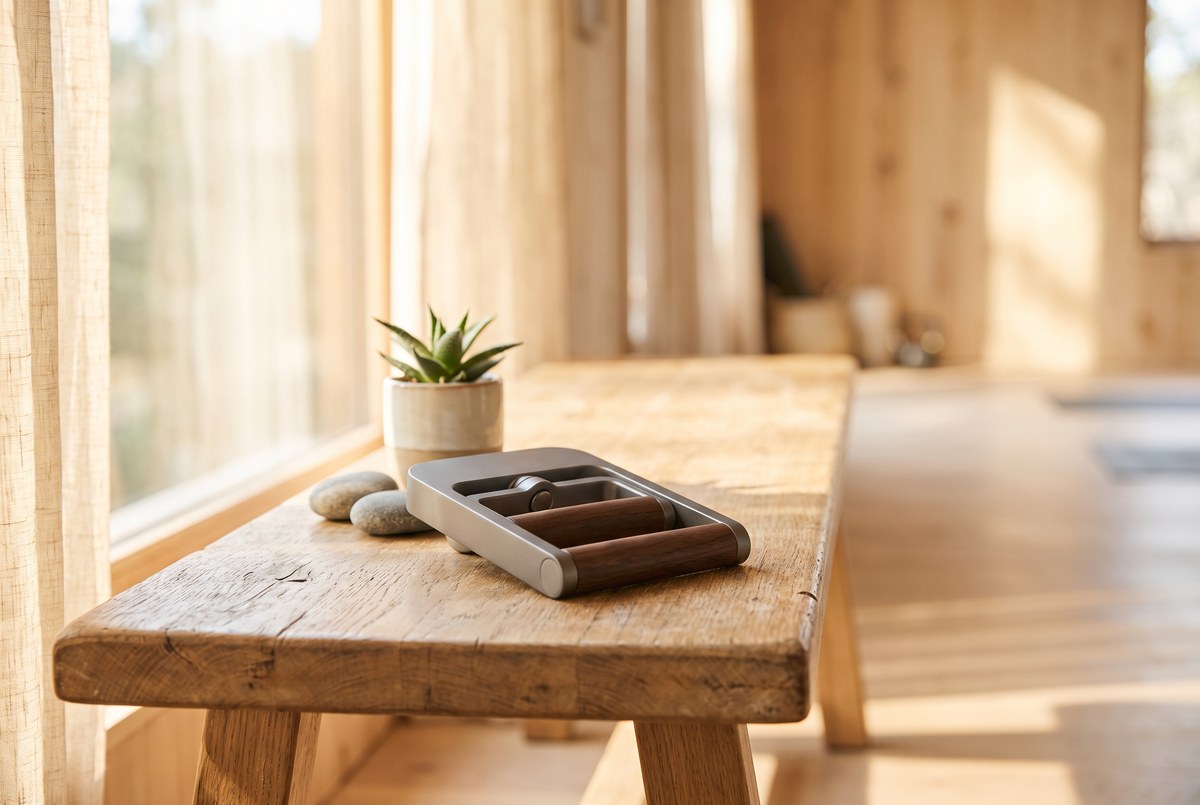
For a reader: knowing your number is defensible and cheap, best interpreted as a prompt — if it is low for your age and sex, the reasonable response is attention to overall muscular fitness with professional guidance, not dynamometer obsession and not forearm-only training. This evidence concerns handgrip strength as a biomarker and its measurement by dynamometry, not this specific commercial device.
The jar, in the end, was never about the jar. The squeeze is a readout of a whole life written into the muscles — and the same literature that makes the number ominous also names its counterweight: the decline accelerates with inactivity, which means use is not nothing. Educational, not medical advice.
The takeaway
Grip strength is a cheap, well-normed vital sign of aging; know your number against age- and sex-specific ranges, but treat it as a prompt for overall strength and activity, not a target in itself.
Train the numbers: Stronger for Longer
A free 12-week walking, strength and balance program for adults 50 and over, measured with five validated self-tests at weeks 0, 6 and 12. No supplements, nothing to buy.
References
5 peer-reviewed sources, published 2015–2024, across 5 journals. 3 of them have a full Magellan study write-up linked below.
- BMJ · 2018 · PMID 29739772 · DOI 10.1136/bmj.k1651Lower grip strength is associated with increased risk of mortality and various diseases, and can improve the accuracy of health risk predictions. Read our full write-up →
- Ageing Res Rev · 2022 · PMID 36332759 · DOI 10.1016/j.arr.2022.101778Lower handgrip strength is linked to increased mortality risk, with the specific dose-response varying by cause of death. Read our full write-up →
- J Cachexia Sarcopenia Muscle · 2024 · PMID 39439054 · DOI 10.1002/jcsm.13619Higher muscle strength is gradually associated with a lower risk of death in people aged 90 and older. Read our full write-up →
- Lancet · 2015 · PMID 25982160 · DOI 10.1016/S0140-6736(14)62000-6
- Arch Phys Med Rehabil · 2018 · PMID 29425700 · DOI 10.1016/j.apmr.2018.01.008
Mechanisms and molecules in this article
Each links to its Magellan monograph — what it is, what it does, and the studies behind it.
Related reading
Largely independent of muscle mass, diet, age, and sex, cystatin C-based eGFR flags more chronic kidney…
CGMs reveal biological variation, but a visible glucose spike is not automatically harmful and consumer…
Lp(a) is 80–90% genetically determined, elevated in roughly one in five people, and causally linked to heart…
All Magellan articles → · More on Diagnostics & Epigenetic Tests →
Prefer the interactive version? Open this article inside the Magellan app →