The Body's Own Pain Molecule, Bottled: PEA's Promising, Uneven Trial Record
Meta-analyses of randomized trials find oral PEA reduces chronic pain of mixed origin and is well tolerated — but heterogeneity is very high, study quality is often low, publication bias is possible, and a geriatric N-of-1 trial found only a small effect.
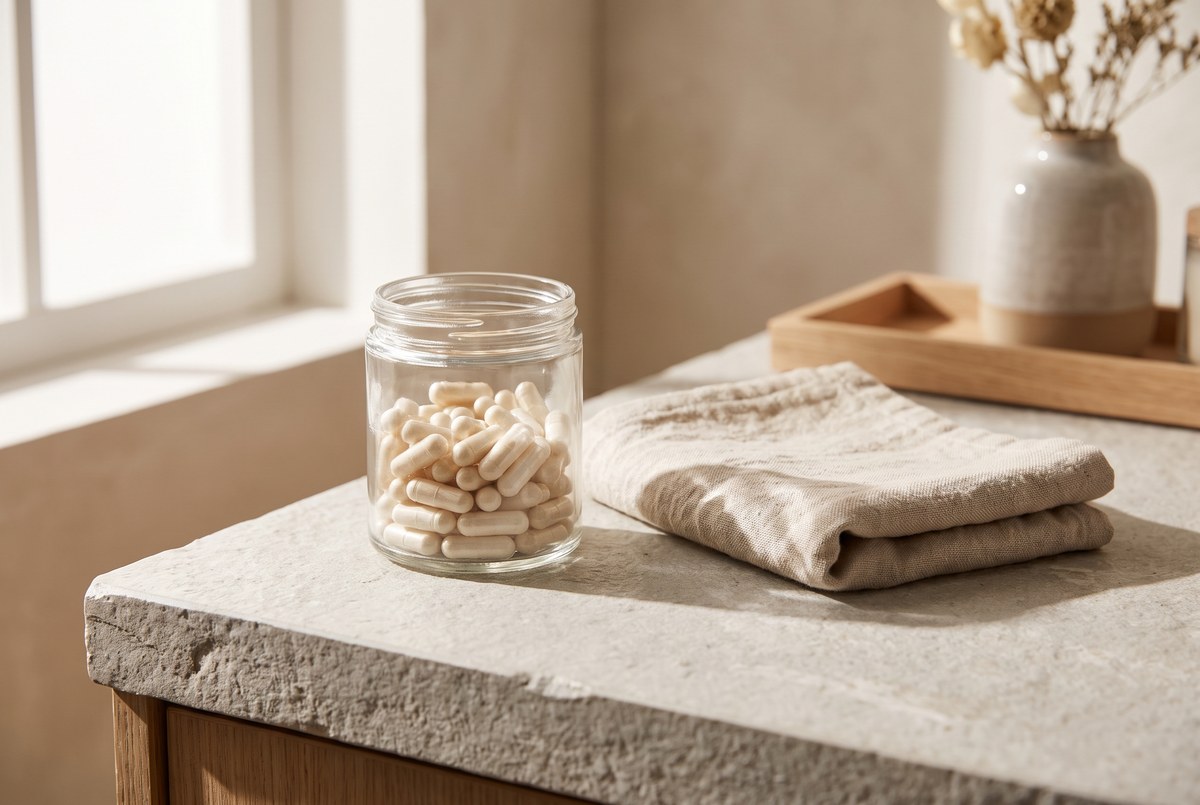
The molecule is made on demand, in the cell membrane, when tissue calls for it — a fatty acid amide of the N-acylethanolamine family, synthesized from membrane phospholipids and then, having made its point, broken back down. Egg yolk contains it. Soybeans. Peanuts. In the supplement jar it arrives as a white powder, micronized or ultra-micronized, milled fine in the hope the gut will take more of it up.
Palmitoylethanolamide — PEA — works, in the laboratory picture, as an agonist of the nuclear receptor PPAR-alpha and a down-modulator of mast-cell and glial-cell activation: anti-inflammatory, analgesic, neuroprotective. It engages endocannabinoid-related pathways without binding the classical cannabinoid receptors, which is why the literature calls it an ALIAmide — cannabinoid-like, but not a cannabinoid. The question the trials set out to answer is whether swallowing the powder quiets human pain.
The meta-analytic signal
The human evidence is unusually heavily meta-analyzed for a supplement. A 2017 meta-analysis in Pain Physician found efficacy for pain. A 2023 systematic review and meta-analysis of double-blind randomized controlled trials in Nutrients covered chronic pain broadly. A 2024 Nutrients meta-analysis examined extended treatment with micron-size oral PEA. A 2025 meta-analysis in Nutrition Reviews set out, in its own title, to address the literature's gaps. Together they describe reductions in chronic pain of mixed origin — neuropathic; nociceptive and musculoskeletal, including knee osteoarthritis and temporomandibular joint pain; pelvic pain from endometriosis — with general good tolerability and a characteristic delay: benefit often takes one to two months to appear. That delay matters practically: a two-week disappointment is not a failed therapy, it is the expected pharmacology. The ALIAmide framing — a compound that borrows the endocannabinoid neighborhood without binding the cannabinoid receptors — also fits the tolerability record: the machinery it touches is the body's own. Chronic pain is exactly the kind of condition where a slow, safe adjunct earns its keep — and exactly the kind where hype does the most damage. Modesty, in this category, is a feature. The slow clock and the gentle touch are exactly what the trials describe.
Read the same papers with colder eyes
The caveats are not decorative; the meta-analysts wrote them themselves. Effect sizes vary widely across the pooled trials. Several analyses flag very high heterogeneity, low study quality, and possible publication bias — the three horsemen of an inflated supplement literature. And a geriatric N-of-1 trial found only a small effect. That design is worth pausing on: randomized periods within individual patients, aggregated, is about as honest as this literature gets, and what it found was modesty. The fair classification is 'promising adjunct' — not proven stand-alone therapy, and not a replacement for diagnosing why the pain exists in the first place.
The aging angle is still preclinical
Why does a pain supplement appear in a longevity catalog at all? Because mechanistic and animal studies show reduced neuroinflammation and, in aged mice, neuroprotective and survival benefits. Those are preclinical findings — interesting, hypothesis-generating, and not yet human evidence of any anti-aging effect. The human record is a pain record, and should be read as one. This evidence describes the palmitoylethanolamide compound and its mechanisms, not any specific commercial product.
Practically: for someone with chronic pain already working with a clinician, PEA's tolerability and the consistent direction of the meta-analyses make it a reasonable topic to raise — with expectations set by the trials: slow in onset, modest in size, uncertain in any individual case.
The body makes its own supply when asked; the powder is an attempt to raise the background level and wait. Two months, the trials say, before the waiting can even be judged. Educational, not medical advice.
The takeaway
PEA is a promising, well-tolerated adjunct for chronic pain that often takes one to two months to show benefit; it is not a proven stand-alone therapy, and its anti-aging angle remains preclinical.
References
4 peer-reviewed sources, published 2017–2025, across 3 journals. 1 of them has a full Magellan study write-up linked below.
- Pain Physician · 2017 · PMID 28727699Palmitoylethanolamide (PEA) shows promise for pain reduction, but more rigorous research is needed to confirm its benefits and safety. Read our full write-up →
- Nutrients · 2023 · PMID 36986081 · DOI 10.3390/nu15061350
- Nutrients · 2024 · PMID 38892586 · DOI 10.3390/nu16111653
- Nutr Rev · 2025 · PMID 39798151 · DOI 10.1093/nutrit/nuae203
Mechanisms and molecules in this article
Each links to its Magellan monograph — what it is, what it does, and the studies behind it.
Related reading
Boswellia serrata extracts reduce osteoarthritis pain and stiffness in multiple randomized trials and…
Glucosamine and chondroitin are among the most studied joint supplements on earth — and after decades of…
Luteolin reliably calms inflammatory signaling in rodent brains and cultured cells, and small human trials —…
All Magellan articles → · More on Nutraceuticals & Cellular Energizers →
Prefer the interactive version? Open this article inside the Magellan app →