Four Tubes and a Lock of Hair: What a Cortisol Test Can Actually Tell You
Cortisol patterns track mortality and cardiovascular risk across large cohorts, and late-night salivary cortisol screens for Cushing syndrome at roughly 92% sensitivity and 96% specificity — but values swing with time of day, collection method, and hair color, so a single consumer test says little about one person's health.
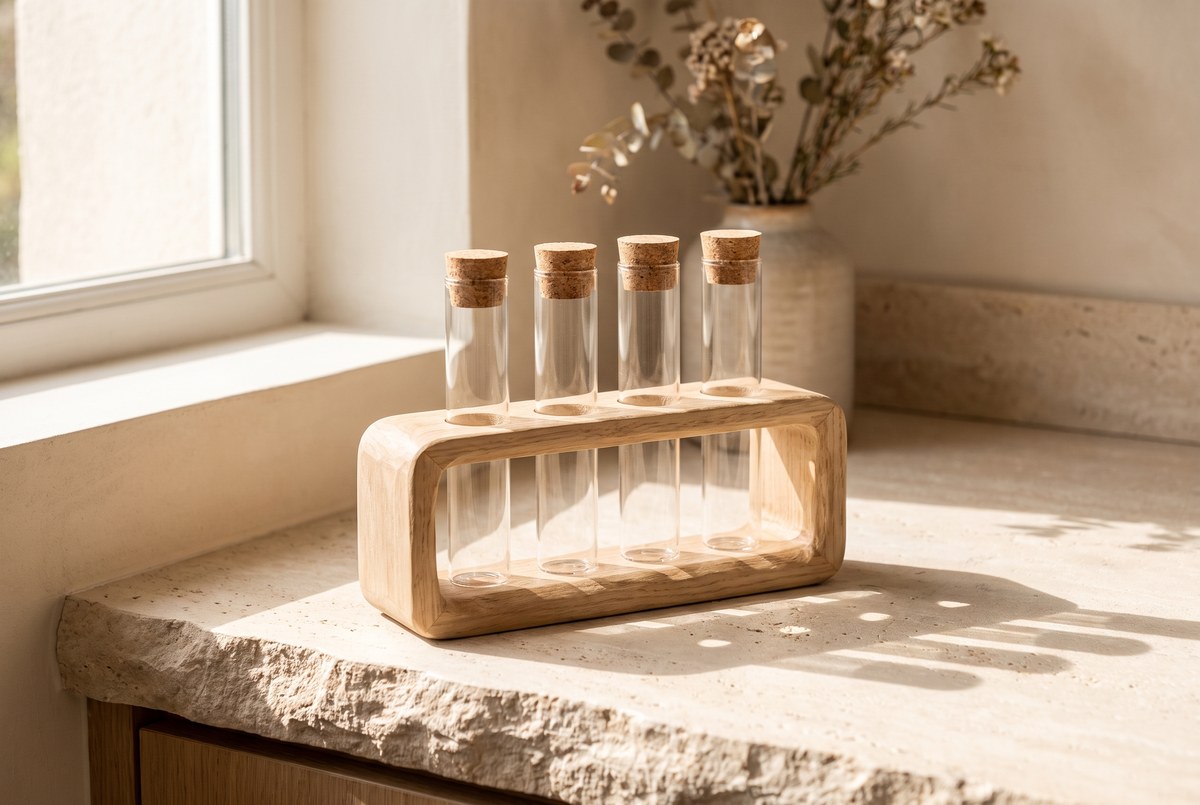
An inventory of what testing your stress hormone actually requires. A saliva tube at the moment of waking — before coffee, before email. A second tube thirty minutes later, to catch the cortisol awakening response, the sharp morning surge produced by the hypothalamic-pituitary-adrenal axis. Tubes across the afternoon as the level declines. A late-night tube, saliva pooled in the dark. Or, alternatively, a segment of scalp hair, which accumulates cortisol the way tree rings accumulate weather: average exposure over the preceding weeks to months, readable in a single snip.
A second inventory: what the numbers are. Roughly 92% sensitivity and 96% specificity — that is late-night salivary cortisol screening for Cushing syndrome, a rare disease of cortisol excess. One hundred forty-seven studies establishing that the awakening response reproducibly tracks psychosocial stress. A Whitehall II cohort linking flatter daily salivary slopes to higher all-cause and cardiovascular mortality. A Lifelines cohort tying long-term glucocorticoid exposure to incident cardiovascular disease. And a systematic review and meta-analysis across outcomes: flatter diurnal slopes, poorer mental and physical health.
The question a consumer test implicitly asks — is my stress chemistry making me sick? — deserves a precise answer: cortisol patterns genuinely track health at the population level, while a single test on a single person carries far less information than the checkout page implies.
Where the biomarker earns its keep
Cortisol is the body's primary glucocorticoid stress hormone, produced by the adrenal glands under HPA-axis control, and its validated uses are specific. Late-night salivary values screen for Cushing syndrome with the 92/96 performance above. The awakening response is a workhorse of stress research across those 147 studies. And hair cortisol — the long-exposure medium — has been tied to hypertension and incident cardiovascular disease, and in one 2021 study predicted coronary arterial disease alongside perceived stress and resilience.
The population signal
The associations run consistently in one direction: dysregulated rhythms, worse outcomes. Whitehall II; Lifelines; the 2017 meta-analysis of diurnal slopes and mental and physical health outcomes. Elevated hair cortisol marks chronic stress exposure, and chronic exposure tracks with cardiometabolic risk in cohort after cohort. As epidemiology, this is a real literature — objective, non-invasive biomarkers of HPA-axis activity doing what biomarkers are supposed to do, at the scale where patterns become visible.
The individual-level ceiling
Here the inventory turns cautionary. Associations with general health are typically modest. Cortisol values are highly variable — sensitive to collection method, time of day, hair color, and analytic technique. Some analyses, such as salivary cortisol in depression, find it cannot reliably distinguish affected from unaffected people — a sobering result for anyone hoping a tube of saliva will adjudicate their mental state. A number that shifts with the hour, the tube, the hair color, and the lab is a poor oracle for one person's future.
Practical meaning
For a reader: a cortisol curve can be an interesting mirror during a known period of stress, and late-night salivary testing has a real clinical job when Cushing syndrome is on the table — through a clinician. As a consumer diagnostic for stress damage, the evidence does not support the purchase's implicit promise; persistent symptoms deserve a clinician, not another panel. This evidence concerns cortisol as a biomarker of stress and HPA-axis function in general, not this specific commercial saliva product.
The tubes line up on the bathroom counter: waking, thirty minutes, afternoon, midnight — four small plastic verdicts on a single day. They will describe the rhythm faithfully, hour by hour. What they cannot tell you is what to do about the life that set it. Educational, not medical advice.
The takeaway
Cortisol is a genuine research biomarker with a narrow validated clinical use; as an individual 'stress damage' diagnostic, a consumer saliva test is weak.
References
5 peer-reviewed sources, published 2011–2024, across 4 journals. 2 of them have a full Magellan study write-up linked below.
- Curr Cardiol Rep · 2019 · PMID 31471749 · DOI 10.1007/s11886-019-1208-7Hair cortisol is a promising biomarker for chronic stress linked to cardiovascular disease and its risk factors, but more robust research is needed. Read our full write-up →
- Stress Health · 2021 · PMID 34652868 · DOI 10.1002/smi.3106Hair cortisol levels show a small, inverse association with coronary artery disease risk, but perceived stress and resilience do not independently predict it. Read our full write-up →
- Psychoneuroendocrinology · 2017 · PMID 28578301 · DOI 10.1016/j.psyneuen.2017.05.018
- J Clin Endocrinol Metab · 2011 · PMID 21346074 · DOI 10.1210/jc.2010-2137
- J Clin Endocrinol Metab · 2024 · PMID 38500477 · DOI 10.1210/clinem/dgae081
Related reading
The ApoB Home Test Kit measures apolipoprotein B, which may be a more accurate indicator of cardiovascular…
Because every atherogenic particle carries exactly one apoB molecule, an apoB test counts plaque-forming…
Epigenetic clocks predict mortality consistently across populations and unreliably within one person:…
All Magellan articles → · More on Diagnostics & Epigenetic Tests →
Prefer the interactive version? Open this article inside the Magellan app →