Does a Cold Plunge Raise Dopamine 250% Without a Crash? The Viral Claim, Examined
A small one-hour immersion experiment measured dopamine in blood. It did not demonstrate a 250% rise in brain dopamine, a day-long motivation boost, or the absence of a crash.
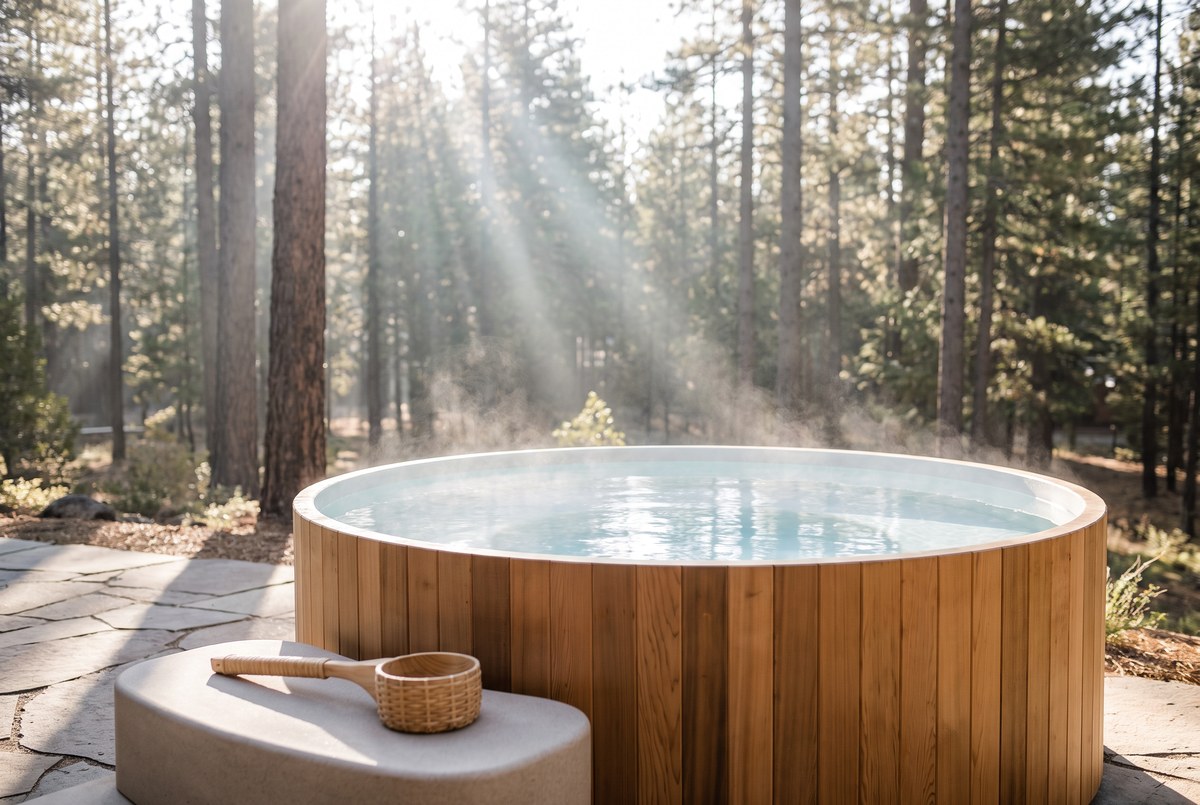
The water is 14 degrees Celsius. One hour, head-out immersion — and the young men’s plasma dopamine climbs 250%, noradrenaline 530%! Between that tank and your feed, the number broke loose — whoosh — into a slogan: dopamine up 250%, sustained for hours, no crash. A typical plunge lasts two or three minutes. The study ran sixty.
The question: does a cold plunge raise brain dopamine 250% without a crash? The defensible answer: nobody knows. The study measured plasma, not brain; it never tested a crash; and a 2025 meta-analysis found mood outcomes not significantly improved. The number is real. The receipt it is asked to sign is not.
Where 250% came from
In a 2000 laboratory study, a small group of young men underwent head-out water immersion at different temperatures. During one hour at 14 degrees Celsius, plasma noradrenaline rose by about 530% and plasma dopamine by about 250%; metabolic rate also increased substantially. The study documented a strong peripheral stress response to prolonged cold.
That protocol is not the same as a typical two- or three-minute plunge. Exposure lasted an hour, involved head-out immersion under laboratory observation, and measured catecholamines in plasma. Dose matters in cold physiology: temperature, duration, body surface area, habituation, movement, and whether the face or head is immersed can change the response.
Using the 250% figure for every cold shower, plunge, or winter swim therefore assumes that very different exposures produce the same effect. That has not been demonstrated.
Plasma dopamine is not a direct readout of brain dopamine
Dopamine in a blood sample and dopamine signaling in reward circuits are not interchangeable measurements. Circulating dopamine is strongly shaped by peripheral nerves, the gastrointestinal system, metabolism, and conjugation. Dopamine does not freely cross the blood-brain barrier, which is one reason neurological dopamine treatment requires special delivery strategies or precursor drugs.
The immersion study did not use brain imaging, cerebrospinal-fluid sampling, or a validated central-dopamine proxy. It did not measure reward learning, motivation, addiction, attention, or executive function. A rise in plasma dopamine can coexist with a subjective feeling of alertness, but it cannot establish the size or duration of dopamine signaling inside the brain.
The study did not test "no crash"
A crash is not a laboratory variable unless investigators define and measure it. The cold-immersion experiment did not compare cold with caffeine, did not track withdrawal or rebound fatigue, and did not establish a dopamine curve lasting through the day. "No crash" was not one of its results.
People may reasonably report feeling awake or accomplished after cold exposure. Expectation, sympathetic arousal, pain modulation, breathing, ritual, and the relief of rewarming could all contribute. Subjective benefit is meaningful to the person experiencing it, but it should not be reverse-engineered into a specific unmeasured neurotransmitter story.
Broader trials do not show a universal mood effect
A 2025 systematic review and meta-analysis evaluated cold-water immersion studies across a wide range of protocols. It found limited and time-dependent effects: stress was lower at one delayed time point, while pooled mood outcomes were not significantly improved. The authors emphasized the small number of randomized trials, protocol diversity, and limited ability to draw firm conclusions.
This does not prove that nobody feels better after a plunge. It shows that a repeatable population-level mood benefit has not been established with the confidence implied by the dopamine slogan.
Cold is a stressor, not a free neurochemical upgrade
Cold immersion rapidly changes breathing, vascular resistance, heart rate, blood pressure, and autonomic activity. Reviews describe an initial cold-shock response that can include involuntary gasping and hyperventilation. The risk depends on water temperature, suddenness, swimming conditions, health status, and supervision. Open water adds drowning and hypothermia hazards that a controlled plunge does not.
Even favorable effects are context-specific. Cold-water immersion can reduce soreness after exercise, but repeated use immediately after resistance training may alter some training adaptations. A 2025 experiment also found that daily brief 14-degree immersion temporarily decreased glucose tolerance and insulin sensitivity in its study conditions. One acute stress response should not be generalized into "more cold is better."
What can honestly be said?
Cold exposure reliably produces acute physiological arousal. Some people enjoy it, and specific recovery outcomes may improve under specific protocols. The famous 250% dopamine figure, however, is a peripheral blood measurement from a small, prolonged immersion study. It is not evidence of a comparable increase in brain dopamine, a guaranteed motivation effect, or a crash-free stimulant replacement.
For anyone choosing to use cold water, the evidence supports treating it as a dose-dependent physical stressor rather than a harmless mood hack. Sudden immersion, breath-holding contests, solo open-water exposure, and use in people with relevant cardiovascular or medical risks deserve particular caution. Educational, not medical advice.
The takeaway
The 250% figure came from plasma dopamine during one hour of 14-degree-Celsius immersion. The study did not measure brain dopamine, motivation, or a caffeine-like crash, and broader reviews have not established a universal mood benefit.
References
11 peer-reviewed sources, published 1989–2026, across 10 journals. Every citation links to its PubMed record.
- Eur J Appl Physiol · 2000 · PMID 10751106 · DOI 10.1007/s004210050065
- PLoS One · 2025 · PMID 39879231 · DOI 10.1371/journal.pone.0317615
- Exp Physiol · 2017 · PMID 28833689 · DOI 10.1113/EP086283
- Clin Sci (Lond) · 1989 · PMID 2691172 · DOI 10.1042/cs0770581
- J Therm Biol · 2024 · PMID 38663342 · DOI 10.1016/j.jtherbio.2024.103857
- J Therm Biol · 2025 · PMID 40048836 · DOI 10.1016/j.jtherbio.2025.104088
- Front Sports Act Living · 2021 · PMID 34337408 · DOI 10.3389/fspor.2021.714148
- Br J Sports Med · 2010 · PMID 19945970 · DOI 10.1136/bjsm.2009.065565
- J Clin Endocrinol Metab · 1999 · PMID 10404831 · DOI 10.1210/jcem.84.7.5864
- Clin Chem · 2008 · PMID 18801936 · DOI 10.1373/clinchem.2008.107193
- Neurosci Biobehav Rev · 2026 · PMID 42435826 · DOI 10.1016/j.neubiorev.2026.106866
Mechanisms and molecules in this article
Each links to its Magellan monograph — what it is, what it does, and the studies behind it.
Related reading
Breathing is the last thing most people think to train — until a climbing blood-pressure reading makes the…
The spiked mat is wellness social media's favorite torture device. The underlying technique — acupressure —…
Evidence shows balance and strength training improves key healthspan markers in older adults.
All Magellan articles → · More on Recovery, Sauna & Light Therapy →
Prefer the interactive version? Open this article inside the Magellan app →