Under the Microscope, the Truth About Glycolic Acid Is Measured in Microns
Human biopsy and controlled-trial evidence shows topical glycolic acid thickens epidermis, raises collagen and hyaluronic acid, and modestly improves photodamage and sallowness — while wrinkle effects stay small and stronger peels carry real risk.
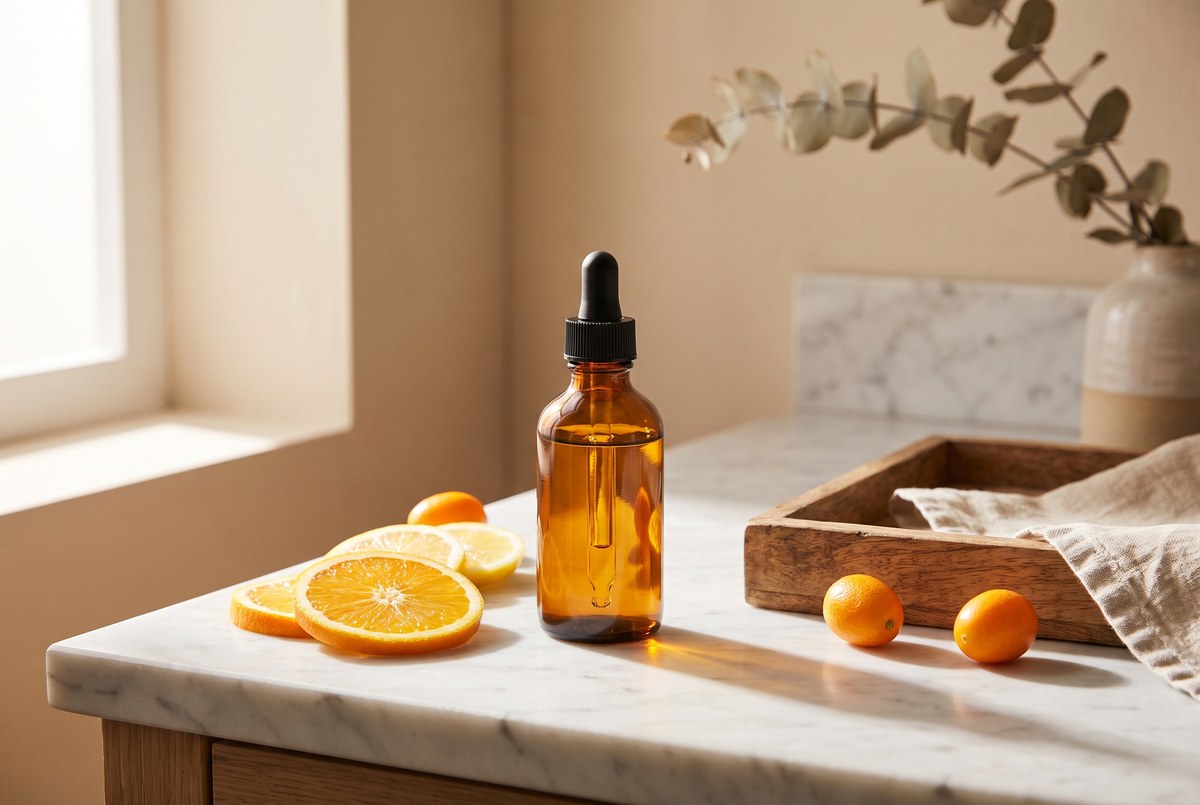
The biopsy punch is only a few millimeters across. It comes off the forearm, or the temple, and it goes into fixative, and then into paraffin, and then onto a microtome that shaves it into sections thin enough for light to pass through. Under the microscope, sun-damaged skin tells its story in cross-section: a thinned, disorganized epidermis, collagen in tangles, elastic fibers clumped like old rubber bands. This is the photograph every topical claim ultimately has to pose for.
The question on the tray is a small molecule — glycolic acid, the smallest of the alpha-hydroxy acids, originally derived from sugarcane and other fruits, now mostly produced synthetically for cosmetic use. Small enough to slip through the stratum corneum and loosen the cohesion between dead corneocytes, so the surface sheds and smoothes; at concentrations of 20 to 70 percent, strong enough that physicians paint it on as a chemical peel and regulators take an interest. The histology slides are where the bigger claim — that months of a leave-on cream can remodel the dermis itself, not just exfoliate the surface — gets tested against a slice of actual skin, graded by people who were not told which cream went where.
And here the slides have an answer, which is the nut of the matter: the evidence that glycolic acid improves texture, discoloration, and some markers of photoaging is real and human; the evidence that it erases wrinkles or reverses aging is modest, cumulative, and not always statistically significant.
What the microscope recorded
In the 1996 pilot study — clinical, histologic, and ultrastructural — alpha-hydroxy acids produced increased epidermal thickness, increased collagen density, and improved elastic fibers. Later biopsy work showed months of topical application raising type I collagen mRNA and hyaluronic acid content in the skin, and in vitro studies show direct stimulation of fibroblast collagen synthesis. That is dermal matrix remodeling, documented at the tissue level — a genuine biological signal, not a marketing adjective, and the reason glycolic acid occupies a different evidentiary tier from most of what shares its shelf.
What the controlled trials recorded
At the surface, in a 22-week vehicle-controlled trial, an 8% glycolic acid cream gave modest but statistically significant improvement in overall photodamage and sallowness. A 1998 double-blind randomized trial tested a daily 5% formulation the slow way — the way consumers actually use these products. Reviews of hydroxy-acid classification and of glycolic peel therapy place most of the peel evidence in pigmentation and texture, often with glycolic combined with other topical agents rather than tested alone.
The complications, plainly
Wrinkles respond least and slowest, and the effect is not always significant. Head-to-head trials sometimes favor retinoids for elasticity, or find retinaldehyde creams comparable and better tolerated than glycolic acid peels. Higher-strength peels can irritate the skin and increase photosensitivity, and regulators have warned consumers against using chemical-peel products without professional supervision — leave-on serums are a milder risk class, but the active is the same molecule. And no study cited here tested this specific commercial serum.
Practical meaning
For a reader: a leave-on AHA product is among the more evidence-backed items in topical skincare for texture and tone, with daily sun protection non-negotiable alongside it, since the same exfoliation that smooths also sensitizes. Anyone considering a high-strength peel belongs in professional hands, per the regulators' own warning. Expect microns of epidermis, not decades of face.
The sections go back on the tray: a little thicker, a little better organized, the collagen a little denser than before. Under the microscope, a little is what the truth usually looks like. Educational, not medical advice.
The takeaway
Glycolic acid has real tissue-level evidence for texture, tone, and some photoaging markers; wrinkle benefits are modest and cumulative, and peel-strength products demand professional supervision.
References
5 peer-reviewed sources, published 1996–2024, across 3 journals. 3 of them have a full Magellan study write-up linked below.
- Clin Cosmet Investig Dermatol · 2024 · PMID 39050562 · DOI 10.2147/CCID.S453243Alpha-hydroxy acids are effective for skin rejuvenation and treating various skin conditions, but more research is needed to determine optimal concentrations for safety and efficacy, and regulatory compliance is crucial. Read our full write-up →
- Clin Cosmet Investig Dermatol · 2013 · PMID 24399880 · DOI 10.2147/CCID.S34029Glycolic acid peels are a safe and effective treatment option for various skin conditions when applied correctly. Read our full write-up →
- Clin Cosmet Investig Dermatol · 2010 · PMID 21437068 · DOI 10.2147/CCID.S9042Hydroxy acids are widely used in skincare for various conditions, but more research is needed to fully understand their mechanisms and long-term safety, especially regarding sun exposure. Read our full write-up →
- J Am Acad Dermatol · 1996 · PMID 8642081 · DOI 10.1016/s0190-9622(96)80110-1
- Dermatol Surg · 1998 · PMID 9598014 · DOI 10.1111/j.1524-4725.1998.tb04209.x
Mechanisms and molecules in this article
Each links to its Magellan monograph — what it is, what it does, and the studies behind it.
Related reading
Bakuchiol is marketed as retinol's gentler plant twin. A 12-week randomized trial backs the comparison —…
Copper tripeptide-1 stimulates collagen in the lab and connective tissue in rat wounds, and it has become a…
In a randomized Australian trial, adults assigned to daily sunscreen showed no detectable increase in skin…
All Magellan articles → · More on Skin & Topical Longevity →
Prefer the interactive version? Open this article inside the Magellan app →