The Mat That Hums: A Skeptic's Honest Guide to PEMF
Pulsed electromagnetic field therapy is real, regulated medicine in one narrow orthopedic niche — fracture non-union — and a sprawling wellness claim everywhere else. The osteoarthritis trial literature is genuinely mixed, the whole-body mat literature is officially insufficient, and the longevity claims are mechanism speculation.
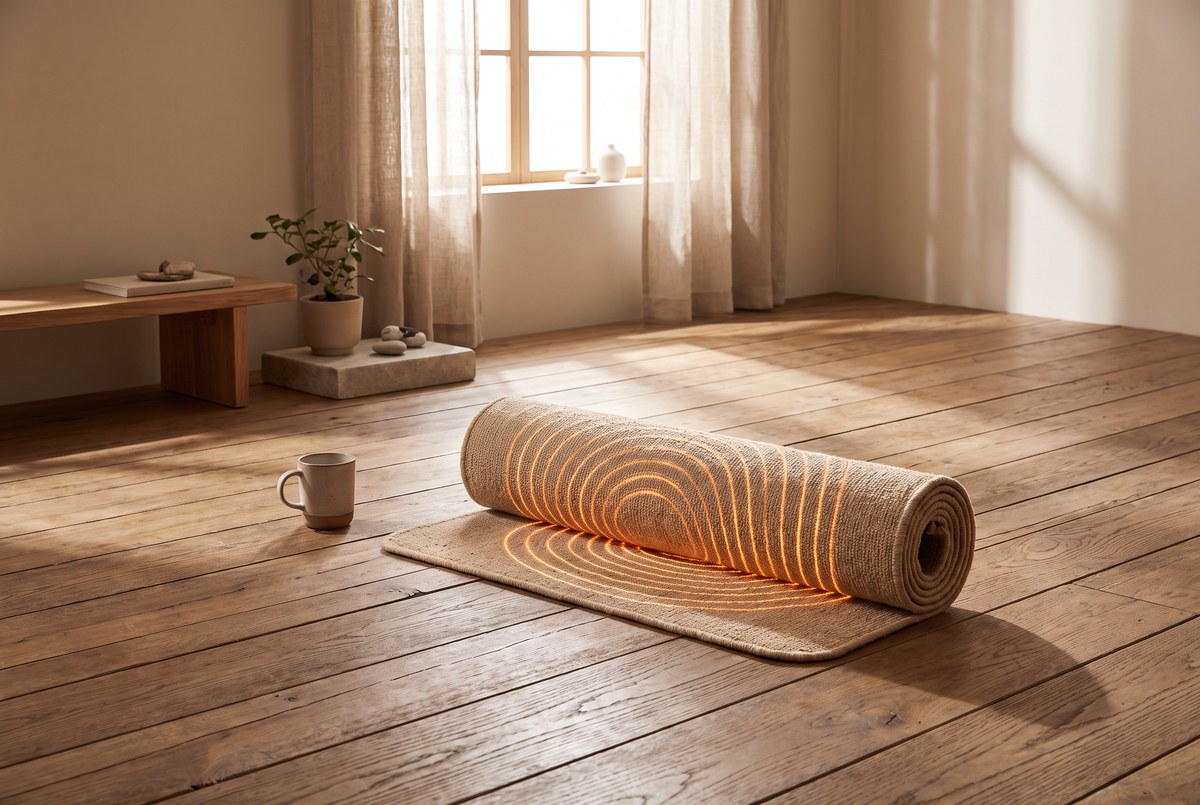
Okay, so picture the product page, because it is a marvel of the genre: a mat, roughly yoga-mat-sized, that you lie on — fully clothed, ideally twice a day — while invisible coils bathe you in low-frequency, low-intensity pulses of electromagnetic energy, fields you cannot feel, which are said (depending on the listing) to recharge your cells, deepen your sleep, unknot your joints and generally restore whatever modern life has drained — and here is the genuinely awkward part, the thing that makes this article harder to write than a simple debunking: pulsed electromagnetic fields are real, regulator-cleared medicine in exactly one orthopedic niche, and it is everything beyond that niche where the evidence thins toward speculation.
The proposed mechanism is not magic: time-varying fields are thought to influence membrane potential, ion signaling, inflammatory pathways, and osteoblast and chondrocyte activity. PEMF bone-growth stimulators carry regulatory clearance for fracture non-union — a fact that does enormous rhetorical work on wellness-mat websites.
The precise question, then: how far does the cleared, clinical evidence stretch toward the mat on the bedroom floor? The defensible answer: partway into osteoarthritis, uncertainly; not to whole-body wellness claims at all.
Where PEMF earned its clearance
The strongest evidence is in fracture healing with clinical-grade, targeted devices: a 22-trial meta-analysis found higher union rates — about 80% versus 64% with standard care. That sounds decisive until you read the updated review, which still rates the certainty as low. Real signal, honest asterisk: even the flagship, regulator-cleared use is less settled than the clearance suggests, and it belongs to targeted clinical devices applied under medical supervision — not to lying on a consumer mat.
The osteoarthritis literature: genuinely mixed
Here the trials multiply and the verdict wobbles. Meta-analyses of randomized placebo-controlled trials — a 2018 meta-analysis in BMJ Open, a 2020 meta-analysis in Physical Therapy, a 2019 record in the Journal of Rehabilitation Medicine, a 2026 systematic review of knee osteoarthritis in Medicina, and a 2026 review of magnetic-field therapies for orthopedic pain in Frontiers in Pain Research — report short-term reductions in joint pain and improvements in physical function. But effect sizes vary widely, some high-quality reviews find little or no advantage over placebo, and one detail deserves to be quoted at every sales demonstration: shorter sessions of 30 minutes or less appeared more effective than longer ones. Whatever PEMF dosing is, 'more' is not supported.
The complication: the mat itself
Now the device this article is actually about. A systematic review of whole-body PEMF mats concluded the scientific evidence for their therapeutic effects is insufficient. Claims that wellness mats improve sleep, energy or longevity rest on mechanism speculation rather than outcome trials — there are no mat trials showing those endpoints. At least one major insurer now formally classifies PEMF for pain as having insufficient supporting evidence, which is the payment system's way of reading the same literature. Safety is good overall; pacemakers, ICDs and pregnancy are the standard contraindications.
Practical meaning
Keep the two products separate in your mind: a clinical-grade, targeted PEMF device used under medical guidance for a specific indication is one thing, with trial support and its own caveats; a whole-body wellness mat promising vitality is another thing, with the mechanism and without the trials. This evidence concerns PEMF exposure as studied, not any specific commercial mat.
So the mat hums on the bedroom floor, borrowing credibility from a bone stimulator in an orthopedic clinic across town. The fields are real. The niche is real. Everything the brochure adds beyond that niche is, for now, a bet the buyer is making with eyes open — or should be.
Educational, not medical advice.
The takeaway
Clinical-grade PEMF raised fracture union rates to about 80% versus 64% with standard care in a 22-trial meta-analysis (certainty still rated low), and osteoarthritis meta-analyses report short-term pain and function benefits that some high-quality reviews cannot separate from placebo — while a systematic review of whole-body wellness mats concluded the evidence for their therapeutic effects is insufficient.
References
5 peer-reviewed sources, published 2018–2026, across 5 journals. 2 of them have a full Magellan study write-up linked below.
- J Rehabil Med · 2019 · PMID 31583420 · DOI 10.2340/16501977-2613Pulsed electromagnetic field therapy may improve physical function in knee osteoarthritis but does not significantly reduce pain or stiffness. Read our full write-up →
- Phys Ther · 2020 · PMID 32251502 · DOI 10.1093/ptj/pzaa054Pulsed electromagnetic field therapy significantly reduces pain, stiffness, and improves physical function in osteoarthritis patients in the short term. Read our full write-up →
- BMJ Open · 2018 · PMID 30552258 · DOI 10.1136/bmjopen-2018-022879
- Medicina (Kaunas) · 2026 · PMID 42075549 · DOI 10.3390/medicina62040677
- Front Pain Res (Lausanne) · 2026 · PMID 42146884 · DOI 10.3389/fpain.2026.1760721
Mechanisms and molecules in this article
Each links to its Magellan monograph — what it is, what it does, and the studies behind it.
Related reading
The spiked mat is wellness social media's favorite torture device. The underlying technique — acupressure —…
Verbatim local searches for cold plunge, red light, hyperbaric oxygen and PEMF, answered with the trials…
PEMF, red light, cold plunges, infrared saunas, hyperbaric oxygen, vibration plates, compression boots and…
All Magellan articles → · More on Recovery, Sauna & Light Therapy →
Prefer the interactive version? Open this article inside the Magellan app →