Sulforaphane and Nrf2: Promising Biology, Mixed Human Results
Broccoli-sprout sulforaphane switches on the cell's antioxidant defense system, but the human trials range from encouraging to flatly null.
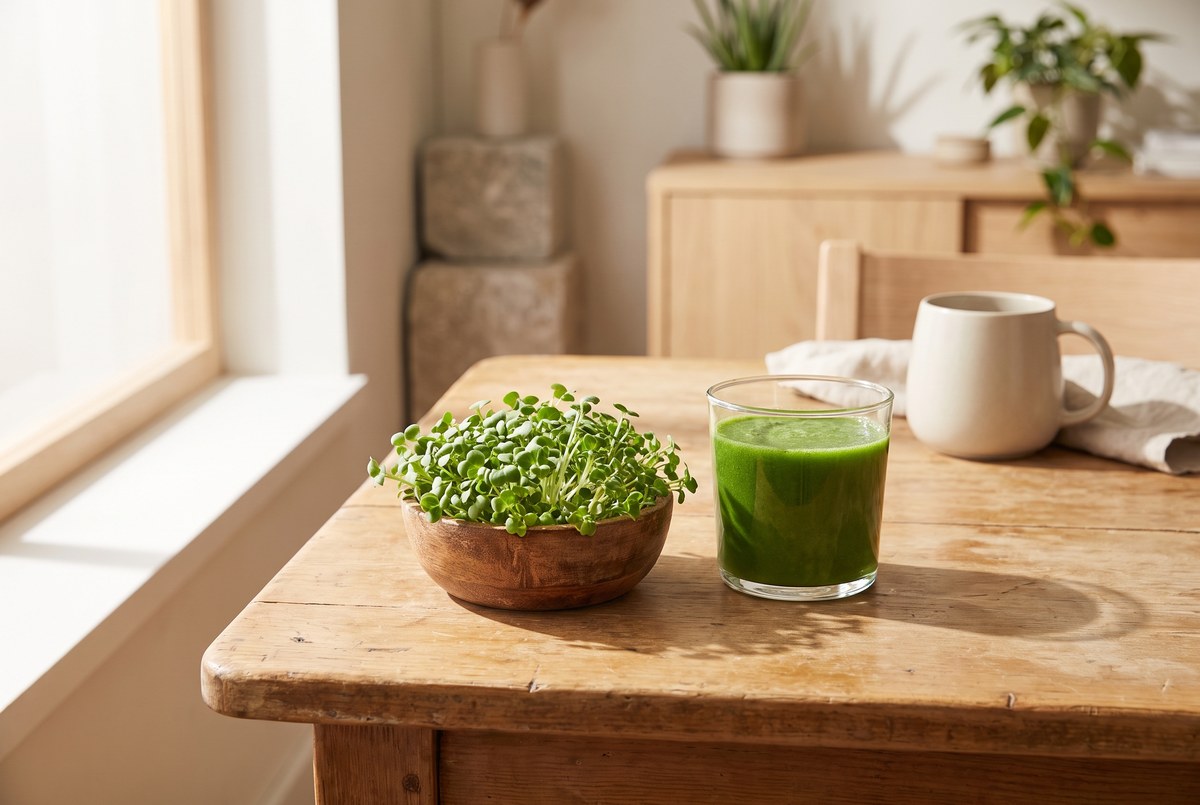
The knife comes down on the cutting board, and the chemistry begins. Inside the intact broccoli there is nothing — no sulforaphane at all. Only when the tissue is chopped, chewed, or crushed does the precursor glucoraphanin meet the enzyme myrosinase and the compound form. Heat the pan too high and the enzyme dies first.
That fragile kitchen reaction is the whole story in miniature. Sulforaphane reliably activates Nrf2, the master switch for the body's own detoxifying and antioxidant enzymes — real, elegant biology. But the human clinical evidence is uneven, absorption varies widely from product to product, and reading the literature honestly means including the trials that found nothing.
How it works, and why preparation matters
Sulforaphane is not present in intact broccoli. It is produced when the precursor glucoraphanin meets an enzyme called myrosinase, which is released only when plant tissue is damaged by chopping, chewing, or crushing. This is why preparation matters enormously. Many supplements supply glucoraphanin but lack active myrosinase, and a randomized crossover study in healthy men found that absorption of sulforaphane was far lower from a myrosinase-free powder than from fresh sprouts; combining the two synergistically boosted early absorption (Cramer et al., Br J Nutr). Cooking is a further complication, since high heat can deactivate myrosinase. In plain terms, a capsule's label dose can substantially overstate what your body actually absorbs and converts.
The chemoprevention signal
The strongest human work comes from cancer-prevention research in highly exposed populations. In a 12-week randomized trial of 291 adults in Qidong, China, an area characterized by substantial air pollution and elevated cancer risk, a broccoli-sprout beverage significantly increased urinary excretion of the detoxified forms of the airborne carcinogen benzene (up roughly 61%) and the irritant acrolein, though not crotonaldehyde (Egner et al., Cancer Prev Res). Importantly, bioavailability held steady across the full 12 weeks, and the benzene effect was larger in people with a functioning GSTT1 gene. This is a credible demonstration that sulforaphane engages its detox pathway in people, though it measures carcinogen handling, a chemoprevention marker, rather than cancer rates themselves. Because chronic exposure to these pollutants is linked to lung cancer and cardiopulmonary disease, the finding is best read as a plausible mechanism by which broccoli compounds might lower long-term risk, not as proof that they prevent any specific cancer.
The mixed and null results
Other trials temper the enthusiasm. A randomized, double-blind, multicenter trial of sulforaphane in 108 children with autism spectrum disorder in China found no significant change on caregiver-rated symptom scales, the more conservative measure, even though clinician-rated scales improved and about a third of participants showed a meaningful response (Ou et al., J Autism Dev Disord). The authors themselves called the inconsistency between raters a reason for caution and for more trials. And a 12-week randomized trial in 45 women, testing whether a sulforaphane-rich beverage affects the thyroid, found no change in thyroid-stimulating hormone, free thyroxine, thyroglobulin, or autoimmune markers (Chartoumpekis et al., Food Chem Toxicol). That is reassuring for safety, but it is also a clear example of a clean null result where an effect had been hypothesized.
What to make of it
Sulforaphane reliably activates Nrf2 and measurably boosts carcinogen detoxification, which is more than can be said for many popular compounds. But the leap from that mechanism to durable clinical benefit, whether for cognition, metabolic disease, or longevity, is not yet supported by large, consistent human trials. Several promising signals sit alongside genuine nulls, the studies are often small and short, and bioavailability varies widely from one product to the next. A useful rule of thumb when you read a sulforaphane headline: ask whether the trial measured a real-world outcome people care about or only a laboratory marker, whether it was randomized and placebo-controlled, and how many people were enrolled. By those standards, the compound is promising and well-tolerated, but far from established as a therapy.
Educational, not medical advice. If you want sulforaphane, fresh or lightly steamed broccoli sprouts are the most reliable source; discuss supplements with a clinician, since label doses and actual absorption often differ.
The takeaway
Sulforaphane convincingly switches on the Nrf2 detox pathway, but human outcomes are mixed, some trials are null, and absorption depends heavily on preparation.
Discussed here: Broccoli Sprout Sulforaphane
Moderate evidenceWhat that grade means: Several human studies point the same way, but with limits — size, duration, funding, or mixed results.
Typical listed price $11.19 — check the live price before buying.
Read the full evidence page → View on Amazon ↗
See every graded product in Nutraceuticals & Cellular Energizers →
References
4 peer-reviewed sources, published 2012–2024, across 4 journals. Every citation links to its PubMed record.
- Cancer Prev Res (Phila) · 2014 · PMID 24913818 · DOI 10.1158/1940-6207.CAPR-14-0103
- J Autism Dev Disord · 2024 · PMID 36427174 · DOI 10.1007/s10803-022-05784-9
- Food Chem Toxicol · 2019 · PMID 30735751 · DOI 10.1016/j.fct.2019.02.004
- Br J Nutr · 2012 · PMID 21910945 · DOI 10.1017/S0007114511004429
Mechanisms and molecules in this article
Each links to its Magellan monograph — what it is, what it does, and the studies behind it.
Related reading
Broccoli-sprout sulforaphane flips one of biology's master antioxidant switches. Human trials show modest…
Astaxanthin, the carotenoid that colors salmon, reliably shifts oxidative-stress biomarkers in human trials…
Blood ergothioneine falls with age, and low levels track with cognitive decline, cardiovascular disease,…
All Magellan articles → · More on Nutraceuticals & Cellular Energizers →
Prefer the interactive version? Open this article inside the Magellan app →