Blueberry & Walnut Brain Bowl
Berry anthocyanins and walnut omega-3 are the two most studied food components in cognitive aging research — and they happen to taste good together.
- Mechanism
- Brain health
- Yield
- serves 2
- Ingredients
- 6
- Steps
- 4
- Cited studies
- 4
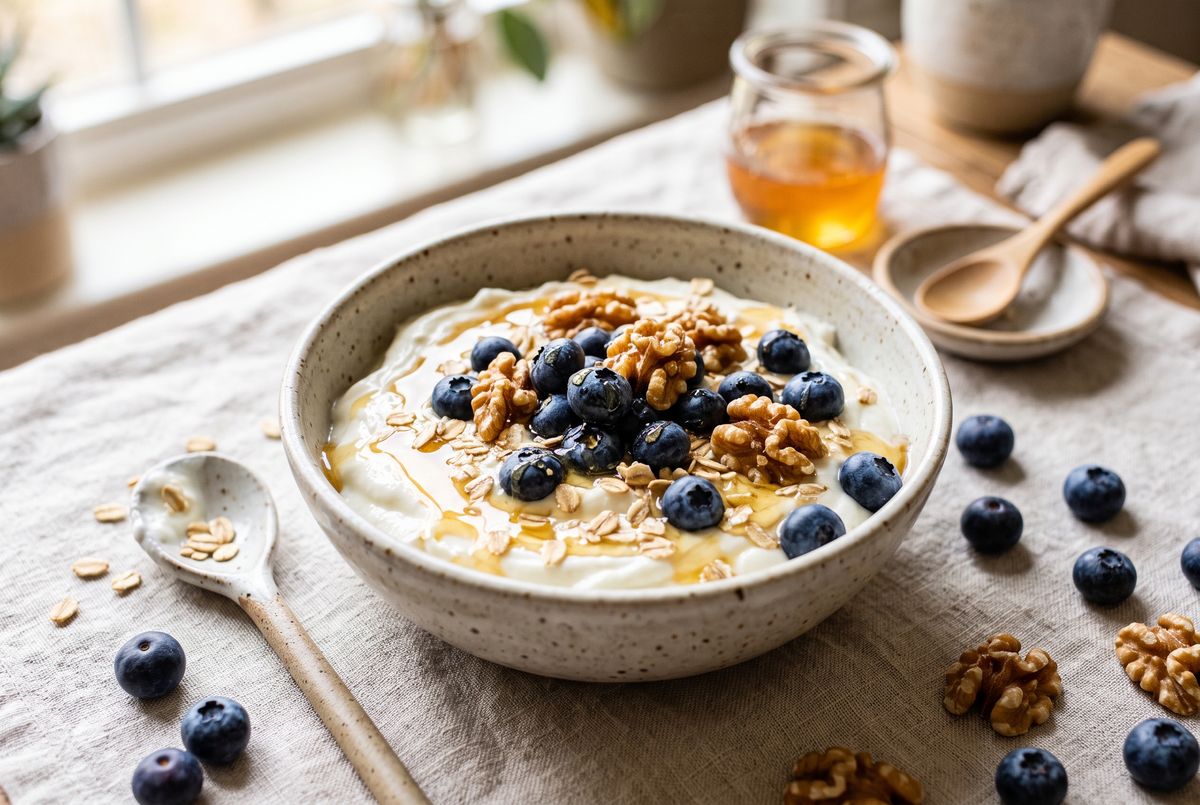
Blueberries and walnuts are the two foods that come up most often in research on diet and cognitive aging, which says something about where the attention has gone rather than proving that either one protects your memory. Polyphenol-rich colorful foods have been reviewed for their effects on vascular and cognitive outcomes, and in a substudy of a large Mediterranean-diet trial (British Journal of Clinical Pharmacology, 2017), higher polyphenol intake went with lower inflammatory markers related to artery disease.
Flavanols from berries and grapes have been examined for cognitive benefit too, though the randomized evidence on grape polyphenols has mostly measured cardiovascular endpoints — a meta-analysis of randomized trials of grape seed extract (Medicine, 2016) looked at blood pressure, not memory. The honest summary is that this evidence is largely observational and short-term: supportive of eating this way, not curative.
Why this works
Blueberries carry the anthocyanins that put berries at the center of this research, and walnuts bring two things at once: ellagitannins, which gut bacteria act on — a study tracking walnut intake in healthy adults (Nutrients, 2019) found people differ a lot in how their microbes handle them — and the plant omega-3 ALA. Ground flaxseed is the other main plant source of ALA, reviewed alongside the rest in a survey of vegetarian omega-3 sources (Critical Reviews in Food Science and Nutrition, 2014), so a spoonful stirred through the yogurt doubles up on it. The yogurt is the base that makes this breakfast rather than a garnish, and toasted oats add texture.
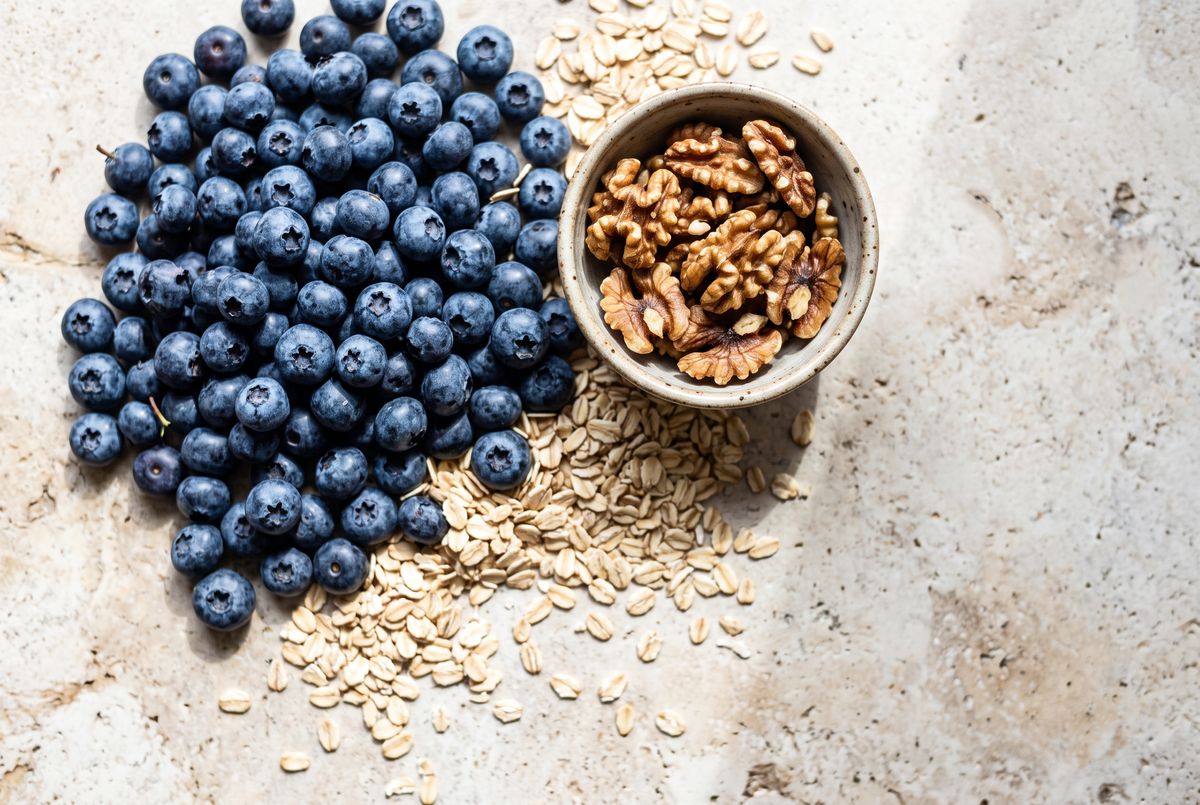
Ingredients · serves 2
- 1½ cups plain Greek yogurt or skyr
- 1 cup fresh blueberries
- ⅓ cup walnuts, toasted and chopped
- 2 tbsp rolled oats
- 1 tbsp ground flaxseed
- 1 tsp honey (optional), cinnamon
Method
- Toast the walnuts and oats together in a dry pan for 3 minutes until fragrant, then cool.
- Spoon the yogurt into bowls and stir the ground flax through it.
- Top with the blueberries, toasted walnuts and oats.
- Add honey only if you need it, and finish with cinnamon.
Getting the most from it
Frozen blueberries work just as well here and cost a fraction of fresh, and the anthocyanins hold up to freezing, so buy a bag and stop thinking about season. Toast the walnuts and oats only until fragrant, then cool them fully or they will soften in the yogurt. Buy flaxseed already ground and keep it in the fridge. Taste before you reach for the honey — ripe berries usually make it unnecessary.
Nutrition Facts
Calculated for one serving from USDA FoodData Central values for the ingredients above. An estimate, not a lab analysis.
How this was calculated. Each ingredient was converted to grams, matched to a food in USDA FoodData Central (SR Legacy, April 2018), summed, and divided by 2 servings. Cooking losses, draining and the real size of a handful all move these numbers, so treat them as a good estimate rather than a measurement. Added sugars count honey, maple syrup and table sugar only; sugar from whole fruit is not an added sugar.
- Yogurt, Greek, plain, whole milk
- Blueberries, raw
- Nuts, walnuts, english
- Cereals, oats, regular and quick, not fortified, dry
- Seeds, flaxseed
- Honey
21 PubMed citations
Randomized trials and meta-analyses indicate that grape seed extract can modestly lower blood pressure — pooled…
22 PubMed citations
Across large randomized trials and meta-analyses, marine omega-3s reliably reduce serum triglycerides (roughly 15% at…
20 PubMed citations
In human research, urolithin A supplementation is safe and bioavailable and improves markers of mitochondrial health.…
The research behind this recipe
Primary sources for the claims above. Effects reported in these papers describe the compound or the dietary pattern studied — not this specific dish.
More brain, eyes & sleep recipes
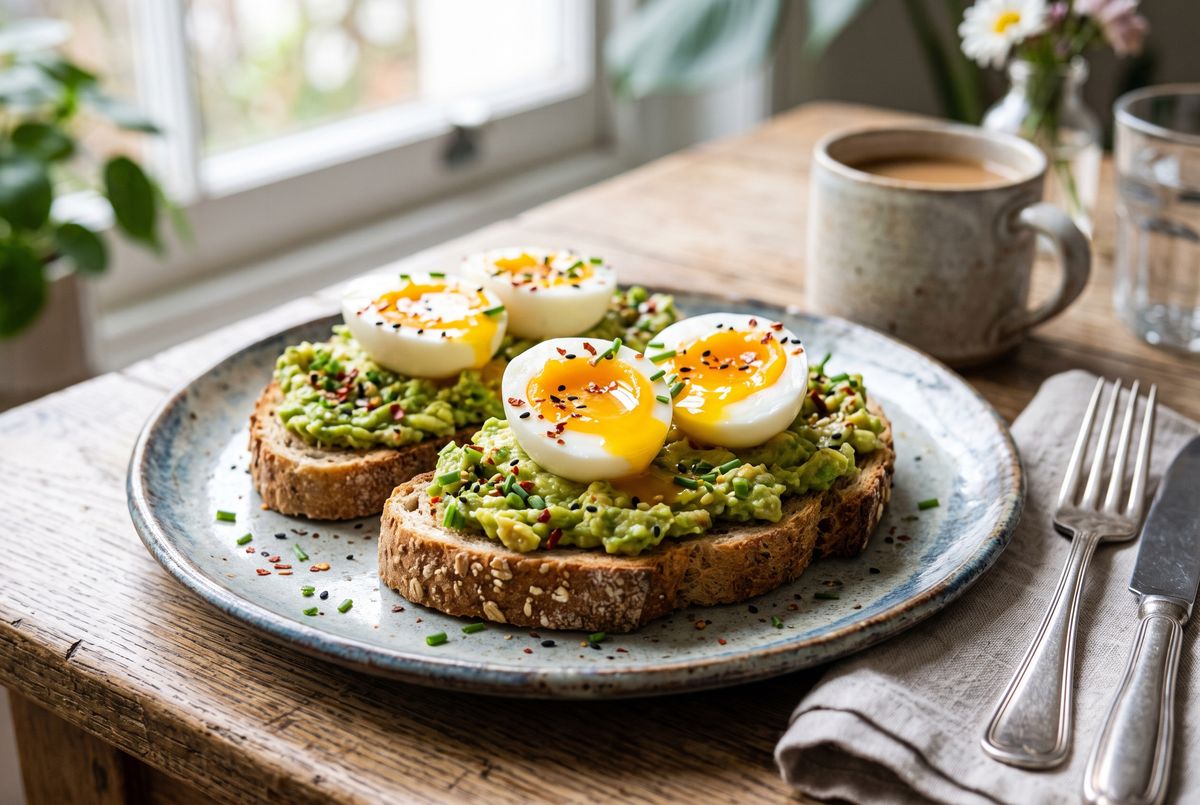 Choline & brain
Egg yolk is the densest everyday source of phosphatidylcholine — and the same yolk carries the lutein your retina concentrates.
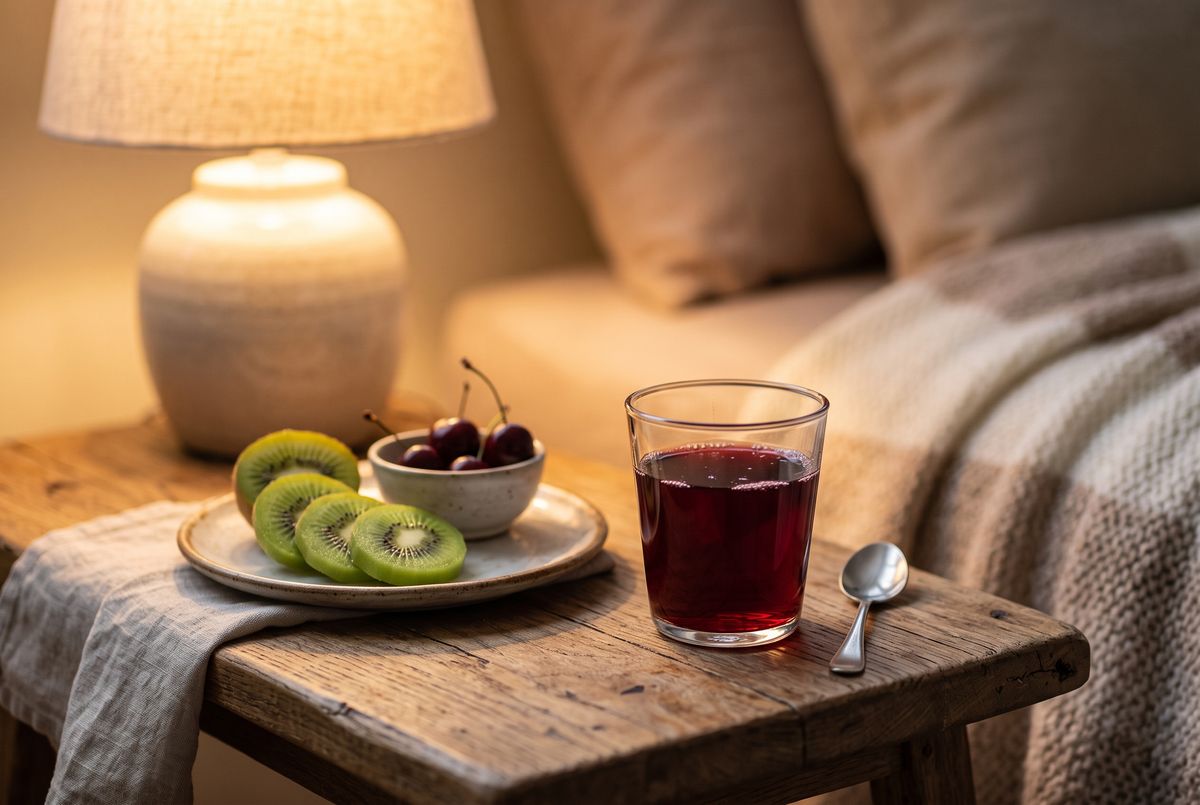 Sleep
SleepMontmorency cherry juice is the sleep intervention with the most actual trial data behind it — and the results are real but…
 Choline & brain
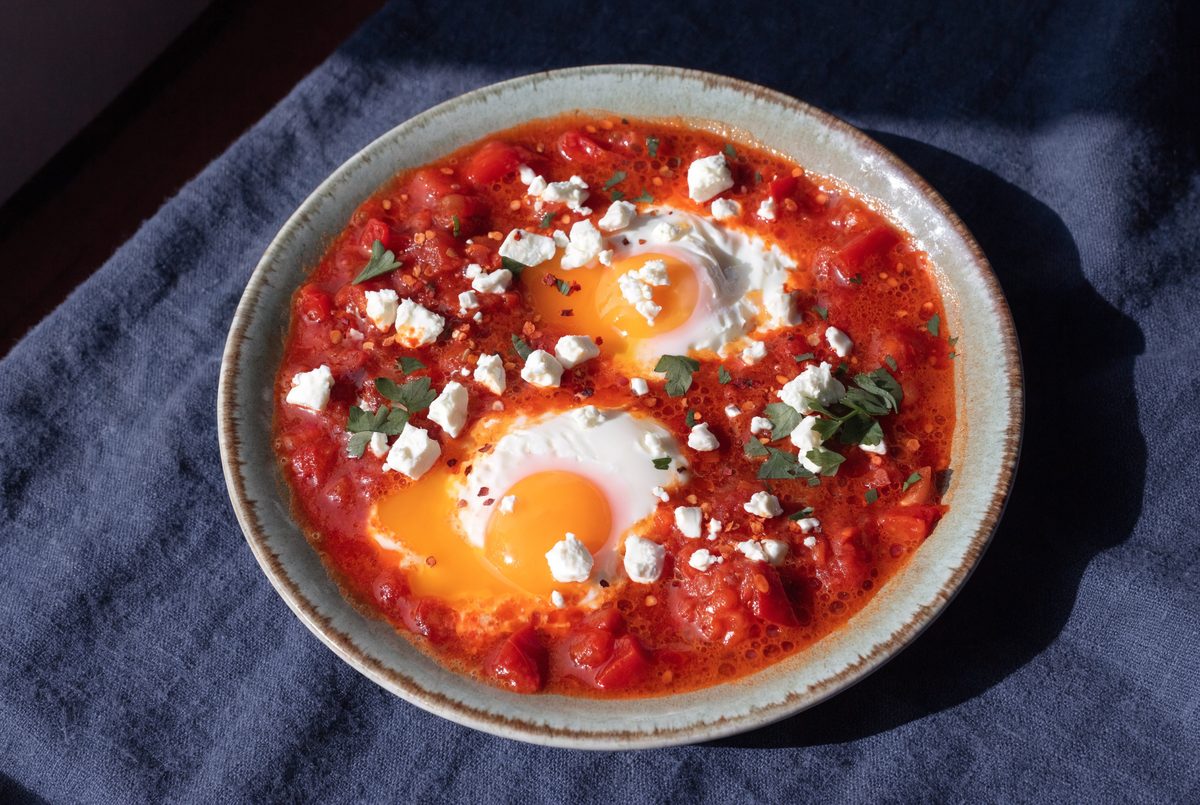
Two eggs deliver roughly 300 mg of choline — most of a day's target — poached in a tomato-pepper sauce whose cooked lycopene is…
Keep reading
Blood pressureUrolithin AOmega-3Urolithin A: the evidenceOmega-3: the evidenceUrolithin A (Mitopure) and MuscleThe supplement guideResearch mapPathway universe