Matcha–Chia Brain Pudding with Kiwi
Matcha brings EGCG and L-theanine, chia brings ALA and magnesium, and kiwi has a small sleep study of its own — a no-cook pudding whose caffeine is worth taking seriously if you eat it at night.
- Mechanism
- Brain health
- Cited studies
- 5
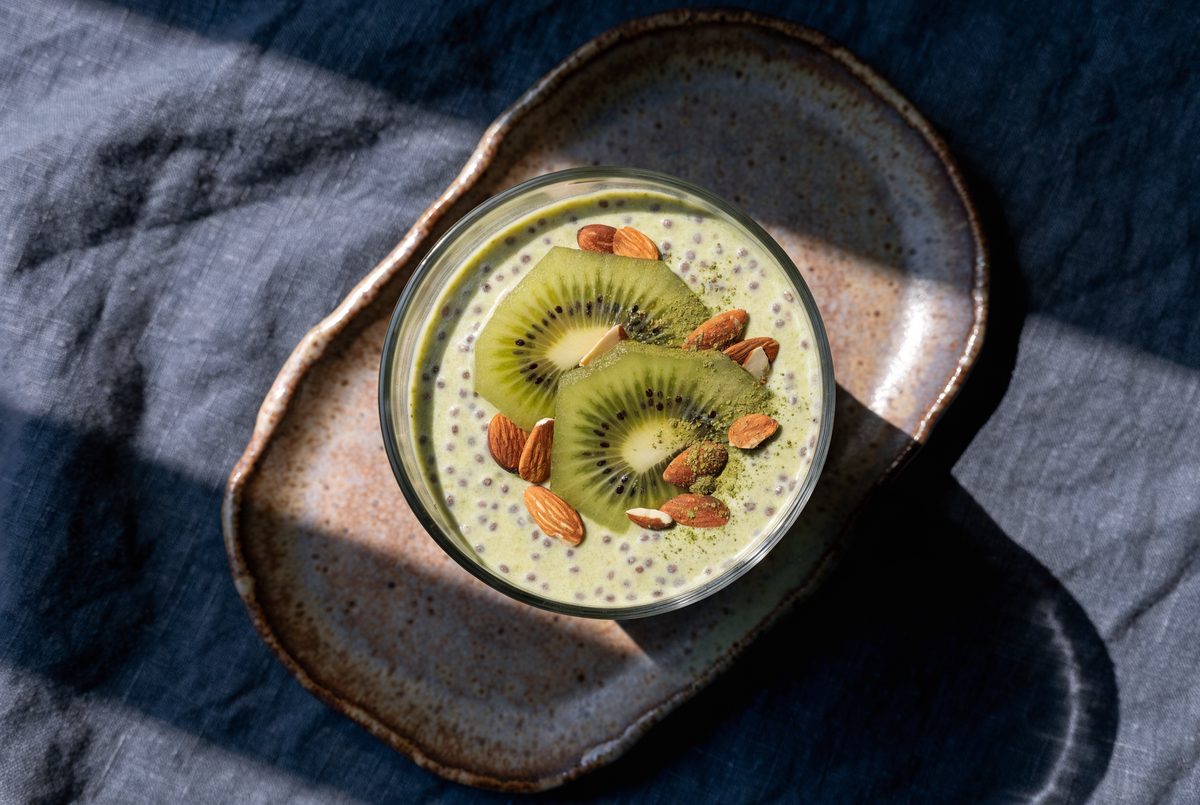
Matcha is powdered whole green tea leaf, so you consume the leaf rather than an infusion — more EGCG, more L-theanine, and more caffeine per gram than steeped tea. A systematic review of green tea's effects on the brain (Phytomedicine, 2017) concluded it can reduce anxiety and improve memory and attention, with the caveat that the clearest effects come from caffeine and L-theanine acting together rather than from any single ingredient. The long-range signal is observational: in a cross-sectional study of elderly Japanese adults (The American Journal of Clinical Nutrition, 2006), drinking two or more cups of green tea daily was associated with roughly half the prevalence of cognitive impairment — the kind of finding that generates hypotheses rather than settles them.
The rest of the glass leans toward evening. Kiwi has a small but real sleep literature: in a four-week study (Asia Pacific Journal of Clinical Nutrition, 2011), adults eating two kiwifruit an hour before bed fell asleep faster and slept longer — though the trial had no control group, so expectation effects are uncontrolled. Chia seeds are a leading source of ALA, which a meta-analysis (The American Journal of Clinical Nutrition, 2012) linked to modestly lower cardiovascular risk, and they carry magnesium, which improved sleep measures in a randomized trial in elderly adults with insomnia (Journal of Research in Medical Sciences, 2012). If you want this as a bedtime pudding, halve the matcha or leave it out of the evening batch — the caffeine is genuine.
Why this works
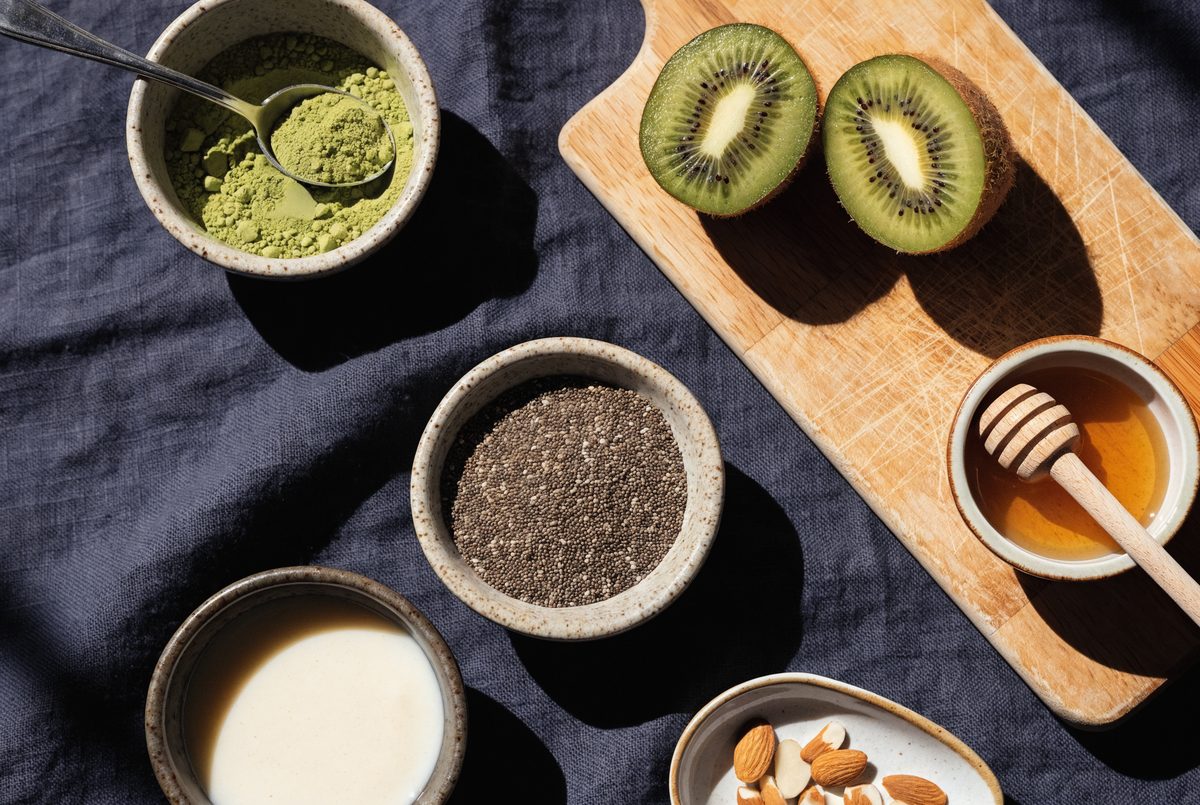
Chia seeds gel with almond milk into pudding with no cooking, delivering ALA, magnesium, and about 10 g of fiber per serving. Matcha supplies EGCG plus L-theanine, the pairing behind green tea's calm-alert reputation. Kiwi on top adds vitamin C, folate, and the serotonin precursors proposed as the mechanism for its sleep findings, while honey and toasted almonds handle sweetness and crunch — with still more magnesium in the almonds. Morning or evening, it is a low-sugar pudding built from four foods with actual literatures.
How to make it
- Sift 2 teaspoons matcha into a splash of warm almond milk and whisk to a smooth, lump-free paste.
- Whisk the paste into 2 cups almond milk with 1½ tablespoons honey.
- Stir in ½ cup chia seeds, wait 10 minutes, then stir again thoroughly to break up clumps.
- Refrigerate at least 4 hours or overnight, until thick enough to hold a spoon trail.
- Layer into glasses and top with sliced kiwi, toasted almond slivers, and a faint sift of matcha.
Makes 4 servings; keeps 4 days chilled. A full serving carries caffeine comparable to about half a cup of coffee — plan accordingly.
20 PubMed citations
For weight and metabolic syndrome, meta-analyses of randomized trials indicate that green tea catechins produce small…
23 PubMed citations
The best-supported clinical use of ALA is for symptomatic diabetic peripheral neuropathy: randomized trials and…
19 PubMed citations
In small randomized trials, magnesium-L-threonate improved composite cognition versus placebo in older adults with…
The research behind this recipe
Primary sources for the claims above. Effects reported in these papers describe the compound or the dietary pattern studied — not this specific dish.
More brain, eyes & sleep recipes
 Choline & brain
Egg yolk is the densest everyday source of phosphatidylcholine — and the same yolk carries the lutein your retina concentrates.
 Sleep
SleepMontmorency cherry juice is the sleep intervention with the most actual trial data behind it — and the results are real but…
 Brain health
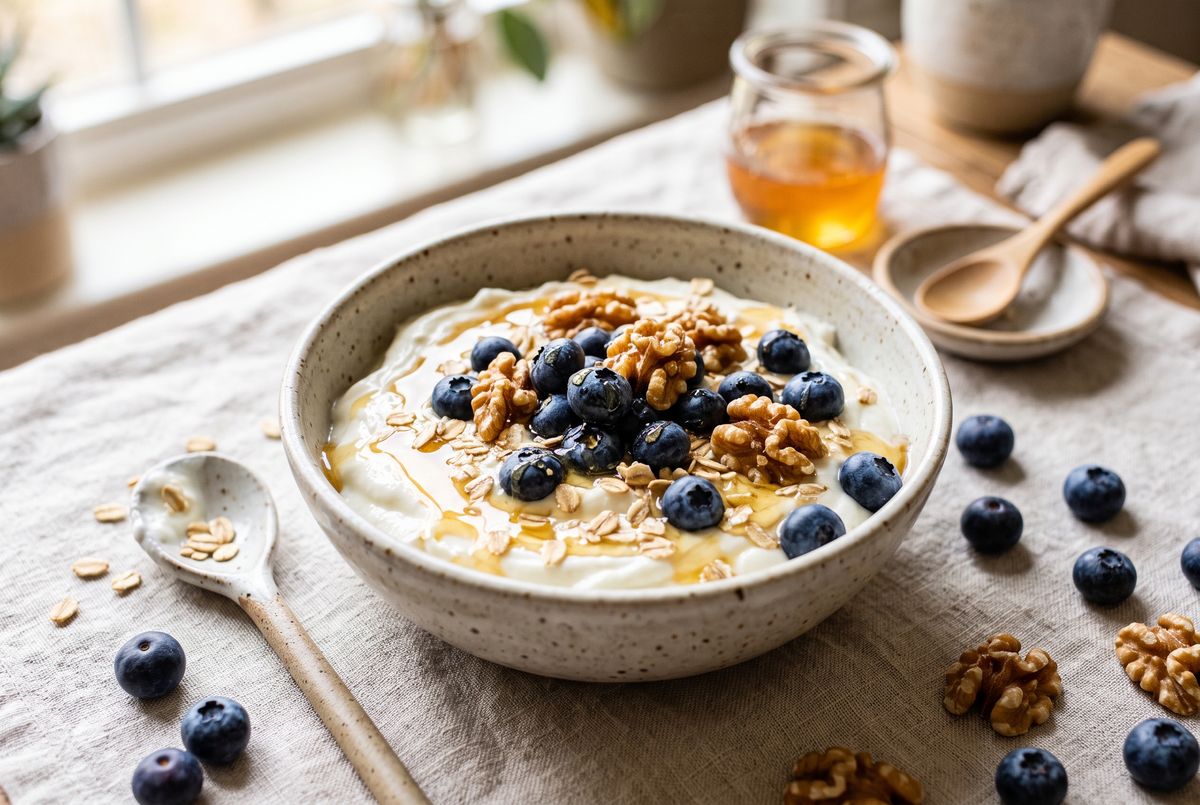
Berry anthocyanins and walnut omega-3 are the two most studied food components in cognitive aging research — and they happen to…