Purple Sweet Potato Thai Curry
Purple sweet potatoes carry the same anthocyanins as berries plus serious potassium, simmered with ginger and kale in a coconut curry — an honest extrapolation from berry evidence to a violet, satisfying bowl.
- Mechanism
- Brain health
- Cited studies
- 4
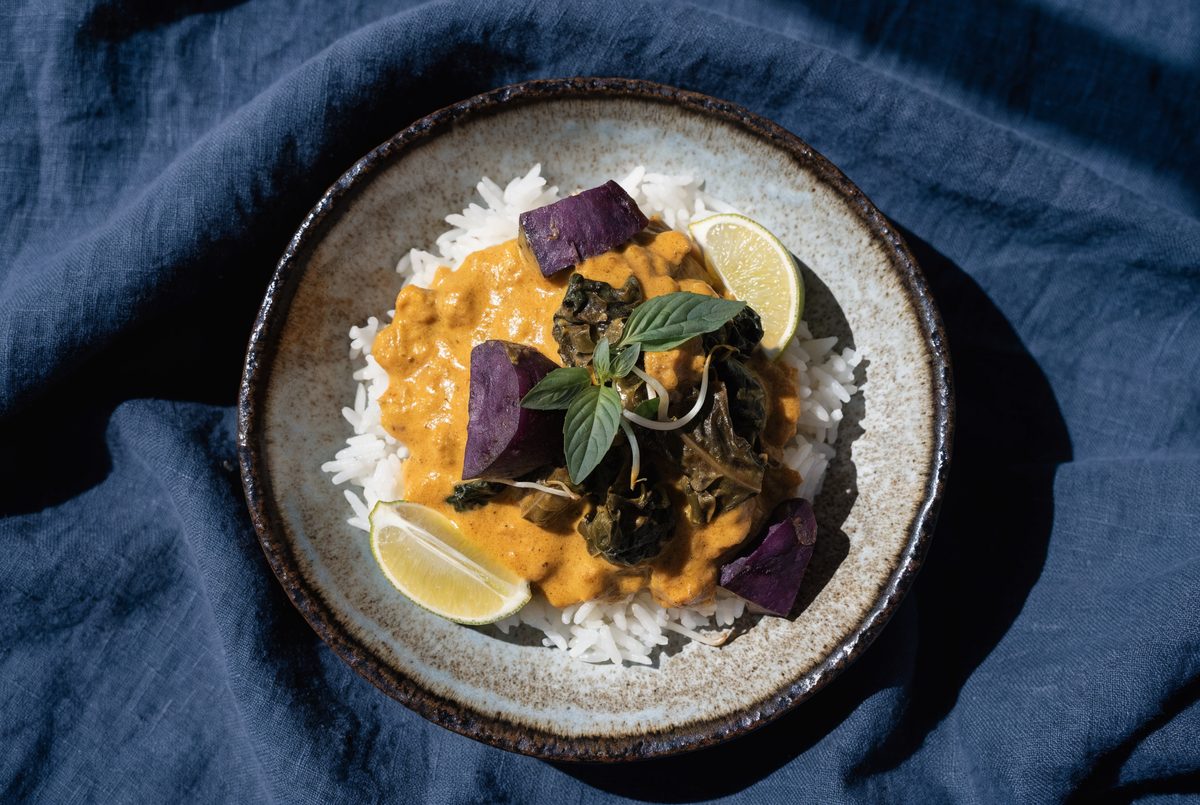
Purple sweet potatoes owe their color to anthocyanins, the same pigment family as blueberries and tart cherries — and the family, rather than the potato itself, is where the evidence lives. In a large prospective cohort of younger women (Circulation, 2013), the highest anthocyanin intakes were associated with a 32% lower risk of myocardial infarction. In the Nurses' Health Study (Annals of Neurology, 2012), higher intake of berries and flavonoids went with measurably slower cognitive decline. Both findings are observational and both centered on berries — so applying them to a purple tuber is an extrapolation across foods that share a compound class, and it should be labeled as exactly that.
The rest of the bowl stands on broader footing. Sweet potatoes of any color are dense in potassium, and a systematic review and meta-analysis (BMJ, 2013) found higher potassium intake associated with lower blood pressure and a 24% lower risk of stroke. Fresh ginger carries gingerols, with a systematic review of randomized trials (British Journal of Anaesthesia, 2000) supporting it for nausea — modest territory, honestly held. Lacinato kale wilted in at the end adds lutein, folate, and fiber. A curry is not a clinical intervention; it is a genuinely pleasant way to eat a pile of plants with a defensible nutrient profile.
Why this works
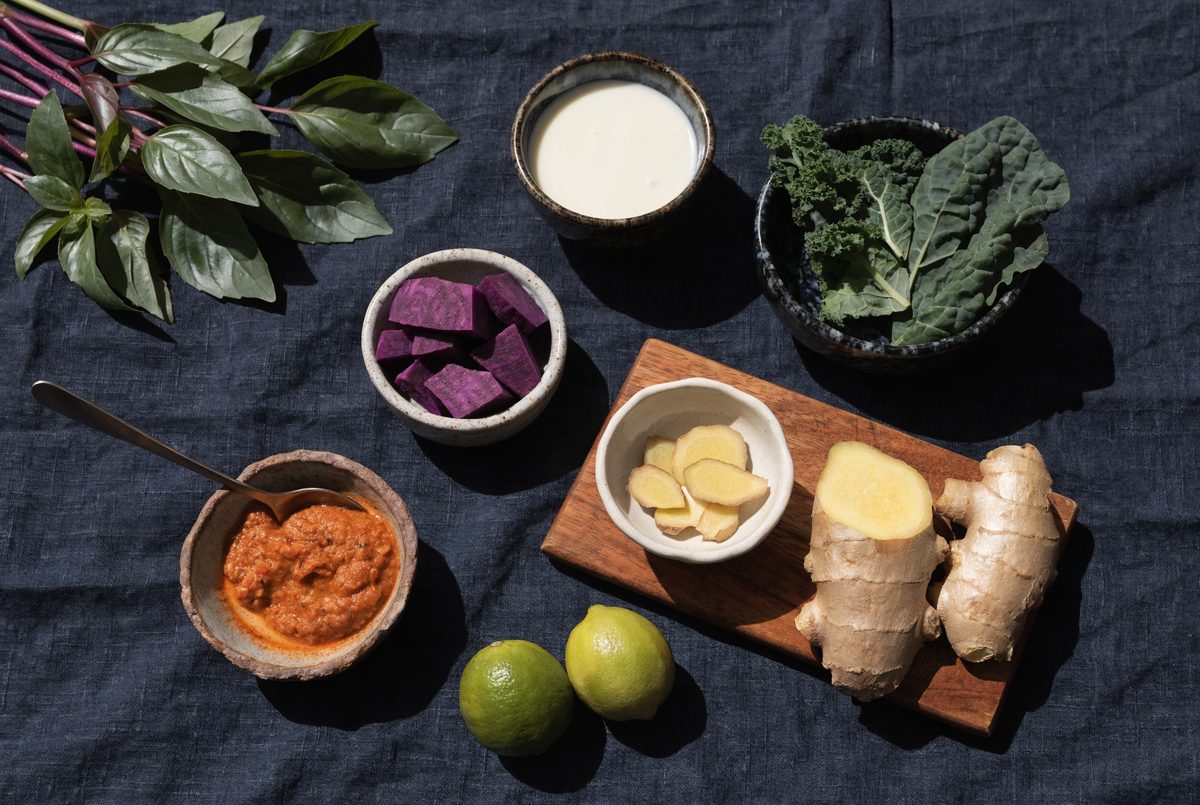
Purple sweet potatoes bring anthocyanins plus potassium in one starch, and simmering them in coconut milk matters because anthocyanins and the curry paste's fat-soluble aromatics absorb better with fat — though coconut milk's saturated fat is why the recipe uses one can, not two. Thai red curry paste concentrates chilies, galangal, and lemongrass; fresh ginger doubles down on gingerols. Lime juice added off the heat preserves its vitamin C and brightens the anthocyanins — which literally shift color with acidity — and Thai basil finishes the bowl with its own polyphenols.
How to make it
- Peel 1½ lb purple sweet potatoes and cut into 1-inch chunks.
- In a wide pot, fry 3 tablespoons Thai red curry paste and 1 tablespoon minced ginger in the thick top layer of a 14-oz can of coconut milk for 2 minutes, until fragrant and split.
- Add the rest of the coconut milk, 1 cup water or broth, and the sweet potatoes; simmer covered 15–18 minutes until just tender.
- Stir in 3 cups sliced lacinato kale and cook 2–3 minutes until wilted but still deep green.
- Off the heat, add the juice of 1 lime and a handful of Thai basil; taste and adjust with tamari or a pinch of sugar.
- Serve over jasmine rice with lime wedges.
Serves 4; the violet color leaches slightly into the sauce overnight, which looks dramatic and changes nothing nutritionally.
The research behind this recipe
Primary sources for the claims above. Effects reported in these papers describe the compound or the dietary pattern studied — not this specific dish.
More brain, eyes & sleep recipes
 Choline & brain
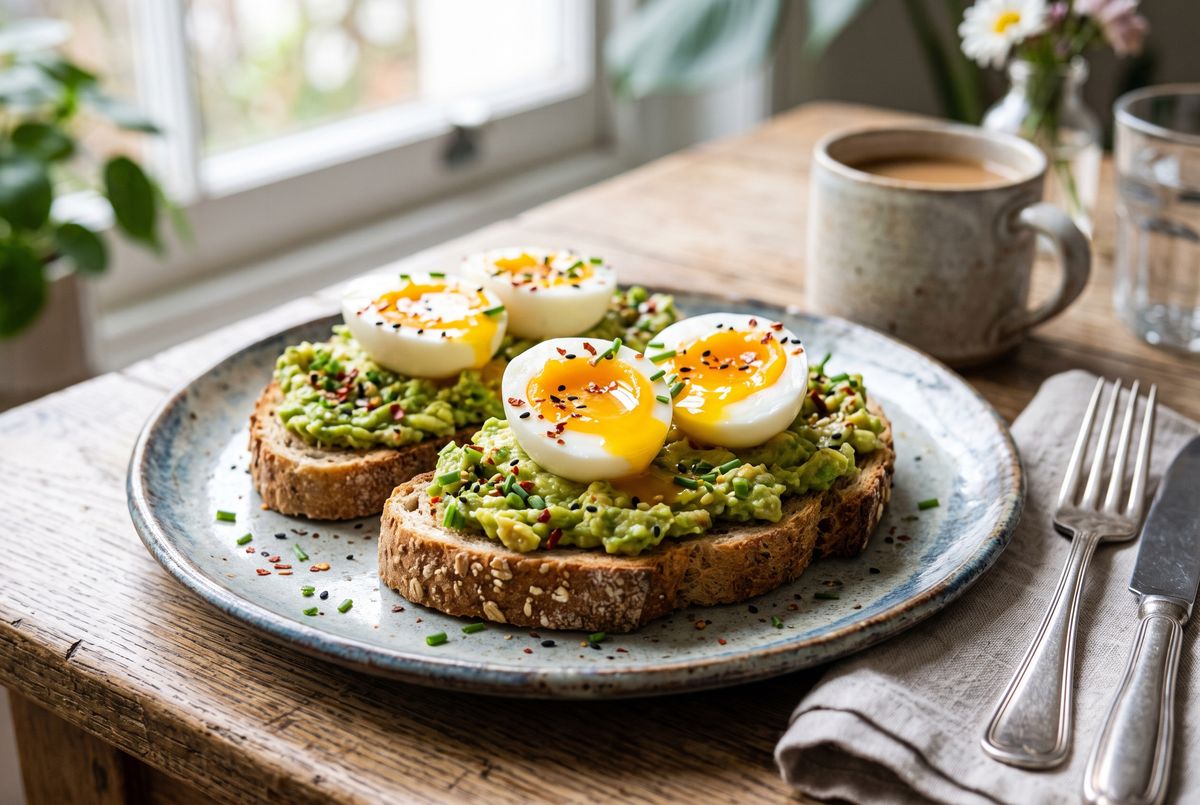
Egg yolk is the densest everyday source of phosphatidylcholine — and the same yolk carries the lutein your retina concentrates.
 Sleep
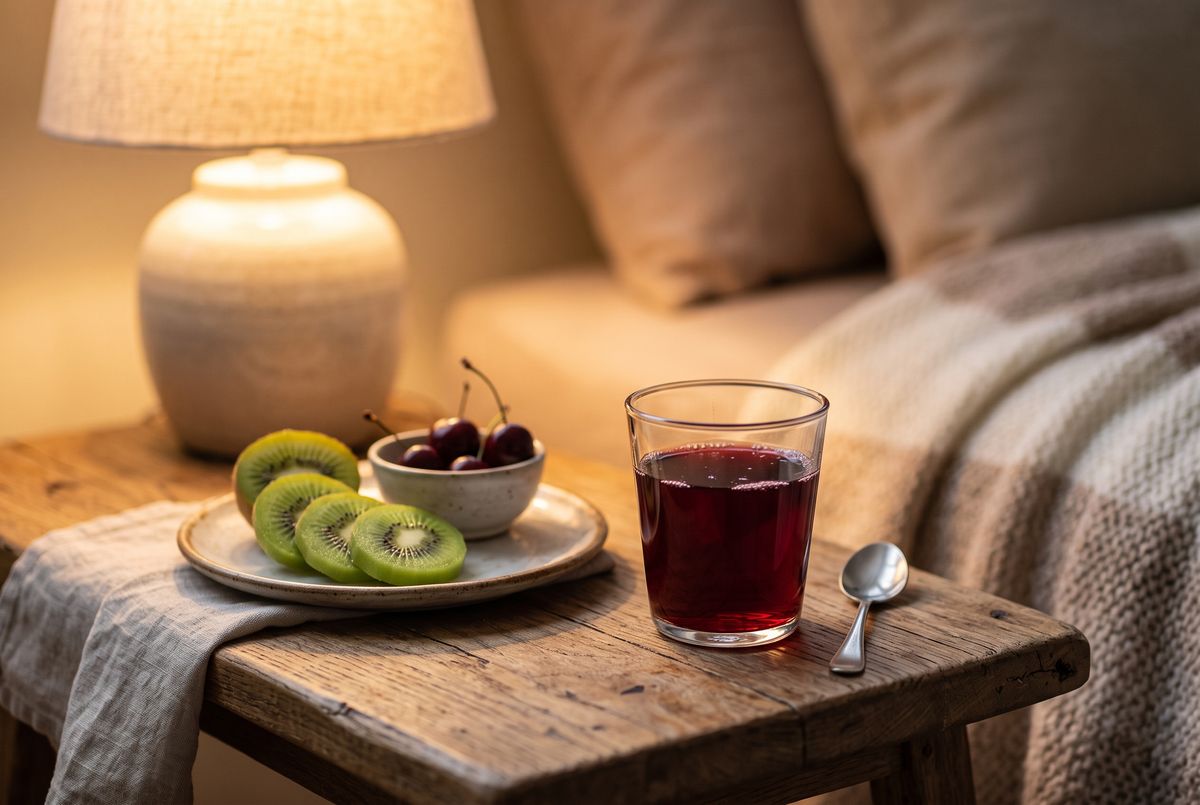
SleepMontmorency cherry juice is the sleep intervention with the most actual trial data behind it — and the results are real but…
 Brain health
Berry anthocyanins and walnut omega-3 are the two most studied food components in cognitive aging research — and they happen to…
Keep reading
Blood pressureVitamin CDietary fiberMethylfolateThe supplement guideResearch mapPathway universe