Sardine Puttanesca
Sardines deliver about a gram of EPA and DHA per tin, and the olive oil–tomato–caper sauce echoes the diet pattern that cut cardiovascular events by roughly 30% in the PREDIMED trial.
- Mechanism
- Brain health
- Cited studies
- 5
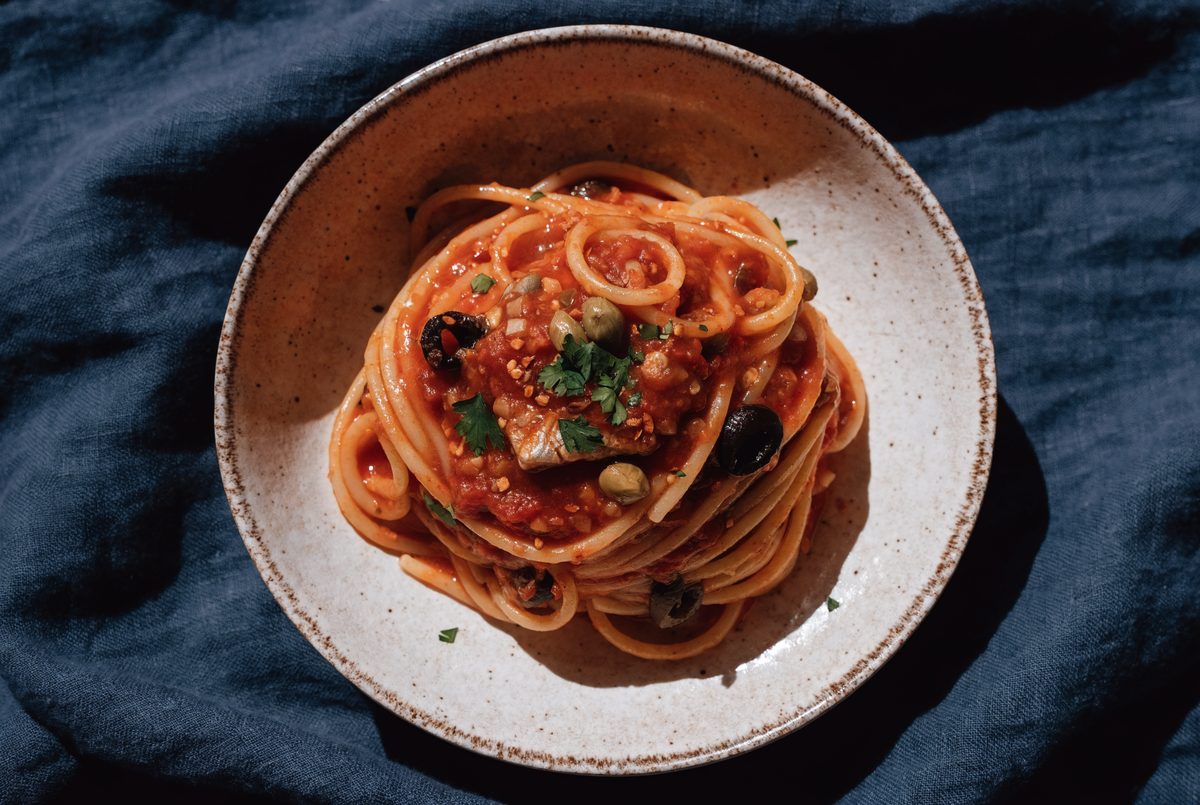
Sardines are the pragmatic answer to the fish question: high in EPA and DHA, low on the food chain, and low in mercury. A landmark risk-benefit analysis (JAMA, 2006) concluded that modest fish consumption — one to two servings of oily fish a week — was associated with a 36% lower risk of coronary death, and that for adults the benefits of eating fish outweigh the contaminant risks. The supplement story is more sobering: in the VITAL randomized trial (The New England Journal of Medicine, 2019), 1 g per day of marine omega-3s did not significantly reduce major cardiovascular events overall, though myocardial infarction was lower in secondary analyses. Whole fish remains the better-supported habit.
The sauce is quietly the most Mediterranean thing on the plate. In the PREDIMED trial (The New England Journal of Medicine, 2018), a Mediterranean diet supplemented with extra-virgin olive oil reduced major cardiovascular events by about 30% versus a lower-fat control — one of the few dietary patterns with randomized outcome data. Cooked tomatoes deliver lycopene in its most absorbable form, and meta-analyses of intervention trials (Maturitas, 2011) found lycopene at higher doses lowered LDL cholesterol and systolic blood pressure. Capers, ounce for ounce, are the densest food source of quercetin, a flavonoid whose trial evidence sits at supplement doses (Journal of the American Heart Association, 2016). Strong pattern-level evidence, thinner single-meal evidence — which is true of every recipe.
Why this works
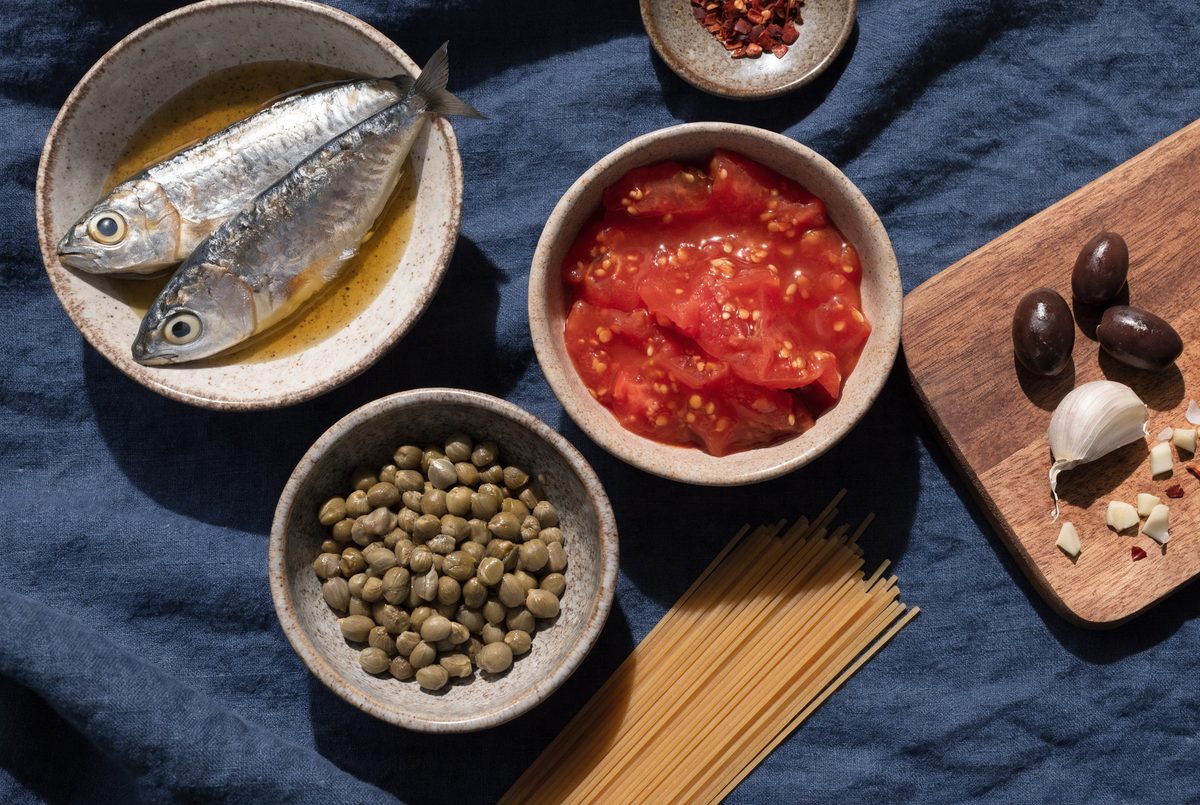
Tinned sardines supply roughly 1 g of EPA and DHA per can along with calcium from the soft bones. Crushed tomatoes simmered in extra-virgin olive oil maximize lycopene absorption, since it is fat-soluble and heat frees it from the tomato matrix; the oil also carries hydroxytyrosol and oleocanthal, the olive polyphenols. Garlic crushed and rested forms allicin, while capers and kalamata olives add quercetin and more olive polyphenols and do the salting, so no extra salt is needed. Whole-wheat spaghetti keeps the fiber and slows the starch.
How to make it
- Cook 12 oz whole-wheat spaghetti in well-salted water until just shy of al dente; reserve a cup of pasta water.
- Meanwhile, warm 3 tablespoons olive oil over medium heat with 4 crushed garlic cloves (rested 10 minutes) and a pinch of chili flakes until fragrant, about 1 minute.
- Add one 28-oz can crushed tomatoes, 2 tablespoons drained capers, and ⅓ cup halved kalamata olives; simmer 10–12 minutes.
- Fold in two tins of drained sardines, breaking them into large flakes, and warm through gently so they hold shape.
- Toss with the pasta, loosening with pasta water, and finish with parsley, more chili flakes, and a thread of raw olive oil.
Serves 4; the sauce keeps 3 days and arguably improves overnight.
22 PubMed citations
Across large randomized trials and meta-analyses, marine omega-3s reliably reduce serum triglycerides (roughly 15% at…
22 PubMed citations
In prospective cohort studies and pooled analyses spanning dozens of cohorts, higher blood levels of EPA + DHA have…
25 PubMed citations
Meta-analyses of randomized trials indicate quercetin produces a small blood-pressure reduction—on the order of 2–3…
The research behind this recipe
Primary sources for the claims above. Effects reported in these papers describe the compound or the dietary pattern studied — not this specific dish.
More brain, eyes & sleep recipes
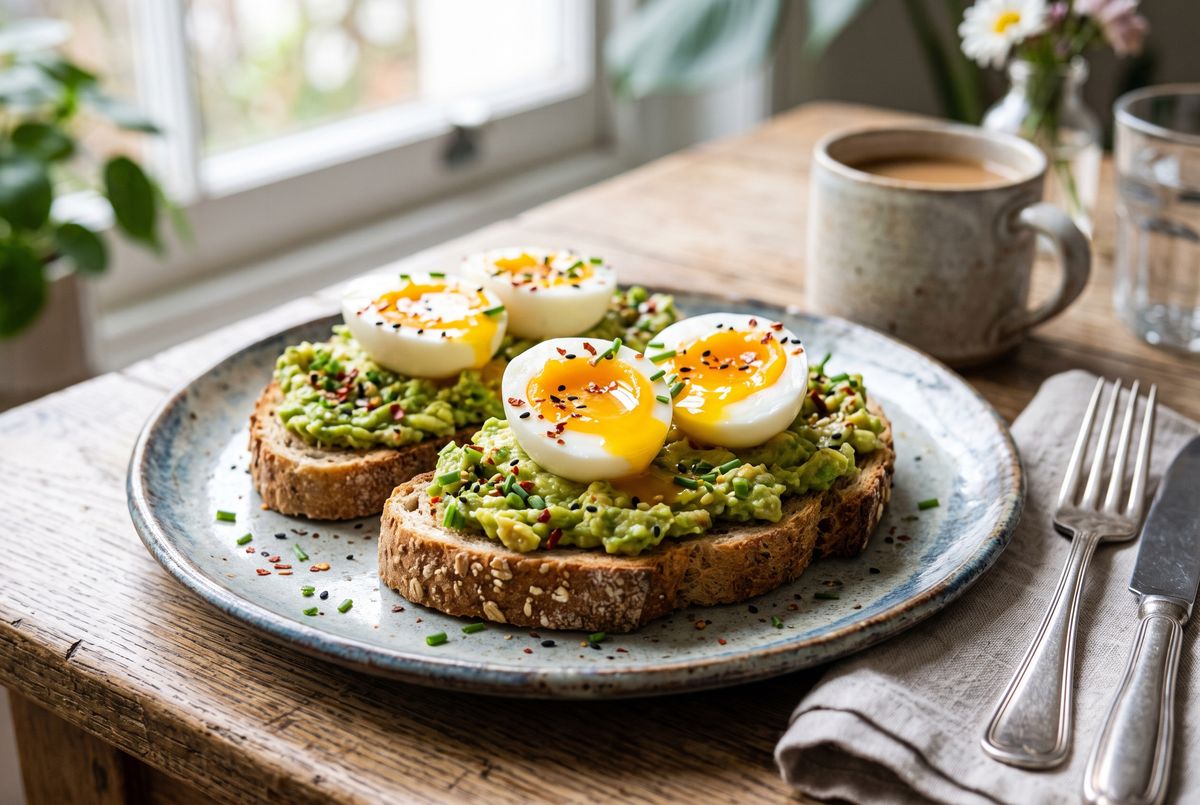 Choline & brain
Egg yolk is the densest everyday source of phosphatidylcholine — and the same yolk carries the lutein your retina concentrates.
 Sleep
SleepMontmorency cherry juice is the sleep intervention with the most actual trial data behind it — and the results are real but…
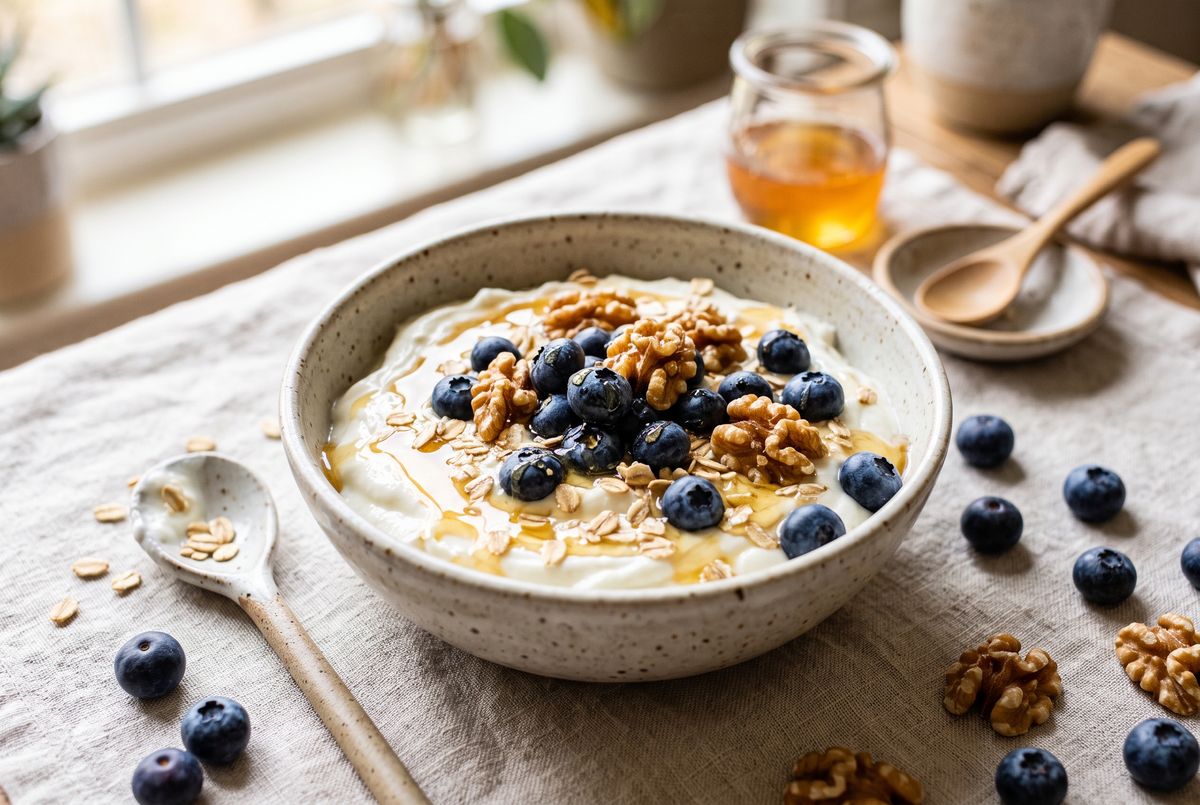 Brain health
Berry anthocyanins and walnut omega-3 are the two most studied food components in cognitive aging research — and they happen to…
Keep reading
Blood pressureOmega-3QuercetinDietary fiberOmega-3: the evidenceOmega-3 and AgingThe supplement guideResearch mapPathway universe