Watermelon, Feta & Mint Salad
Watermelon is the best food source of L-citrulline, a precursor the body converts to arginine and then nitric oxide — and one of the only lycopene-rich foods eaten raw. Feta, mint and olive oil make it dinner-worthy.
- Mechanism
- Nitric oxide
- Cited studies
- 4
- Course
- Salad
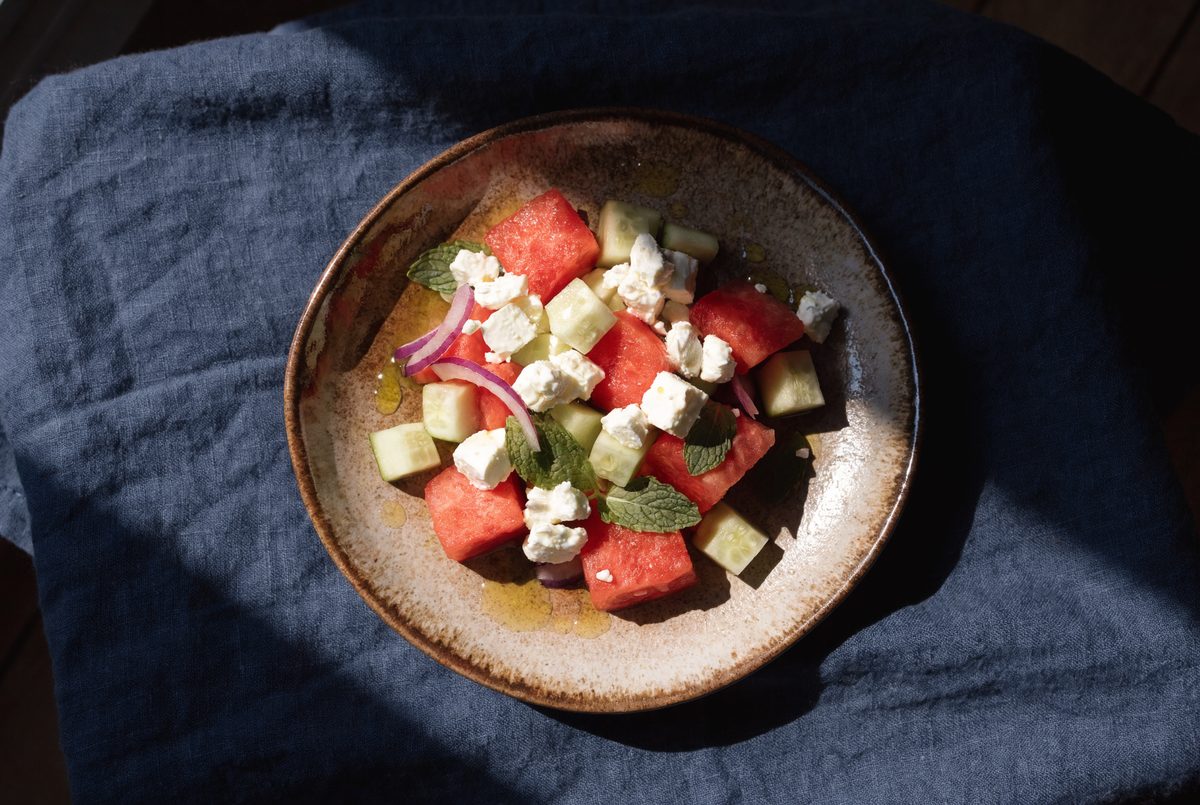
Watermelon is the only common food with meaningful amounts of L-citrulline, and the basic biochemistry has been demonstrated with the fruit itself: a three-week crossover feeding study (Nutrition, 2007) showed that daily watermelon juice raised fasting plasma arginine by 12–22 percent, confirming the citrulline-to-arginine conversion that feeds nitric oxide synthesis. What that does for blood vessels is more tentative. A small randomized crossover trial in obese adults with prehypertension or hypertension (American Journal of Hypertension, 2012) found watermelon extract reduced ankle blood pressure and arterial-stiffness measures — encouraging, but it enrolled fourteen people, and fourteen people do not settle anything.
Watermelon is also one of the few lycopene-rich foods eaten raw. The bulk of lycopene evidence comes from tomato products: a systematic review and meta-analysis of intervention trials (Atherosclerosis, 2017) found tomato and lycopene supplementation improved LDL cholesterol, endothelial function, and blood pressure, so the watermelon extrapolation is plausible rather than proven. The extra-virgin olive oil is the best-tested thing on the plate — the EUROLIVE randomized trial (Annals of Internal Medicine, 2006) showed high-phenolic olive oil shifting HDL and oxidative-damage markers in a dose-dependent fashion.
Why this works
Watermelon delivers citrulline and lycopene at once; the flesh nearest the rind is the most citrulline-dense part, so cube generously. Cucumber adds a second, smaller citrulline source and dilutes the sweetness. Extra-virgin olive oil contributes hydroxytyrosol and helps absorb the fat-soluble lycopene. Feta brings salt and protein that turn fruit into a course; mint and lime-sharpened red onion keep the whole thing from tasting like dessert.
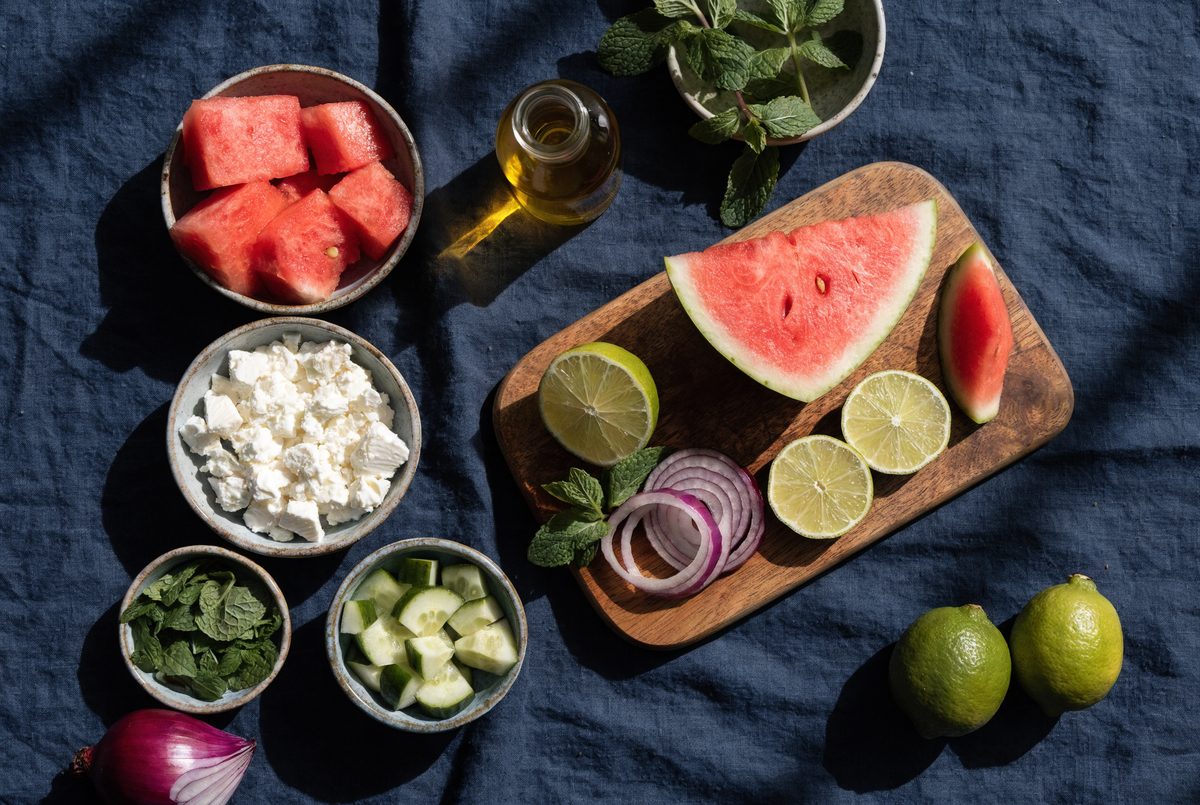
How to make it
- Slice half a red onion paper-thin and soak it in the juice of 2 limes with a pinch of salt, 10 minutes, to tame its bite.
- Cube 6 cups of seedless watermelon, cutting close to the rind, and half-moon 1 large cucumber.
- Toss the watermelon and cucumber with the onion and its lime juice in a wide bowl.
- Crumble 4 oz feta over the top and scatter a big handful of torn mint leaves.
- Finish with 2 tbsp extra-virgin olive oil and coarse black pepper; serve immediately, well chilled.
Serves 4 as a side or light lunch. Assemble at the last minute — salted watermelon weeps, and nobody wants a soup they did not order.
19 PubMed citations
In human trials, standardized olive leaf extract has most consistently produced modest reductions in systolic and…
The research behind this recipe
Primary sources for the claims above. Effects reported in these papers describe the compound or the dietary pattern studied — not this specific dish.
More nitric oxide & blood flow recipes
 Nitric oxide
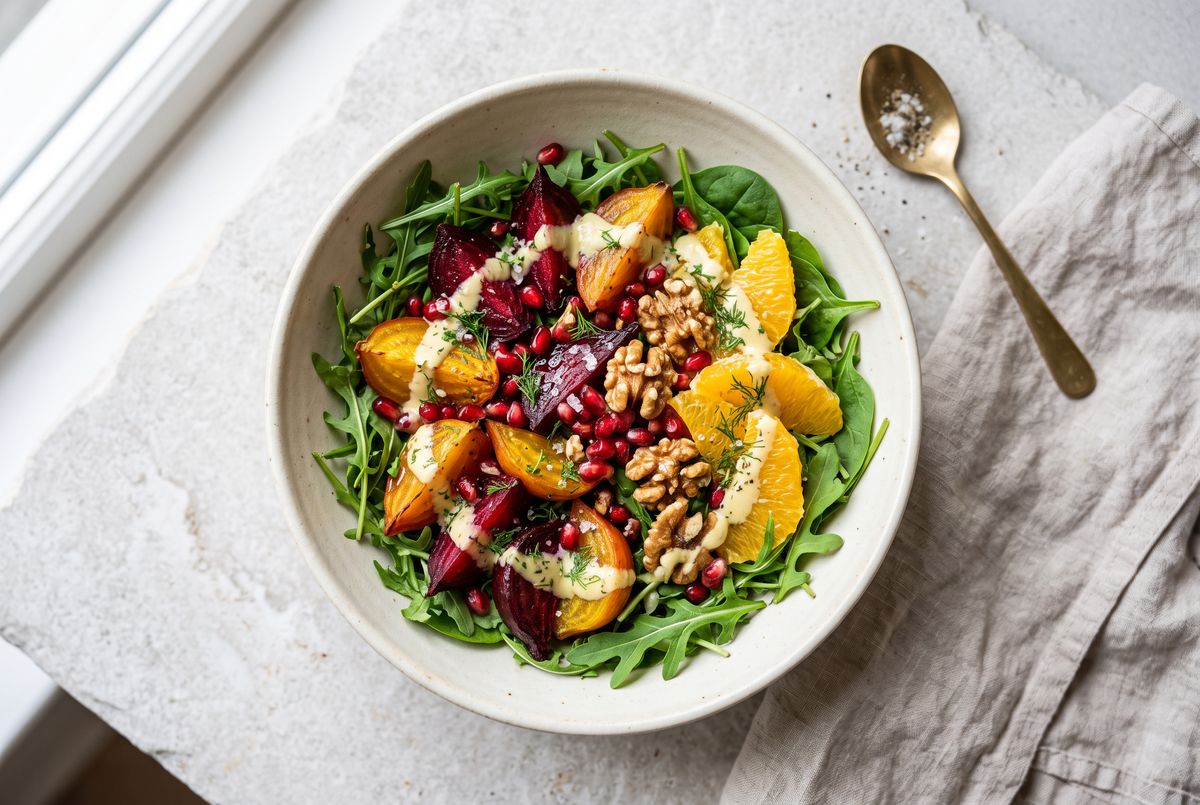
Beetroot and arugula are two of the richest dietary sources of nitrate — the raw material your body converts into nitric oxide…
 Nitric oxide
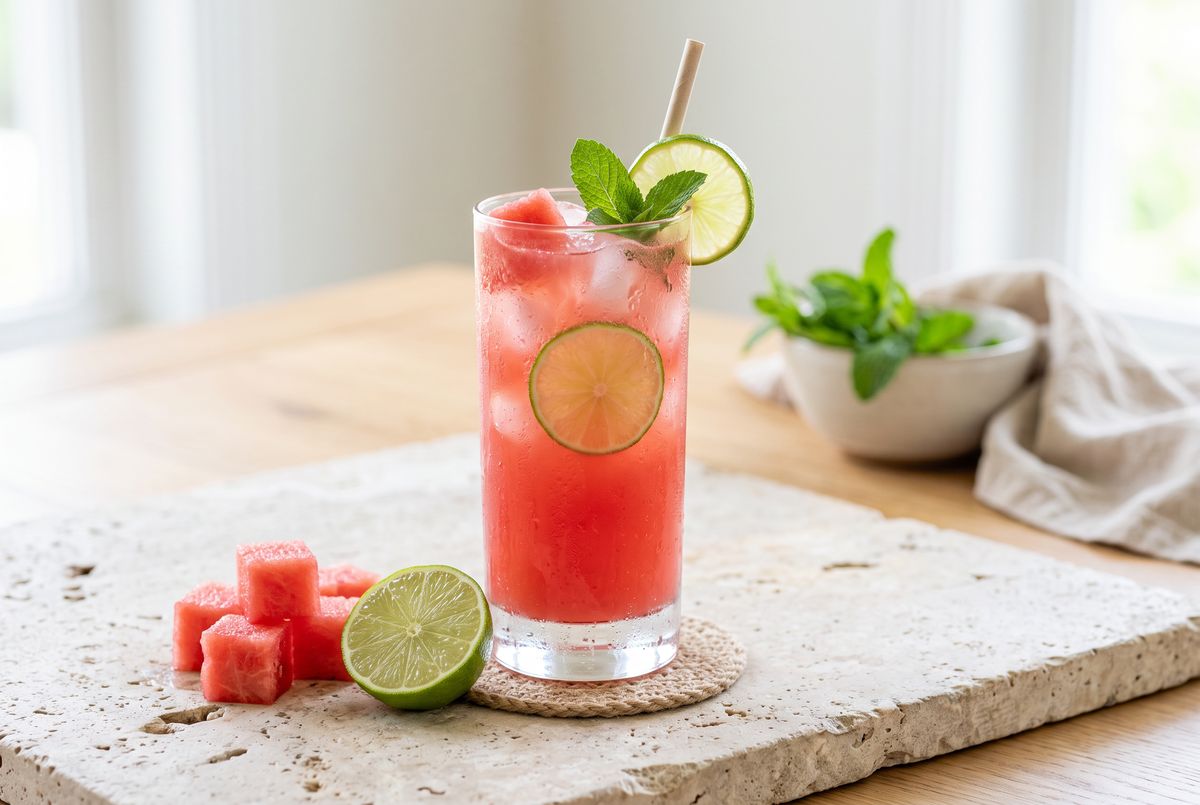
Watermelon is the richest everyday food source of L-citrulline — the amino acid your body converts into L-arginine, the raw…
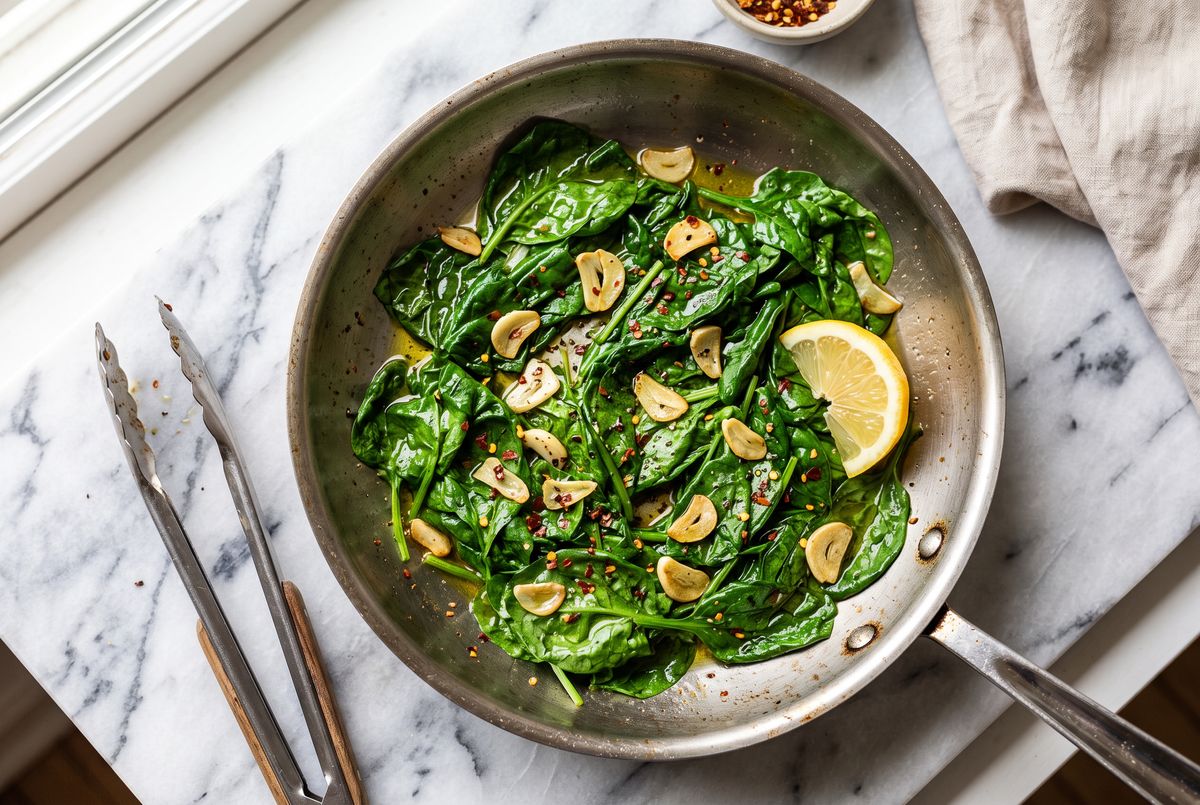 Nitric oxide
Spinach sits alongside arugula and beets at the top of the dietary-nitrate list, and a controlled trial found nitrate-rich…
Keep reading
Nitric oxideBlood pressureThe endotheliumThe supplement guideResearch mapPathway universe