Five-Minute Nitrate Greens: Spinach with Garlic & Lemon
Spinach sits alongside arugula and beets at the top of the dietary-nitrate list, and a controlled trial found nitrate-rich spinach raised nitric-oxide status and improved endothelial function.
- Mechanism
- Nitric oxide
- Yield
- serves 2
- Ingredients
- 5
- Steps
- 4
- Cited studies
- 4
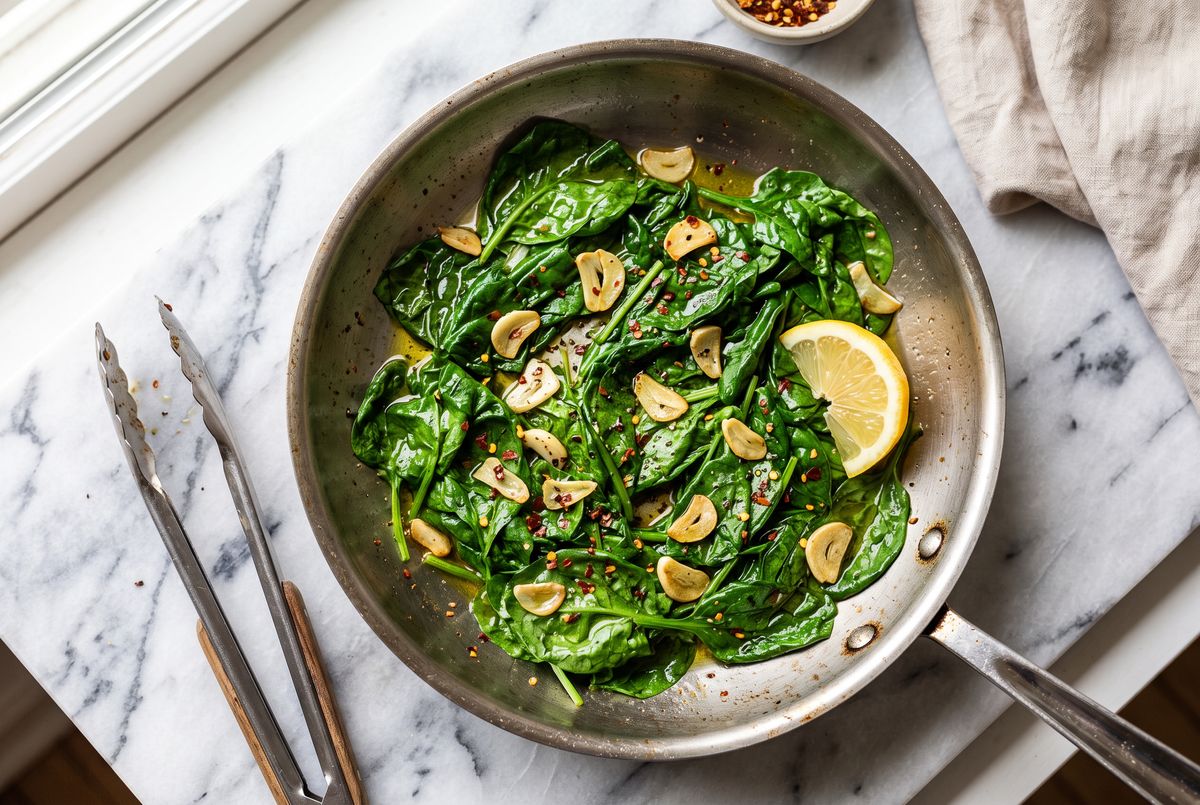
Spinach is one of the densest dietary sources of nitrate. Your body converts some of that nitrate into nitric oxide, the signal that tells the muscle in your blood vessel walls to relax, and food-composition work has mapped which vegetables carry the most of it and why that matters physiologically (American Journal of Clinical Nutrition, 2009). Leafy greens sit near the top of that list.
In a randomized controlled trial, nitrate-rich spinach — alongside flavonoid-rich apples — augmented nitric oxide status and improved endothelial function in healthy adults (Free Radical Biology and Medicine, 2012). A large Danish cohort study found vegetable nitrate intake tracked with lower blood pressure and less incident cardiovascular disease. Garlic reaches the same destination by a different road, with meta-analytic support for lowering blood pressure in people who have hypertension. None of this replaces treatment; it sits alongside it.
Why this works
Two of the five ingredients are doing the real work. The spinach brings the nitrate, and the volume matters — ten ounces looks absurd in the pan and collapses to two modest servings, which is the point: a pile that looks like too much is how you actually eat a serving of greens. The garlic is the second route, sliced rather than pounded to a paste so it perfumes the oil and goes pale gold instead of bitter. The olive oil is the medium that lets that happen. Lemon goes in off the heat, where its brightness survives, and chili flakes and black pepper are there because plain wilted spinach is dull, and food you find dull is food you stop making.
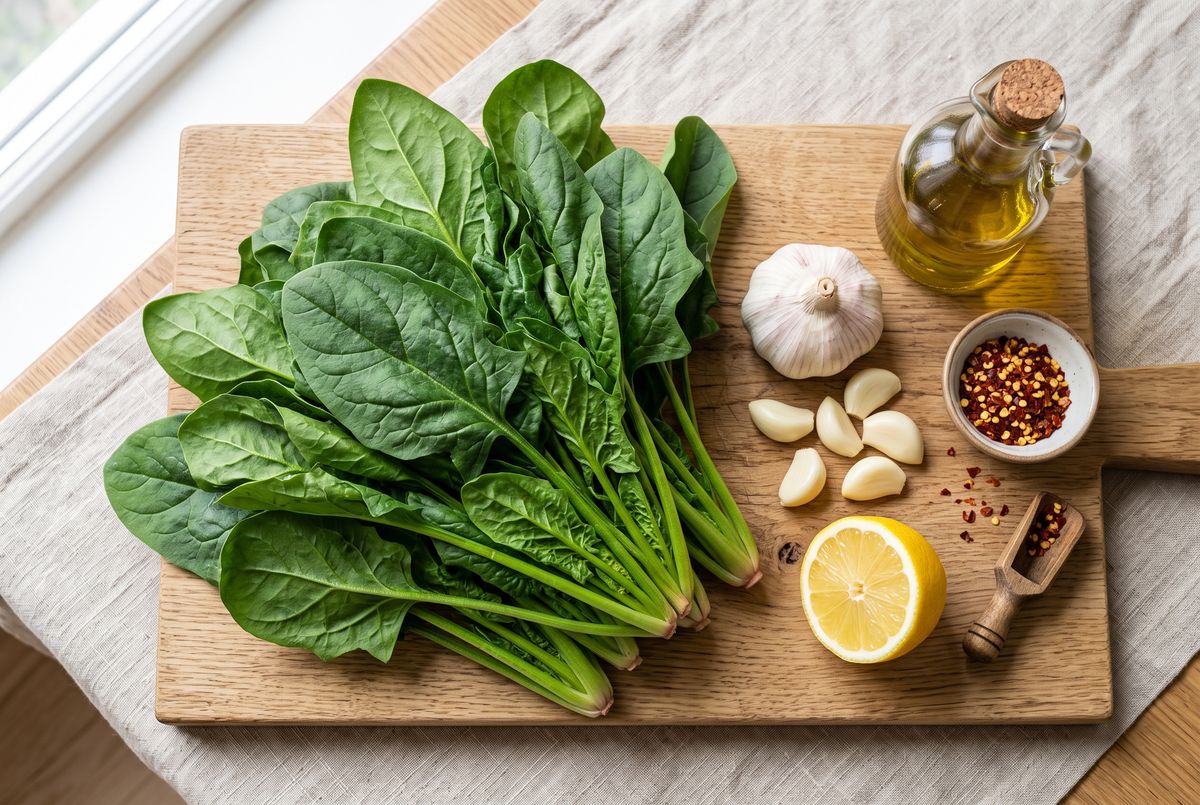
Ingredients · serves 2
- 10 oz baby spinach (it wilts down dramatically)
- 3 cloves garlic, thinly sliced
- 1–2 tbsp extra-virgin olive oil
- Juice of ½ lemon
- A pinch of chili flakes, black pepper
Method
- Crush or slice the garlic and let it sit while you wash the spinach.
- Warm the oil over medium heat and cook the garlic 45–60 seconds until just pale gold — do not brown it.
- Add the spinach in handfuls, tossing, and cook only until it collapses, 1–2 minutes.
- Off the heat, finish with lemon, chili flakes and pepper. Serve immediately.
Getting the most from it
Do not boil it. Nitrate is water-soluble, so simmering spinach leaves a good share of it in the water you pour down the drain, while a fast saute or a raw salad keeps it in the food. Buy loose baby spinach if you can and use it within a couple of days, since it wilts quickly in the bag. Have the lemon cut and the garlic sliced before the pan goes on; this cooks faster than you expect.
Nutrition Facts
Calculated for one serving from USDA FoodData Central values for the ingredients above. An estimate, not a lab analysis.
How this was calculated. Each ingredient was converted to grams, matched to a food in USDA FoodData Central (SR Legacy, April 2018), summed, and divided by 2 servings. Cooking losses, draining and the real size of a handful all move these numbers, so treat them as a good estimate rather than a measurement. Added sugars count honey, maple syrup and table sugar only; sugar from whole fruit is not an added sugar.
- Spinach, raw
- Garlic, raw
- Oil, olive, salad or cooking
- Lemon juice, raw
24 PubMed citations
Meta-analyses of randomized trials show that beetroot juice and dietary nitrate lower blood pressure—about 5 mmHg…
19 PubMed citations
In small randomized trials, magnesium-L-threonate improved composite cognition versus placebo in older adults with…
23 PubMed citations
The best-supported clinical use of ALA is for symptomatic diabetic peripheral neuropathy: randomized trials and…
The research behind this recipe
Primary sources for the claims above. Effects reported in these papers describe the compound or the dietary pattern studied — not this specific dish.
More nitric oxide & blood flow recipes
 Nitric oxide
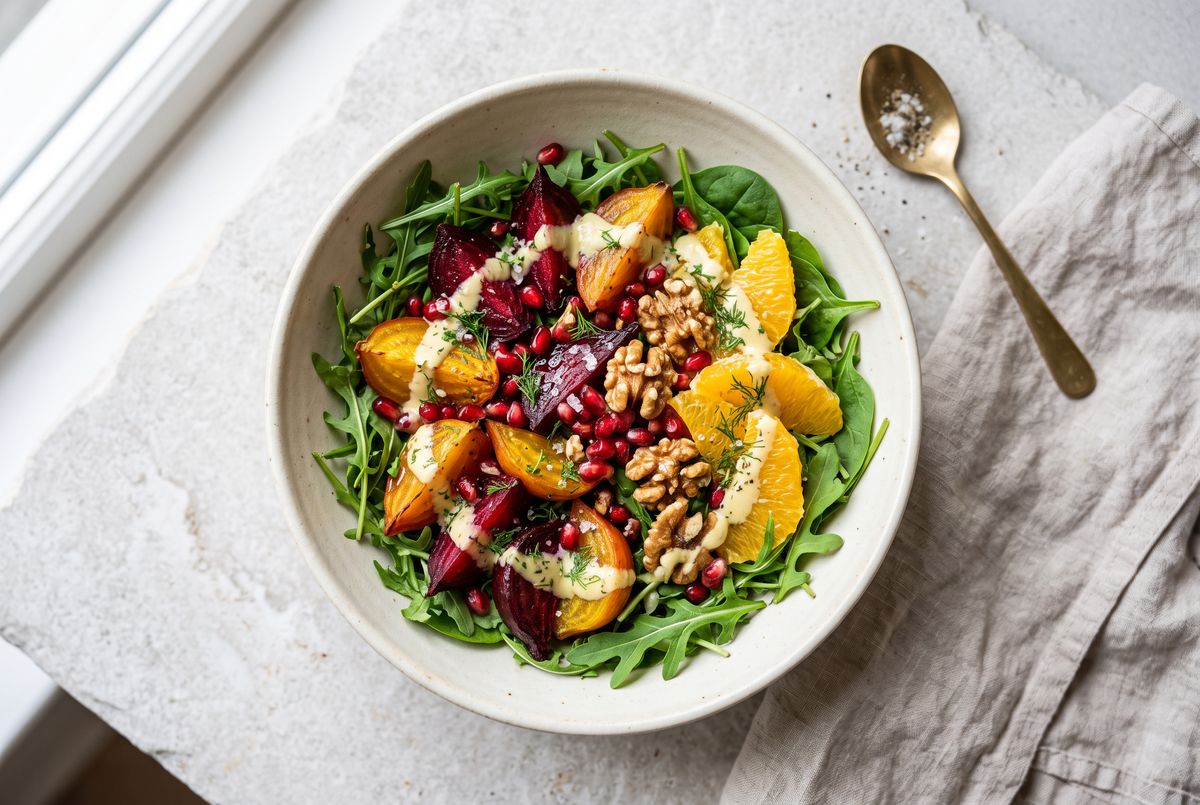
Beetroot and arugula are two of the richest dietary sources of nitrate — the raw material your body converts into nitric oxide…
 Nitric oxide
Watermelon is the richest everyday food source of L-citrulline — the amino acid your body converts into L-arginine, the raw…
 Nitric oxide
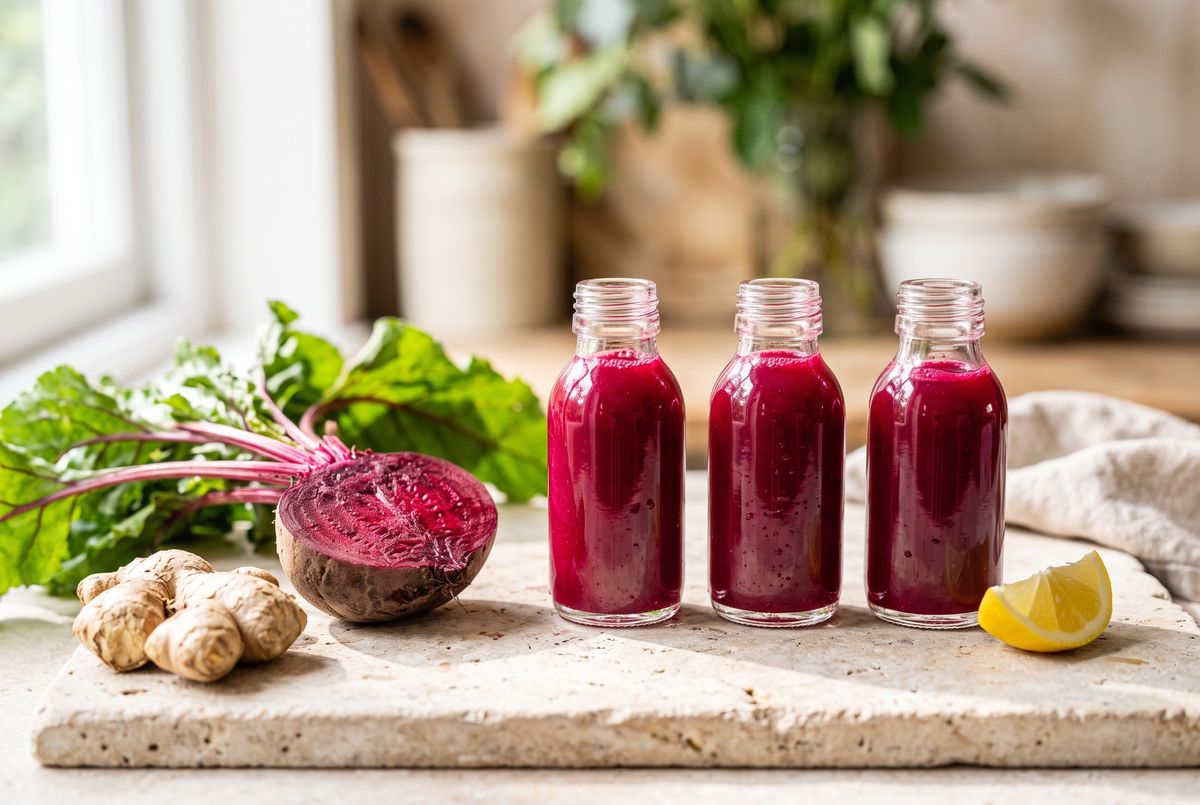
A small, concentrated hit of beet juice about two hours before training — the timing and dose most closely matching the nitrate…
Keep reading
Nitric oxideBeetroot & dietary nitrateBlood pressureThe endotheliumThe supplement guideResearch mapPathway universe