Seared Steak & Wild Arugula Salad
Arugula is among the highest-nitrate vegetables measured, and eating it raw preserves that. Sliced flank steak adds dietary creatine while a lemon and extra-virgin olive oil dressing carries olive phenolics.
- Mechanism
- Nitric oxide
- Cited studies
- 4
- Course
- Salad
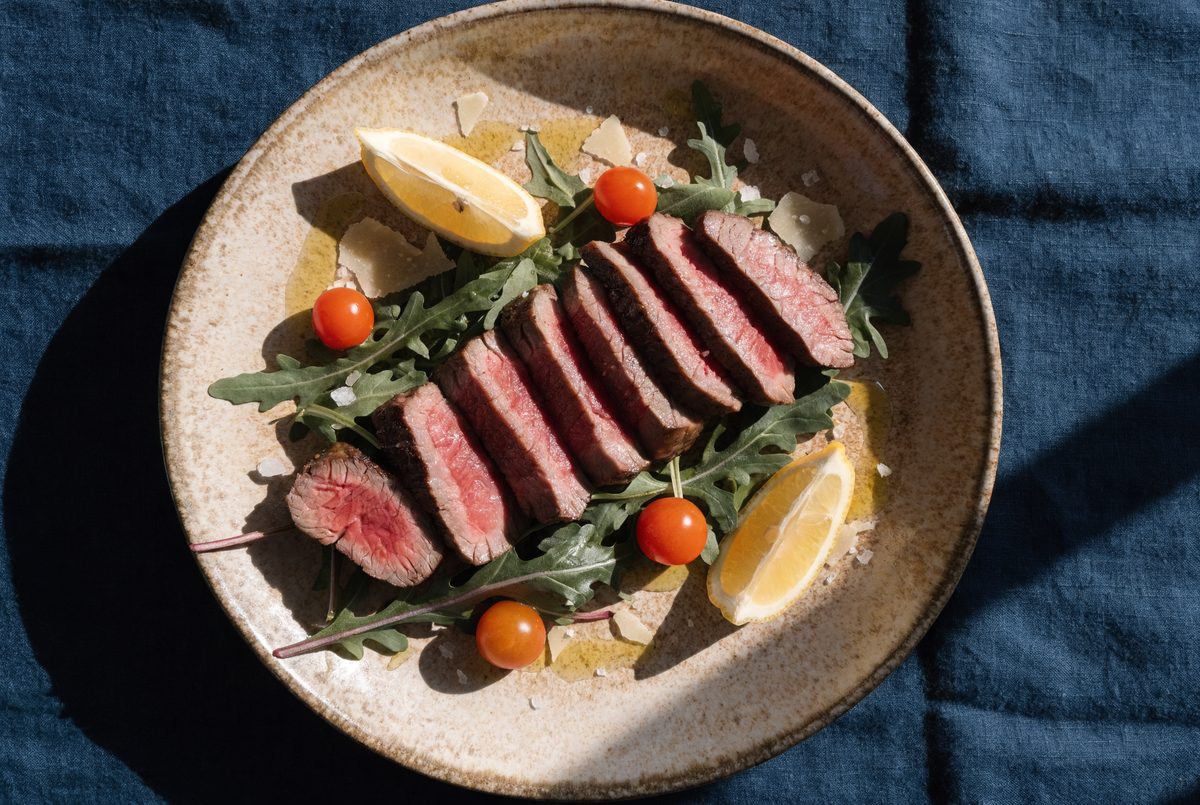
Arugula routinely tops the tables of vegetable nitrate content — often higher per gram than beetroot — and eating it raw skips the cooking losses. The case that this matters rests on trials of nitrate itself: a meta-analysis of sixteen randomized trials (The Journal of Nutrition, 2013) found dietary nitrate lowered systolic blood pressure by about 4 mmHg, and a four-week randomized trial in people with hypertension (Hypertension, 2015) showed the effect can be sustained rather than a one-afternoon curiosity. Whether a salad's worth of arugula delivers the doses those trials used depends on how generous you are with the greens; two big handfuls per person gets you into a meaningful range.
The steak earns its place beyond protein. Beef is one of the few substantial food sources of creatine — roughly half a gram per serving here — though the position-stand literature (Journal of the International Society of Sports Nutrition, 2017) is built on supplemental doses of 3–5 grams daily, so treat dietary creatine as a contribution, not a replacement. The extra-virgin olive oil in the dressing has cleaner human data: in the EUROLIVE randomized crossover trial (Annals of Internal Medicine, 2006), higher-phenolic olive oil raised HDL and lowered markers of oxidative damage in a dose-dependent way. Short-term biomarkers, honestly — but from a well-run trial.
Why this works
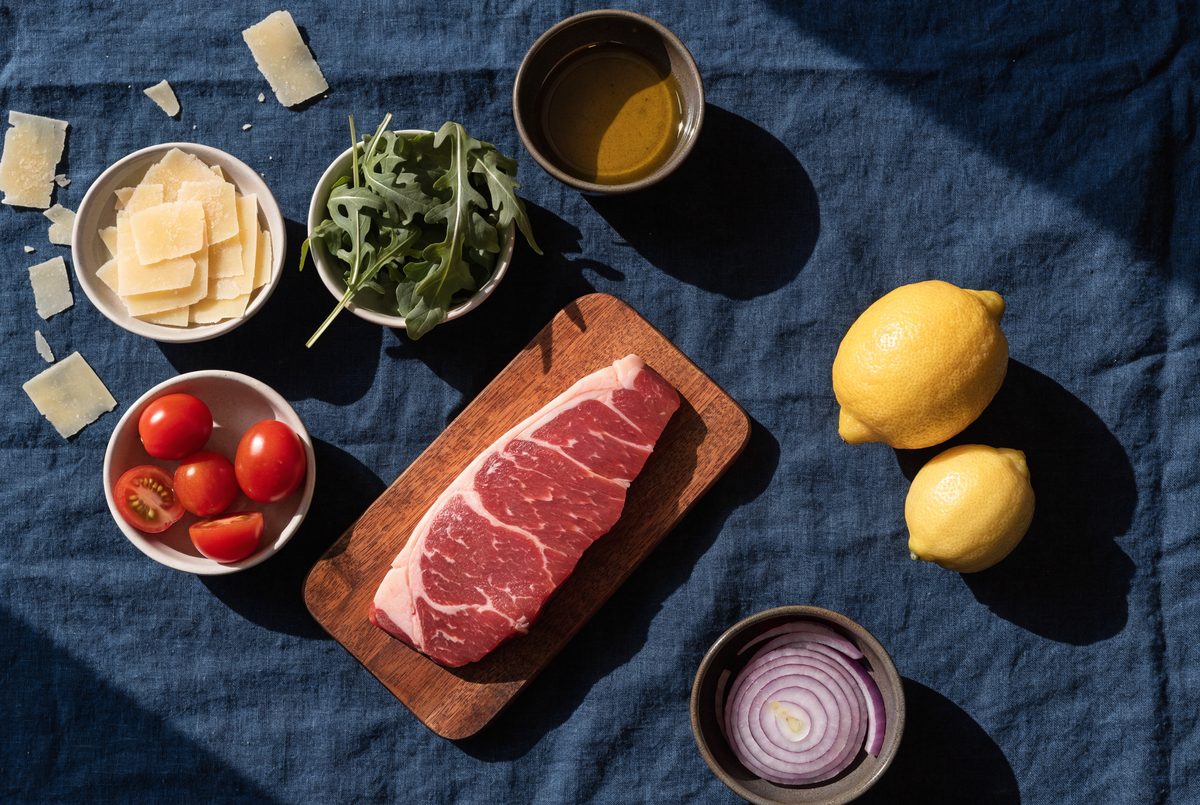
Wild arugula is the nitrate engine, served raw and unwashed of its peppery isothiocyanates. Flank steak supplies creatine along with heme iron and B12; keeping it medium-rare limits creatine degradation, which climbs with prolonged high heat. Extra-virgin olive oil delivers hydroxytyrosol and oleocanthal — buy a recent-harvest, peppery-tasting oil, since phenolics fade with age. Lemon and cherry tomatoes add vitamin C, which inhibits nitrosamine formation when nitrate and protein share a plate. Parmesan is here for salt, umami, and morale.
How to make it
- Season a 1 lb flank steak generously with salt and pepper and let it sit at room temperature 20 minutes.
- Sear in a screaming-hot cast-iron pan with a little oil, 4–5 minutes per side to medium-rare (about 130°F / 54°C). Rest 10 minutes.
- Whisk 3 tbsp extra-virgin olive oil with the juice of 1 lemon, a pinch of salt, and black pepper.
- Toss 5 oz wild arugula, a pint of halved cherry tomatoes, and half a thinly sliced red onion with most of the dressing.
- Slice the steak thinly against the grain and fan it over the salad.
- Finish with shaved Parmesan, the remaining dressing, and a last thread of olive oil.
Serves 4 as a main. Eat it the day it is made — dressed arugula does not believe in leftovers.
24 PubMed citations
Meta-analyses of randomized trials show that beetroot juice and dietary nitrate lower blood pressure—about 5 mmHg…
23 PubMed citations
Across meta-analyses and randomized trials, creatine monohydrate combined with resistance training modestly increases…
19 PubMed citations
In human trials, standardized olive leaf extract has most consistently produced modest reductions in systolic and…
The research behind this recipe
Primary sources for the claims above. Effects reported in these papers describe the compound or the dietary pattern studied — not this specific dish.
More nitric oxide & blood flow recipes
 Nitric oxide
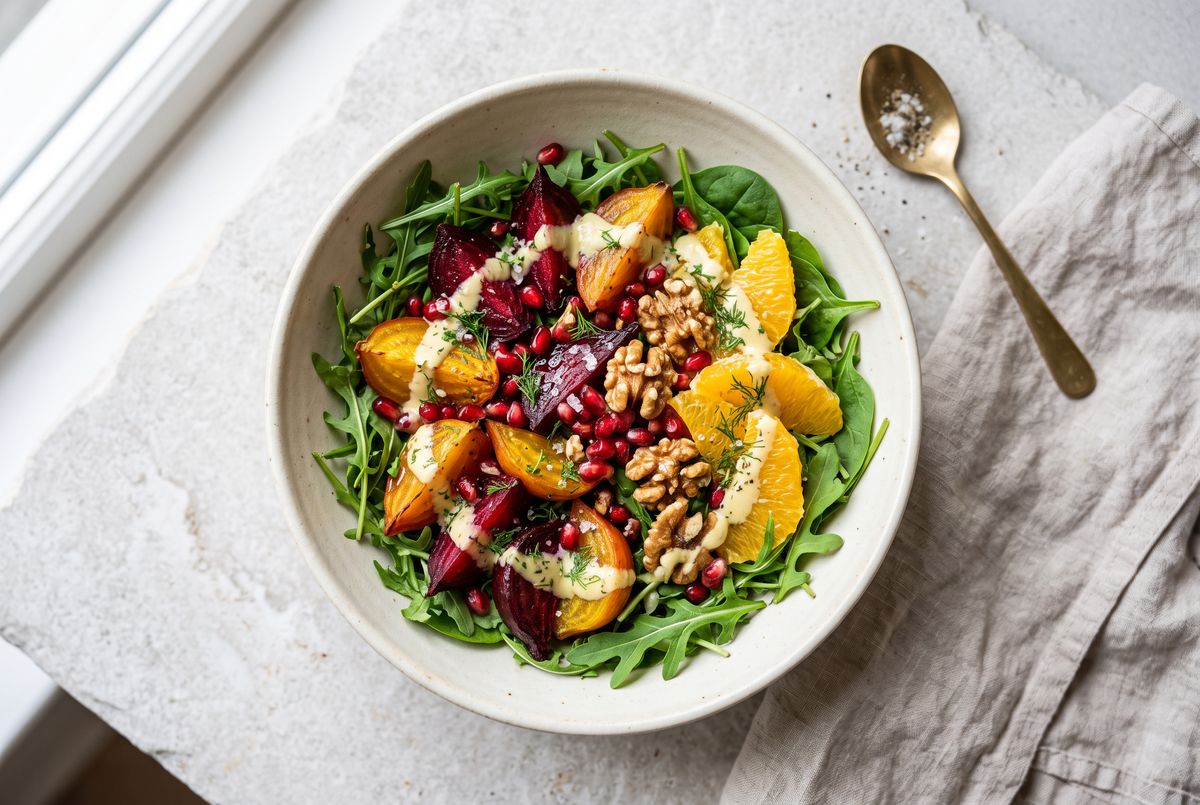
Beetroot and arugula are two of the richest dietary sources of nitrate — the raw material your body converts into nitric oxide…
 Nitric oxide
Watermelon is the richest everyday food source of L-citrulline — the amino acid your body converts into L-arginine, the raw…
 Nitric oxide
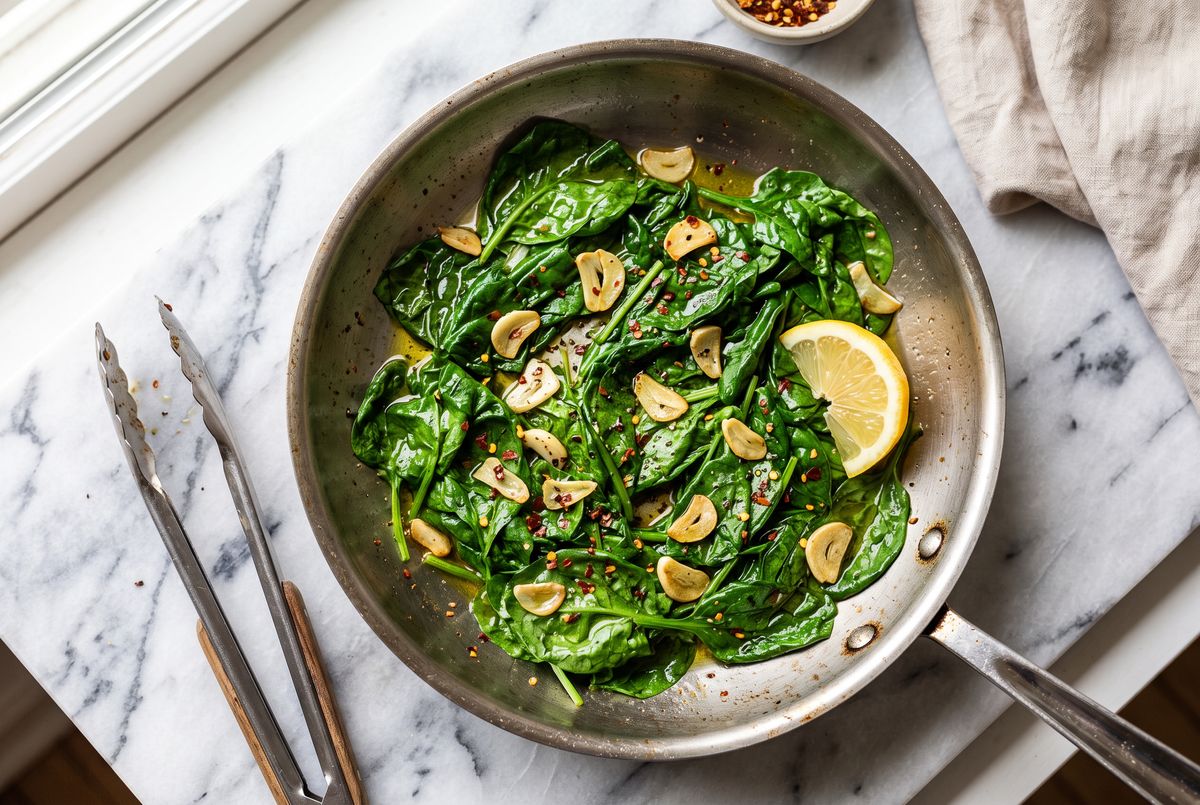
Spinach sits alongside arugula and beets at the top of the dietary-nitrate list, and a controlled trial found nitrate-rich…
Keep reading
Beetroot & dietary nitrateBlood pressureCreatineVitamin CCreatine: the evidenceCreatine for Healthy AgingThe supplement guideResearch mapPathway universe