Swiss Chard & Red Lentil Dal
Swiss chard folds a leafy nitrate source into a turmeric-gold dal built on garlic, ginger and tomatoes — four spice-rack compounds with randomized-trial literatures of varying (and honestly stated) strength.
- Mechanism
- Nitric oxide
- Cited studies
- 4
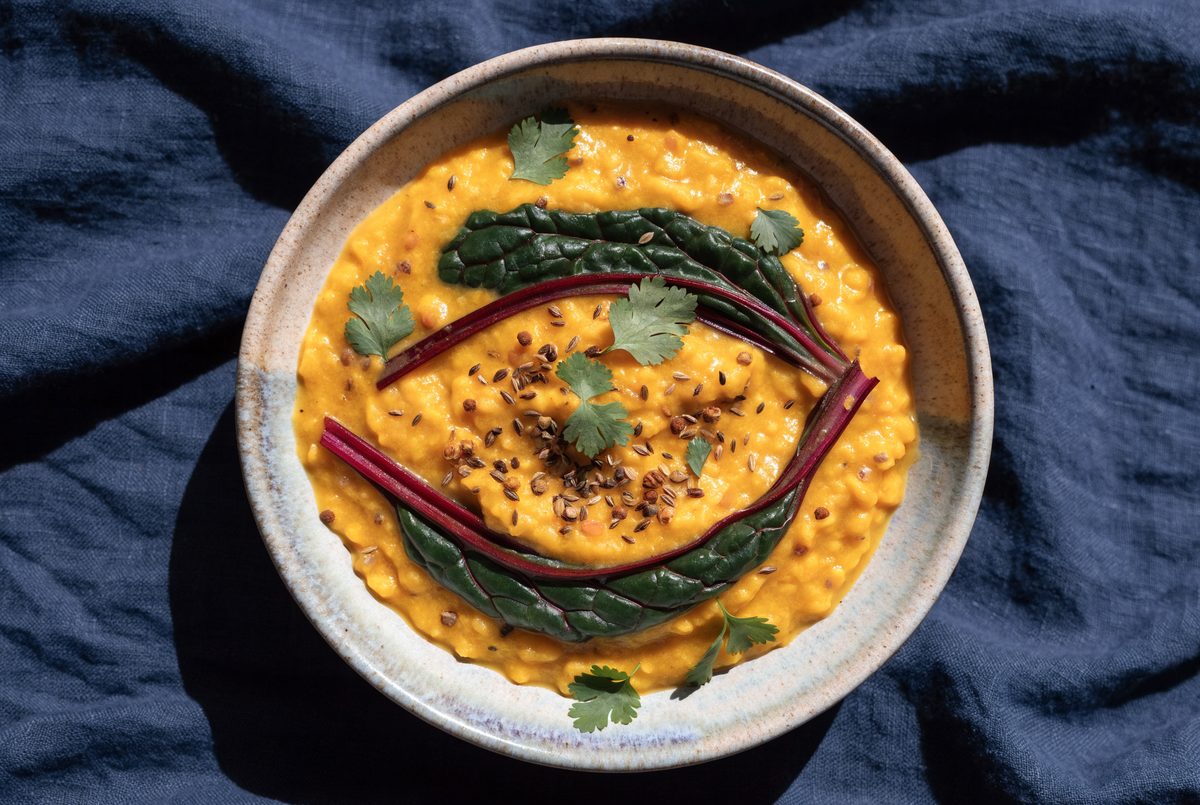
Swiss chard sits alongside arugula and spinach in the top tier of nitrate-dense greens, and the nitrate story has better randomized evidence than most of the spice rack: a four-week placebo-controlled trial in hypertensive patients (Hypertension, 2015) found daily dietary nitrate lowered clinic blood pressure by around 8/4 mmHg, with the effect holding across ambulatory monitoring. Folding chard into a simmering dal loses some nitrate to the pot liquid, but in a dal you eat the pot liquid, which is a quietly satisfying loophole.
The spices deserve hedged enthusiasm. A meta-analysis of 103 randomized trials of curcumin (Phytotherapy Research, 2024) reported improvements in inflammatory markers and lipids, while noting persistent problems with bioavailability and trial quality — the reason this recipe includes black pepper, whose piperine boosts curcumin absorption in pharmacokinetic studies. Garlic has a meta-analysis of its own (BMC Cardiovascular Disorders, 2008) showing blood-pressure reductions mainly in people who started hypertensive, and a systematic review of 109 randomized trials of ginger (Nutrients, 2020) found consistent, if modest, effects on inflammation and glycemic markers. None of this is curative; all of it favors cooking dinner this way.
Why this works
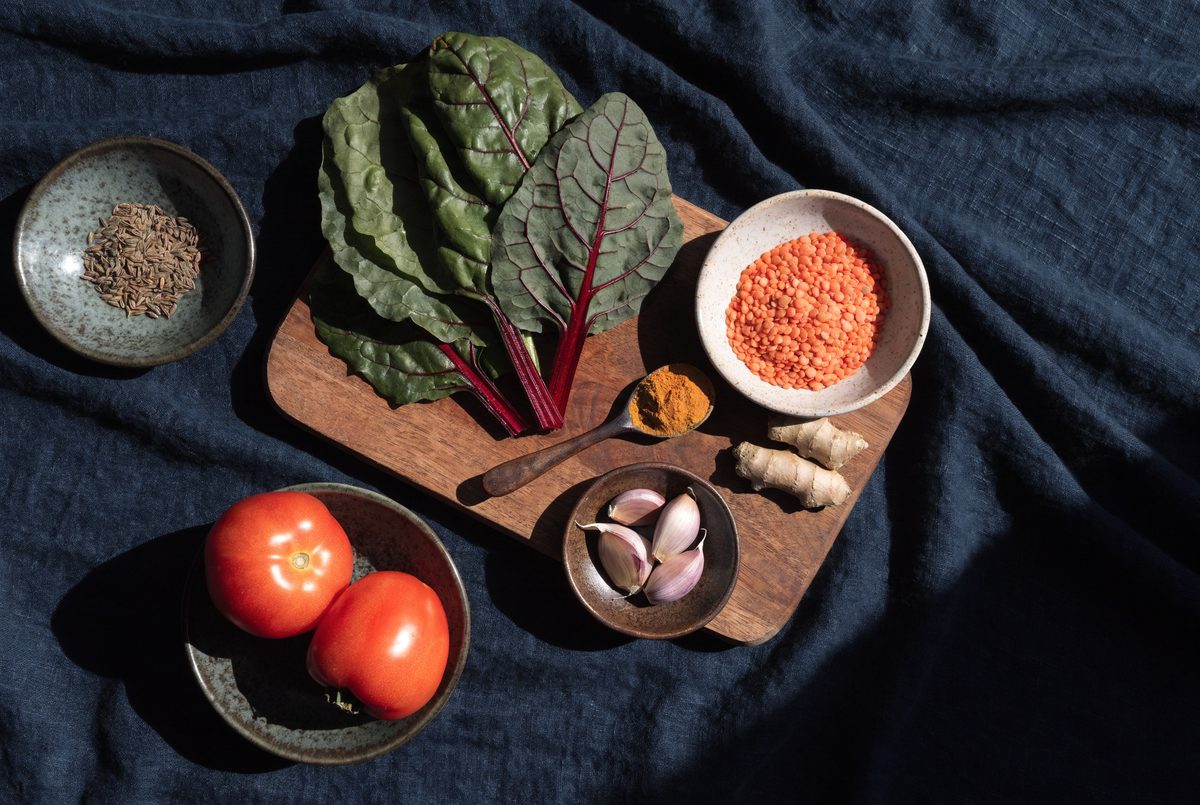
Swiss chard carries the dietary nitrate, plus magnesium in the bargain. Turmeric supplies curcumin, bloomed in hot oil (it is fat-soluble) and paired with black pepper. Garlic is crushed and rested ten minutes before it hits the pan, because allicin forms enzymatically after crushing and the enzyme dies quickly in heat. Fresh ginger brings gingerols, which survive a simmer better than allicin does. Red lentils and tomatoes are the fiber-and-lycopene chassis that turns four compounds into an actual dinner.
How to make it
- Rinse 1½ cups red lentils and simmer in 4 cups water with 1 tsp ground turmeric and ½ tsp salt, 15–20 minutes until collapsed.
- Meanwhile, crush 4 garlic cloves and let them rest 10 minutes while you grate 2 tbsp fresh ginger and dice 2 ripe tomatoes.
- Heat 3 tbsp oil or ghee in a small pan; sizzle 1½ tsp cumin seeds 30 seconds, then soften 1 diced onion.
- Add the garlic, ginger, and several grinds of black pepper; cook 1 minute, then add the tomatoes and cook down to a jammy paste, 5 minutes.
- Stir this tempering into the lentils, then fold in 1 bunch Swiss chard, stems diced and leaves cut into ribbons, until just wilted, about 3 minutes.
- Season with salt and a squeeze of lemon; finish with cilantro.
Serves 4 with rice or flatbread. Like most dals it is better the next day, though the chard's color will not be.
24 PubMed citations
Meta-analyses of randomized trials show that beetroot juice and dietary nitrate lower blood pressure—about 5 mmHg…
24 PubMed citations
Meta-analyses of randomized controlled trials generally find that curcumin/turmeric supplementation lowers CRP, IL-6…
The research behind this recipe
Primary sources for the claims above. Effects reported in these papers describe the compound or the dietary pattern studied — not this specific dish.
More nitric oxide & blood flow recipes
 Nitric oxide
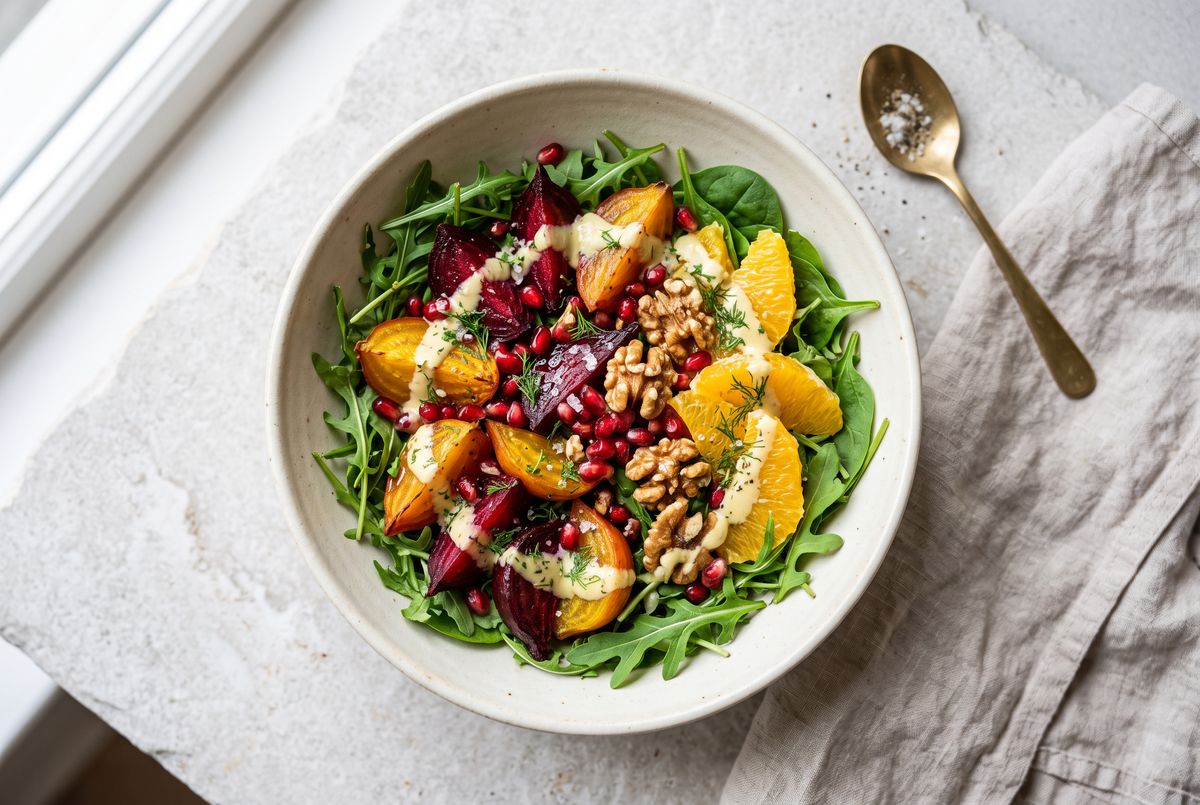
Beetroot and arugula are two of the richest dietary sources of nitrate — the raw material your body converts into nitric oxide…
 Nitric oxide
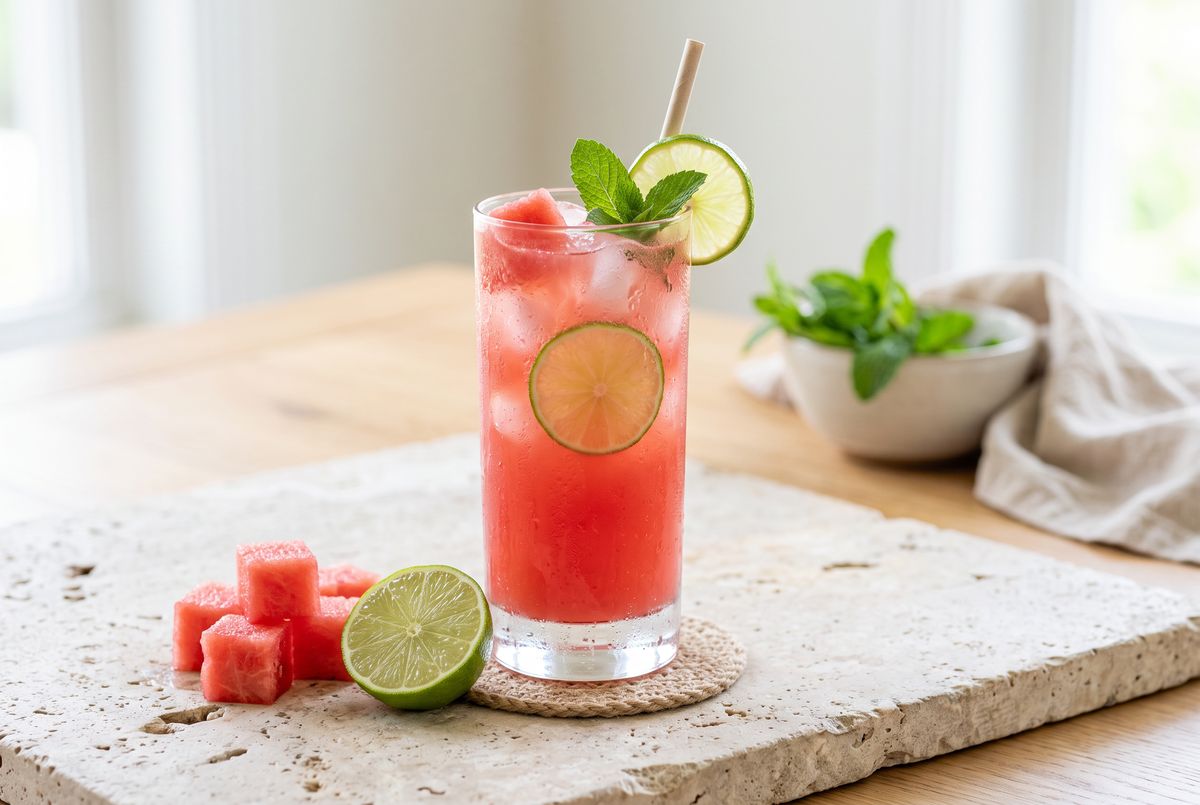
Watermelon is the richest everyday food source of L-citrulline — the amino acid your body converts into L-arginine, the raw…
 Nitric oxide
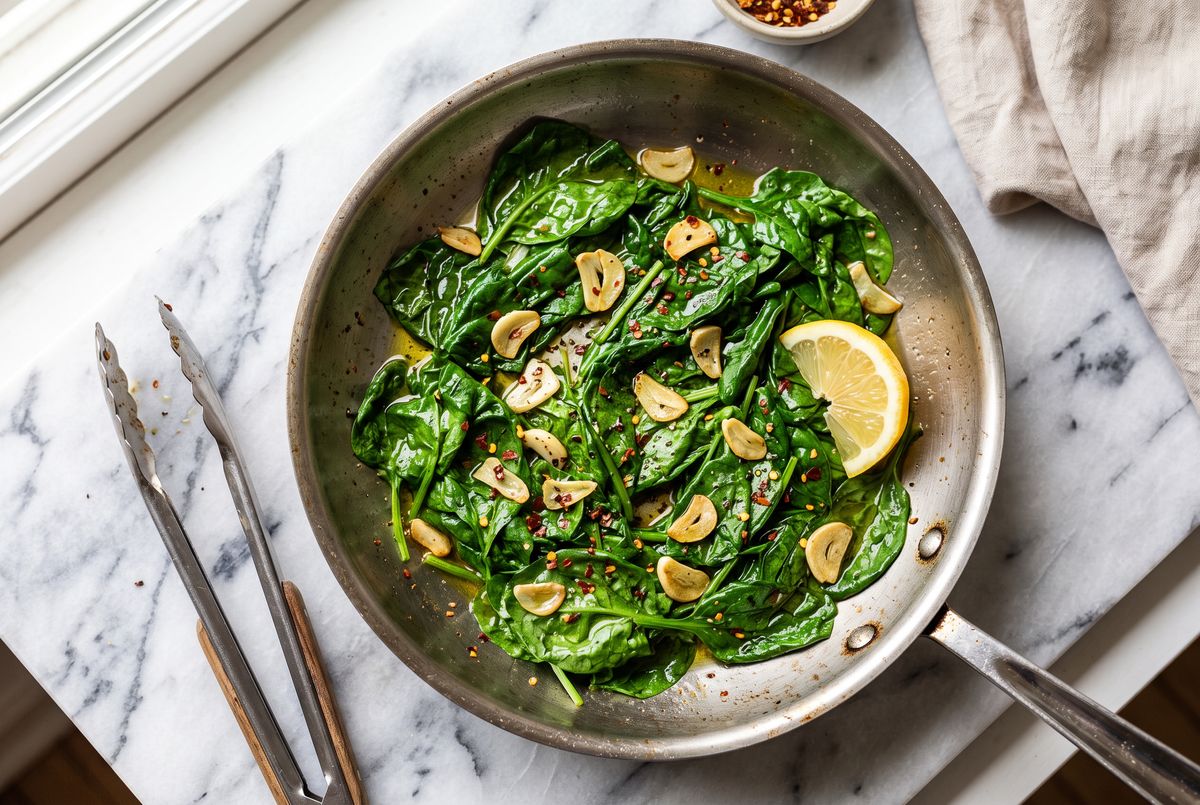
Spinach sits alongside arugula and beets at the top of the dietary-nitrate list, and a controlled trial found nitrate-rich…
Keep reading
Beetroot & dietary nitrateBlood pressureDietary fiberMagnesiumThe supplement guideResearch mapPathway universe