Bok Choy & Sesame Stir-Fry
Asian leafy greens like bok choy are nitrate-dense, and a fast, hot stir-fry keeps far more of that nitrate than a pot of boiling water would.
- Mechanism
- Nitric oxide
- Yield
- serves 2–3
- Ingredients
- 8
- Steps
- 4
- Cited studies
- 3
- Course
- Main course
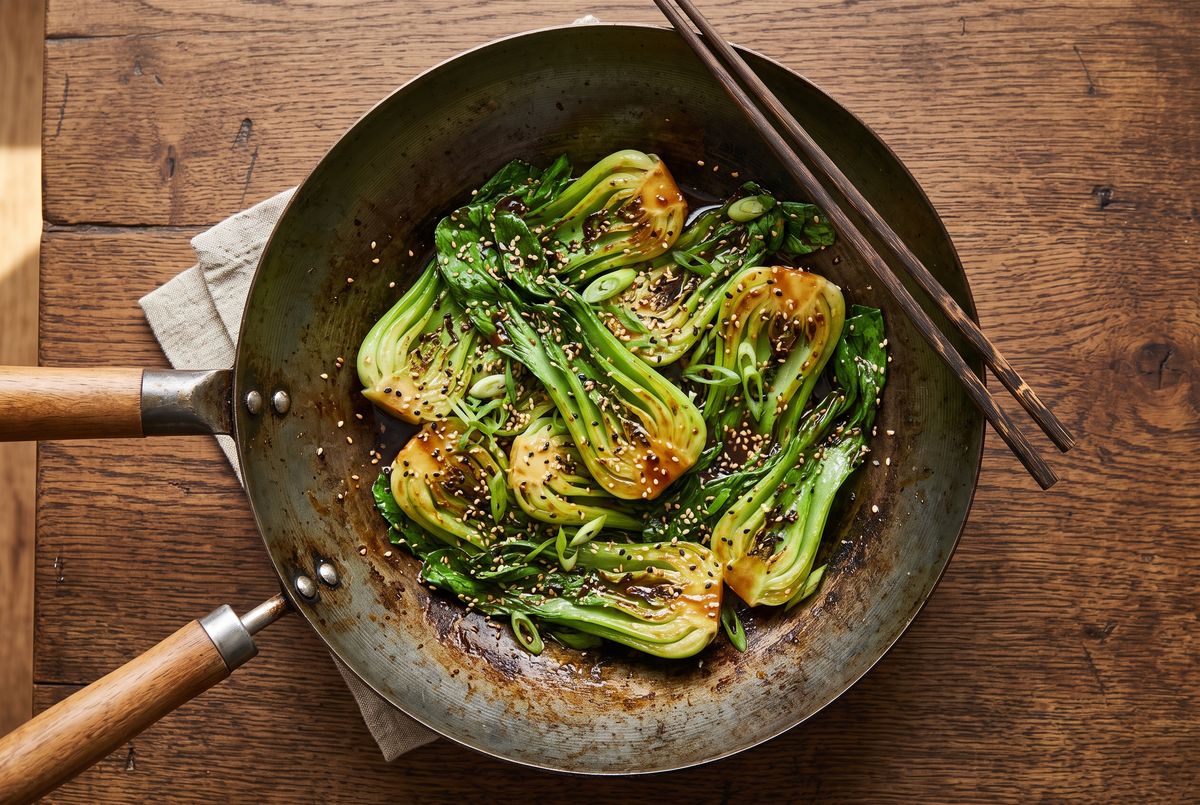
Bok choy belongs to the same family as broccoli and cabbage, but as a leafy green it also sits high on published nitrate tables (American Journal of Clinical Nutrition, 2009). Dietary nitrate is the raw material your body uses to make nitric oxide, the signal that lets blood vessels widen and relax.
In a randomized controlled trial, nitrate-rich vegetables raised nitric-oxide status and improved endothelial function in healthy adults (Free Radical Biology and Medicine, 2012), and in a large cohort study, higher vegetable nitrate intake tracked with lower blood pressure and less cardiovascular disease (European Journal of Epidemiology, 2021). Cohort findings are associations, not proof, and the trial effects are modest. Still, the direction is consistent, and the cooking lesson is simple: nitrate is water-soluble, so speed beats a pot of boiling water.
Why this works
The bok choy is the point, and the method is what protects it. Searing the halves cut-side down in a very hot pan, then covering them for a single minute with a splash of water, cooks the thick stems through without ever submerging the leaves. Garlic and ginger go in late because both turn bitter if they scorch. Toasted sesame oil and sesame seeds carry most of the flavor, which means you need very little tamari — and rice vinegar at the end does the job that extra salt would otherwise be asked to do. Scallions add a raw, fresh edge.
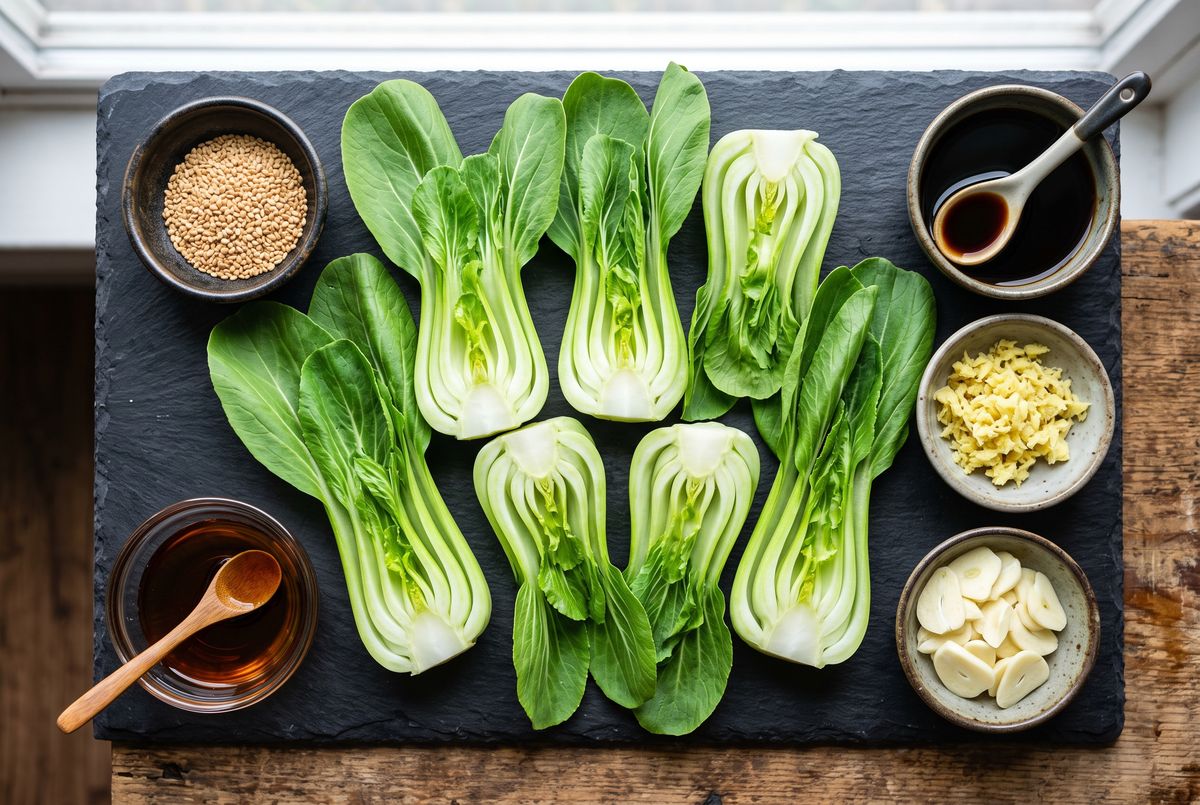
Ingredients · serves 2–3
- 1 lb baby bok choy, halved lengthwise
- 2 cloves garlic, sliced
- 1 tsp grated fresh ginger
- 1 tbsp toasted sesame oil
- 1 tbsp low-sodium tamari or soy sauce
- 1 tsp rice vinegar
- 1 tbsp sesame seeds, toasted
- 2 scallions, sliced
Method
- Get a wok or wide skillet properly hot before anything goes in.
- Add the sesame oil, then the bok choy cut-side down. Sear undisturbed 2 minutes until browned.
- Add the garlic and ginger, toss 30 seconds, then add the tamari, vinegar and a splash of water. Cover 1 minute to steam the stems tender.
- Uncover, toss once, and finish with sesame seeds and scallions.
Getting the most from it
The soy sauce is the one thing here that can work against you: use low-sodium tamari, measure it rather than pouring, and lean on the vinegar and sesame instead if you want more flavor. Get the pan properly hot before anything goes in, or the bok choy will steam and slump. Buy baby heads with tight white stems and no yellowing, and halve them just before cooking.
Nutrition Facts
Calculated for one serving from USDA FoodData Central values for the ingredients above. An estimate, not a lab analysis.
How this was calculated. Each ingredient was converted to grams, matched to a food in USDA FoodData Central (SR Legacy, April 2018), summed, and divided by 3 servings. Cooking losses, draining and the real size of a handful all move these numbers, so treat them as a good estimate rather than a measurement. Added sugars count honey, maple syrup and table sugar only; sugar from whole fruit is not an added sugar.
- Cabbage, chinese (pak-choi), raw
- Garlic, raw
- Ginger root, raw
- Oil, sesame, salad or cooking
- Soy sauce made from soy (tamari)
- Vinegar, distilled
- Seeds, sesame seeds, whole, roasted and toasted
- Onions, spring or scallions (includes tops and bulb), raw
24 PubMed citations
Meta-analyses of randomized trials show that beetroot juice and dietary nitrate lower blood pressure—about 5 mmHg…
20 PubMed citations
In humans, MK-7 supplementation consistently improves vitamin K-status biomarkers — lowering circulating…
19 PubMed citations
In small randomized trials, magnesium-L-threonate improved composite cognition versus placebo in older adults with…
The research behind this recipe
Primary sources for the claims above. Effects reported in these papers describe the compound or the dietary pattern studied — not this specific dish.
More nitric oxide & blood flow recipes
 Nitric oxide
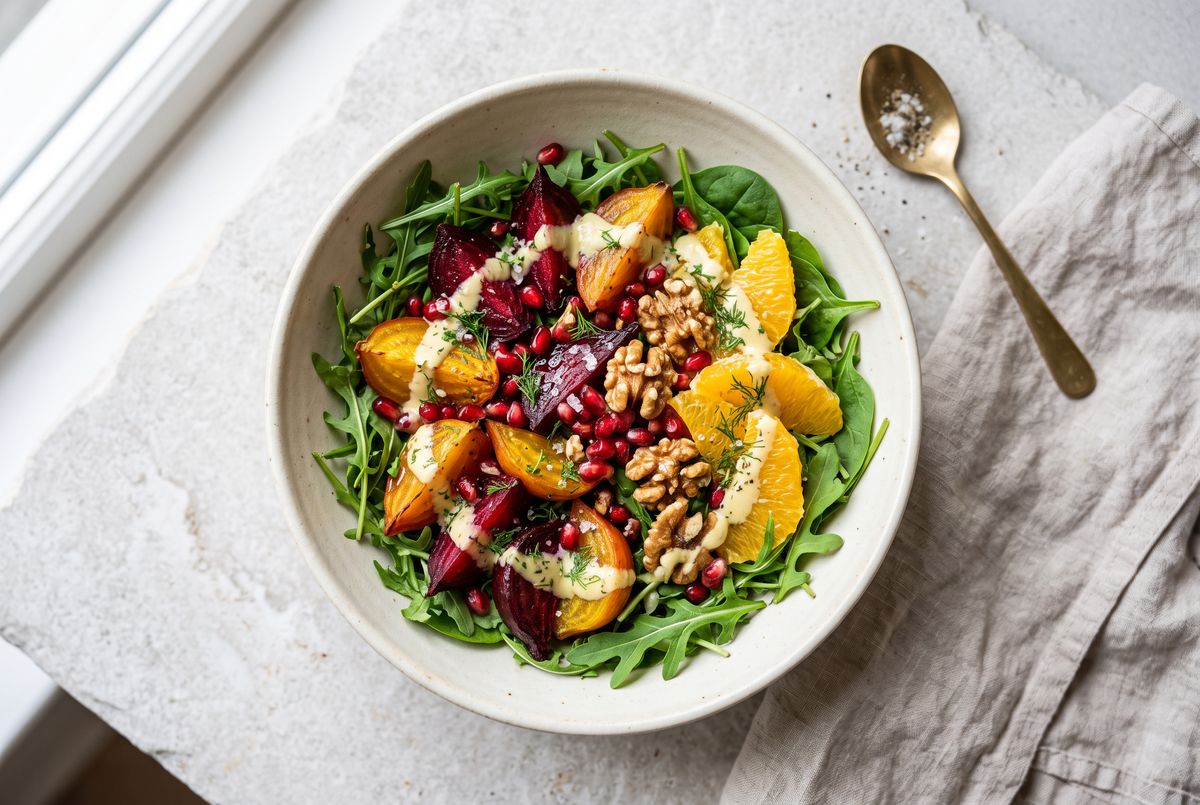
Beetroot and arugula are two of the richest dietary sources of nitrate — the raw material your body converts into nitric oxide…
 Nitric oxide
Watermelon is the richest everyday food source of L-citrulline — the amino acid your body converts into L-arginine, the raw…
 Nitric oxide
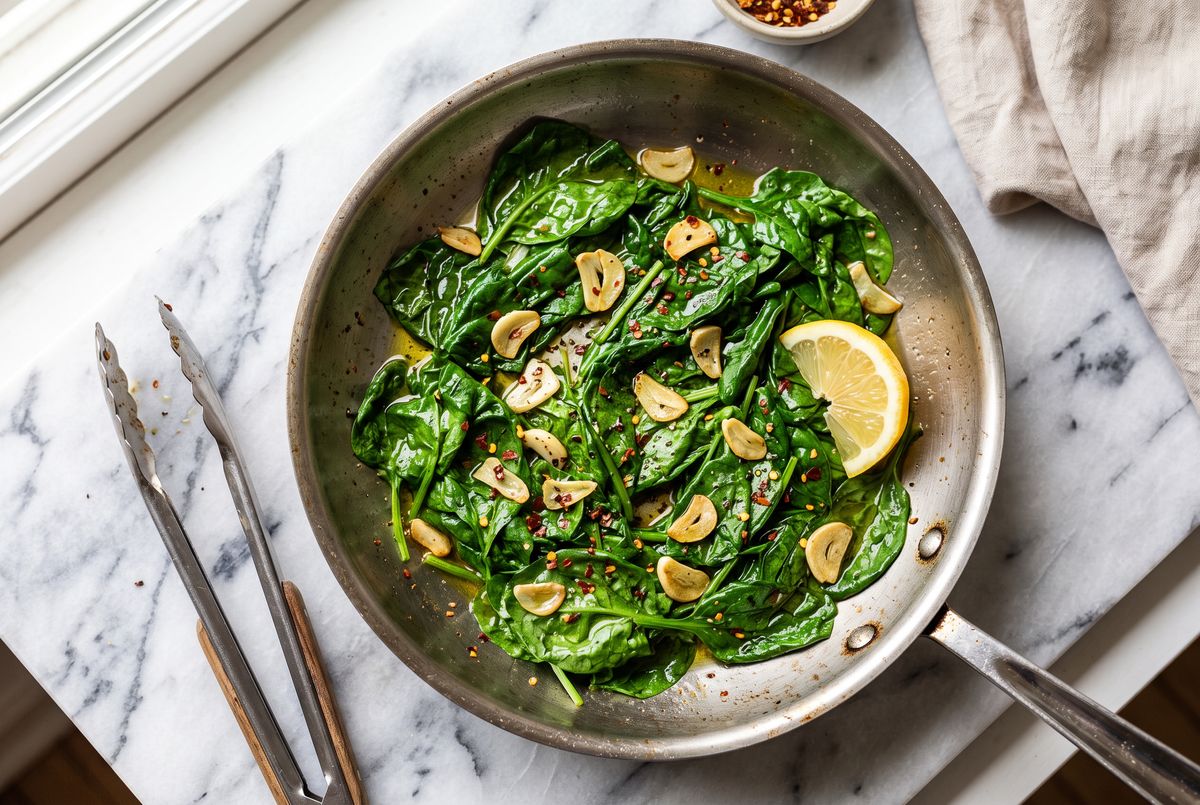
Spinach sits alongside arugula and beets at the top of the dietary-nitrate list, and a controlled trial found nitrate-rich…
Keep reading
Nitric oxideBeetroot & dietary nitrateBlood pressureThe endotheliumThe supplement guideResearch mapPathway universe