Celery, Fennel & Apple Slaw
Celery is quietly one of the higher-nitrate vegetables, and eating it raw and crunchy is the best way to keep that nitrate intact.
- Mechanism
- Nitric oxide
- Yield
- serves 4
- Ingredients
- 6
- Steps
- 3
- Cited studies
- 4
- Course
- Salad
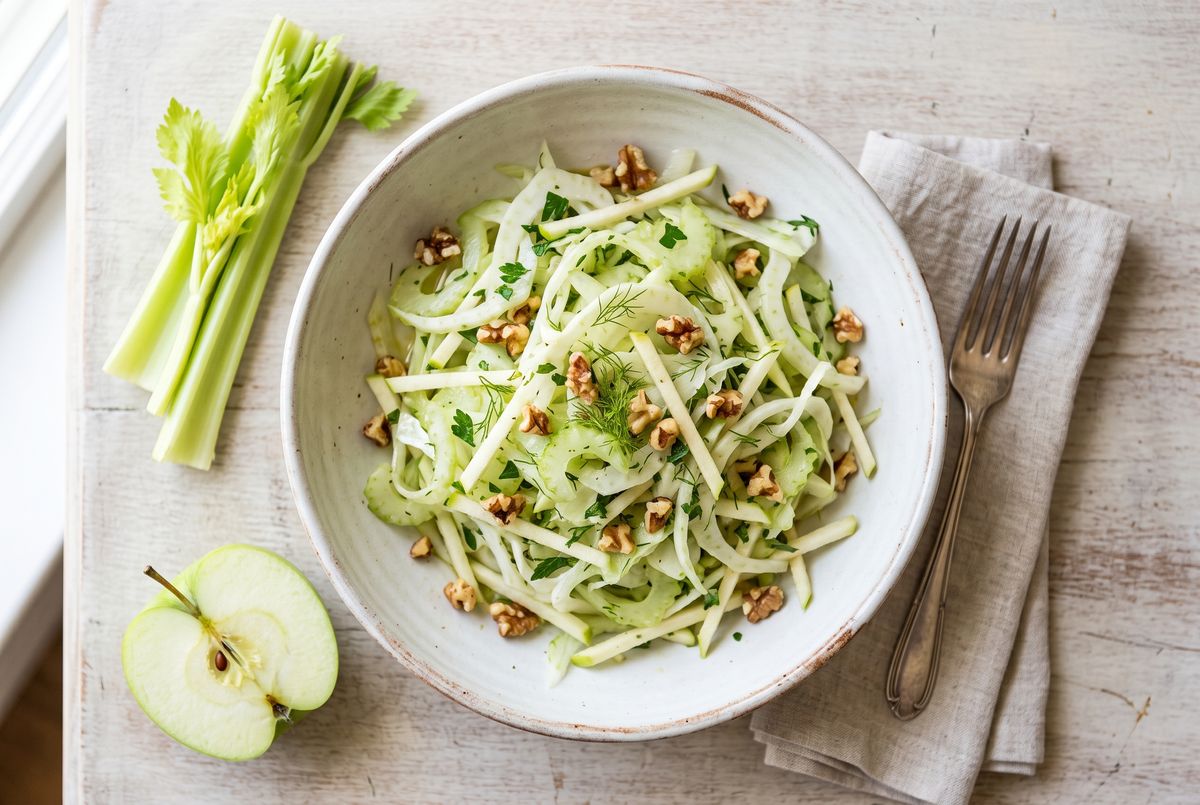
Celery gets treated as filler, but it sits among the higher-nitrate vegetables in food-composition reviews (American Journal of Clinical Nutrition, 2009) — and dietary nitrate is what your body draws on to make nitric oxide, the signal that relaxes blood vessel walls. Because nitrate dissolves in water, boiling is where it gets lost. Eating celery raw and cold, as here, keeps it where you want it.
Celery and parsley are also the leading dietary sources of the flavone apigenin, and apples are a classic source of quercetin — both identified in dietary survey work (Nutrition and Cancer, 2008). Quercetin itself has mostly been studied in animal and laboratory models, so treat it as promising rather than proven. Higher potassium intake, meanwhile, is associated with lower blood pressure in systematic reviews (BMJ, 2013).
Why this works
Celery is the nitrate here, and shaving it thin is what makes six stalks pleasant to eat rather than a chore. Fennel brings a cleaner, sweeter crunch that keeps the bowl from tasting like a health measure, and parsley adds to the apigenin the celery is already supplying. The green apple does two jobs: it is the quercetin source, and its acidity plus the lemon keeps everything else tasting bright. Walnuts add fat, which slows the whole thing down and makes it more filling. The vegetables and fruit together are also where the potassium comes in. Nothing is cooked, so nothing water-soluble goes anywhere.
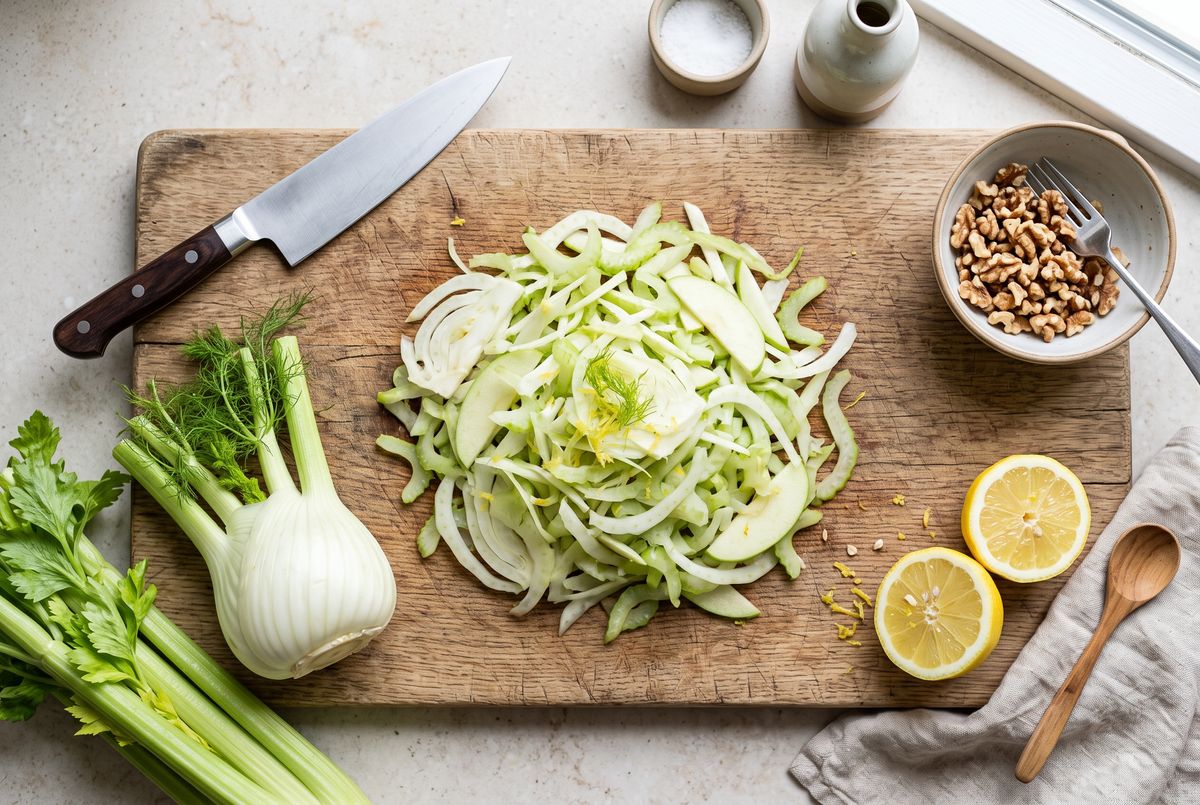
Ingredients · serves 4
- 6 stalks celery, very thinly sliced on the bias
- 1 small fennel bulb, shaved, fronds reserved
- 1 crisp green apple, julienned
- ¼ cup walnuts, toasted
- A large handful of flat-leaf parsley
- Dressing: juice of 1 lemon, 2 tbsp olive oil, 1 tsp Dijon, black pepper
Method
- Shave the celery and fennel as thinly as you can — a mandoline or vegetable peeler is ideal.
- Toss immediately with the lemon dressing so the apple does not brown.
- Fold in the parsley, walnuts and fennel fronds. Let it sit 10 minutes to soften slightly, then serve cold.
Getting the most from it
Toss this with the dressing no more than ten or fifteen minutes before it reaches the table. Salt and acid pull water out of celery and fennel quickly, and once the crunch has gone, so has most of the appeal. Slice everything as thinly as you can — a mandoline or a plain vegetable peeler beats a knife — and get the apple into the lemon straight away so it does not brown. Look for celery with stiff stalks and leaves that have not wilted.
Nutrition Facts
Calculated for one serving from USDA FoodData Central values for the ingredients above. An estimate, not a lab analysis.
How this was calculated. Each ingredient was converted to grams, matched to a food in USDA FoodData Central (SR Legacy, April 2018), summed, and divided by 4 servings. Cooking losses, draining and the real size of a handful all move these numbers, so treat them as a good estimate rather than a measurement. Added sugars count honey, maple syrup and table sugar only; sugar from whole fruit is not an added sugar.
- Celery, raw
- Fennel, bulb, raw
- Apples, raw, golden delicious, with skin
- Nuts, walnuts, english
- Parsley, fresh
- Lemon juice, raw
- Oil, olive, salad or cooking
- Mustard, prepared, yellow
24 PubMed citations
Meta-analyses of randomized trials show that beetroot juice and dietary nitrate lower blood pressure—about 5 mmHg…
18 PubMed citations
CD38 activity rises with age and drives the tissue decline of NAD+ that is linked to mitochondrial dysfunction…
25 PubMed citations
Meta-analyses of randomized trials indicate quercetin produces a small blood-pressure reduction—on the order of 2–3…
The research behind this recipe
Primary sources for the claims above. Effects reported in these papers describe the compound or the dietary pattern studied — not this specific dish.
More nitric oxide & blood flow recipes
 Nitric oxide
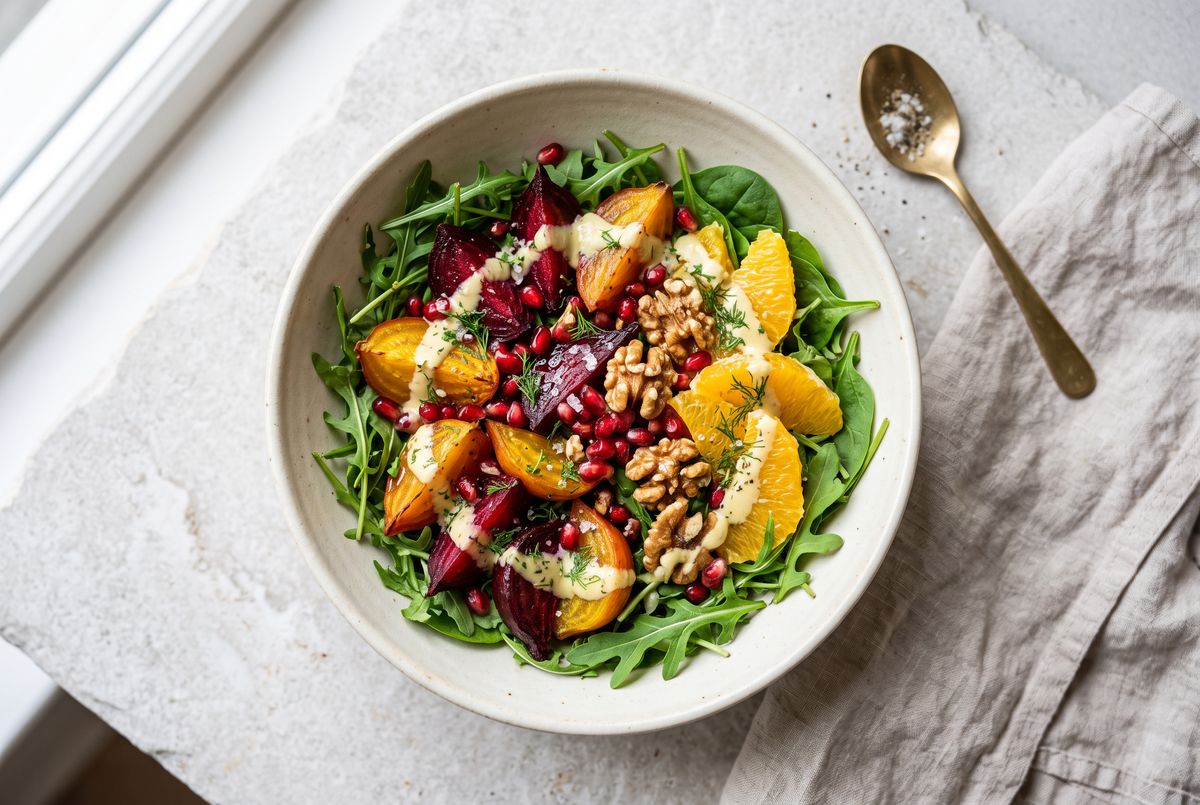
Beetroot and arugula are two of the richest dietary sources of nitrate — the raw material your body converts into nitric oxide…
 Nitric oxide
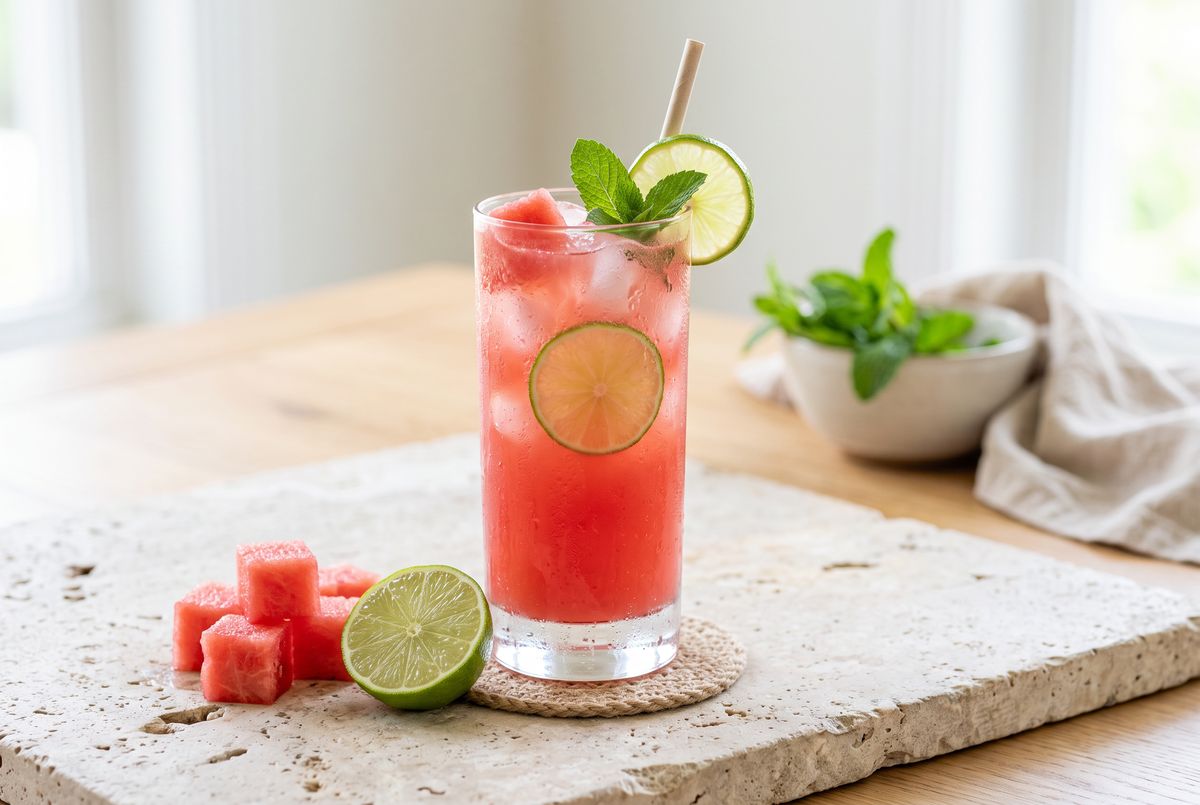
Watermelon is the richest everyday food source of L-citrulline — the amino acid your body converts into L-arginine, the raw…
 Nitric oxide
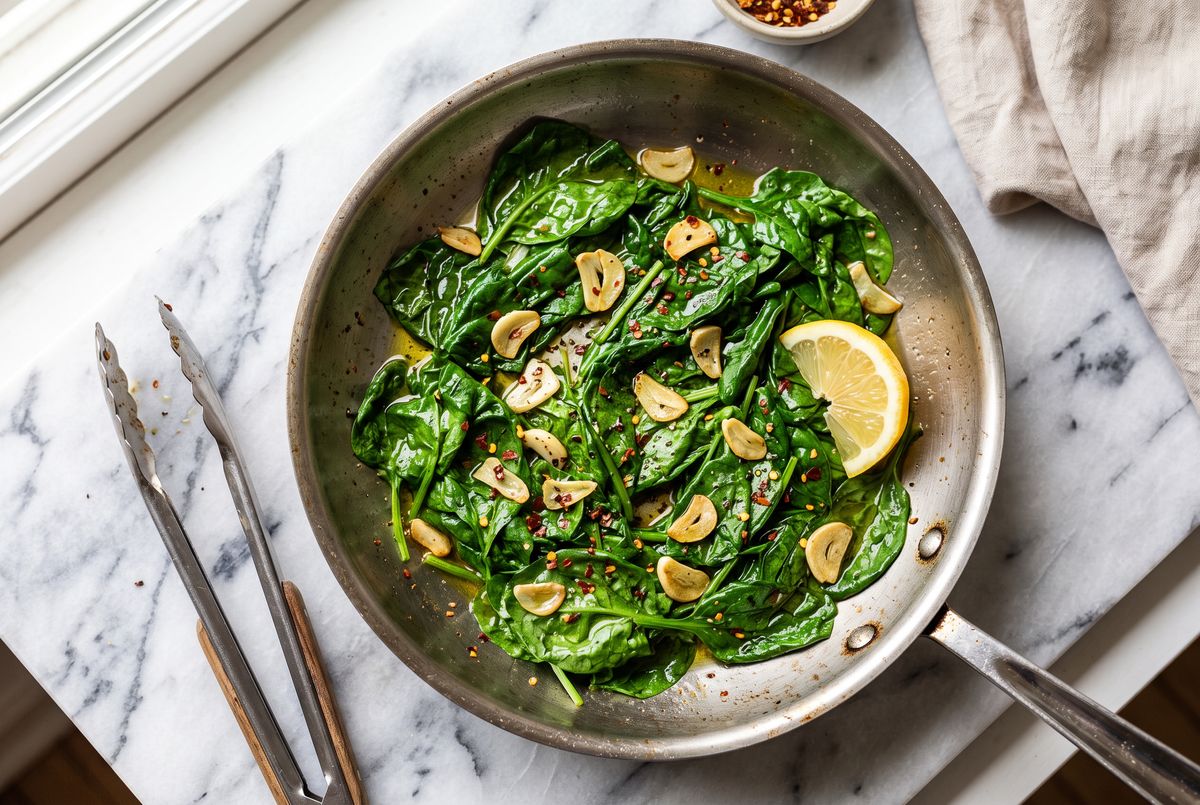
Spinach sits alongside arugula and beets at the top of the dietary-nitrate list, and a controlled trial found nitrate-rich…
Keep reading
Nitric oxideBeetroot & dietary nitrateBlood pressureQuercetinThe supplement guideResearch mapPathway universe