Dark Cocoa–Beet Recovery Smoothie
Two different routes to nitric oxide in one glass: nitrate from beets, and cocoa flavanols, whose vascular effect was traced specifically to epicatechin.
- Mechanism
- Nitric oxide
- Yield
- serves 2
- Ingredients
- 6
- Steps
- 3
- Cited studies
- 4
- Course
- Drink
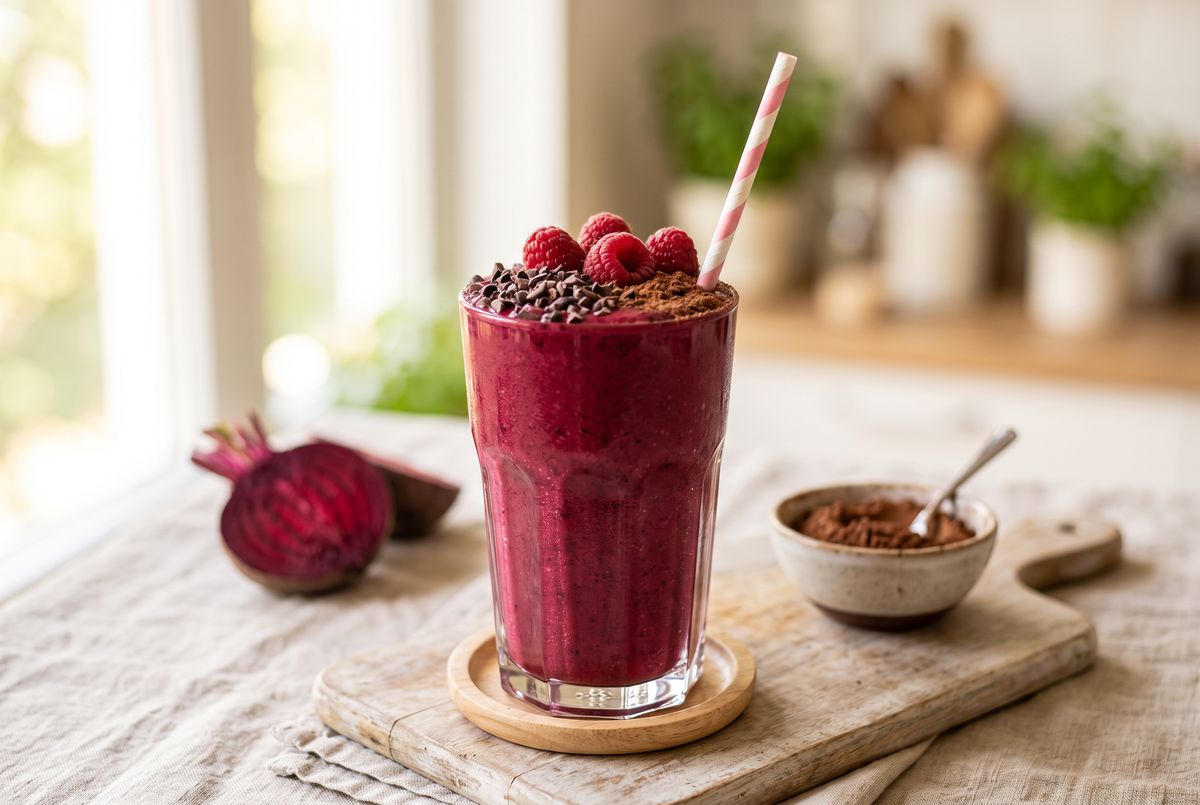
This smoothie takes two different roads to the same destination. The beets supply nitrate, which your body can convert toward nitric oxide. The cocoa supplies flavanols, which act on blood vessels by a separate route — a landmark human study traced the vascular benefit of flavanol-rich cocoa specifically to epicatechin, working through nitric oxide (Proceedings of the National Academy of Sciences, 2006).
The evidence is broader than that one study. A meta-analysis of short-term cocoa trials reported improvements across several cardiovascular risk factors, and a later systematic review and meta-analysis mapped a dose-response relationship between cocoa flavanols and endothelial function in randomized trials (Food and Function, 2019). On the beet side, a meta-analysis of inorganic nitrate and beetroot juice found blood-pressure reductions in adults. These are modest, short-term changes in measurements, not a substitute for treating high blood pressure.
Why this works
The beets and the cocoa are the two active ingredients, and they happen to taste good together — cooked beets are sweet and earthy, cocoa is bitter and earthy, and each covers the other's weak spot. Vacuum-packed beets save you the roasting time and work just as well here. A frozen banana does the job ice would do, thickening the drink without watering it down, and it carries enough sweetness that you do not need to add any. Raspberries bring acidity, which keeps a cocoa-and-root-vegetable drink from tasting heavy. The cacao nibs on top are texture, and a small reminder of what the cocoa is for.
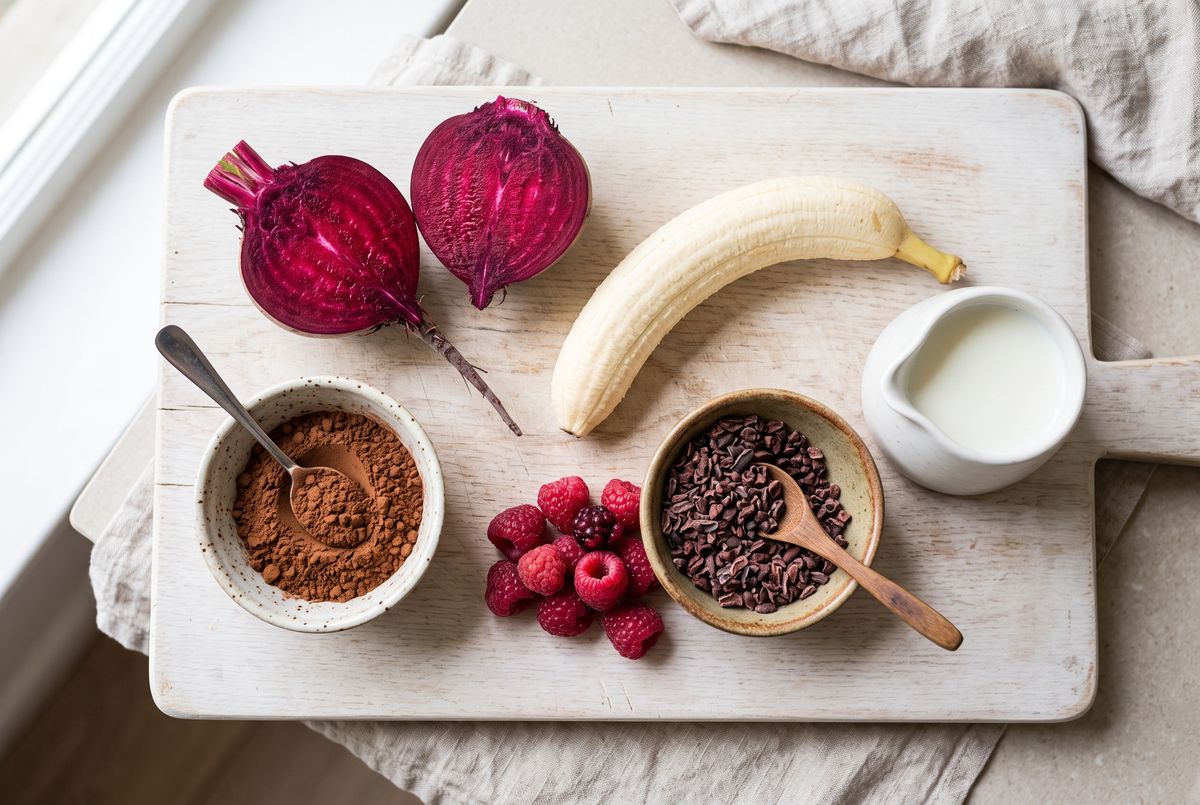
Ingredients · serves 2
- 1 cup cooked or vacuum-packed beets (about 2 small)
- 2 tbsp unsweetened cocoa powder
- 1 ripe banana, frozen
- ½ cup raspberries
- 1¼ cups milk of choice
- 1 tbsp cacao nibs, to finish
Method
- Blend the beets, cocoa, banana, raspberries and milk until completely smooth, 60–90 seconds.
- Taste — if the beets are very earthy, add a squeeze of lemon rather than sugar.
- Pour, scatter cacao nibs over the top, and drink soon after blending.
Getting the most from it
Buy plain unsweetened cocoa, not hot-chocolate mix. The flavanols are the active part and they are also the bitter part, so the more a cocoa product has been alkalized — Dutch-processed, on the label — or sweetened, the less of them is left. Natural non-alkalized cocoa tastes sharper, which is the trade. Drink it soon after blending, while the cocoa is still suspended and the color is still deep.
Nutrition Facts
Calculated for one serving from USDA FoodData Central values for the ingredients above. An estimate, not a lab analysis.
How this was calculated. Each ingredient was converted to grams, matched to a food in USDA FoodData Central (SR Legacy, April 2018), summed, and divided by 2 servings. Cooking losses, draining and the real size of a handful all move these numbers, so treat them as a good estimate rather than a measurement. Added sugars count honey, maple syrup and table sugar only; sugar from whole fruit is not an added sugar.
- Beets, cooked, boiled, drained
- Cocoa, dry powder, unsweetened
- Bananas, raw
- Raspberries, raw
- Milk, whole, 3.25% milkfat, with added vitamin D
21 PubMed citations
In the large COSMOS randomized trial of older adults, daily cocoa extract did not significantly reduce the primary…
24 PubMed citations
Meta-analyses of randomized trials show that beetroot juice and dietary nitrate lower blood pressure—about 5 mmHg…
25 PubMed citations
In human trials, Pycnogenol has improved flow-mediated dilation and other measures of endothelial function in people…
The research behind this recipe
Primary sources for the claims above. Effects reported in these papers describe the compound or the dietary pattern studied — not this specific dish.
More nitric oxide & blood flow recipes
 Nitric oxide
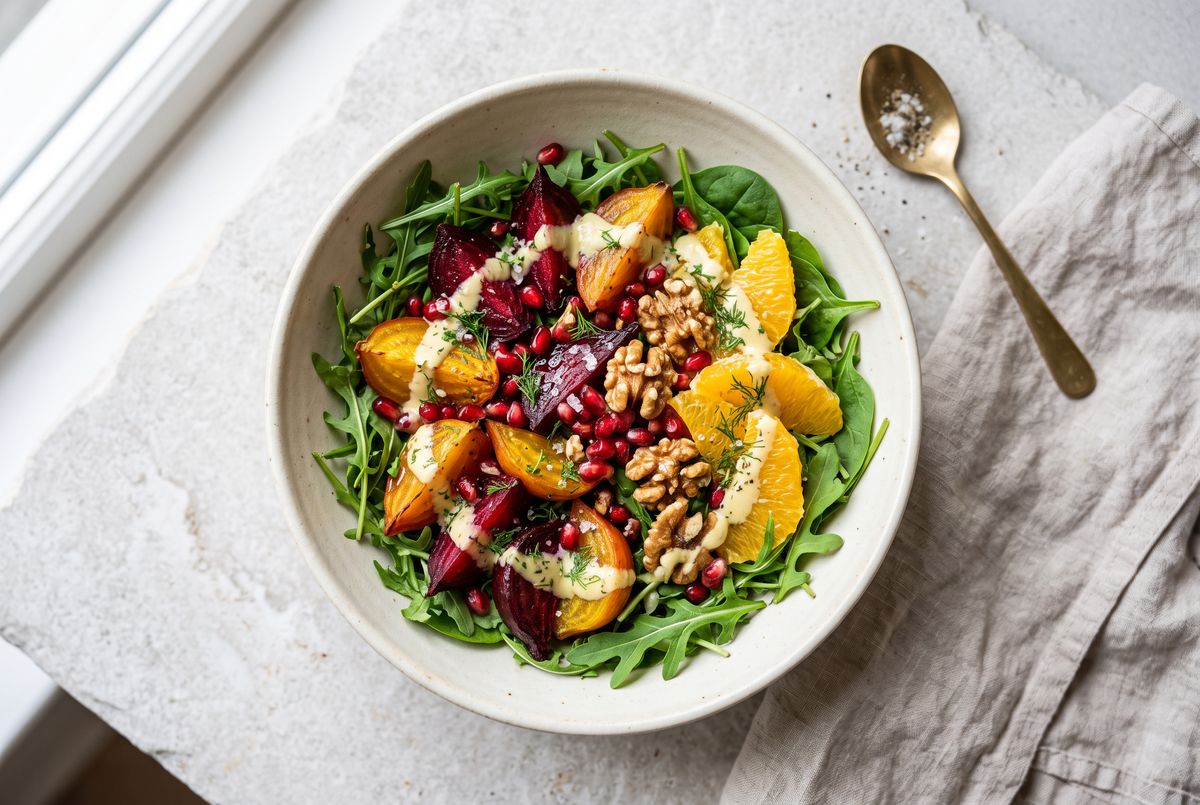
Beetroot and arugula are two of the richest dietary sources of nitrate — the raw material your body converts into nitric oxide…
 Nitric oxide
Watermelon is the richest everyday food source of L-citrulline — the amino acid your body converts into L-arginine, the raw…
 Nitric oxide
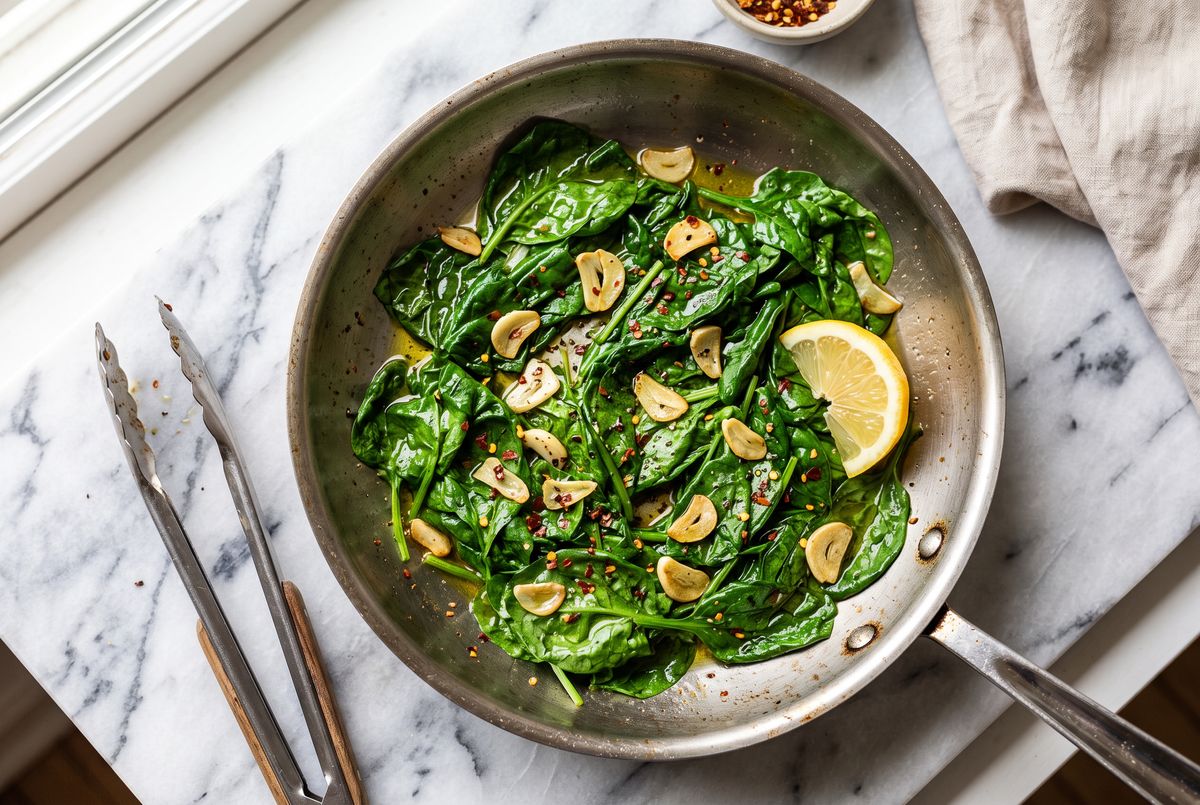
Spinach sits alongside arugula and beets at the top of the dietary-nitrate list, and a controlled trial found nitrate-rich…
Keep reading
Nitric oxideBeetroot & dietary nitrateBlood pressureThe endotheliumThe supplement guideResearch mapPathway universe