Quercetin French Onion & White Bean Soup
Deeply caramelized onions are one of the most concentrated quercetin foods in the pantry; white beans and bone broth turn the bistro classic into a fiber- and glycine-forward dinner.
- Mechanism
- Senolytics
- Cited studies
- 4
- Course
- Soup
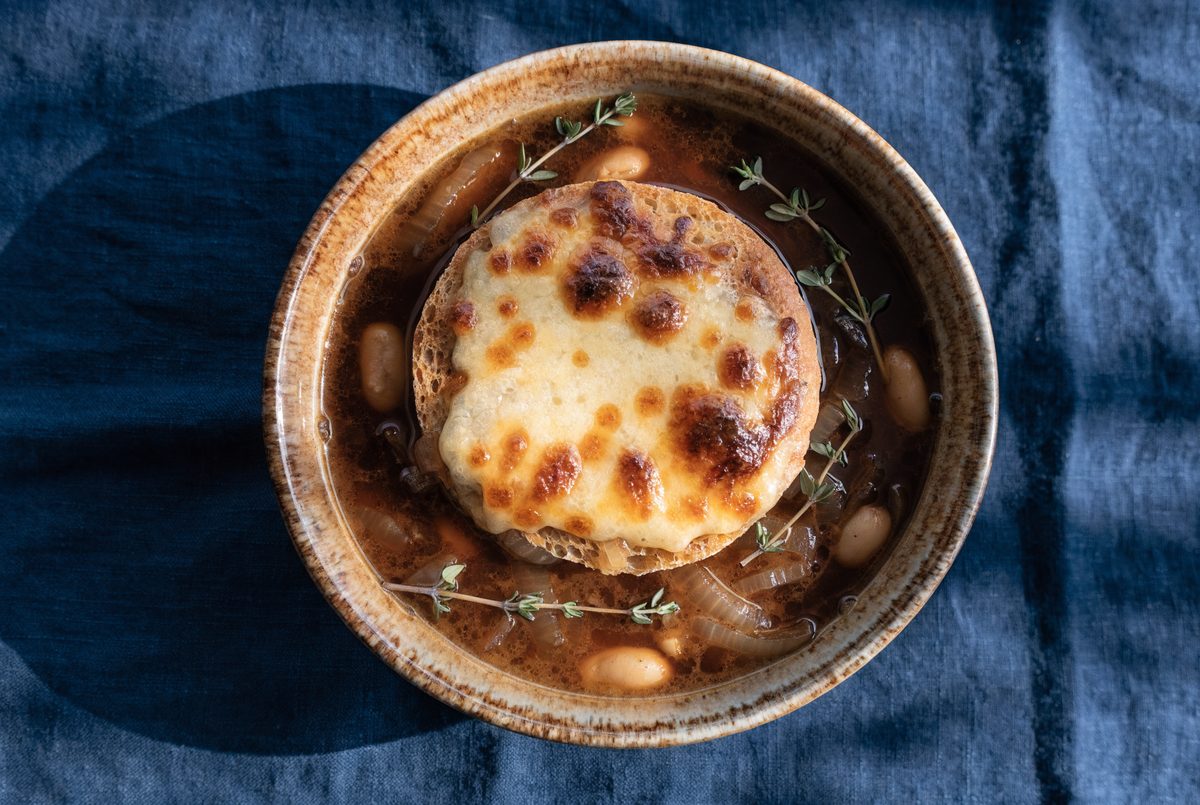
Onions are among the richest ordinary sources of quercetin, and slow caramelization concentrates them by driving off most of their water. Whether that matters is a dose question worth stating plainly: a meta-analysis of randomized trials (Journal of the American Heart Association, 2016) found quercetin supplementation lowered systolic blood pressure by about 3 mmHg, but the effect showed at doses of 500 mg a day and up — a very large bowl of this soup delivers a fraction of that. The direction is encouraging; the arithmetic is humbling.
Quercetin's senolytic reputation comes from drug-level work, not dinner. The first human senolytic report (EBioMedicine, 2019) gave dasatinib — a chemotherapy agent — plus 1,000–1,250 mg of quercetin to patients with diabetic kidney disease and found fewer senescent cells in fat and skin afterward; it was small, short, and uncontrolled. Food cannot replicate that protocol and should not claim to. What food-scale evidence does support is the rest of the pot: garlic modestly lowered blood pressure in hypertensive trial participants (BMC Cardiovascular Disorders, 2008), and a landmark series of systematic reviews (The Lancet, 2019) tied 25–29 g of daily fiber to 15–30% reductions in all-cause mortality across 185 prospective studies and 58 trials. Beans and onions are both, quietly, fiber delivery systems.
Why this works
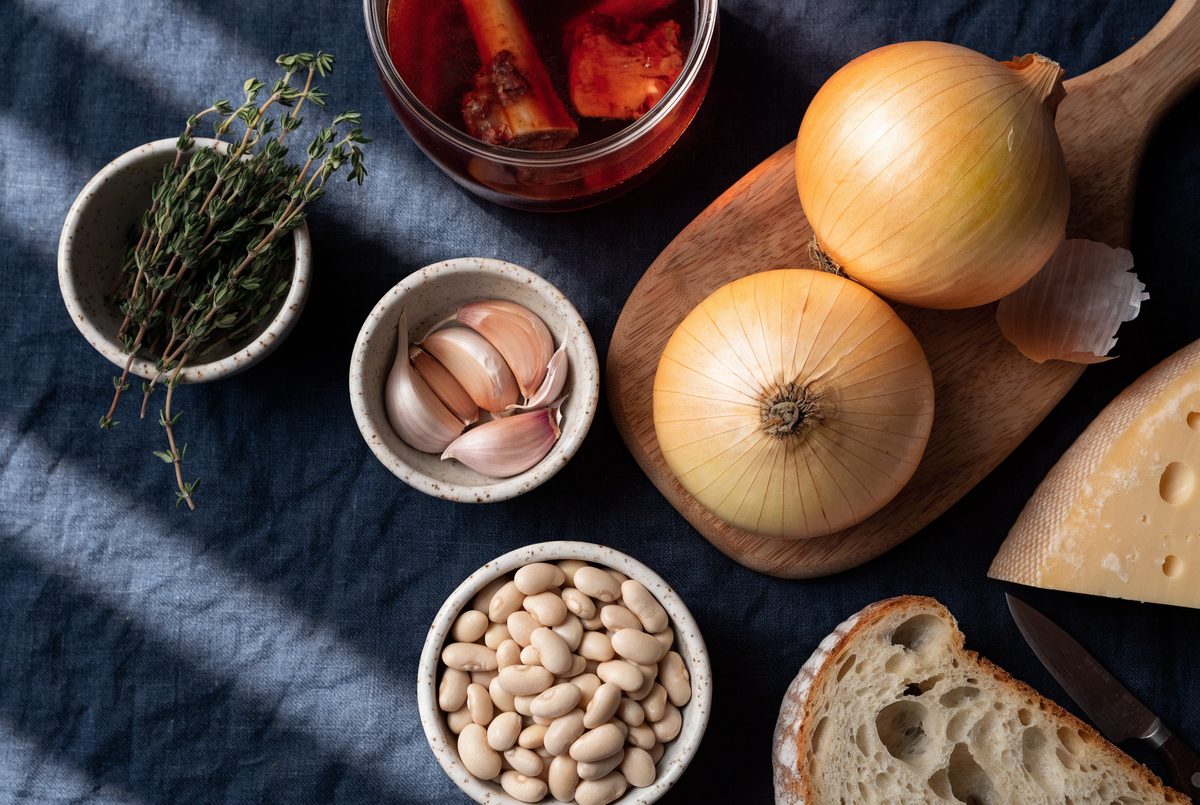
Yellow onions contribute quercetin plus inulin, a fermentable fiber that survives caramelizing. White beans add resistant starch and enough protein to make the soup a meal. Beef bone broth is the glycine-rich collagen backbone French onion soup always secretly had. Garlic — crushed, rested, added late — brings allicin, fresh thyme its polyphenols, and the sourdough lid with Gruyère is there because a soup you actually crave beats an optimized one you abandon.
How to make it
- Slice 1 kg of yellow onions and cook them in 3 tablespoons of olive oil with a pinch of salt over medium-low heat, stirring often, 40–50 minutes, until deep mahogany. Do not rush this stage.
- Crush 3 garlic cloves, rest them 10 minutes, then stir them in with the leaves of 4 thyme sprigs for one minute.
- Deglaze with a splash of dry white wine or water, scraping up the browned layer.
- Add 1 liter of beef bone broth and 2 cups of cooked white beans; simmer 15 minutes and season.
- Ladle into ovenproof bowls, float a slice of toasted sourdough on each, top with grated Gruyère, and broil until molten and blistered.
- Rest 5 minutes before serving — the interior is lava.
Serves 4. The caramelized-onion base freezes well; make a double batch and the second soup costs you ten minutes.
25 PubMed citations
Meta-analyses of randomized trials indicate quercetin produces a small blood-pressure reduction—on the order of 2–3…
21 PubMed citations
Randomized trials and meta-analyses indicate that inulin-type fructans reliably increase stool frequency and improve…
18 PubMed citations
Small human trials report that about 3 g of glycine before bedtime improves subjective sleep quality and reduces…
The research behind this recipe
Primary sources for the claims above. Effects reported in these papers describe the compound or the dietary pattern studied — not this specific dish.
More cellular housekeeping: autophagy, mitophagy & senescent cells recipes
 Autophagy
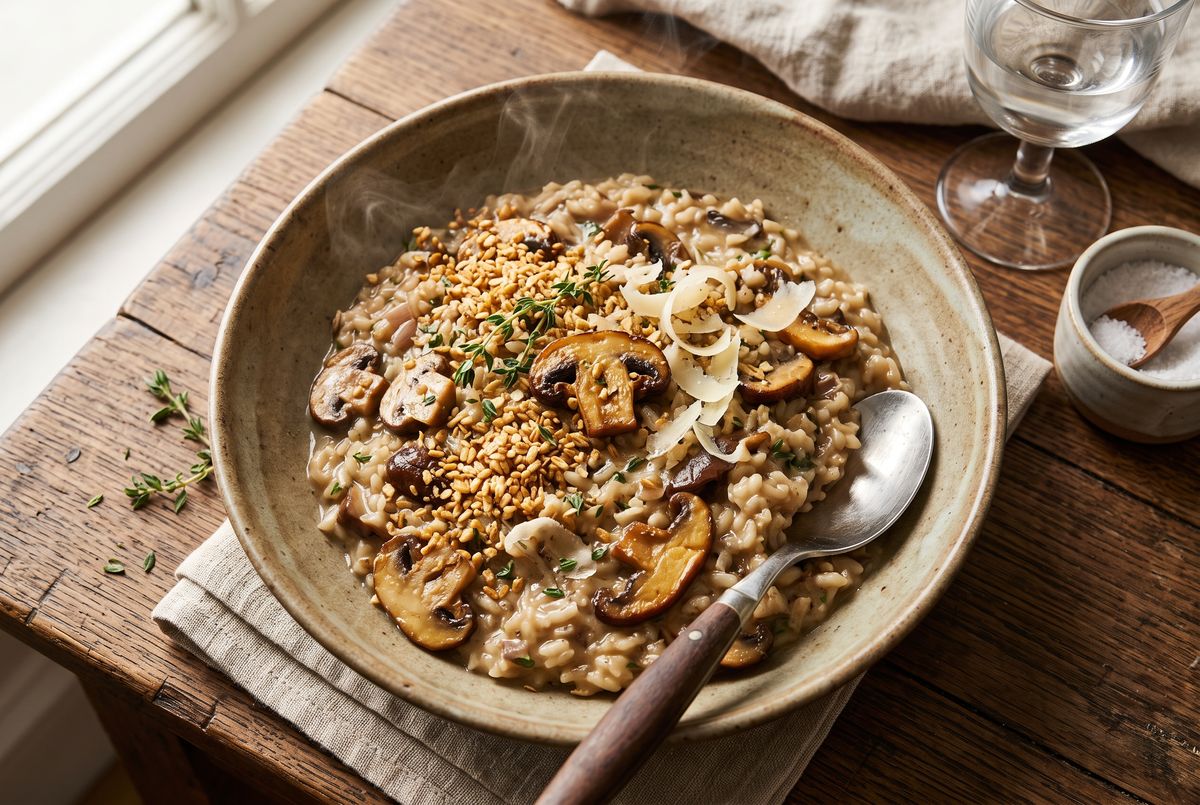
Wheat germ is the densest common food source of spermidine, the polyamine tied to autophagy — and it toasts into risotto like a…
 Mitophagy
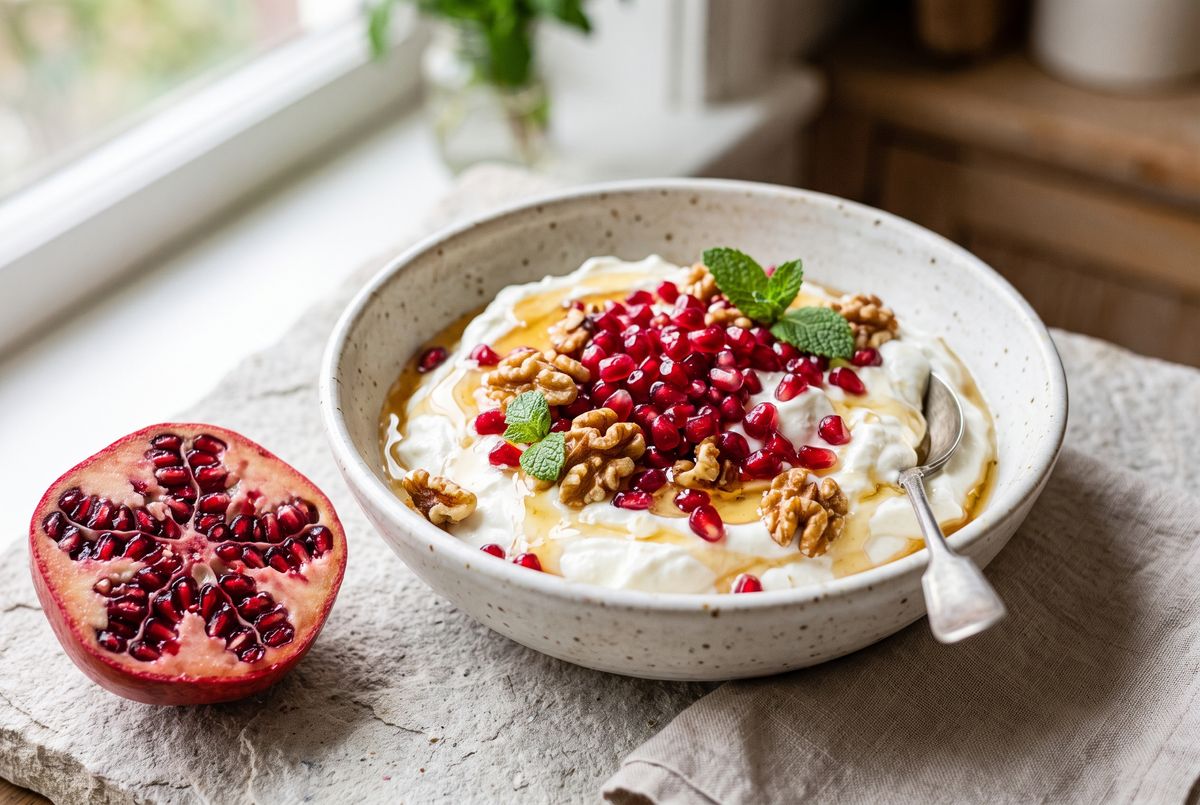
You cannot eat urolithin A directly — your gut bacteria make it from the ellagitannins in pomegranate and walnuts, and only some…
 Senolytics
Strawberries are the leading dietary source of fisetin, the flavonoid at the center of senolytic research — though food amounts…
Keep reading
Blood pressureCollagenGlycineSenolyticsSenolytics: the evidenceThe supplement guideResearch mapPathway universe