Pomegranate–Walnut Yogurt Bowl
You cannot eat urolithin A directly — your gut bacteria make it from the ellagitannins in pomegranate and walnuts, and only some people's microbiomes do it well.
- Mechanism
- Mitophagy
- Yield
- serves 2
- Ingredients
- 6
- Steps
- 3
- Cited studies
- 5
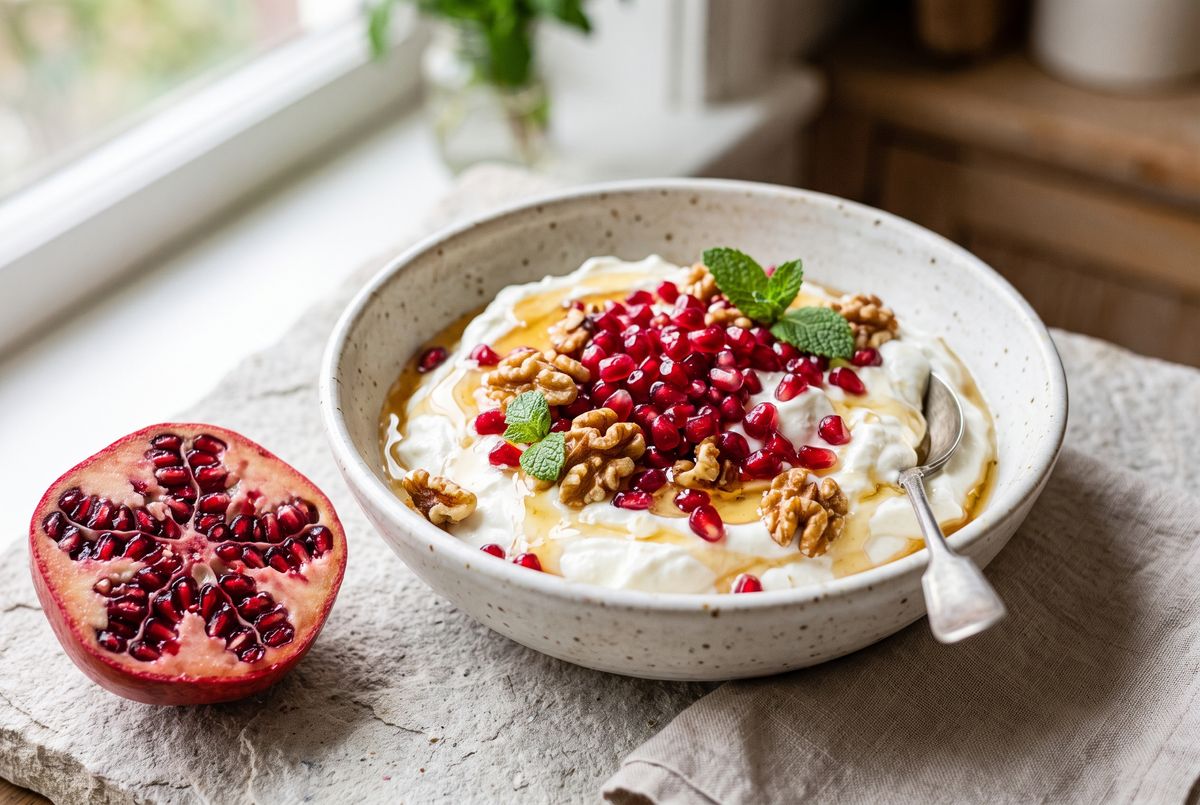
Urolithin A, the compound behind the mitophagy supplements, is not present in any food. What food gives you is the raw material: ellagitannins and ellagic acid, concentrated in pomegranate, walnuts and berries, which your gut bacteria then convert. Reviews of urolithin metabolism and of pomegranate's interaction with the microbiome describe the same handoff — the plant supplies the precursor, the bacteria do the chemistry.
That last step is where people differ. Human work on pomegranate and walnut ellagitannins (Clinical Nutrition, 2018) has sorted people into distinct urolithin metabotypes, and a short walnut-eating study in healthy adults tracked the same split — so a meaningful share of people produce little urolithin A from food alone. That variation is the honest reason the supplement exists. This bowl gives your microbiome the substrate; what it does with it is individual.
Why this works
Pomegranate and walnuts are the classic dietary sources of ellagitannins, and they come at it from different directions — the arils deliver theirs in juicy, sharp bursts, while the walnuts add theirs alongside fat and plant omega-3 that keep the bowl from being a sugar hit. Toasting the walnuts is about texture, not chemistry. The Greek yogurt is the third element: live cultures and enough protein to make this a meal rather than a snack. Honey is optional, and the mint and cinnamon are there because a bowl you enjoy is a bowl you actually repeat.
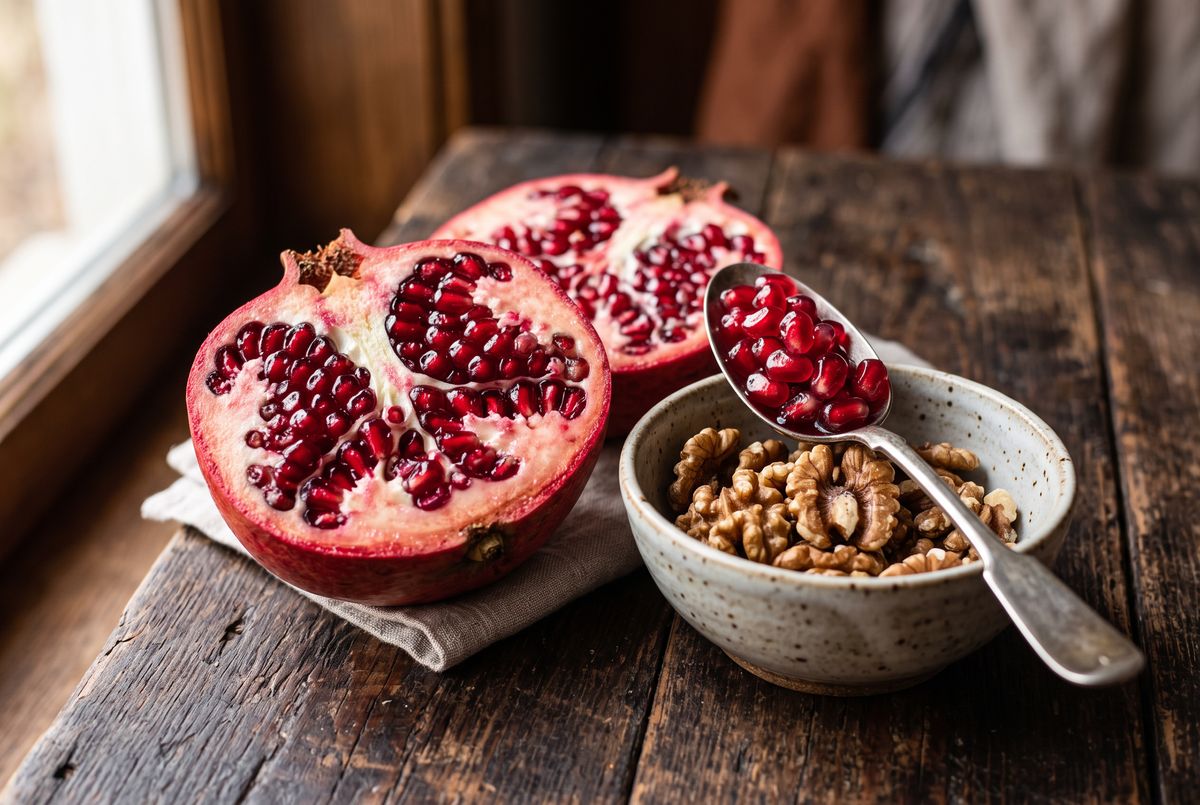
Ingredients · serves 2
- 1½ cups plain Greek yogurt
- Seeds of 1 pomegranate (about ¾ cup arils)
- ⅓ cup walnuts, toasted and roughly chopped
- 1 tsp honey (optional)
- A few mint leaves
- Cinnamon
Method
- Toast the walnuts briefly and let them cool so they stay crisp in the yogurt.
- Spoon the yogurt into two bowls and hollow the center slightly.
- Pile in the pomegranate arils and walnuts, add honey if you want it, and finish with mint and a dusting of cinnamon.
Getting the most from it
Pick a pomegranate that feels heavy for its size, and score the skin under water if you would rather not repaint the kitchen; refrigerated arils work fine out of season. Toast the walnuts and cool them completely so they stay crisp. And hold the expectation loosely — whether you turn these ellagitannins into urolithin A depends on which bacteria you happen to be carrying, so the bowl supplies the raw material without guaranteeing the reaction.
Nutrition Facts
Calculated for one serving from USDA FoodData Central values for the ingredients above. An estimate, not a lab analysis.
How this was calculated. Each ingredient was converted to grams, matched to a food in USDA FoodData Central (SR Legacy, April 2018), summed, and divided by 2 servings. Cooking losses, draining and the real size of a handful all move these numbers, so treat them as a good estimate rather than a measurement. Added sugars count honey, maple syrup and table sugar only; sugar from whole fruit is not an added sugar.
- Yogurt, Greek, plain, whole milk
- Pomegranates, raw
- Nuts, walnuts, english
- Honey
20 PubMed citations
In human research, urolithin A supplementation is safe and bioavailable and improves markers of mitochondrial health.…
25 PubMed citations
In human research, the ellagitannin-derived metabolite urolithin A has improved muscle strength, endurance, and…
24 PubMed citations
The strongest human evidence is indication-specific: a Cochrane review of 31 trials (8,672 participants) found…
The research behind this recipe
Primary sources for the claims above. Effects reported in these papers describe the compound or the dietary pattern studied — not this specific dish.
More cellular housekeeping: autophagy, mitophagy & senescent cells recipes
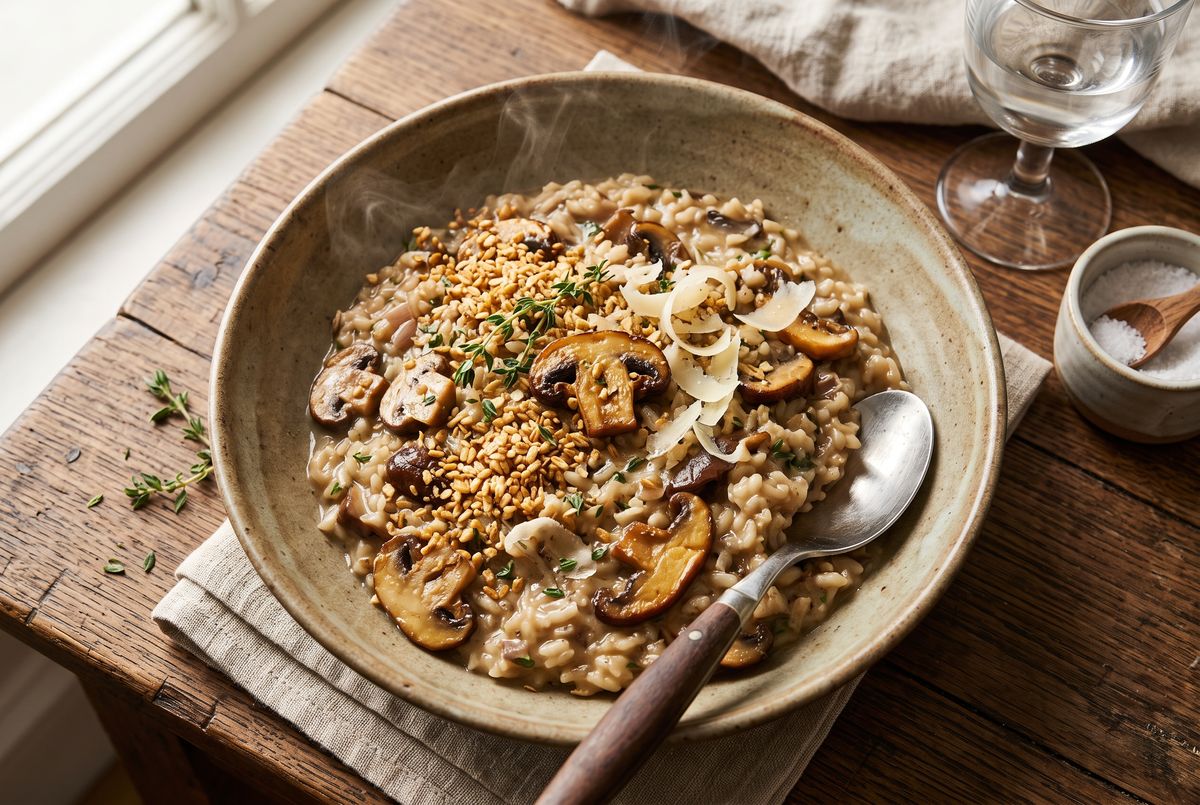 Autophagy
Wheat germ is the densest common food source of spermidine, the polyamine tied to autophagy — and it toasts into risotto like a…
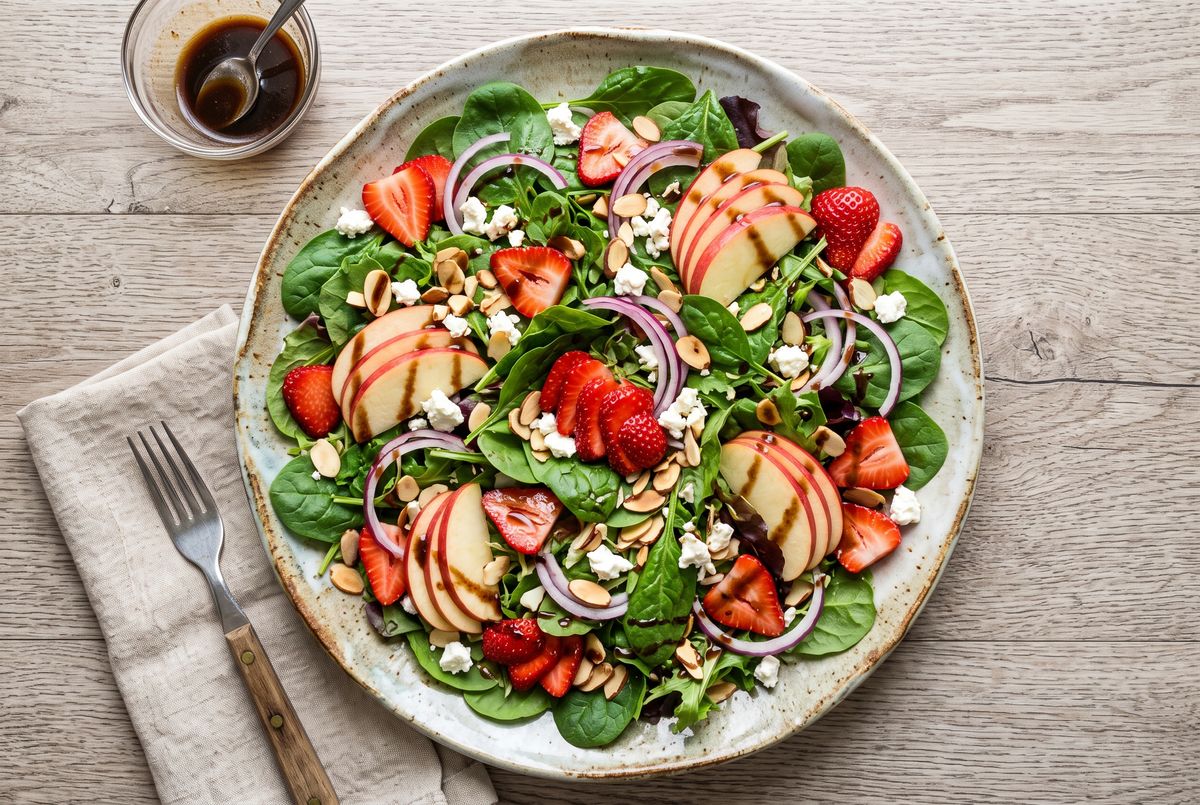 Senolytics
Strawberries are the leading dietary source of fisetin, the flavonoid at the center of senolytic research — though food amounts…
 Autophagy
Natto tops published spermidine tables, and higher spermidine intake tracked with lower 20-year mortality in the Bruneck cohort.…
Keep reading
Urolithin AOmega-3The microbiomeProbioticsUrolithin A: the evidenceOmega-3: the evidenceUrolithin A (Mitopure) and MuscleThe supplement guideResearch mapPathway universe