Tart Cherry & Kiwi Nightcap
Montmorency cherry juice is the sleep intervention with the most actual trial data behind it — and the results are real but modest.
- Mechanism
- Sleep
- Yield
- serves 1
- Ingredients
- 4
- Steps
- 3
- Cited studies
- 2
- Course
- Drink
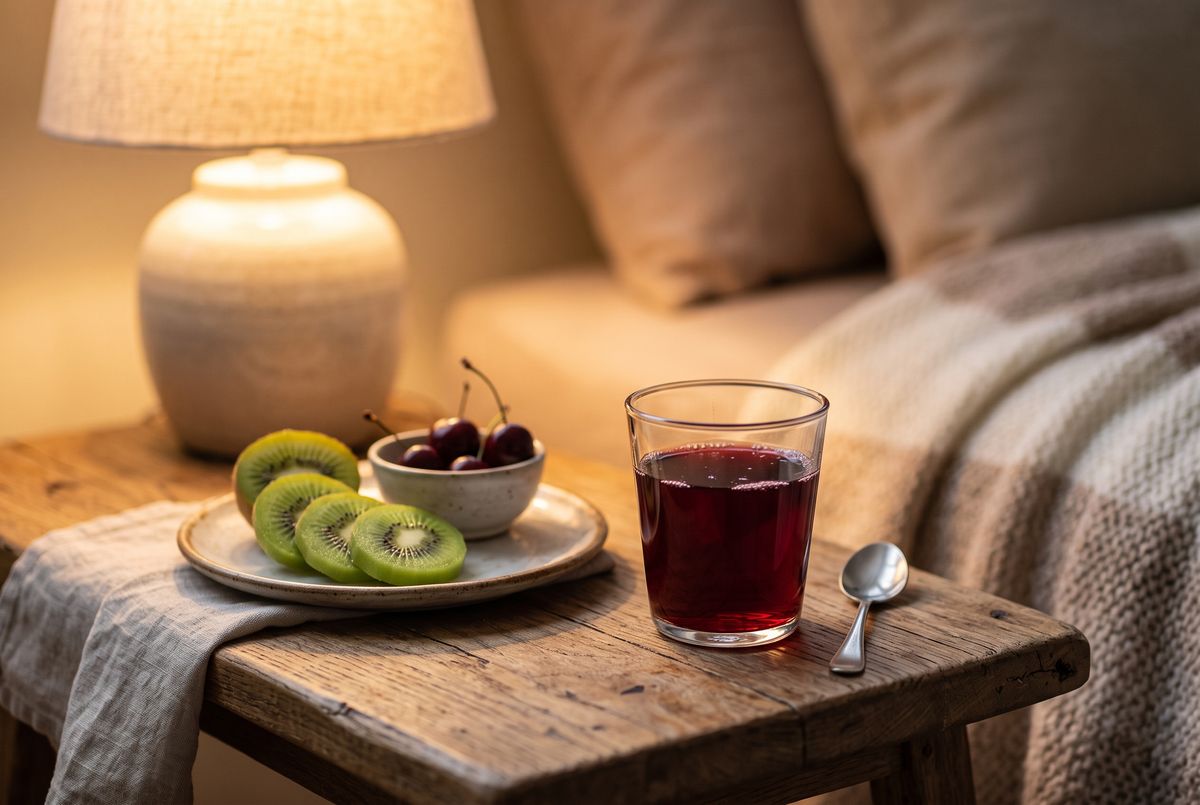
Of all the drinks proposed for sleep, tart Montmorency cherry juice has the most actual trial data behind it. In a placebo-controlled study of tart cherry juice concentrate (European Journal of Nutrition, 2012), sleep measures improved in adults, and the fruit — Prunus cerasus — is a natural source of melatonin, which is the mechanism usually offered for why it might work.
The reality check matters just as much. A more recent trial of Montmorency tart cherry supplementation in healthy adults (Nutrition and Health, 2026) found no impact on sleep, so this is not an effect you can count on: it varies between people and it is not dramatic. Kiwi has been studied for sleep as well, on a smaller evidence base.
Why this works
This one is as much ritual as ingredient. A cup of unsweetened tart cherry juice about an hour before bed leaves time for it to be part of winding down, and is early enough that you are not woken later by a full bladder. Sparkling water lightens it without adding sugar. Two kiwis alongside give you something to eat rather than only to drink, and kiwi is the other fruit with any sleep research attached to it. Chamomile tea afterwards adds warmth and a clear signal that the evening is closing, and keeping the lights low while you drink probably does more for your sleep than anything in the glass.
Ingredients · serves 1
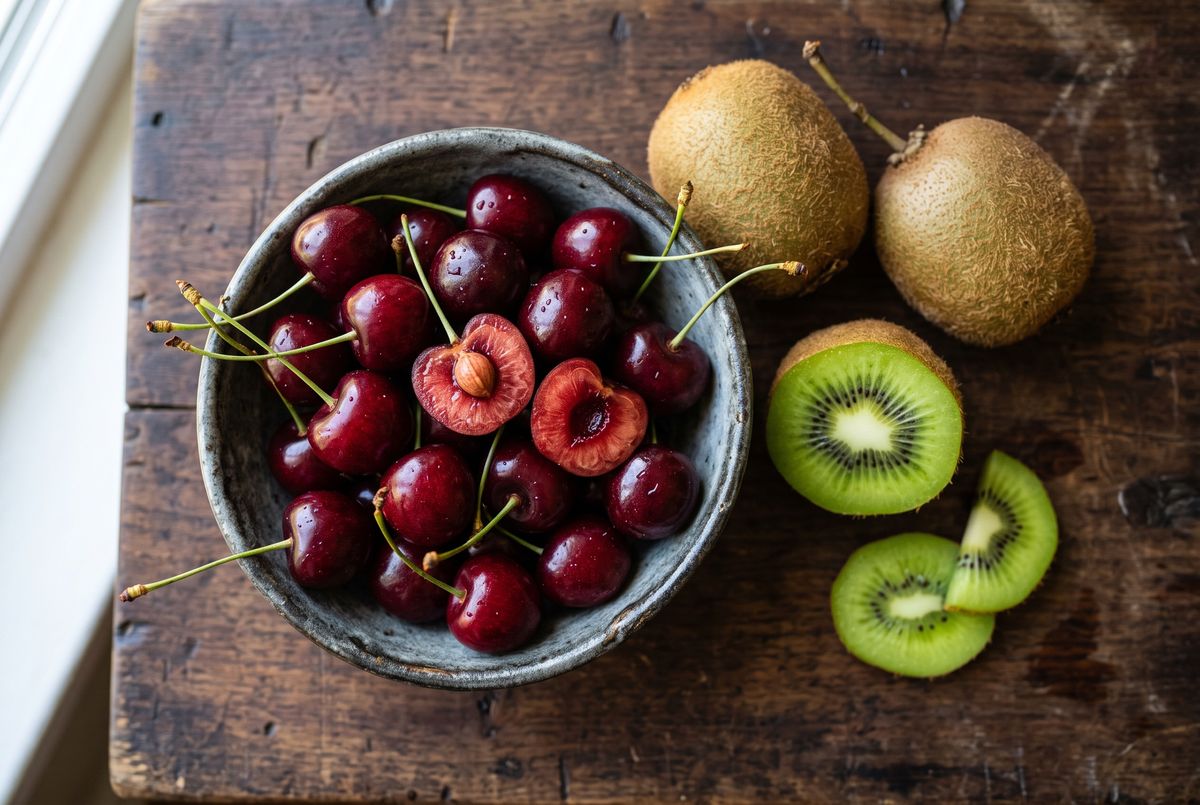
- 1 cup 100% tart cherry juice (Montmorency), unsweetened
- 2 ripe kiwis, peeled and sliced
- Sparkling water, to top (optional)
- A cup of chamomile tea, to follow
Method
- Pour the tart cherry juice into a small glass about an hour before bed. Top with sparkling water if you want it lighter.
- Eat the sliced kiwi alongside.
- Follow with chamomile tea if you like the ritual — and keep the lights low, which does more for sleep than any drink.
Getting the most from it
Read the label: you want 100 percent unsweetened tart cherry juice, not sweetened cherry cocktail. Even the real thing is a genuine sugar load in a cup, so keep it to one glass, and skip it if you are managing blood glucose. Concentrate diluted with water is cheaper and works the same. And if poor sleep is persistent, that is a conversation for a doctor rather than something a drink will fix.
Nutrition Facts
Calculated for one serving from USDA FoodData Central values for the ingredients above. An estimate, not a lab analysis.
How this was calculated. Each ingredient was converted to grams, matched to a food in USDA FoodData Central (SR Legacy, April 2018), summed, and divided by 1 serving. Cooking losses, draining and the real size of a handful all move these numbers, so treat them as a good estimate rather than a measurement. Added sugars count honey, maple syrup and table sugar only; sugar from whole fruit is not an added sugar.
- Cherry juice, tart
- Kiwifruit, green, raw
20 PubMed citations
In small randomized and crossover trials, tart cherry juice or concentrate has modestly increased total sleep time (by…
19 PubMed citations
Pooled analyses of randomized trials indicate oral magnesium lowers blood pressure by a small amount—about 2 mmHg in a…
18 PubMed citations
CD38 activity rises with age and drives the tissue decline of NAD+ that is linked to mitochondrial dysfunction…
The research behind this recipe
Primary sources for the claims above. Effects reported in these papers describe the compound or the dietary pattern studied — not this specific dish.
More brain, eyes & sleep recipes
 Choline & brain
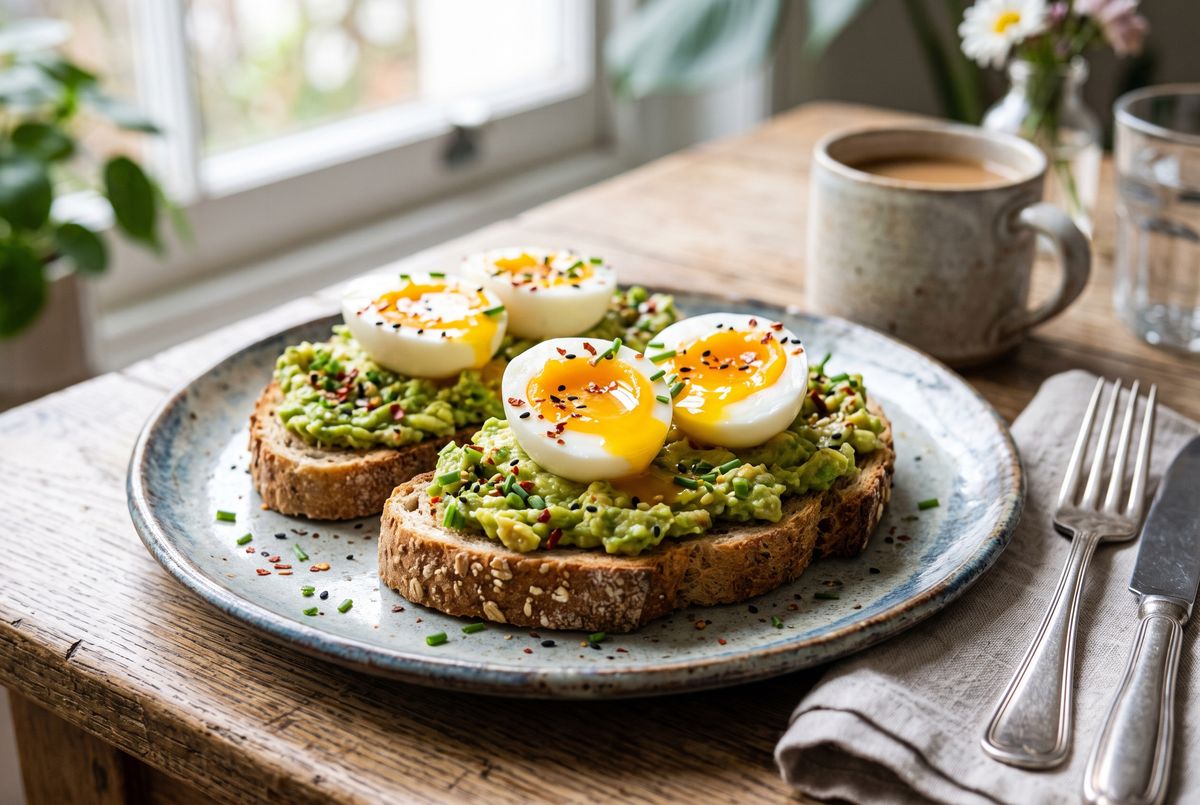
Egg yolk is the densest everyday source of phosphatidylcholine — and the same yolk carries the lutein your retina concentrates.
 Brain health
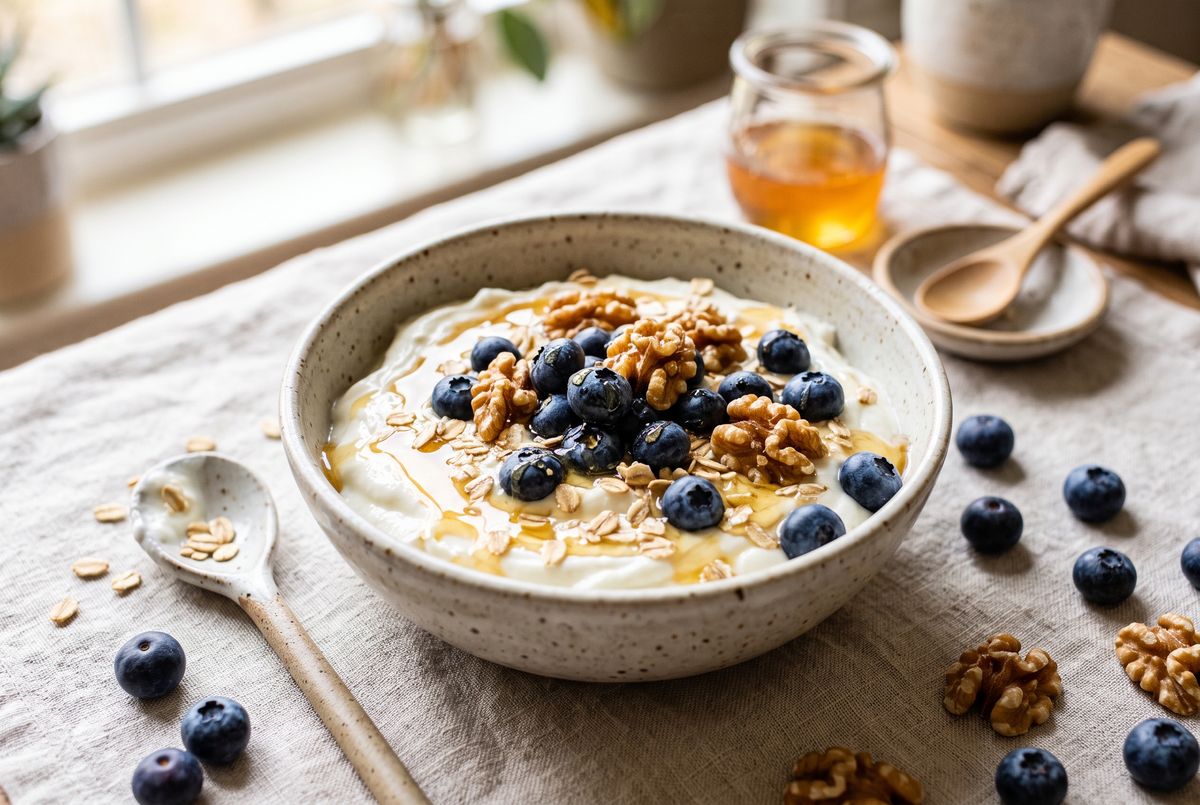
Berry anthocyanins and walnut omega-3 are the two most studied food components in cognitive aging research — and they happen to…
 Choline & brain
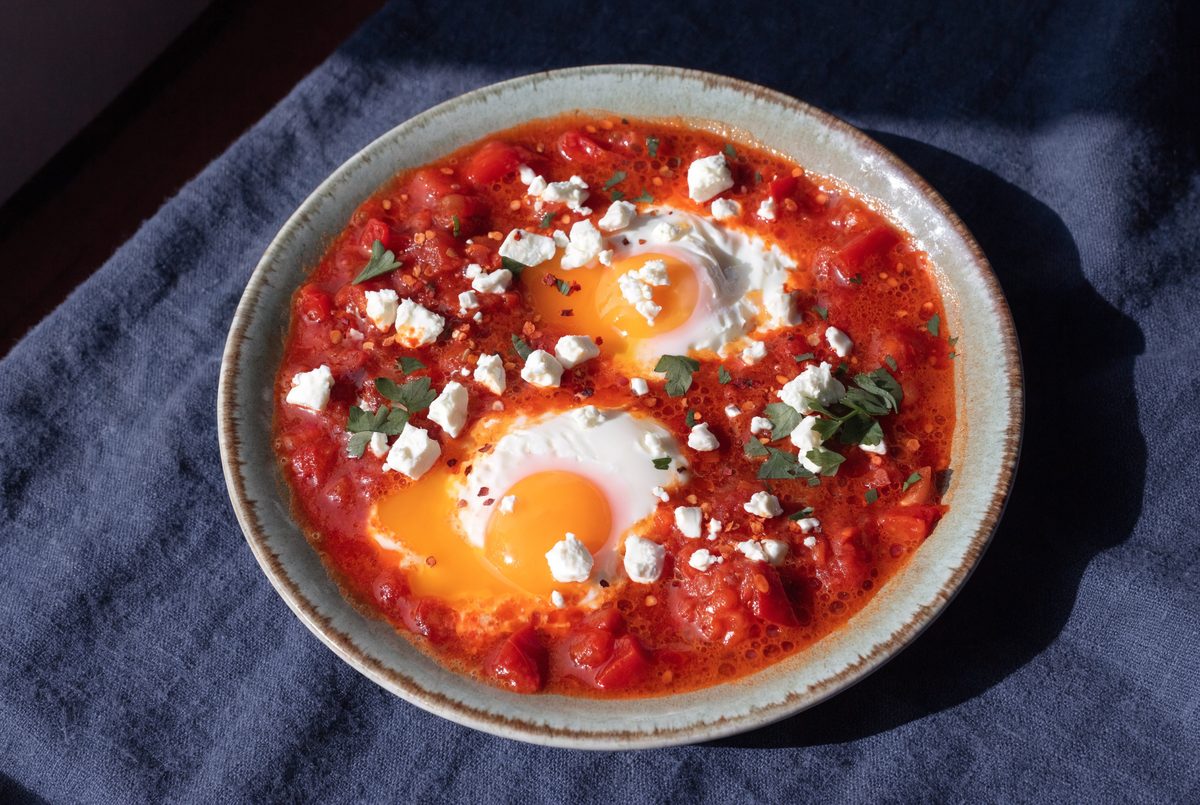
Two eggs deliver roughly 300 mg of choline — most of a day's target — poached in a tomato-pepper sauce whose cooked lycopene is…