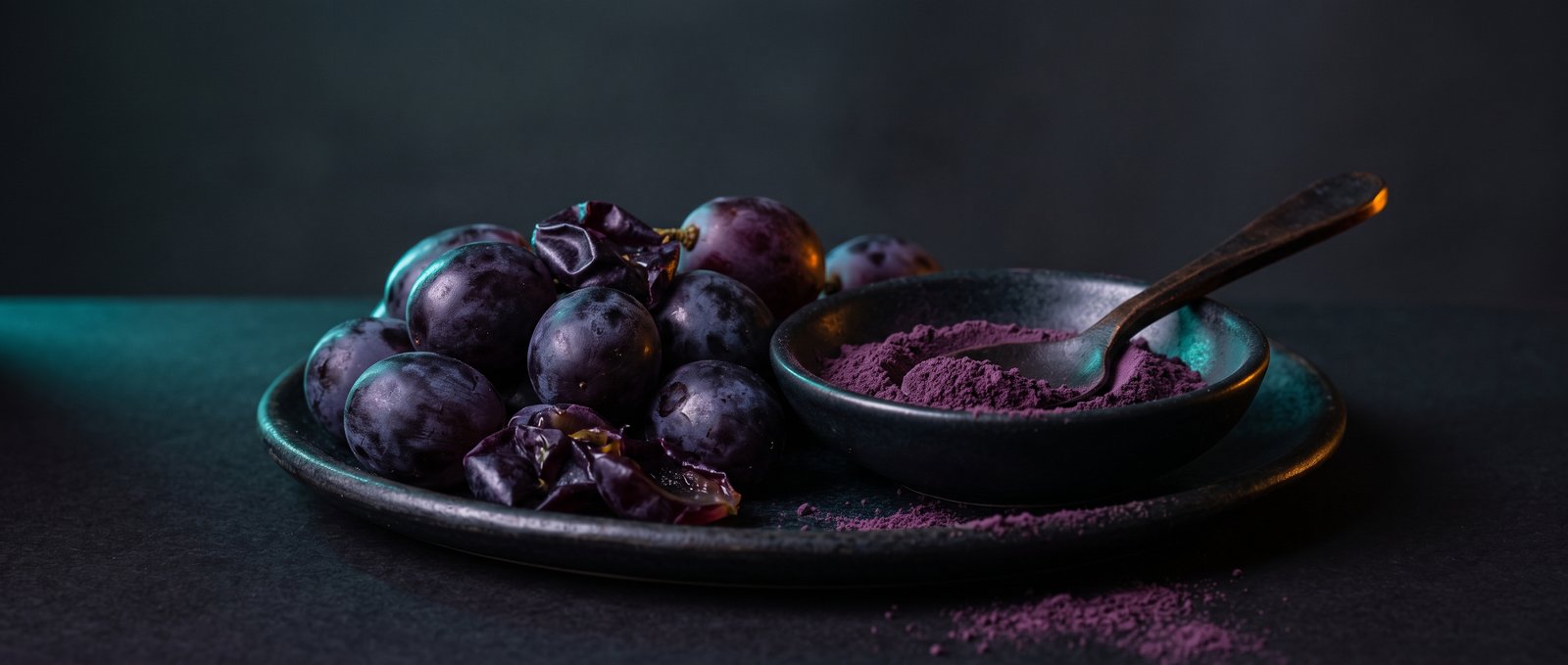
Resveratrol is the polyphenol behind the 'French paradox,' studied for activating sirtuin longevity pathways. Here is the human evidence and what to look for.
Browse polyphenol supplements →Read the full evidence review. Our physician-reviewed look at every human resveratrol trial, including the null results: Resveratrol: What the Human Evidence Shows →
Trans-resveratrol — the active form — is studied for activating sirtuins (SIRT1), the same pathway engaged by caloric restriction. Dietary amounts from red wine are tiny, and absorption is poor, so a standardized trans-resveratrol supplement (often paired with fat or piperine) is the practical route. Many stacks combine it with NMN.
Linked to mechanism and PubMed citations.
In human health, the best-supported effects of resveratrol come from randomized trials and meta-analyses in people with metabolic or cardiovascular…
It reliably engages sirtuin pathways in the lab; human outcome data are mixed and evolving. Each product links to the current evidence.
Trials commonly use 150–500 mg/day of trans-resveratrol, taken with fat for absorption.
Many longevity stacks pair NMN (an NAD⁺ precursor) with trans-resveratrol because sirtuins depend on NAD⁺.
Trans-resveratrol is the biologically active isomer; look for products standardized to it.
Sirtuins, bioavailability, and the human evidence.
Browse polyphenol supplements →