Every Half Hour for Twenty-Four Hours: the Blood-Pressure Test That Sees in the Dark
Ambulatory blood pressure — especially nighttime and 24-hour averages — predicts death and cardiovascular events more strongly than clinic readings, unmasking hidden risk; but no randomized trial has yet proven ABPM-guided treatment improves outcomes.
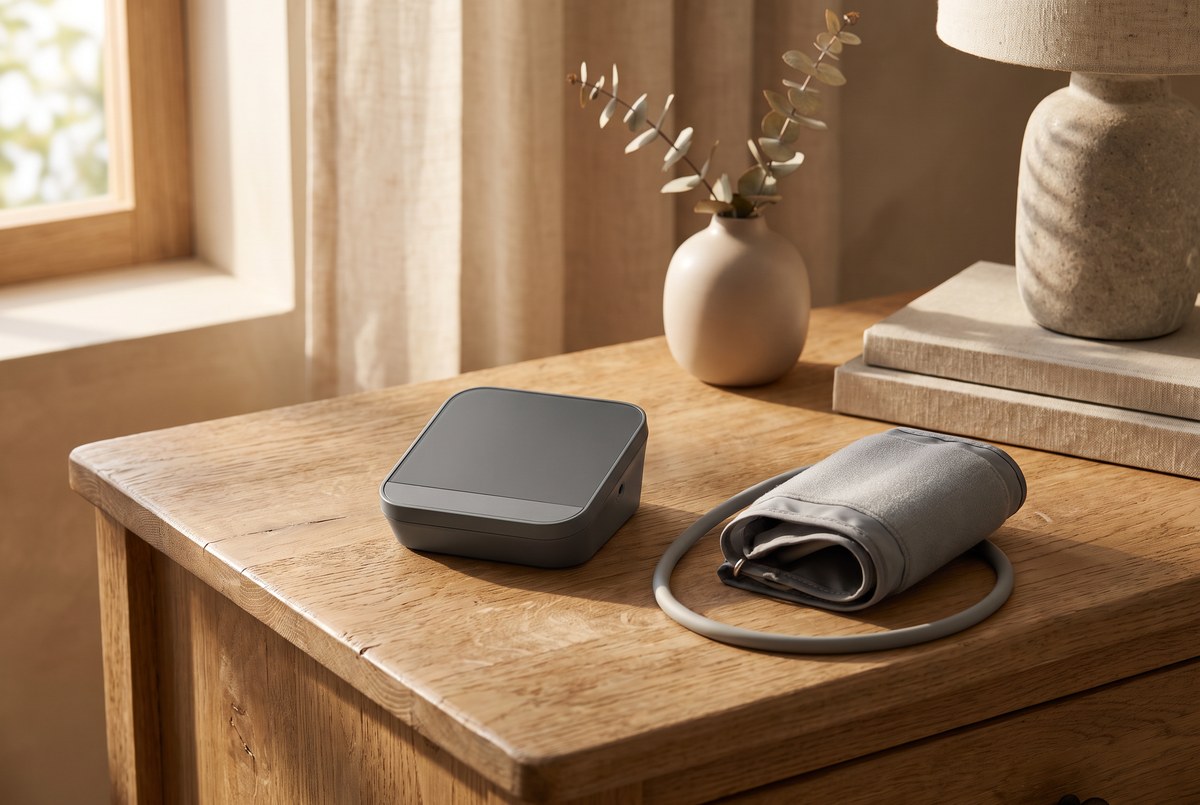
Three in the morning. Dead sleep. Then — whirrr — a cuff on your upper arm wakes up, squeezes, listens, lets go. Every twenty to thirty minutes. All day, all night. Through meetings, commutes, dinner, dreams. The ambulatory blood pressure monitor: the nosiest device in cardiology, building a 24-hour movie out of what the clinic only photographs once.
And the movie keeps revealing characters the photograph never caught. White-coat hypertension — pressure that spikes only under fluorescent lights. Masked hypertension — the sinister reverse: calm in the clinic, dangerous at home. Non-dippers, whose pressure refuses its nightly fall. The single reading, it turns out, was a coin flip wearing a lab coat — which is why the US Preventive Services Task Force and the 2025 AHA/ACC hypertension guideline both say: confirm a hypertension diagnosis with out-of-office measurement before treatment — and ABPM, recording while life actually happens, is the reference standard for doing exactly that. The one-off cuff is over.
The question this article answers: does the 24-hour pattern actually predict who gets hurt? The answer is one of the strongest in preventive cardiology — built on prospective cohorts and pooled analyses of more than 10,000 people, replicated across continents and decades — with one gaping hole at the end.
The prognostic machine
Start with the Dublin outcome study: ambulatory measurement beat clinic measurement at predicting mortality. Full stop. Then the JAMP study — practitioner-based, nationwide, Japanese — tying nighttime blood-pressure phenotypes to cardiovascular prognosis. Pooled analyses of more than 10,000 people converge on the same shape: nighttime and 24-hour average pressure predict events and all-cause and cardiovascular death more strongly than the clinic number; masked hypertension carries substantial risk; white-coat hypertension carries comparatively little; and the more of the day readings stay within guideline target ranges, the lower the observed risk.
Variability — the second signal
The monitor catches something else, too: how much the pressure swings. A 2016 BMJ analysis of blood-pressure level and variability, and a 2023 meta-analysis, tie long-term systolic variability to mortality and cardiovascular events; a 2012 Stroke meta-analysis links the ambulatory systolic-diastolic regression pattern — dipping and its absence — to clinical events across longitudinal studies. The stutter in the signal is itself a signal.
The hole in the evidence
Now pump the brakes. These are cohorts, and meta-analyses of cohorts — association, extraordinarily consistent association, but association all the same. People who get 24-hour monitoring differ from people who do not; the recordings themselves can change behavior on the day they are worn. Dipping status is only modestly reproducible: the same person can dip on Monday and refuse to dip on Thursday, which makes any single night's classification fragile. And no randomized trial has proven that ABPM-guided treatment improves outcomes — the evidence shows the device sees risk better, not that seeing it better has yet been shown to change it. The benefit flows from better hypertension management; the device is a lens, not a treatment.
Practical meaning
For anyone told their pressure is high on a single office reading: out-of-office confirmation is what major guidelines already recommend — ask for it, because the answer changes who actually needs medication and who was merely nervous under fluorescent lights. For the self-tracker, the numbers with the deepest evidence are the nighttime average, the 24-hour average, and the proportion of readings in range.
The cuff fires again at 3:24 a.m. Nobody wakes; the machine takes its reading and files it away with the rest. The data accumulates in the dark — and the dark, it turns out, was where the risk was hiding all along. Educational, not medical advice.
The takeaway
Out-of-office, 24-hour blood pressure is the reference standard and the stronger predictor of risk — guidelines already say to confirm diagnoses with it — but the device is a lens, not a treatment.
References
5 peer-reviewed sources, published 2005–2023, across 5 journals. 2 of them have a full Magellan study write-up linked below.
- BMJ · 2016 · PMID 27511067 · DOI 10.1136/bmj.i4098Variations in blood pressure over long, mid, and short terms are linked to increased risks of cardiovascular disease and mortality, independent of average blood pressure. Read our full write-up →
- Curr Probl Cardiol · 2023 · PMID 38103812 · DOI 10.1016/j.cpcardiol.2023.102343Higher long-term systolic blood pressure variability is associated with increased risks of death and cardiovascular events, particularly stroke. Read our full write-up →
- Hypertension · 2005 · PMID 15939805 · DOI 10.1161/01.HYP.0000170138.56903.7a
- Circulation · 2020 · PMID 33131317 · DOI 10.1161/CIRCULATIONAHA.120.049730
- Stroke · 2012 · PMID 22282885 · DOI 10.1161/STROKEAHA.111.636688
Mechanisms and molecules in this article
Each links to its Magellan monograph — what it is, what it does, and the studies behind it.
Related reading
Nighttime traffic noise is a documented cardiovascular risk factor, and white-noise masking genuinely helps…
HEPA filtration demonstrably cuts indoor PM2.5 and nudges blood pressure down by a few millimeters of…
Evening blue light genuinely suppresses melatonin, but the best-controlled evidence — a Cochrane review of…
All Magellan articles → · More on Air, Water & Sleep Systems →
Prefer the interactive version? Open this article inside the Magellan app →