Seared Salmon with Dill Yogurt
Oily fish delivers EPA and DHA, vitamin D, astaxanthin and CoQ10 in one fillet — the single most efficient whole food on this list.
- Mechanism
- Blood pressure
- Yield
- serves 2
- Ingredients
- 8
- Steps
- 4
- Cited studies
- 4
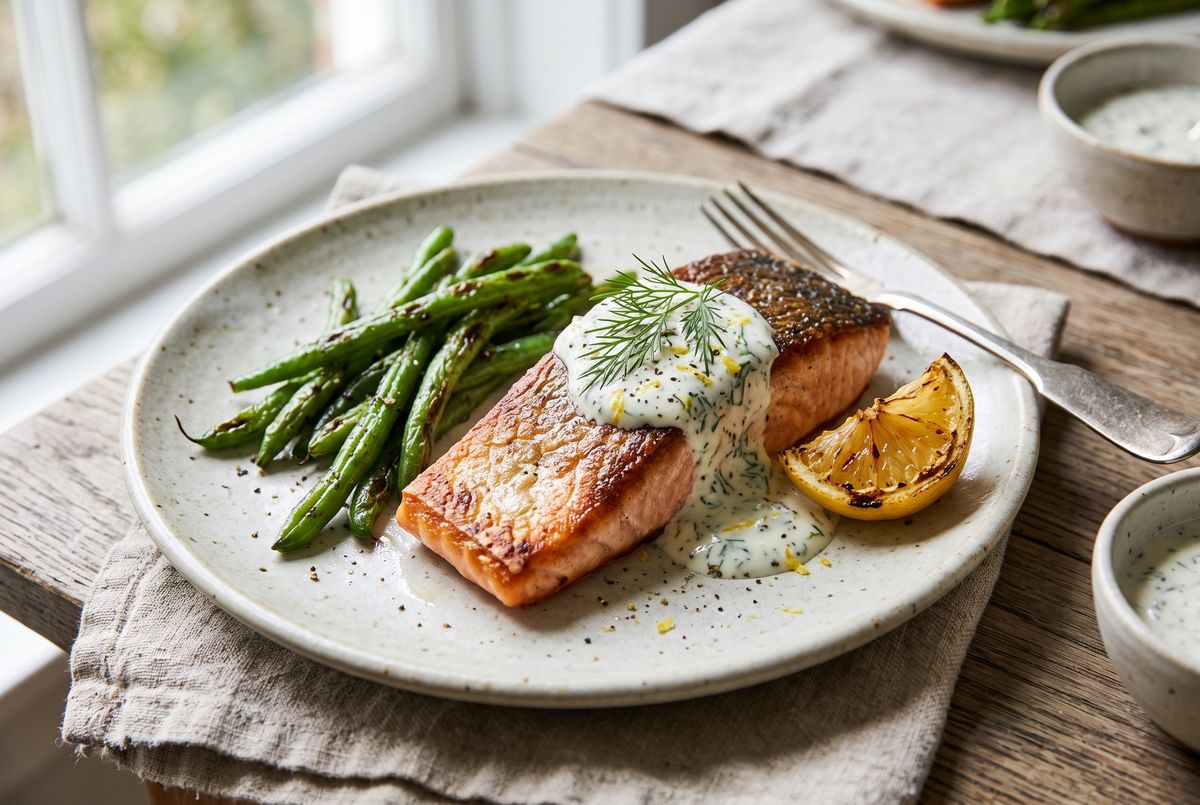
Salmon is the most efficient whole food on this list. Oily fish is the primary dietary source of the long-chain omega-3s EPA and DHA, and eating it regularly is the practical way to get them — reviews of DHA's role in health go back decades (Pharmacological Research, 1999), and research relating fish consumption to omega-3 status in the blood (American Journal of Kidney Diseases, 2006) points the same way.
Salmon is also one of the few real food sources of vitamin D: a meta-analysis of randomized trials found that increasing fish intake improved vitamin D status (American Journal of Clinical Nutrition, 2015). The yogurt sauce adds cultured dairy, where the blood-pressure literature is smaller and less settled — a randomized trial of a multi-strain fermented milk in healthy adults looked mainly at the gut microbiome (Scientific Reports, 2020).
Why this works
The salmon is the reason for the dish; everything else is built to let you cook it without salt. Greek yogurt gives the sauce enough body and tang to stand in for something richer, dill supplies the herbal note people associate with salted, cured fish, and lemon juice and zest do most of the seasoning work. A few chopped capers add a small, controlled hit of salinity, which is a better use of sodium than salting the fillet. The green beans blister in the same pan and keep the plate from needing anything else. Spooning the sauce alongside rather than over keeps the skin crisp.
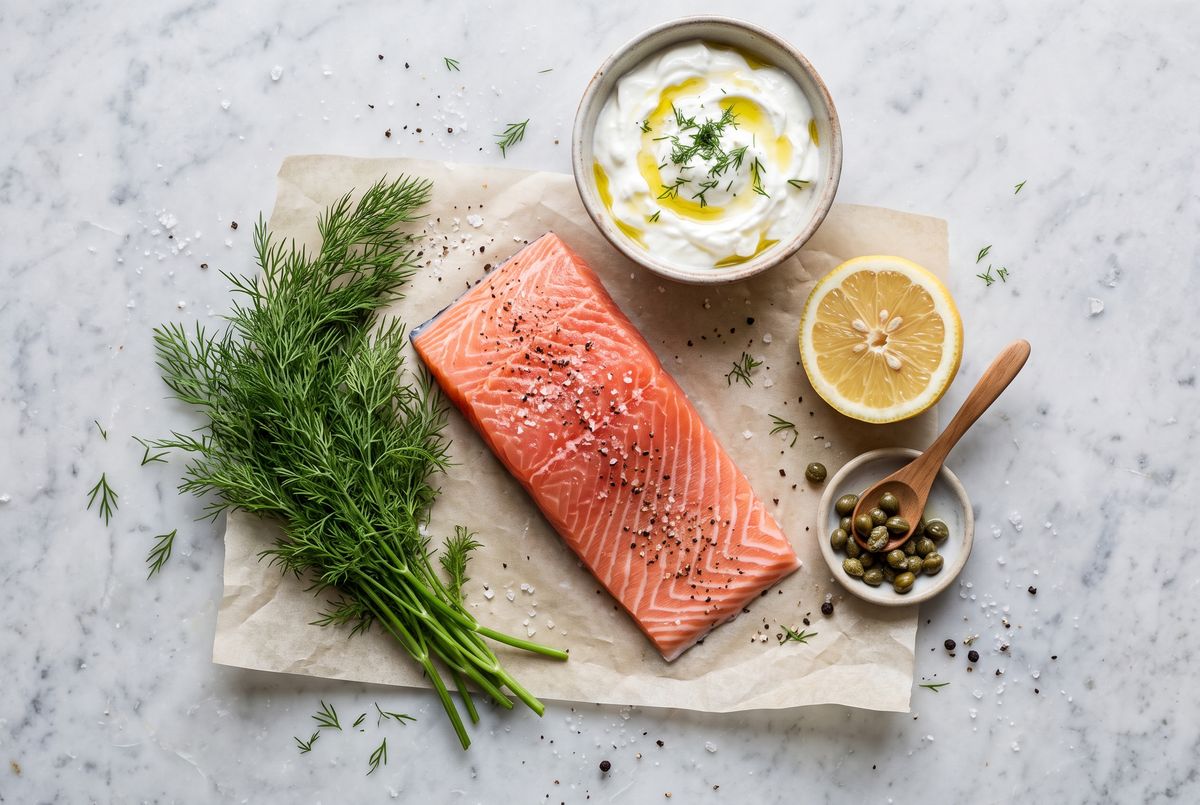
Ingredients · serves 2
- 2 salmon fillets (5–6 oz each), skin on
- 1 tsp olive oil
- ¾ cup plain Greek yogurt
- A large handful of fresh dill, chopped
- Juice and zest of ½ lemon
- 1 tsp capers, chopped (optional)
- 8 oz green beans
- Black pepper
Method
- Pat the salmon very dry and season with pepper. Heat the oil in a skillet over medium-high.
- Lay the fillets skin-side down and press flat for 10 seconds. Cook undisturbed 4–5 minutes until the skin is crisp, then flip for 1–2 minutes. The center should stay slightly translucent.
- Meanwhile blister the green beans in the same pan or a second one.
- Stir the yogurt with dill, lemon juice, zest and capers. Spoon alongside — not over — the crisp skin.
Getting the most from it
Aim for two or three oily-fish meals a week, which is the pattern most dietary guidance points to — frozen fillets and tinned fish count, and both cost far less than fresh. Pat the salmon completely dry before it hits the pan, since surface water is what stops the skin crisping, and pull it while the center is still slightly translucent. Make the yogurt sauce first so the dill has time to soften into it.
Nutrition Facts
Calculated for one serving from USDA FoodData Central values for the ingredients above. An estimate, not a lab analysis.
How this was calculated. Each ingredient was converted to grams, matched to a food in USDA FoodData Central (SR Legacy, April 2018), summed, and divided by 2 servings. Cooking losses, draining and the real size of a handful all move these numbers, so treat them as a good estimate rather than a measurement. Added sugars count honey, maple syrup and table sugar only; sugar from whole fruit is not an added sugar.
- Fish, salmon, Atlantic, wild, raw
- Oil, olive, salad or cooking
- Yogurt, Greek, plain, whole milk
- Dill weed, fresh
- Lemon juice, raw
- Lemon peel, raw
- Capers, canned
- Beans, snap, green, raw
22 PubMed citations
Across large randomized trials and meta-analyses, marine omega-3s reliably reduce serum triglycerides (roughly 15% at…
17 PubMed citations
Large randomized trials and meta-analyses give a mixed picture. In generally healthy, vitamin-D-replete adults the two…
22 PubMed citations
In humans, randomized trials and meta-analyses most consistently show that astaxanthin lowers the lipid-peroxidation…
The research behind this recipe
Primary sources for the claims above. Effects reported in these papers describe the compound or the dietary pattern studied — not this specific dish.
More blood pressure & the potassium-forward plate recipes
 Blood pressure
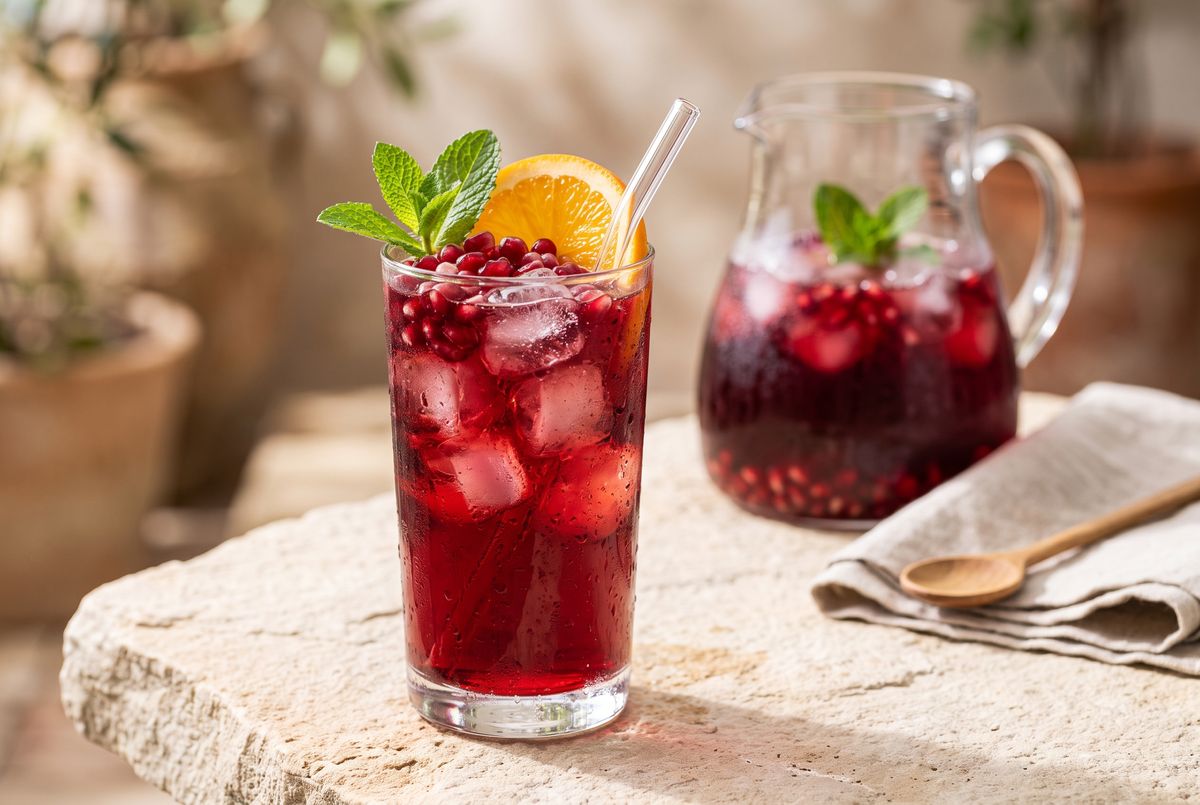
In randomized trials, hibiscus (sour tea) produced small but real drops in blood pressure. This tart, caffeine-free cooler pairs…
 Blood pressure
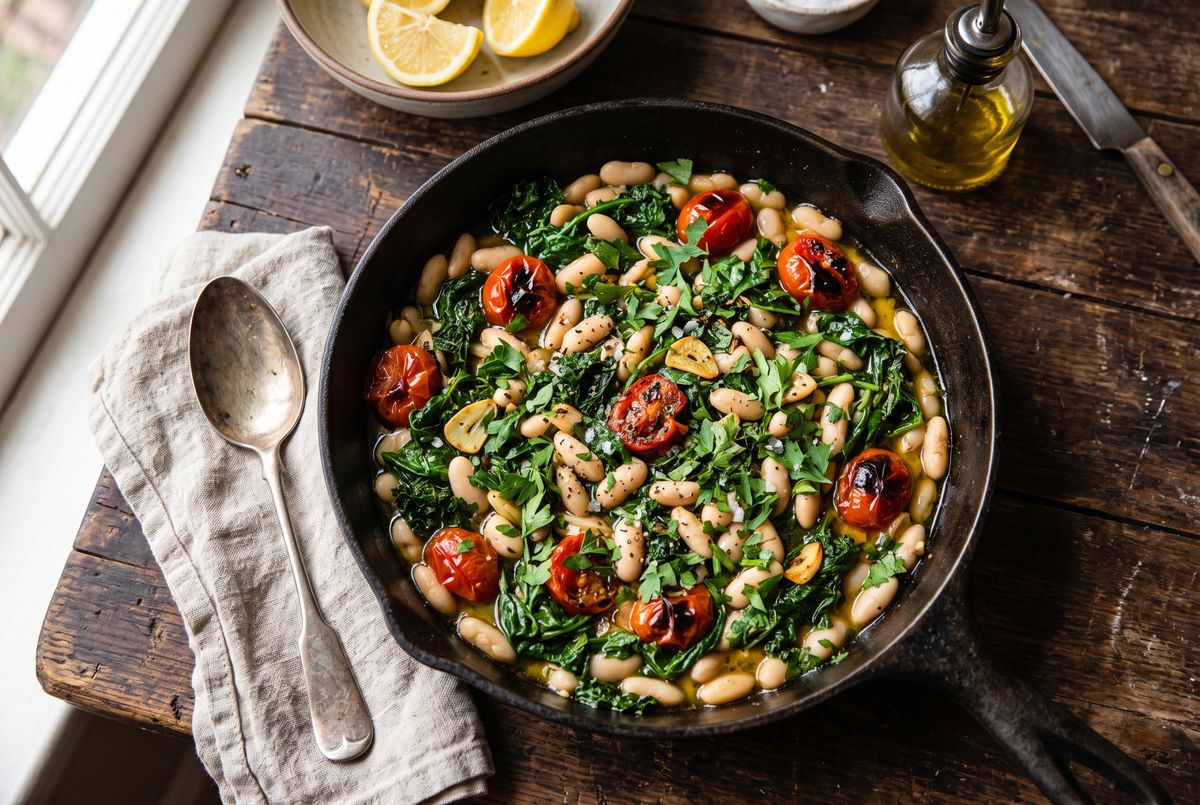
Raw-crushed garlic plus potassium-rich beans and leafy greens — a savory, 20-minute skillet aimed squarely at healthy blood…
 Blood pressure
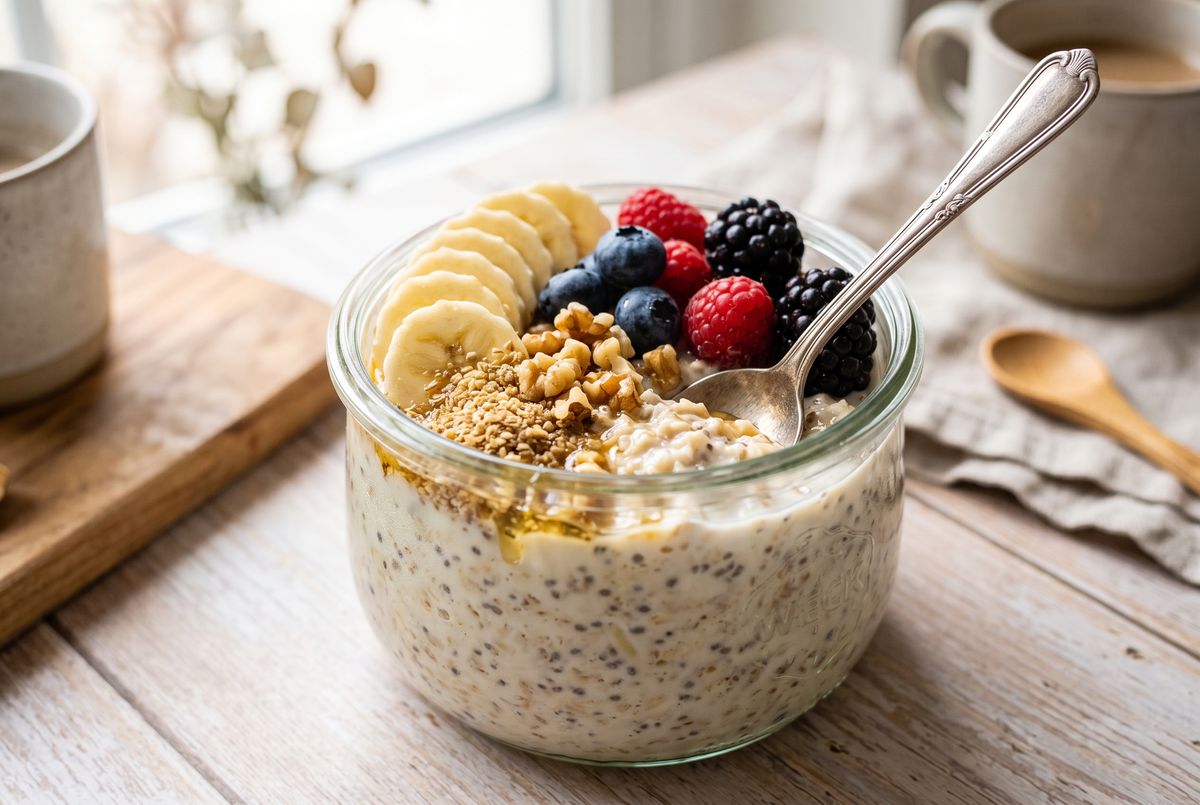
Oat beta-glucan, potassium from banana, and ground flaxseed — three foods with randomized-trial support for lower blood…
Keep reading
Omega-3Vitamin DCoQ10The microbiomeOmega-3: the evidenceOmega-3 and AgingThe supplement guideResearch mapPathway universe