Salmon Niçoise with Jammy Eggs
Salmon and jammy eggs put EPA, DHA, and choline on one plate; potatoes, beans, and olives add potassium and the fat that ferries lutein. The classic composed salad, read through the trial literature.
- Mechanism
- Choline & brain
- Cited studies
- 5
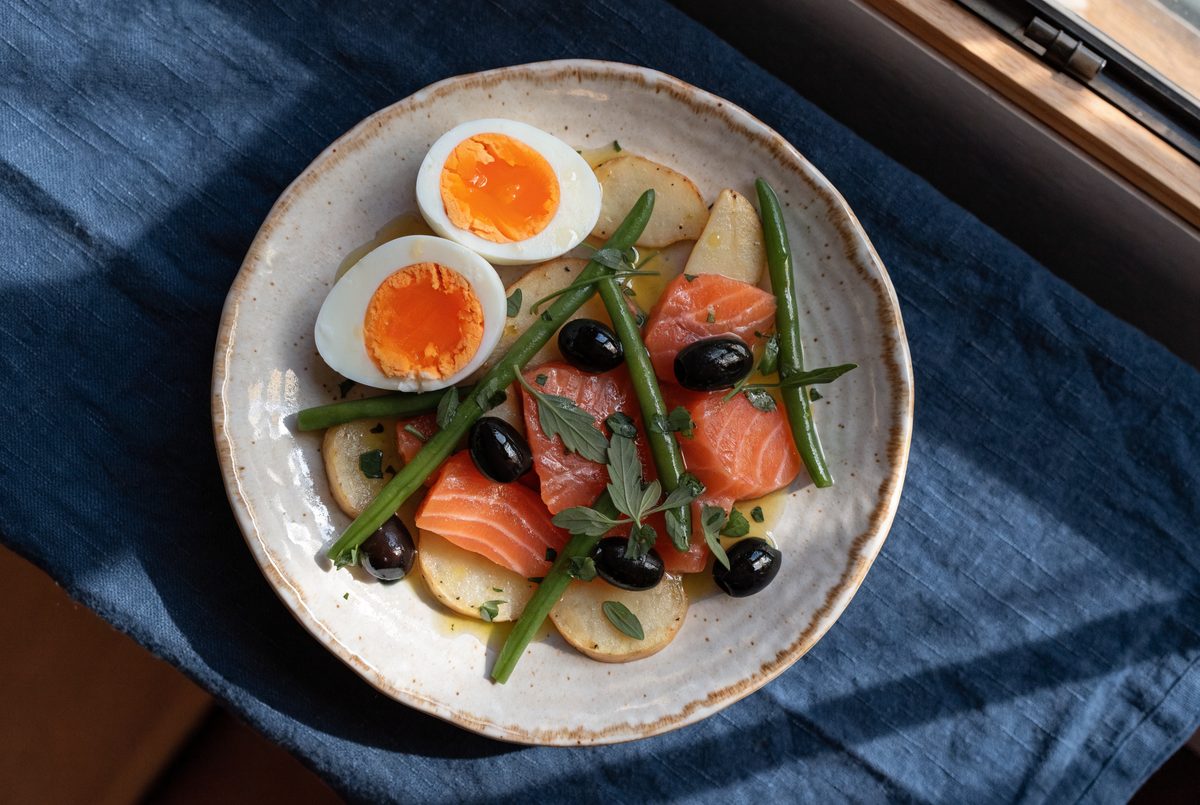
The strongest version of the omega-3 story has always been about eating fish, not swallowing capsules. The influential benefit-risk analysis of fish intake (JAMA, 2006) estimated that one to two servings of oily fish per week was associated with roughly a third lower risk of coronary death — enough, its authors argued, to outweigh typical contaminant concerns for adults. The supplement trials have been humbler: in the VITAL trial (The New England Journal of Medicine, 2019), a gram a day of marine n-3s did not reduce major cardiovascular events overall, with hints of benefit mostly among people who ate little fish. A reasonable reading is that the fish itself — the protein, the fat context, and whatever it displaces from the plate — is the tested dose.
The rest of the plate earns its place. Jammy eggs supply choline, the under-consumed membrane-and-neurotransmitter precursor (Nutrition Reviews, 2009), and their yolks carry lutein and zeaxanthin in an unusually absorbable, fat-packaged form; the AREDS2 trial (JAMA, 2013) tested those carotenoids as supplements in people with macular degeneration, with benefit clearest in secondary analyses of participants with the lowest dietary intake. Potatoes, green beans, and olives push potassium upward, and a systematic review (BMJ, 2013) linked higher potassium intake to lower blood pressure and stroke risk. None of this makes a salad medicine; it makes it a well-allocated dinner.
Why this works
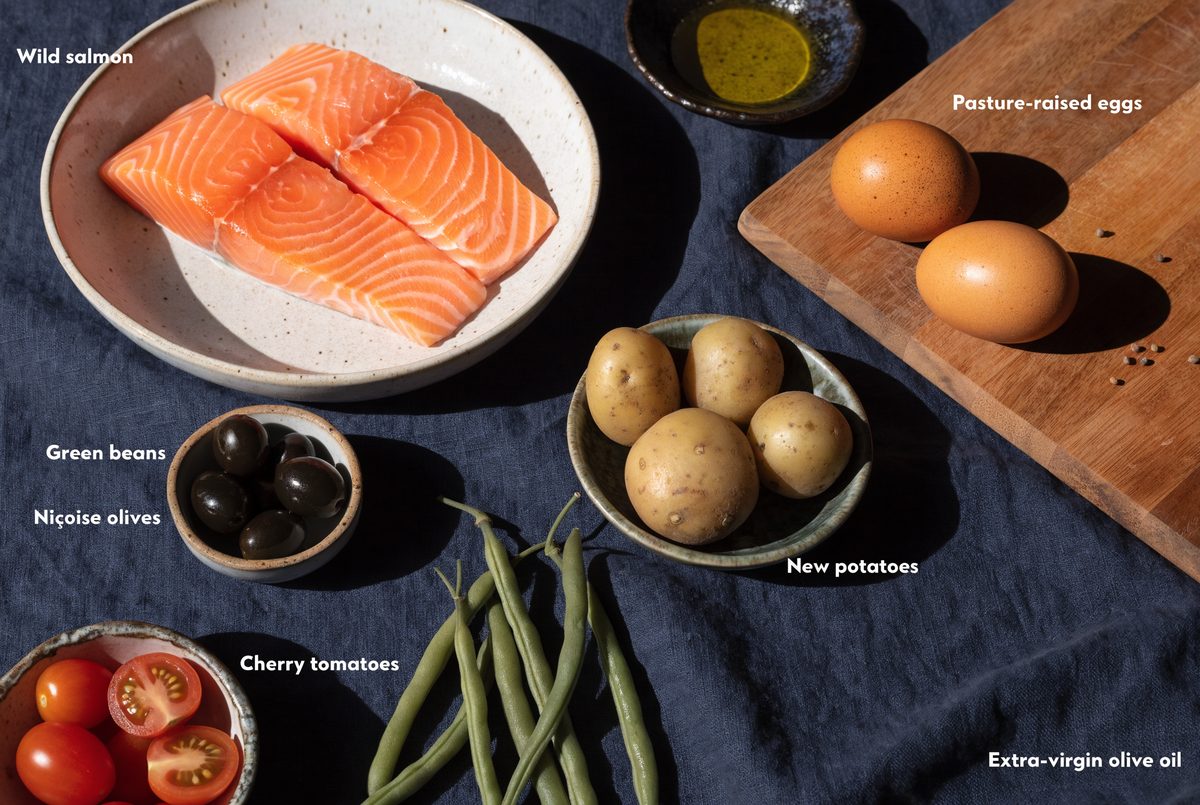
Wild salmon delivers EPA and DHA plus a respectable dose of choline of its own. Pasture-raised eggs, cooked to a fudgy six and a half minutes, add more choline and the yolk carotenoids. New potatoes and green beans bring potassium and fiber. Niçoise olives and extra-virgin olive oil supply the fat that ferries carotenoids across the gut wall. Cherry tomatoes and a tarragon vinaigrette keep it Provençal rather than penitential.
How to make it
- Steam 1 lb halved new potatoes until tender, 12–14 minutes. Blanch 8 oz trimmed green beans in salted boiling water for 3 minutes and shock in ice water.
- Lower 4 eggs into boiling water for exactly 6½ minutes; ice bath, peel, halve.
- Season 4 salmon fillets and roast at 275°F until just opaque at the center, 15–18 minutes — gentle heat keeps the delicate fats where you want them.
- Whisk 3 tablespoons olive oil with 1 tablespoon lemon juice, chopped tarragon, salt, and pepper.
- Compose everything on a platter with a handful of halved cherry tomatoes and the olives; spoon the dressing over and finish with flaky salt.
Serves 4. The vinaigrette doubles as a sauce for the salmon.
25 PubMed citations
In human health, phosphatidylcholine's most encouraging evidence is in ulcerative colitis, where several randomized…
22 PubMed citations
Across large randomized trials and meta-analyses, marine omega-3s reliably reduce serum triglycerides (roughly 15% at…
22 PubMed citations
In prospective cohort studies and pooled analyses spanning dozens of cohorts, higher blood levels of EPA + DHA have…
The research behind this recipe
Primary sources for the claims above. Effects reported in these papers describe the compound or the dietary pattern studied — not this specific dish.
More brain, eyes & sleep recipes
 Choline & brain
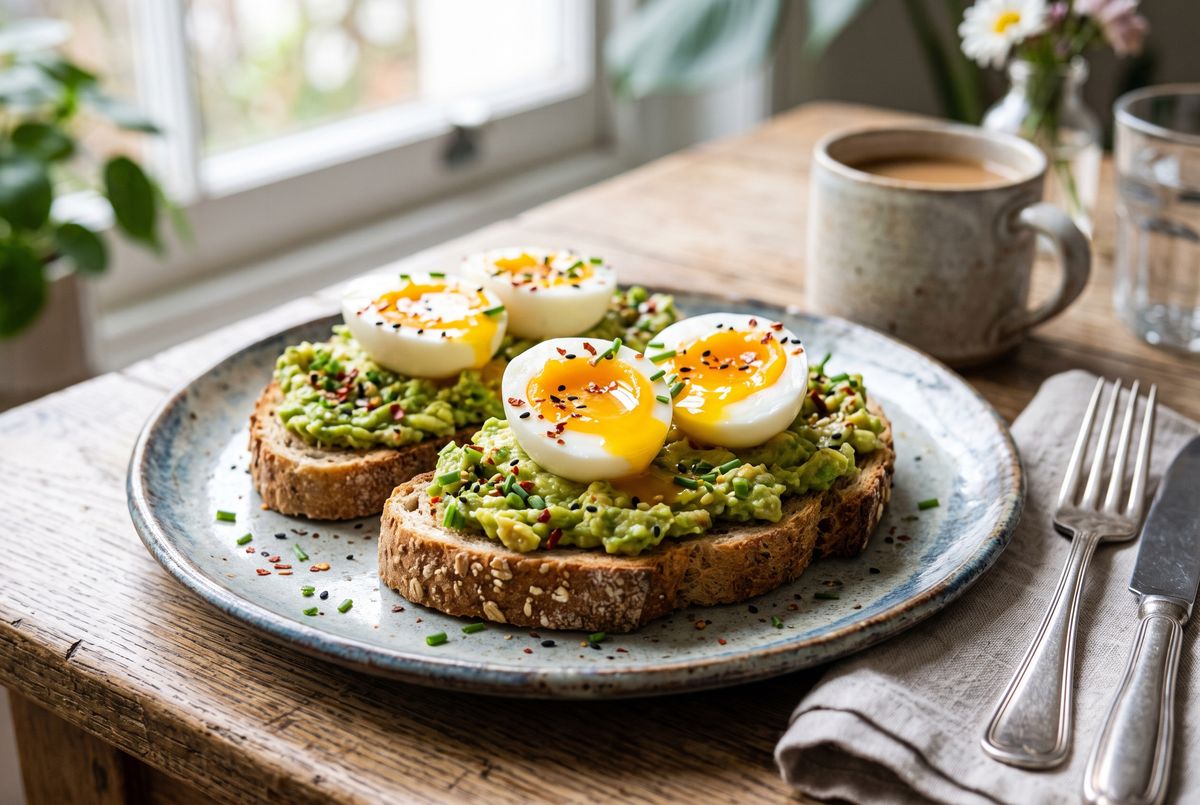
Egg yolk is the densest everyday source of phosphatidylcholine — and the same yolk carries the lutein your retina concentrates.
 Sleep
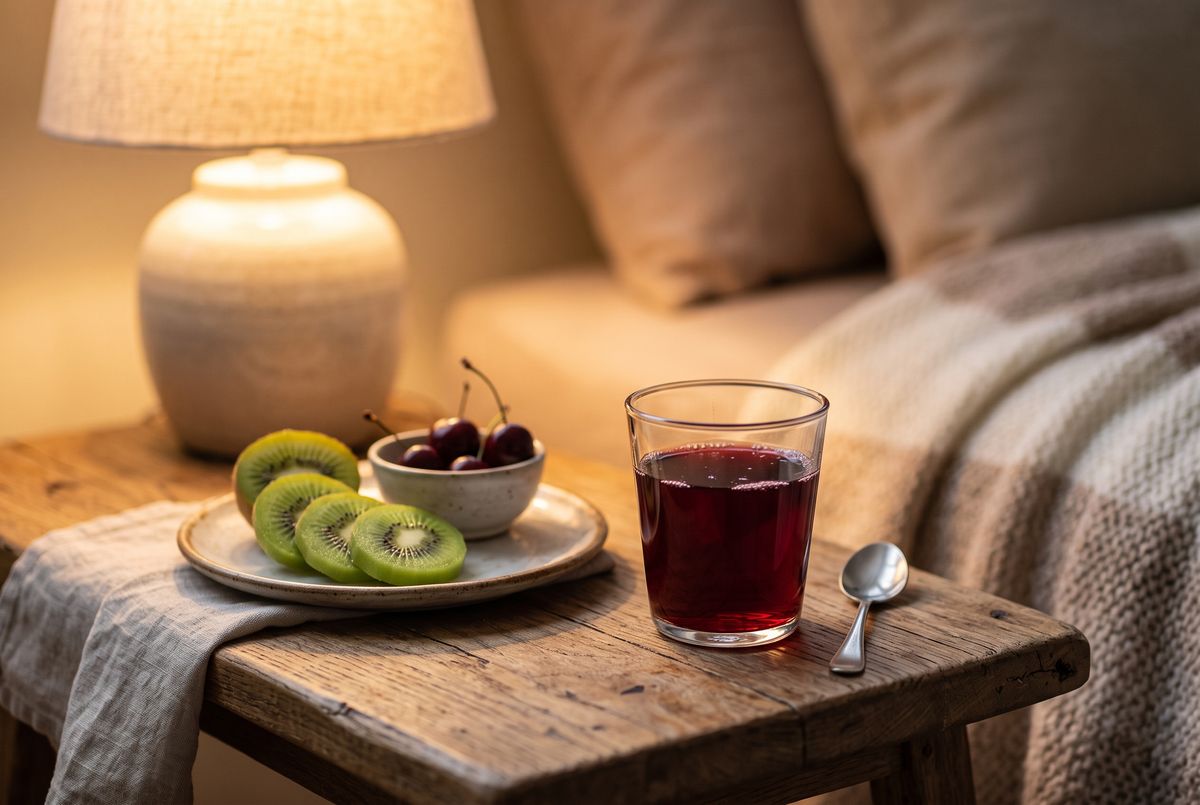
SleepMontmorency cherry juice is the sleep intervention with the most actual trial data behind it — and the results are real but…
 Brain health
Berry anthocyanins and walnut omega-3 are the two most studied food components in cognitive aging research — and they happen to…
Keep reading
Blood pressureOmega-3Dietary fiberOmega-3: the evidenceOmega-3 and AgingThe supplement guideResearch mapPathway universe