Pork Tenderloin Skillet with Apples & Sage
Pork matches beef as a food source of creatine, and apples bring quercetin plus fisetin — the senolytic candidate that extended lifespan in aged mice. One skillet, honest hedges included.
- Mechanism
- Muscle & strength
- Cited studies
- 5
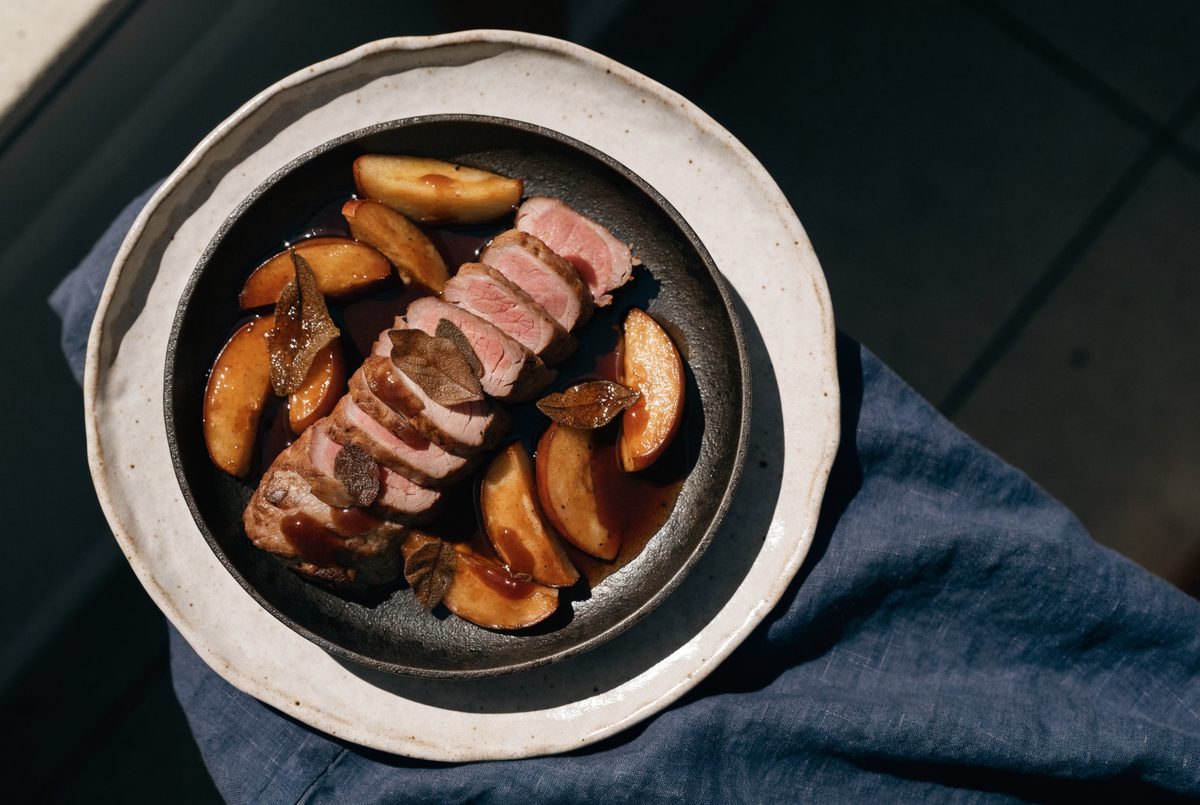
Pork sits alongside beef and bison among the densest food sources of creatine, and tenderloin is its leanest cut — more creatine per calorie than almost any other everyday meat. The compound's evidence base is unusually deep: the International Society of Sports Nutrition's position stand (Journal of the International Society of Sports Nutrition, 2017) rates creatine as the most effective legal supplement for building strength and lean mass with training, and a meta-analysis in adults over fifty (Open Access Journal of Sports Medicine, 2017) found it added roughly a kilogram of lean tissue beyond resistance training alone. Those are supplement doses of 3–5 g daily; a 150 g serving of tenderloin supplies well under a gram. Dinner contributes, it does not replicate.
Apples are the more speculative, more interesting half of this pan. They are one of the dependable dietary sources of quercetin, a flavonoid whose food chemistry has been reviewed at length (Nutrition Journal, 2004), and one of the few common foods with measurable fisetin. The hedges matter here: quercetin's randomized blood-pressure effect (Journal of the American Heart Association, 2016) appears at supplement doses of 500 mg per day and above, and fisetin's headline result — clearing senescent cells and extending both healthspan and lifespan — comes from aged mice (EBioMedicine, 2018), with human senolytic trials still reading out. Eating apples with dinner is well supported; expecting them to behave like the mouse data is not.
Why this works
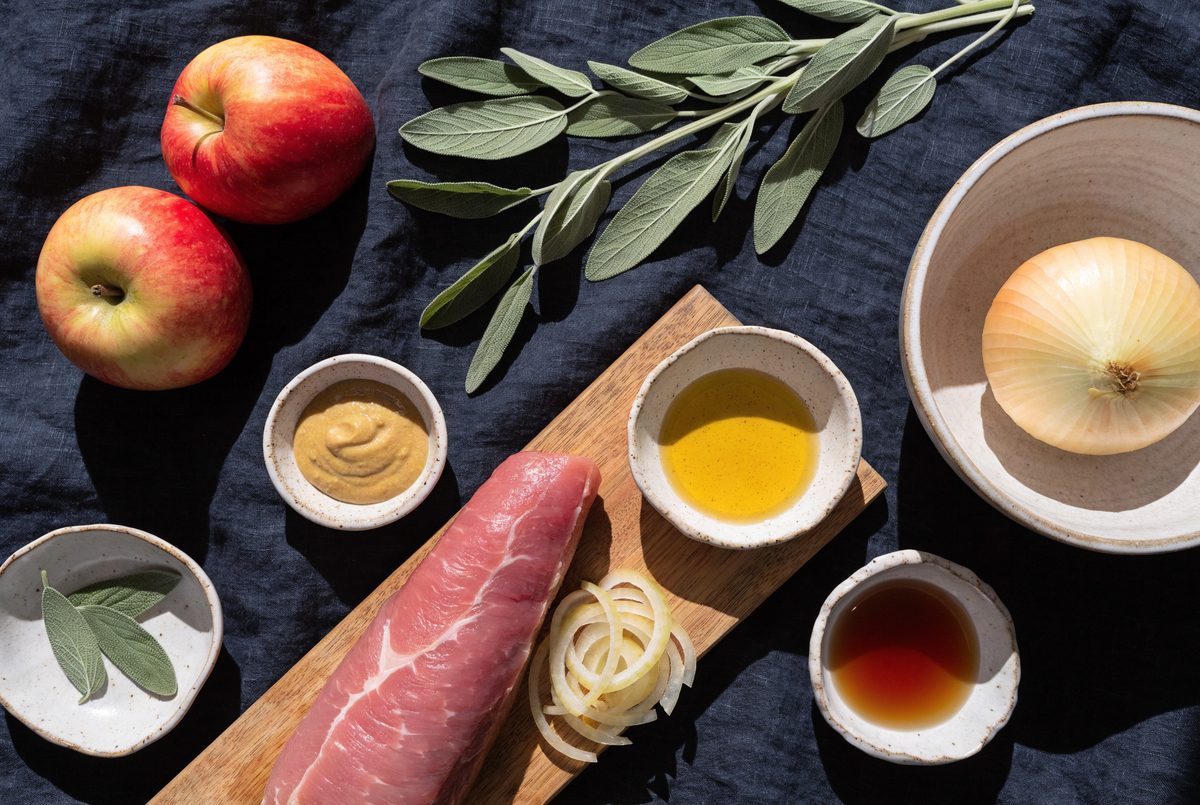
Pork tenderloin carries the creatine, along with thiamine and zinc, and stays juicy if you pull it at 60°C. Apples, skin left on, keep their quercetin and fisetin where they mostly live — in and just under the peel. Yellow onion adds a second quercetin source, fresh sage and apple cider vinegar cut the sweetness, and Dijon plus extra-virgin olive oil turn the pan drippings into a sauce instead of a loss.
How to make it
- Pat a 500 g pork tenderloin dry, season all over with salt and pepper, and sear in olive oil in a heavy skillet until browned on all sides, 6–8 minutes total.
- Transfer the pork to a 200°C (400°F) oven in the same skillet for 10–12 minutes, until the center reads 60°C (140°F). Rest it on a board, tented.
- Meanwhile fry 8–10 sage leaves in the pan fat until crisp, 30 seconds; set aside.
- Caramelize two apples, cut into wedges, with a sliced yellow onion in the same pan, 8–10 minutes.
- Deglaze with 3 tablespoons apple cider vinegar, whisk in a teaspoon of Dijon and a splash of water, and simmer to a loose pan sauce.
- Slice the rested pork, lay it over the apples, and finish with the crispy sage and pan juices.
Serves three. The apples belong slightly burnished at the edges — that is flavor, not damage.
23 PubMed citations
Across meta-analyses and randomized trials, creatine monohydrate combined with resistance training modestly increases…
25 PubMed citations
Meta-analyses of randomized trials indicate quercetin produces a small blood-pressure reduction—on the order of 2–3…
25 PubMed citations
Because senescent cells accumulate with age and contribute to frailty, vascular dysfunction, inflammation, and…
The research behind this recipe
Primary sources for the claims above. Effects reported in these papers describe the compound or the dietary pattern studied — not this specific dish.
More muscle, connective tissue & minerals recipes
 Muscle & strength
Red meat and fish are the only meaningful dietary sources of creatine — roughly a gram per pound of raw meat, and cooking costs…
 Collagen & glycine
Gelatin is roughly a third glycine — the amino acid we eat least of relative to how much our connective tissue needs.
 Taurine
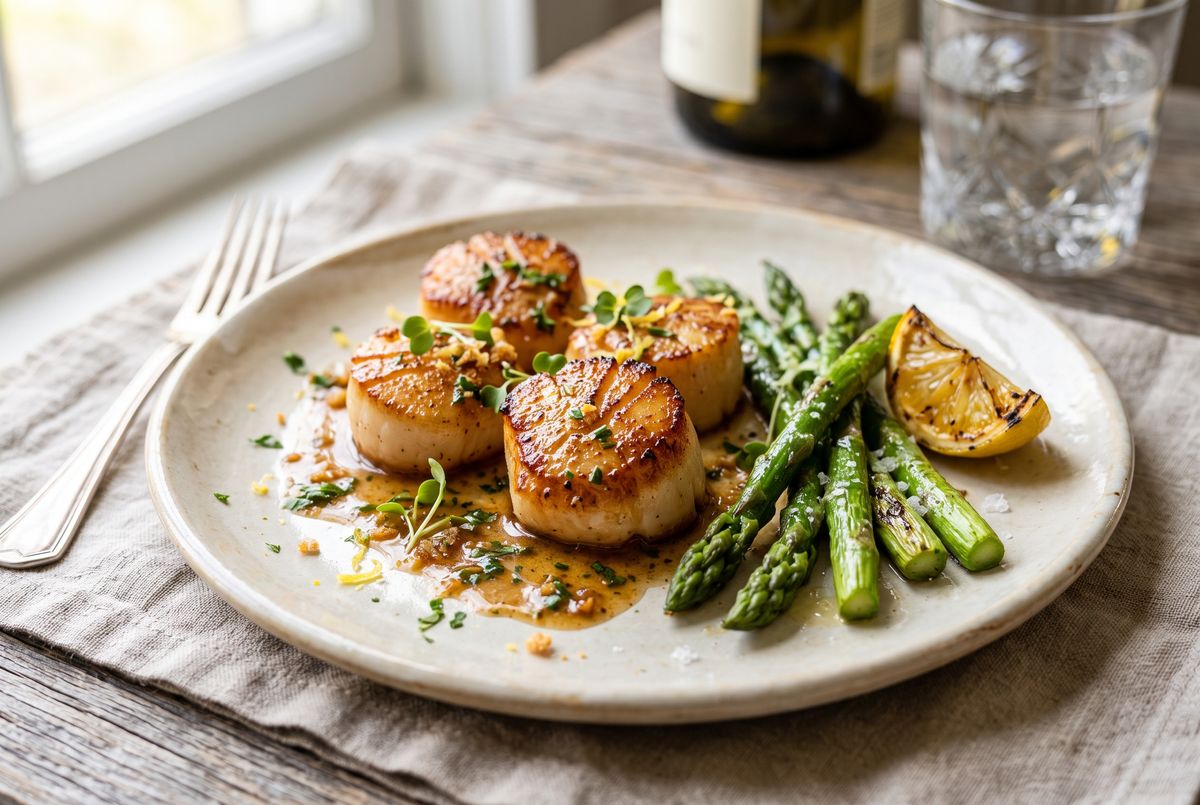
Shellfish are the densest food source of taurine — the amino acid whose age-related decline drew serious attention in 2023.
Keep reading
CreatineFisetinSenolyticsSenescent cellsSenolytics: the evidenceCreatine: the evidenceCreatine for Healthy AgingThe supplement guideResearch mapPathway universe