Strawberry, Apple & Red Onion Salad
Strawberries are the leading dietary source of fisetin, the flavonoid at the center of senolytic research — though food amounts are far below study doses.
- Mechanism
- Senolytics
- Yield
- serves 4
- Ingredients
- 7
- Steps
- 4
- Cited studies
- 5
- Course
- Salad
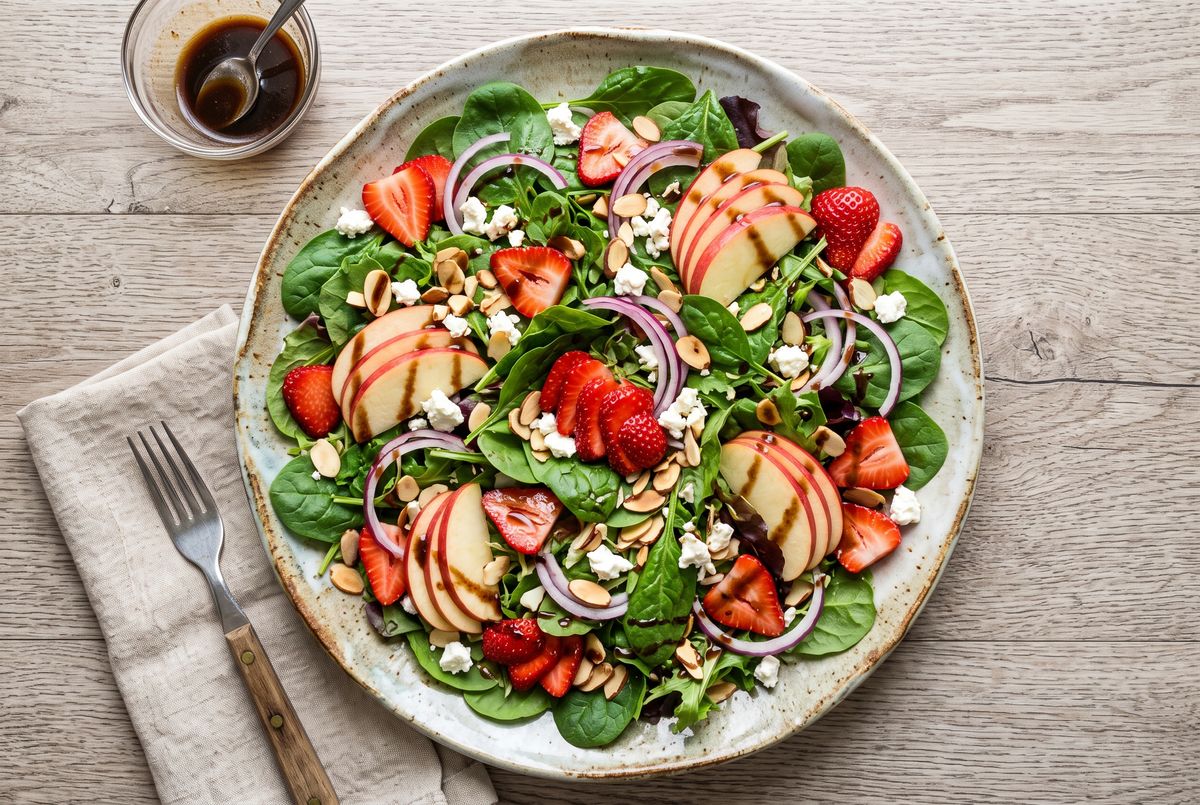
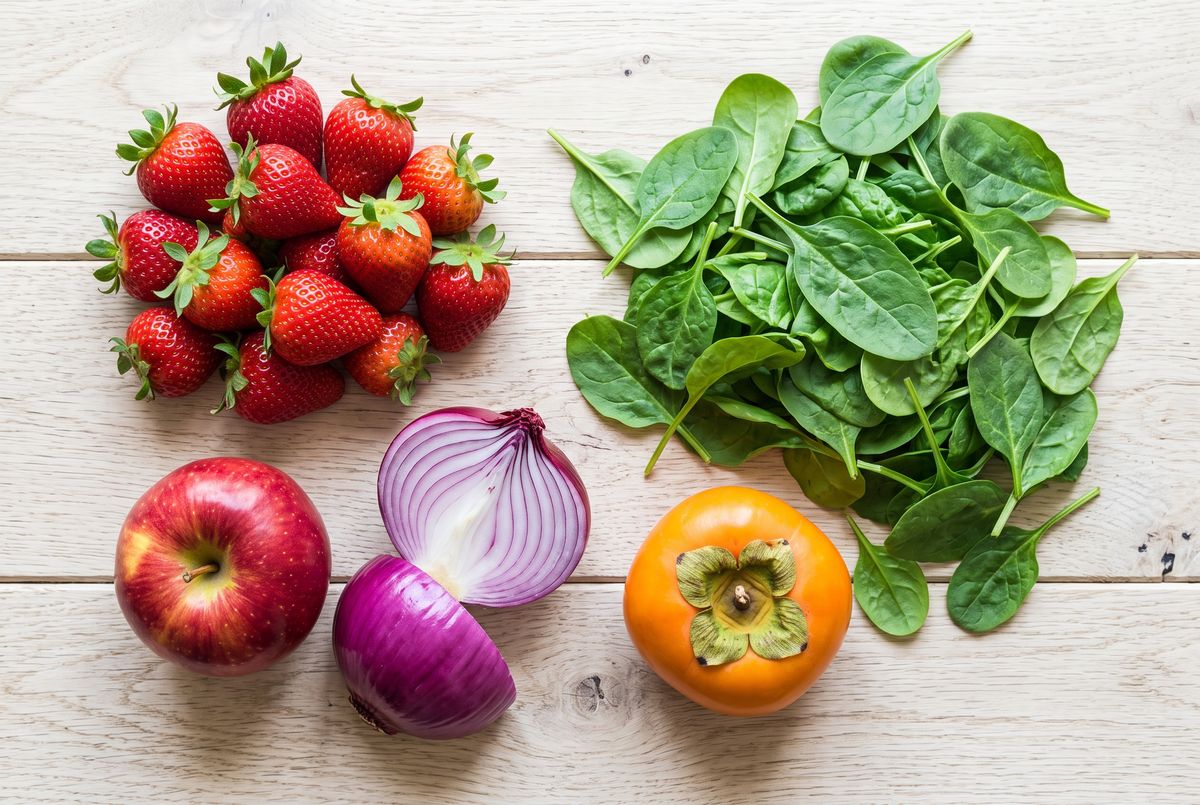
Strawberries are the leading dietary source of fisetin, the flavonoid at the center of senolytic research, with apples, persimmons and onions adding smaller amounts. Fisetin has been studied mostly at the mechanistic level — one paper examined how it inhibits Akt/mTOR signaling (Anti-Cancer Agents in Medicinal Chemistry, 2013), and a later study looked at how it affects cholesterol excretion through the gut (Food Research International, 2024).
A 2026 review in Nutrients surveyed fisetin in the context of women's reproductive health, drawing on everything from laboratory studies to clinical work — a fair signal of how early and how scattered this field still is. Onions and apples also carry quercetin, a flavonoid with a longer cardiovascular literature, though much of that work is animal and laboratory research rather than human trials. Eat this because it is good food, not because a salad can do what a research dose does.
Why this works
Three of the foods that carry fisetin turn up here, all of them raw: strawberries as the bulk of the bowl, thin slices of apple for crunch, and red onion for sharpness. Onion and apple are also the classic everyday quercetin sources, so they earn their place twice. Baby spinach is the neutral base that lets the fruit lead. The feta and almonds bring salt, fat and protein, which is what keeps a fruit-heavy salad tasting like a meal rather than a dessert, and the mustard in the dressing holds the balsamic and oil together so you need less of both.
Ingredients · serves 4
- 1 lb fresh strawberries, hulled and sliced
- 1 crisp apple, thinly sliced
- ¼ red onion, very thinly sliced
- 5 oz baby spinach
- ⅓ cup crumbled feta
- ¼ cup almonds, toasted and sliced
- Dressing: 2 tbsp balsamic vinegar, 2 tbsp olive oil, 1 tsp Dijon, pepper
Method
- Soak the onion slices in cold water 5 minutes, then drain — it keeps the bite without the harshness.
- Whisk the balsamic, oil and Dijon together.
- Toss the spinach with just enough dressing to coat, then layer in the strawberries, apple and onion.
- Scatter the feta and almonds over the top and serve right away.
Getting the most from it
Buy strawberries in season and use them within a day or two — they turn soft fast, and the ones that smell like strawberries in the shop are the ones worth buying. Soak the sliced onion in cold water for five minutes to take the harshness off, and dress the salad at the table so the spinach does not wilt. And keep expectations honest: senolytic research uses fisetin at doses far beyond a bowl of berries, so eat this for the food.
Nutrition Facts
Calculated for one serving from USDA FoodData Central values for the ingredients above. An estimate, not a lab analysis.
How this was calculated. Each ingredient was converted to grams, matched to a food in USDA FoodData Central (SR Legacy, April 2018), summed, and divided by 4 servings. Cooking losses, draining and the real size of a handful all move these numbers, so treat them as a good estimate rather than a measurement. Added sugars count honey, maple syrup and table sugar only; sugar from whole fruit is not an added sugar.
- Strawberries, raw
- Apples, raw, golden delicious, with skin
- Onions, raw
- Spinach, raw
- Cheese, feta
- Nuts, almonds
- Vinegar, balsamic
- Oil, olive, salad or cooking
- Mustard, prepared, yellow
25 PubMed citations
Because senescent cells accumulate with age and contribute to frailty, vascular dysfunction, inflammation, and…
25 PubMed citations
Meta-analyses of randomized trials indicate quercetin produces a small blood-pressure reduction—on the order of 2–3…
The research behind this recipe
Primary sources for the claims above. Effects reported in these papers describe the compound or the dietary pattern studied — not this specific dish.
More cellular housekeeping: autophagy, mitophagy & senescent cells recipes
 Autophagy
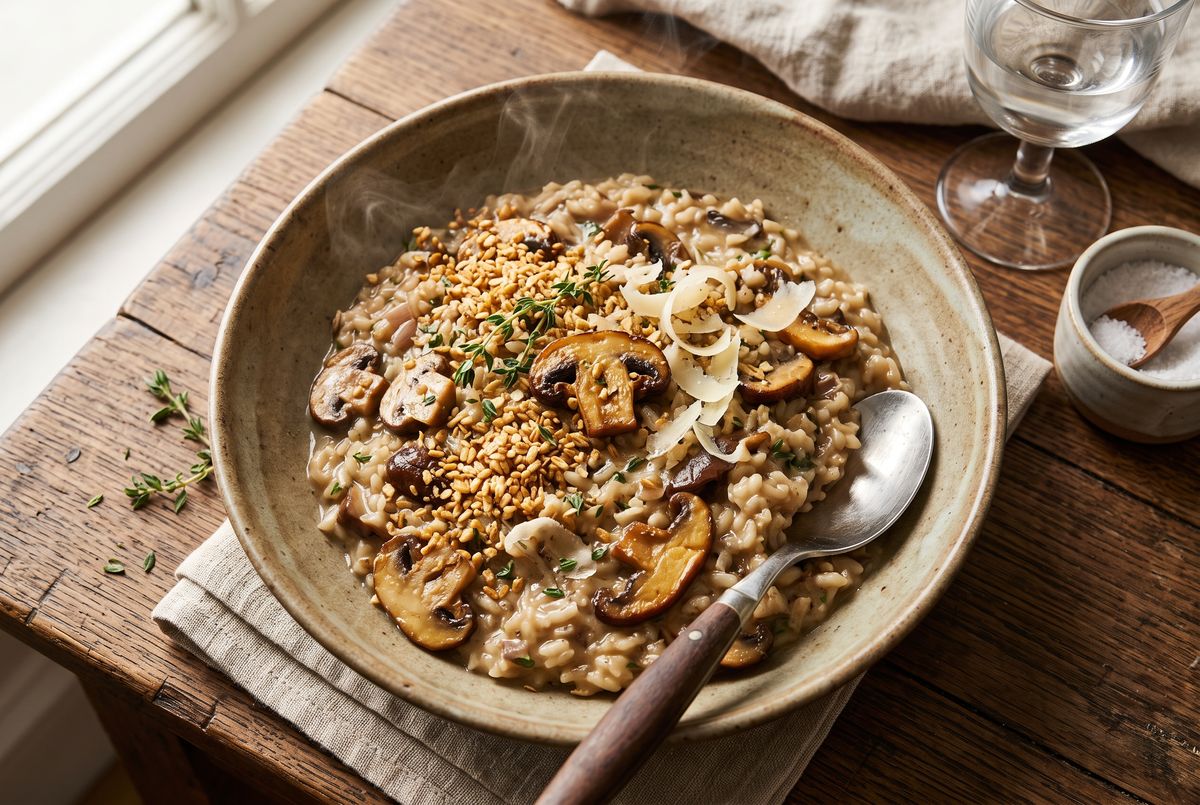
Wheat germ is the densest common food source of spermidine, the polyamine tied to autophagy — and it toasts into risotto like a…
 Mitophagy
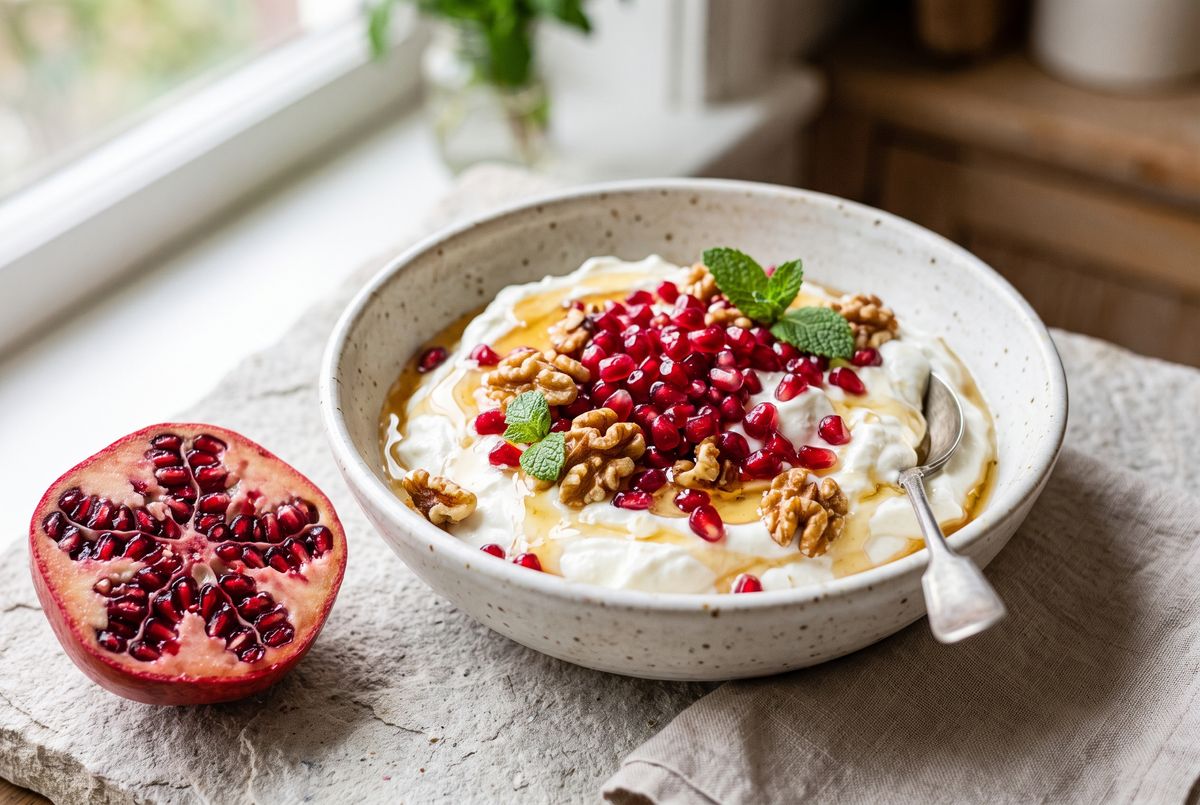
You cannot eat urolithin A directly — your gut bacteria make it from the ellagitannins in pomegranate and walnuts, and only some…
 Autophagy
Natto tops published spermidine tables, and higher spermidine intake tracked with lower 20-year mortality in the Bruneck cohort.…
Keep reading
mTORFisetinSenolyticsQuercetinSenolytics: the evidenceFisetin Senolytic CapsulesThe supplement guideResearch mapPathway universe