Miso-Glazed Eggplant Dengaku
Caramelized miso over silky eggplant: fermented soy was linked to about 10% lower mortality in a 90,000-person Japanese cohort, and this izakaya classic pairs it with fiber and fresh ginger over brown rice.
- Mechanism
- Gut & microbiome
- Cited studies
- 4
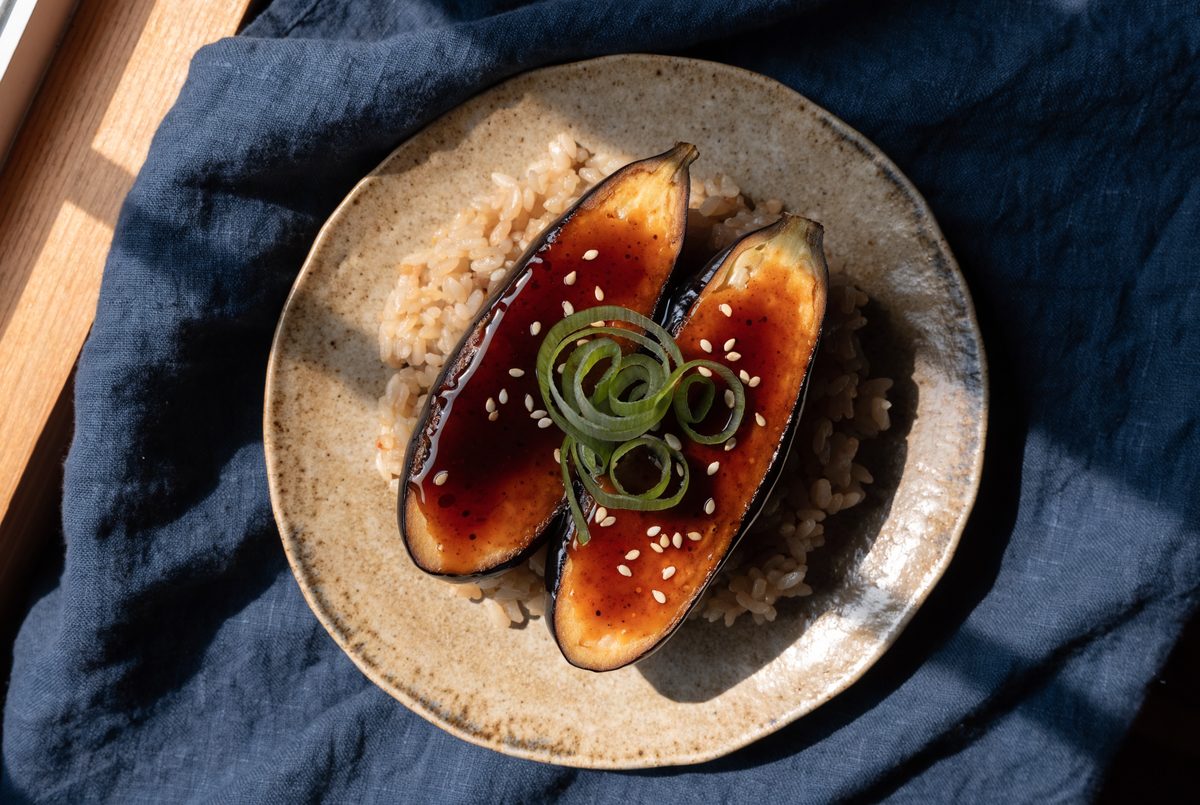
Miso sits in an interesting corner of the fermented-food evidence. In a prospective cohort of roughly 90,000 Japanese adults, higher intake of fermented soy — natto and miso — was associated with about 10 percent lower all-cause mortality, an association that did not hold for total soy (BMJ, 2020). That is observational, and the authors were candid that miso carries meaningful sodium along with its ferments. Broiling the glaze also kills the live cultures, which is worth being honest about: whatever benefit cooked miso confers in those cohorts, it is not delivered by live bacteria.
The rest of the dish works on the fiber side of the gut ledger. A series of systematic reviews and meta-analyses commissioned for WHO found that people eating 25–29 g of fiber daily had meaningfully lower rates of cardiovascular disease, type 2 diabetes, and colorectal cancer (Lancet, 2019) — and eggplant plus brown rice chips away at a target most people miss by half. Fresh ginger is the one ingredient here with old-fashioned randomized evidence, albeit for a modest claim: a systematic review found it outperformed placebo for nausea (British Journal of Anaesthesia, 2000). For live cultures themselves, the randomized fermented-food diet that raised microbiome diversity (Cell, 2021) argues for keeping some uncooked ferments elsewhere in your week.
Why this works
Japanese eggplant collapses into a silky interior that holds the glaze, and its skin contributes nasunin, an anthocyanin. White miso brings fermented-soy peptides, umami, and — before broiling — its cultures; the flavor compounds survive the heat even though the bacteria do not. Mirin balances miso's salt with gentle sweetness. Ginger adds gingerols, sesame seeds add lignans and crunch, and brown rice supplies the fermentable fiber and resistant starch that feed colonic bacteria.
How to make it
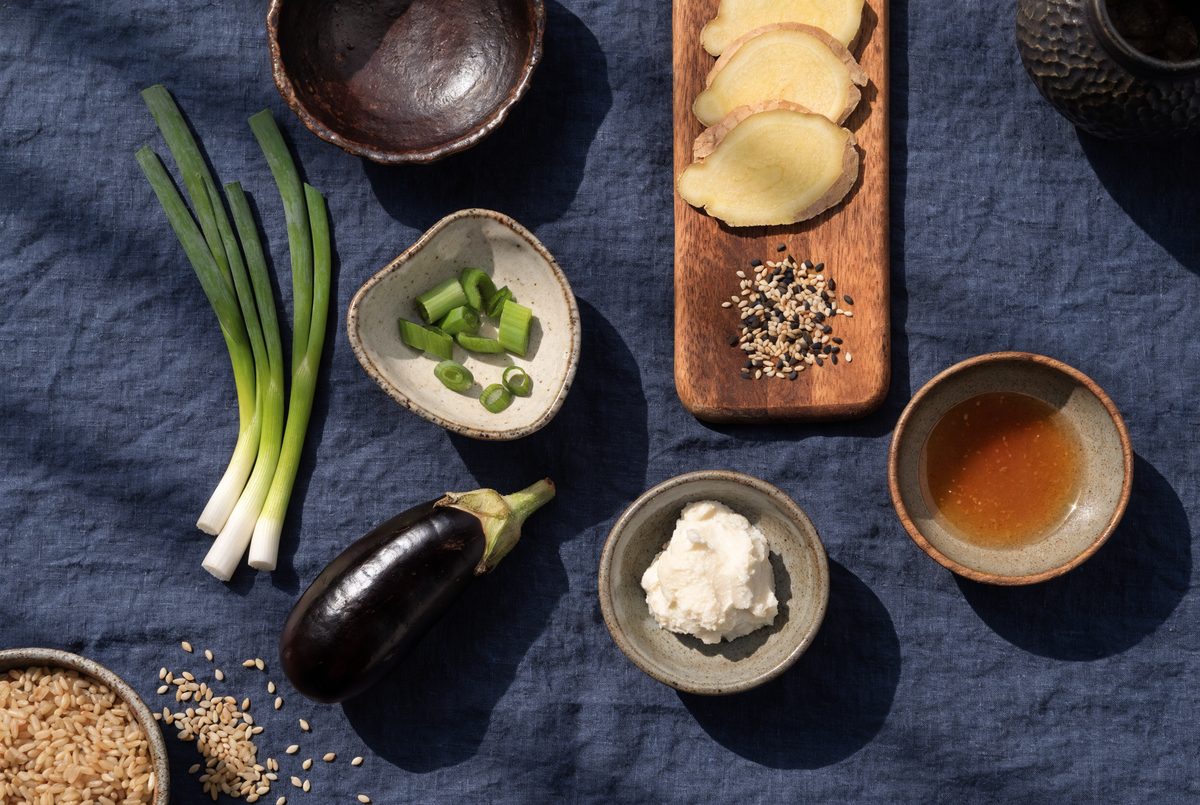
- Halve 4 Japanese eggplants lengthwise and score the cut faces in a fine crosshatch without piercing the skin.
- Brush with neutral oil and roast cut-side down at 220°C (425°F) for 20 minutes until fully tender.
- Whisk 4 tablespoons white miso, 2 tablespoons mirin, 1 tablespoon water, and 2 teaspoons grated fresh ginger into a smooth glaze.
- Flip the eggplant, spread the glaze thickly over the scored faces, and broil 2–3 minutes until bubbling and caramelized in spots — watch closely, it burns fast.
- Shower with toasted sesame seeds and scallion curls, and serve over steamed brown rice.
Serves 4 with rice. Because the glaze is salty, skip added salt everywhere else in the meal.
21 PubMed citations
Randomized trials and meta-analyses indicate that inulin-type fructans reliably increase stool frequency and improve…
The research behind this recipe
Primary sources for the claims above. Effects reported in these papers describe the compound or the dietary pattern studied — not this specific dish.
More gut bacteria & essential fats recipes
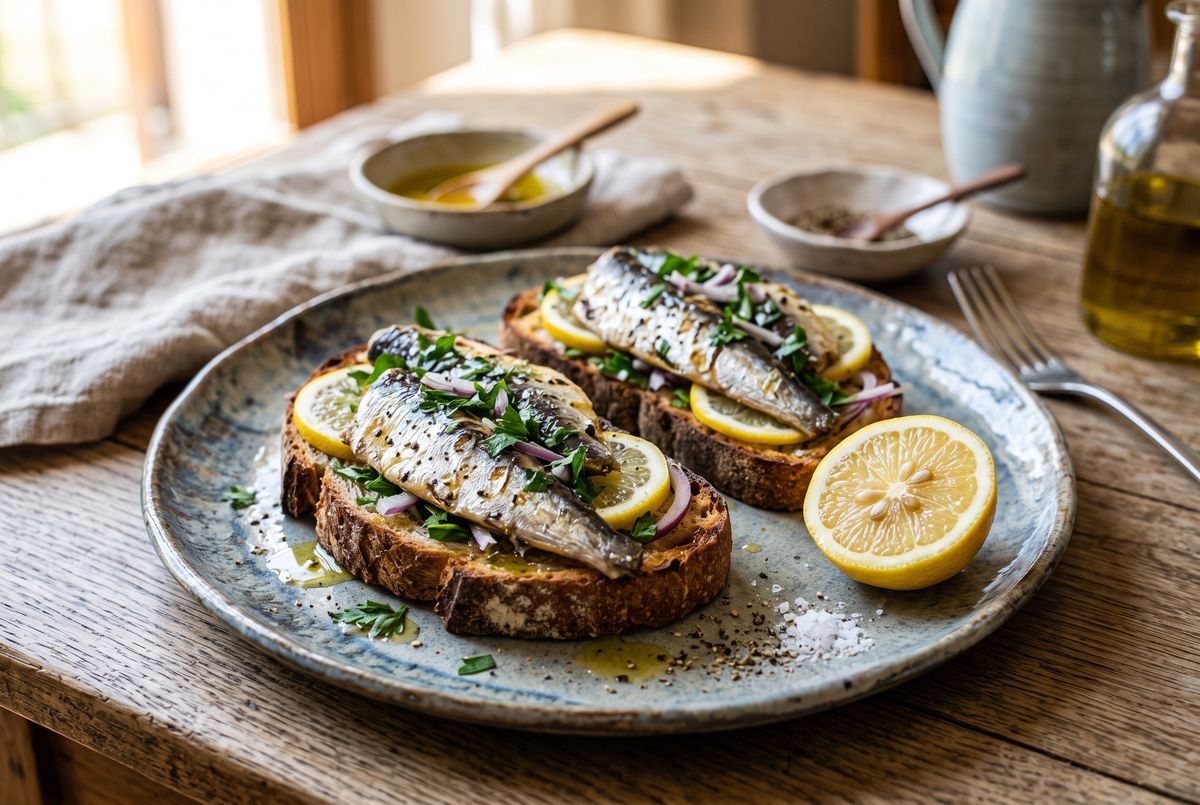 Omega-3
The cheapest serious longevity food in the store: one tin brings EPA and DHA, vitamin D and CoQ10 together.
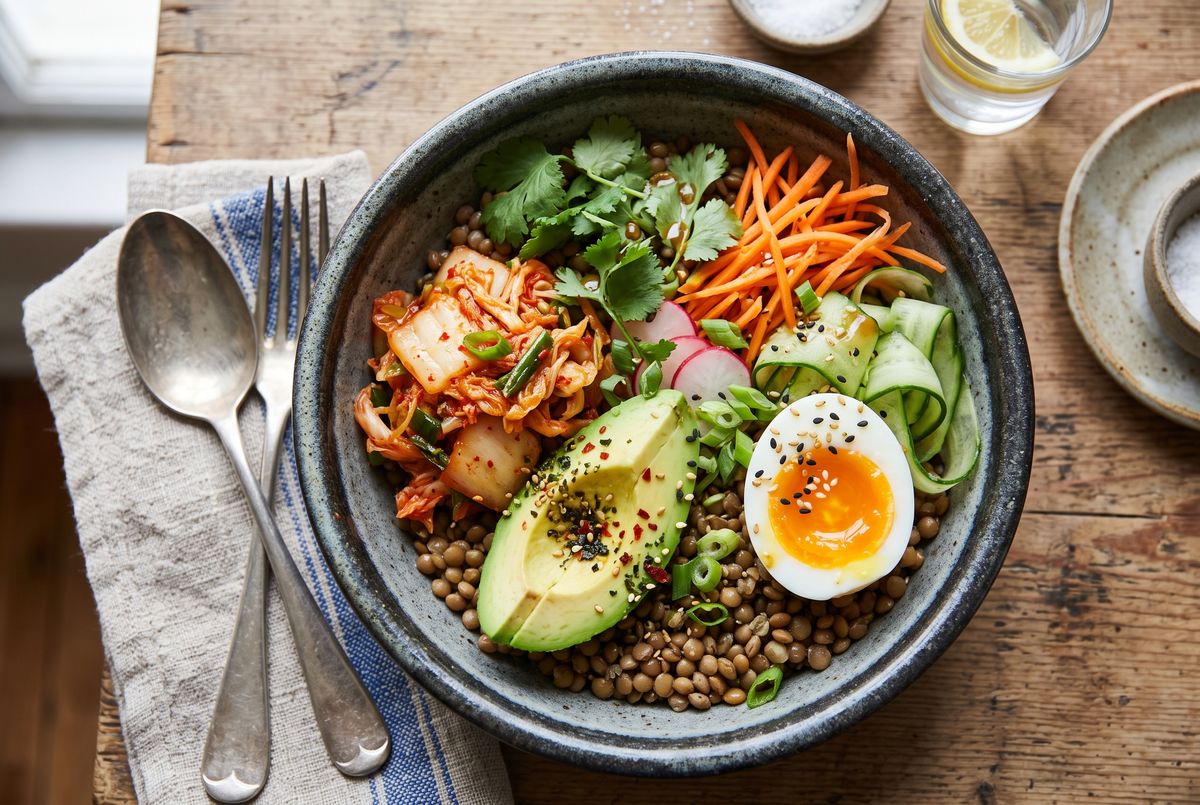 Gut & microbiome
Fermented food for the bacteria you swallow, and fiber for the bacteria you already have — the two halves of gut health in one…
 Omega-3
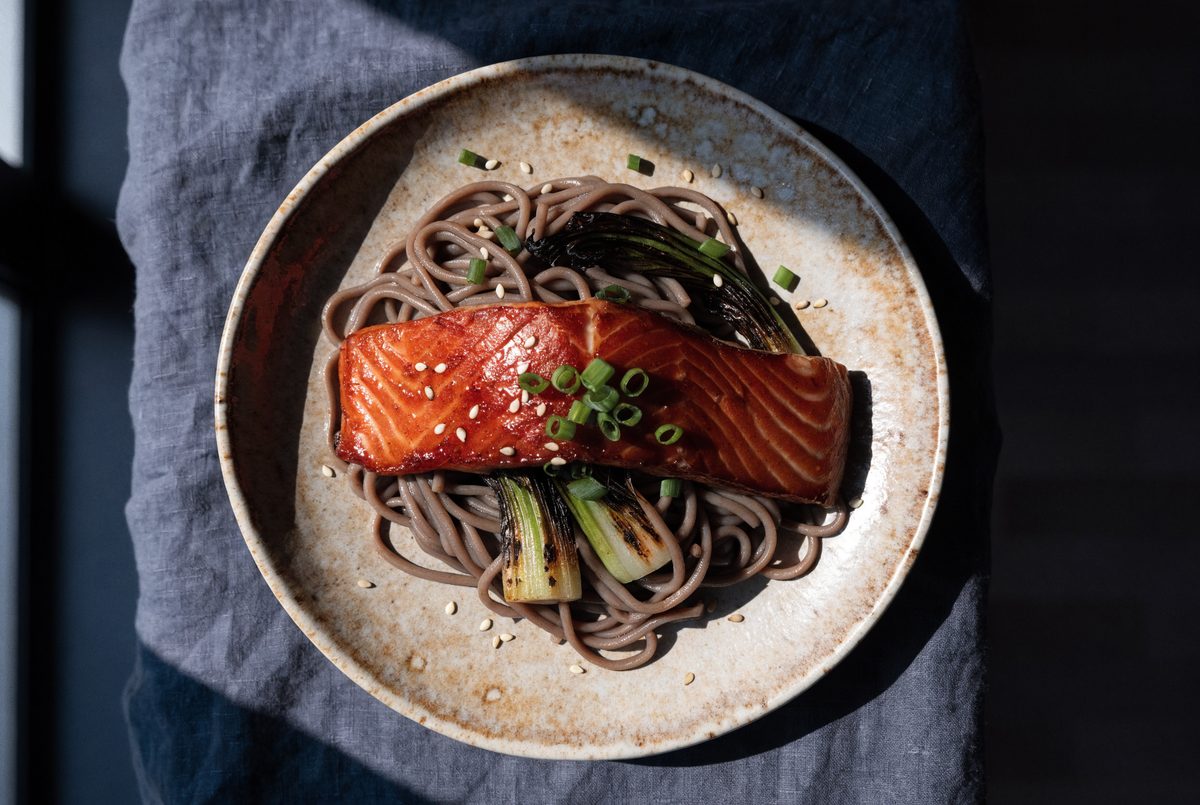
Wild salmon delivers EPA and DHA with astaxanthin in its color, miso brings fermented depth, and bok choy adds dietary nitrate…