Magnesium Pumpkin Seed & Cacao Bites
Pumpkin seeds, almonds and raw cacao are three of the most magnesium-dense foods in the aisle — rolled into something you can keep in the fridge.
- Mechanism
- Magnesium
- Yield
- makes about 16 bites
- Ingredients
- 7
- Steps
- 4
- Cited studies
- 3
- Course
- Snack
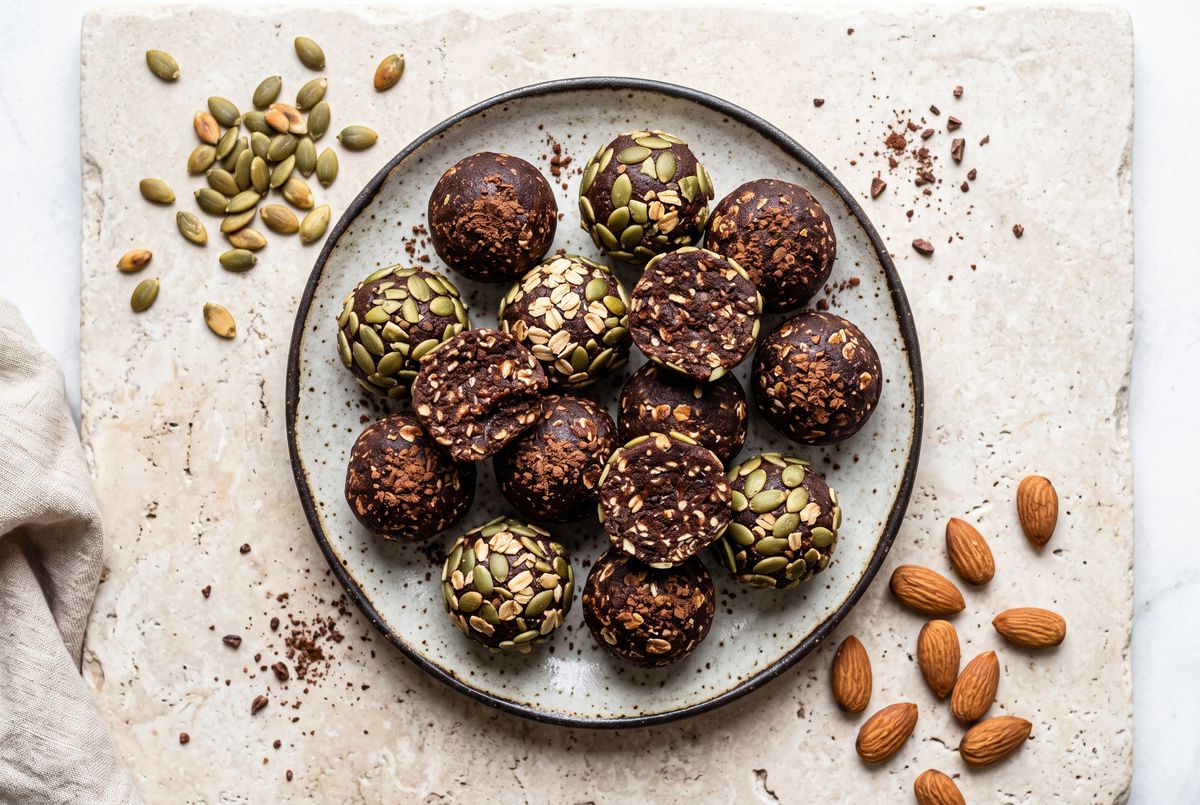
Magnesium is concentrated in a short list of foods: leafy greens, nuts, seeds, whole grains and cocoa. Reviews of magnesium in health and disease (Cureus, 2024) and in nutrition more broadly (Roczniki Panstwowego Zakladu Higieny, 2013) both note that intakes commonly fall short of recommendations on refined diets, which is less a story about any single food than about what gets stripped out of processed ones.
Pumpkin seeds and almonds sit among the densest seed and nut sources, and cocoa contributes magnesium along with its flavanols; a review of cocoa and dark chocolate in cardiovascular prevention (Deutsche Medizinische Wochenschrift, 2011) notes that trials have used modest daily amounts of high-cocoa chocolate. Rolled into date-bound bites, none of it needs baking.
Why this works
Three of the densest magnesium foods are doing the work at once: pumpkin seeds as the base, almonds alongside them, and raw cacao powder through the middle, with chopped dark chocolate folded in for the flavanols that come with the bitterness. Medjool dates are the binder and the only sweetener, so nothing needs added sugar to hold together, and almond butter carries the mixture from crumbs to something that will roll. Pulse the seeds and nuts only to a coarse meal — go further and the oils release, the texture turns to butter, and you lose the bite that makes these worth keeping in the fridge.
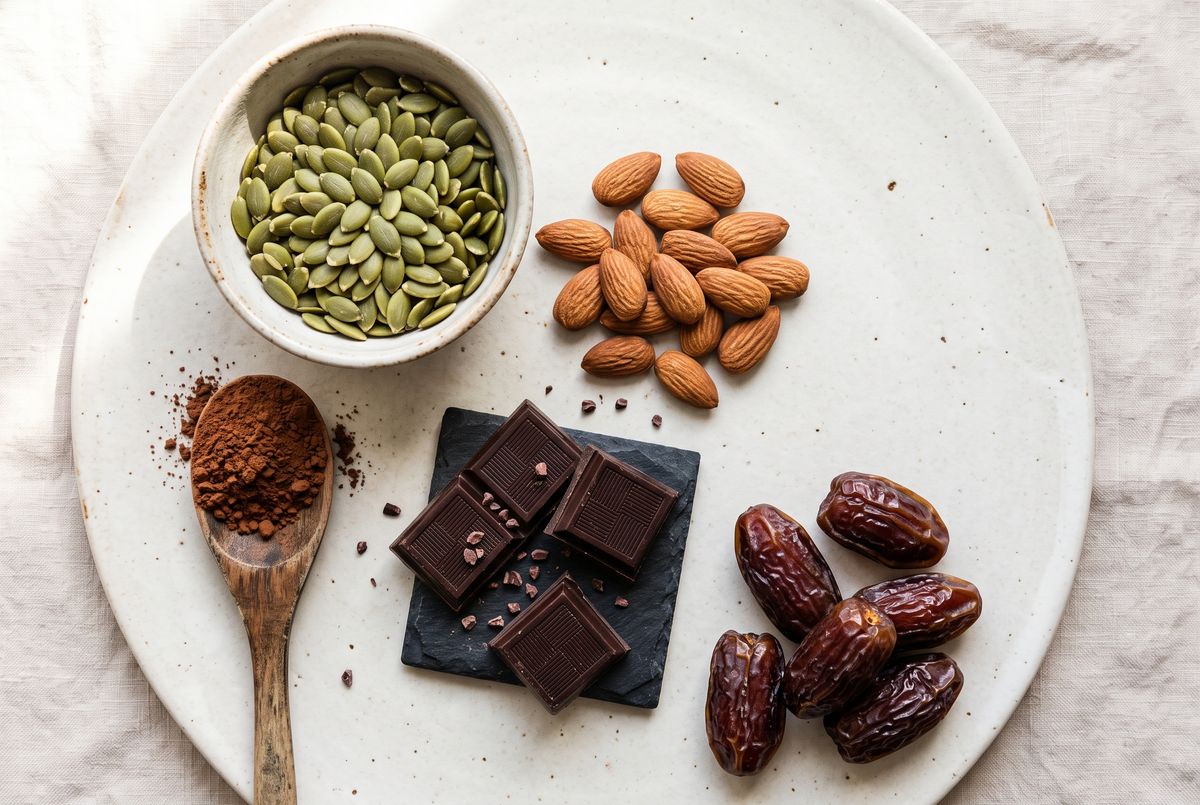
Ingredients · makes about 16 bites
- 1 cup pumpkin seeds (pepitas)
- ½ cup almonds
- 8 soft Medjool dates, pitted
- 3 tbsp raw cacao powder
- 2 tbsp almond butter
- 1 oz 85% dark chocolate, chopped
- A pinch of sea salt, ½ tsp vanilla
Method
- Pulse the pumpkin seeds and almonds in a food processor to a coarse meal — stop before it becomes butter.
- Add the dates, cacao, almond butter, vanilla and salt and pulse until the mixture clumps when pressed.
- Fold in the chopped dark chocolate by hand.
- Roll into walnut-sized balls, then roll some in extra cacao or crushed pepitas. Chill 30 minutes to firm up; keeps 2 weeks refrigerated.
Getting the most from it
These are calorie-dense, so treat two as a portion rather than grazing the jar. If your dates are dry, soak them in warm water for ten minutes and pat them dry before blending, or the mixture will never clump. Store them covered in the fridge for up to two weeks. And if a clinician has raised your magnesium with you, take a snack like this as a complement to their advice rather than a substitute for it.
Nutrition Facts
Calculated for one serving from USDA FoodData Central values for the ingredients above. An estimate, not a lab analysis.
How this was calculated. Each ingredient was converted to grams, matched to a food in USDA FoodData Central (SR Legacy, April 2018), summed, and divided by 16 servings. Cooking losses, draining and the real size of a handful all move these numbers, so treat them as a good estimate rather than a measurement. Added sugars count honey, maple syrup and table sugar only; sugar from whole fruit is not an added sugar.
- Seeds, pumpkin and squash seed kernels, dried
- Nuts, almonds
- Dates, medjool
- Cocoa, dry powder, unsweetened
- Nuts, almond butter, plain, without salt added
- Chocolate, dark, 70-85% cacao solids
- Vanilla extract
19 PubMed citations
In small randomized trials, magnesium-L-threonate improved composite cognition versus placebo in older adults with…
19 PubMed citations
Pooled analyses of randomized trials indicate oral magnesium lowers blood pressure by a small amount—about 2 mmHg in a…
21 PubMed citations
In the large COSMOS randomized trial of older adults, daily cocoa extract did not significantly reduce the primary…
The research behind this recipe
Primary sources for the claims above. Effects reported in these papers describe the compound or the dietary pattern studied — not this specific dish.
More muscle, connective tissue & minerals recipes
 Muscle & strength
Red meat and fish are the only meaningful dietary sources of creatine — roughly a gram per pound of raw meat, and cooking costs…
 Collagen & glycine
Gelatin is roughly a third glycine — the amino acid we eat least of relative to how much our connective tissue needs.
 Taurine
Shellfish are the densest food source of taurine — the amino acid whose age-related decline drew serious attention in 2023.