Arugula–Walnut Pesto
Raw arugula is one of the highest-nitrate foods there is — and pesto is the rare recipe that keeps a large pile of it completely uncooked.
- Mechanism
- Nitric oxide
- Yield
- makes about 1 cup
- Ingredients
- 7
- Steps
- 4
- Cited studies
- 3
- Course
- Sauce
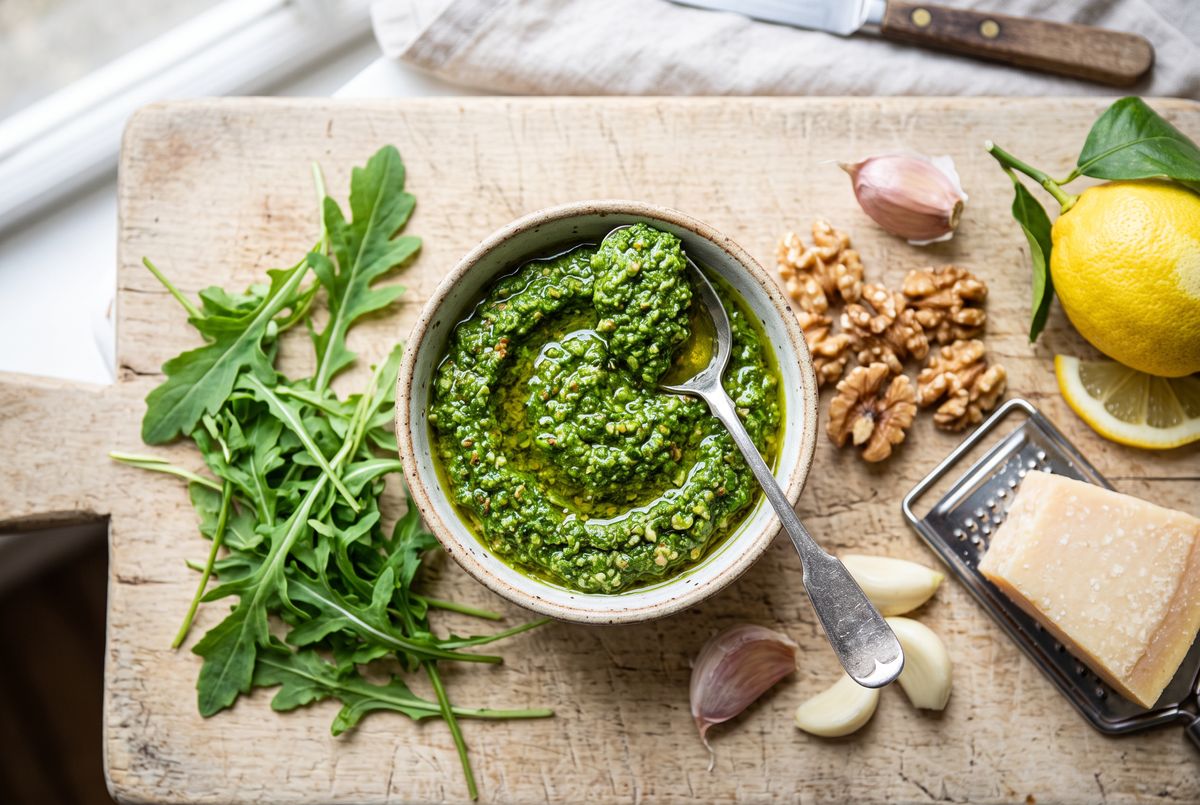
Arugula is among the most nitrate-dense vegetables in food-composition measurements (American Journal of Clinical Nutrition, 2009), which puts it in the same company as beets and spinach. Nitrate is water-soluble, and that is the quiet argument for pesto: nothing is boiled and nothing is drained, so none of it is lost to cooking water. A pile of raw leaves that would be a large salad becomes a few spoonfuls of sauce.
In a large Danish cohort study, vegetable nitrate intake was associated with lower blood pressure and less incident cardiovascular disease (European Journal of Epidemiology, 2021) — an association, not proof. The walnuts bring something else: ellagitannins, which gut bacteria convert into urolithin A. A short human study following three days of walnut eating found that the urolithin metabotype you carry shapes how your gut bacteria respond (Nutrients, 2019). This is a sauce, not a treatment.
Why this works
Pesto is a delivery system for raw leaves. Four packed cups of arugula is more than most people will eat as salad, and blitzing it makes that volume disappear into something you spoon onto pasta. Walnuts do double duty — they carry the ellagitannins along with plant omega-3 fat, and toasted, they give the sauce the body that pine nuts usually provide. Parmesan supplies salt and savory depth, which is what stops a peppery green sauce from tasting like a health food. Garlic sharpens it, lemon zest lifts it, and the olive oil is what binds everything, so stream it in slowly rather than dumping it.
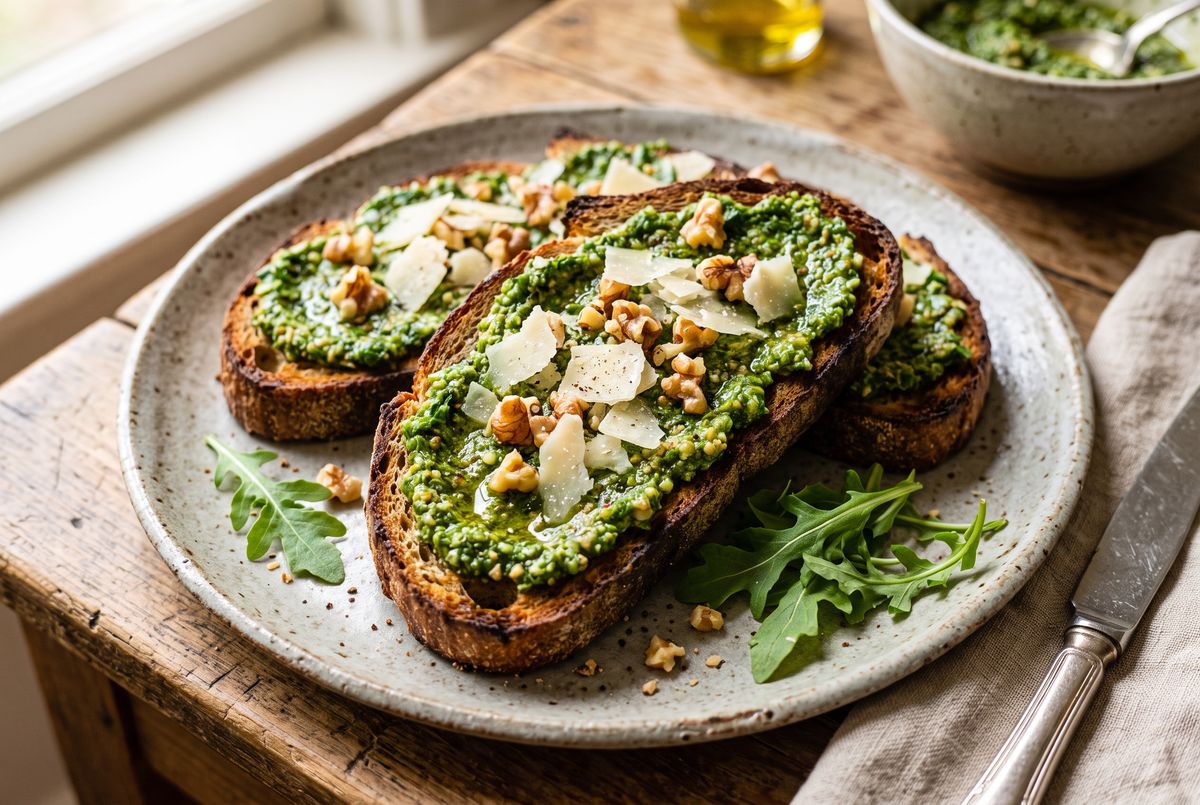
Ingredients · makes about 1 cup
- 4 packed cups wild arugula
- ⅓ cup walnuts, lightly toasted
- 1 small clove garlic
- ½ cup grated Parmesan
- Juice and zest of ½ lemon
- ⅓–½ cup extra-virgin olive oil
- Salt and black pepper
Method
- Toast the walnuts 3–4 minutes in a dry pan, then cool.
- Pulse the arugula, walnuts, garlic, Parmesan, lemon juice and zest in a food processor until coarsely chopped.
- With the motor running, stream in the olive oil until it comes together. Season and pulse once more.
- Use on pasta, spooned over toast, or as a sauce for fish. Keeps 4 days refrigerated under a film of oil.
Getting the most from it
Keep it raw. Heat dulls both the flavor and the reason you used that much raw arugula in the first place, so toss it through hot pasta off the heat with a splash of the cooking water rather than simmering it in a pan. Wild or baby arugula is more peppery and less coarse than the large-leaf kind. Store the pesto under a film of olive oil to keep the surface from browning, and use it within about four days.
Nutrition Facts
Calculated for one serving from USDA FoodData Central values for the ingredients above. An estimate, not a lab analysis.
How this was calculated. Each ingredient was converted to grams, matched to a food in USDA FoodData Central (SR Legacy, April 2018), summed, and divided by 2 servings. The recipe does not state a yield, so two servings were assumed. Cooking losses, draining and the real size of a handful all move these numbers, so treat them as a good estimate rather than a measurement. Added sugars count honey, maple syrup and table sugar only; sugar from whole fruit is not an added sugar.
- Arugula, raw
- Nuts, walnuts, english
- Garlic, raw
- Cheese, parmesan, grated
- Lemon juice, raw
- Oil, olive, salad or cooking
24 PubMed citations
Meta-analyses of randomized trials show that beetroot juice and dietary nitrate lower blood pressure—about 5 mmHg…
20 PubMed citations
In human research, urolithin A supplementation is safe and bioavailable and improves markers of mitochondrial health.…
22 PubMed citations
Across large randomized trials and meta-analyses, marine omega-3s reliably reduce serum triglycerides (roughly 15% at…
The research behind this recipe
Primary sources for the claims above. Effects reported in these papers describe the compound or the dietary pattern studied — not this specific dish.
More nitric oxide & blood flow recipes
 Nitric oxide
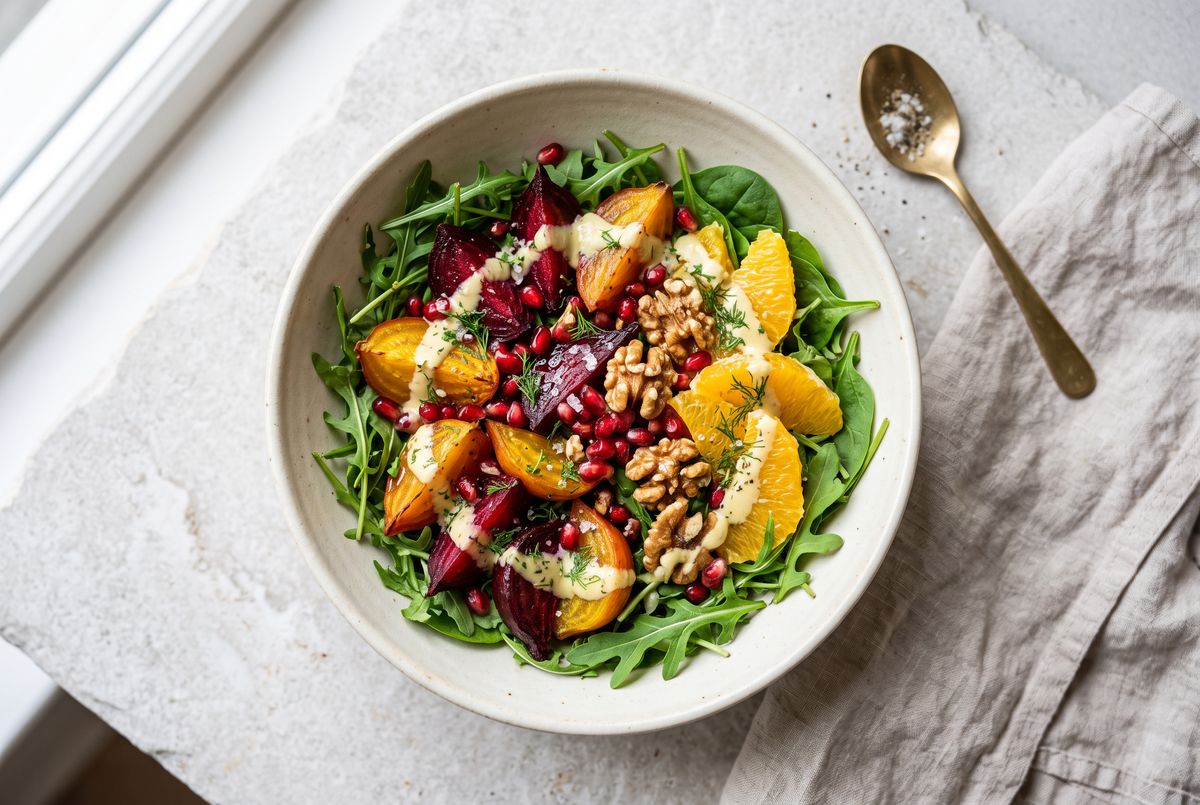
Beetroot and arugula are two of the richest dietary sources of nitrate — the raw material your body converts into nitric oxide…
 Nitric oxide
Watermelon is the richest everyday food source of L-citrulline — the amino acid your body converts into L-arginine, the raw…
 Nitric oxide
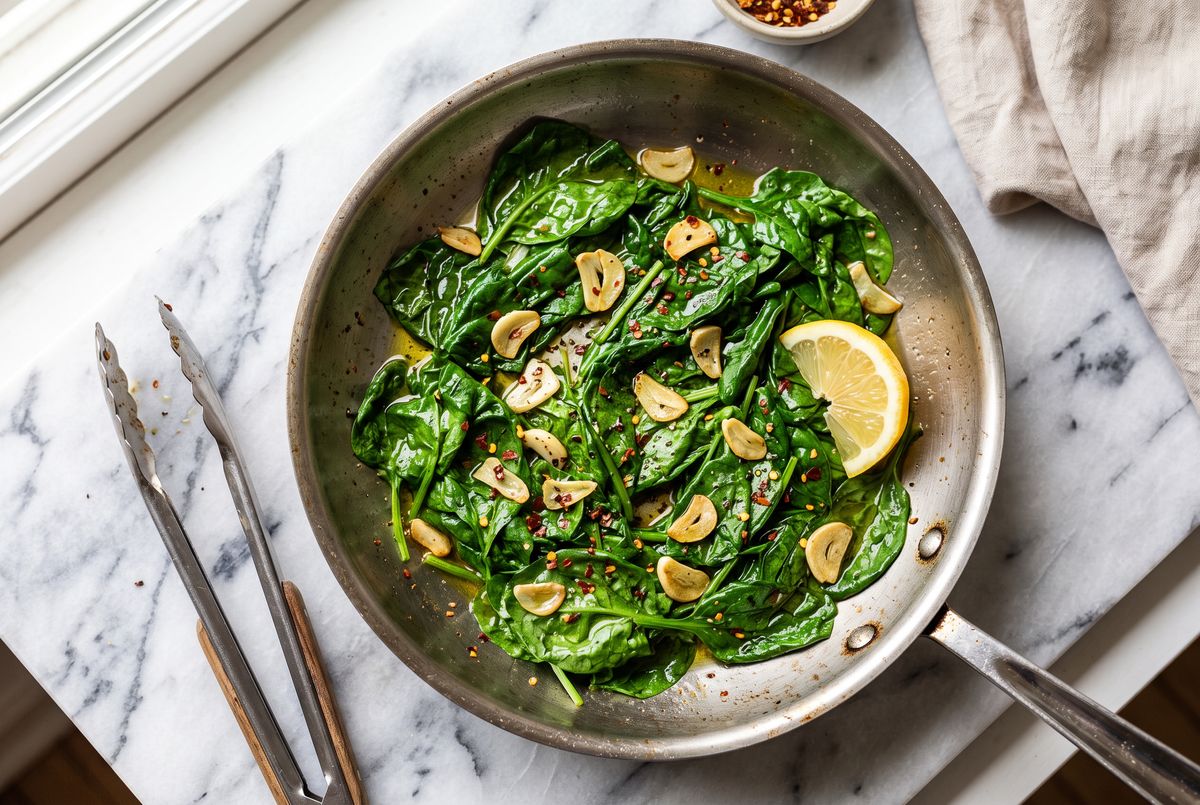
Spinach sits alongside arugula and beets at the top of the dietary-nitrate list, and a controlled trial found nitrate-rich…
Keep reading
Beetroot & dietary nitrateBlood pressureUrolithin AOmega-3Urolithin A: the evidenceOmega-3: the evidenceUrolithin A (Mitopure) and MuscleThe supplement guideResearch mapPathway universe