Watermelon–Lime Citrulline Cooler
Watermelon is the richest everyday food source of L-citrulline — the amino acid your body converts into L-arginine, the raw material your blood vessels use to make nitric oxide.
- Mechanism
- Nitric oxide
- Yield
- serves 4
- Ingredients
- 6
- Steps
- 3
- Cited studies
- 3
- Course
- Drink
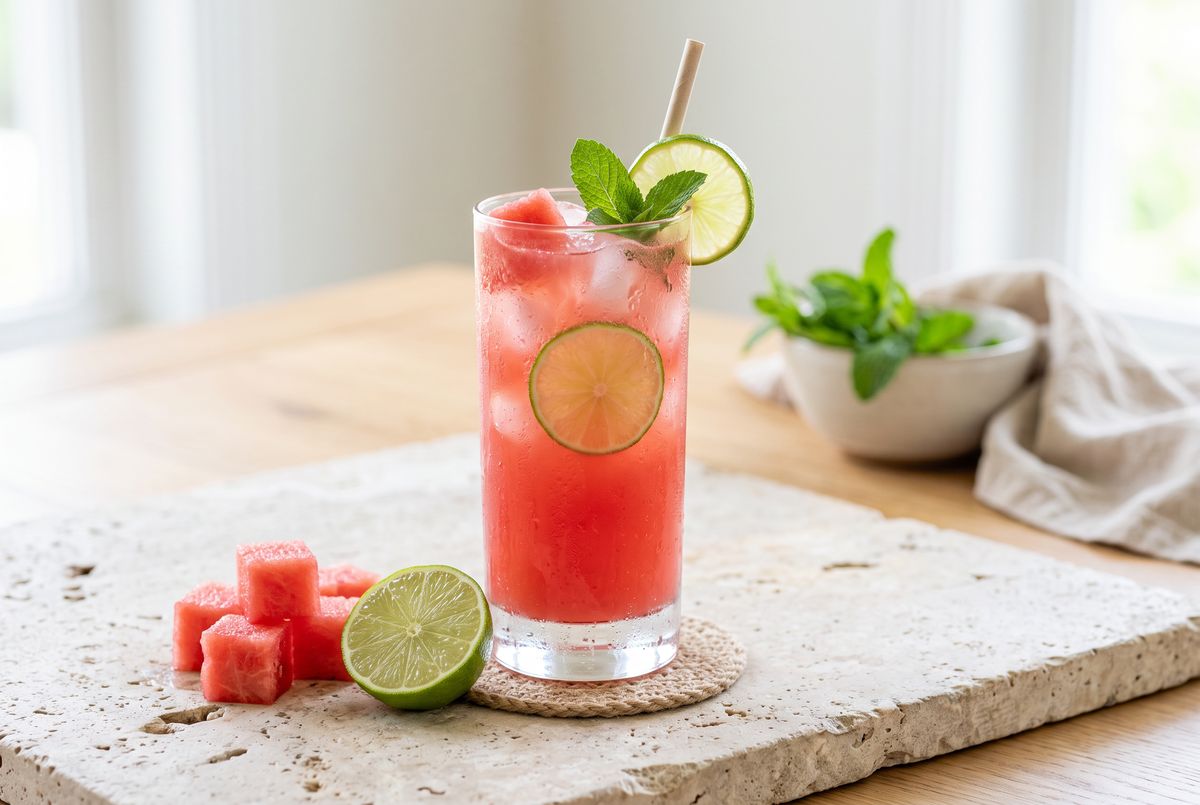
Watermelon is the best food source of L-citrulline, and citrulline has a specific job. Your kidneys convert it into L-arginine, the substrate the enzyme eNOS uses to make nitric oxide — the signal that tells the muscle in your blood vessel walls to relax. Eating citrulline also raises arginine availability more reliably than eating arginine itself does.
Nitric oxide is one of the better-understood targets in vascular physiology (Nature Reviews Drug Discovery, 2008). The watermelon evidence itself is thinner: a small randomized trial of watermelon supplementation reported improved aortic blood pressure and hemodynamic responses in overweight and hypertensive adults (American Journal of Hypertension, 2014), and a review of citrulline and watermelon supplementation has examined vascular function and exercise performance together. Effects are modest and short-lived, so treat this as a habit rather than a cure.
Why this works
The watermelon is the whole point here — it is the only ingredient carrying citrulline, which is why the recipe uses six cups of it and asks you to blend rather than strain. Everything else is there to make that much fruit drinkable. Lime cuts the flat sweetness that a large volume of blended melon develops, and its acidity keeps the puree tasting fresh as it sits. Grated ginger adds a warm bite that reads as more interesting than sweet. Mint, slapped rather than chopped, releases its aroma without turning the drink grassy. Cold matters too: chilled melon and plenty of ice make it something you finish, and a drink you finish is a drink you repeat.
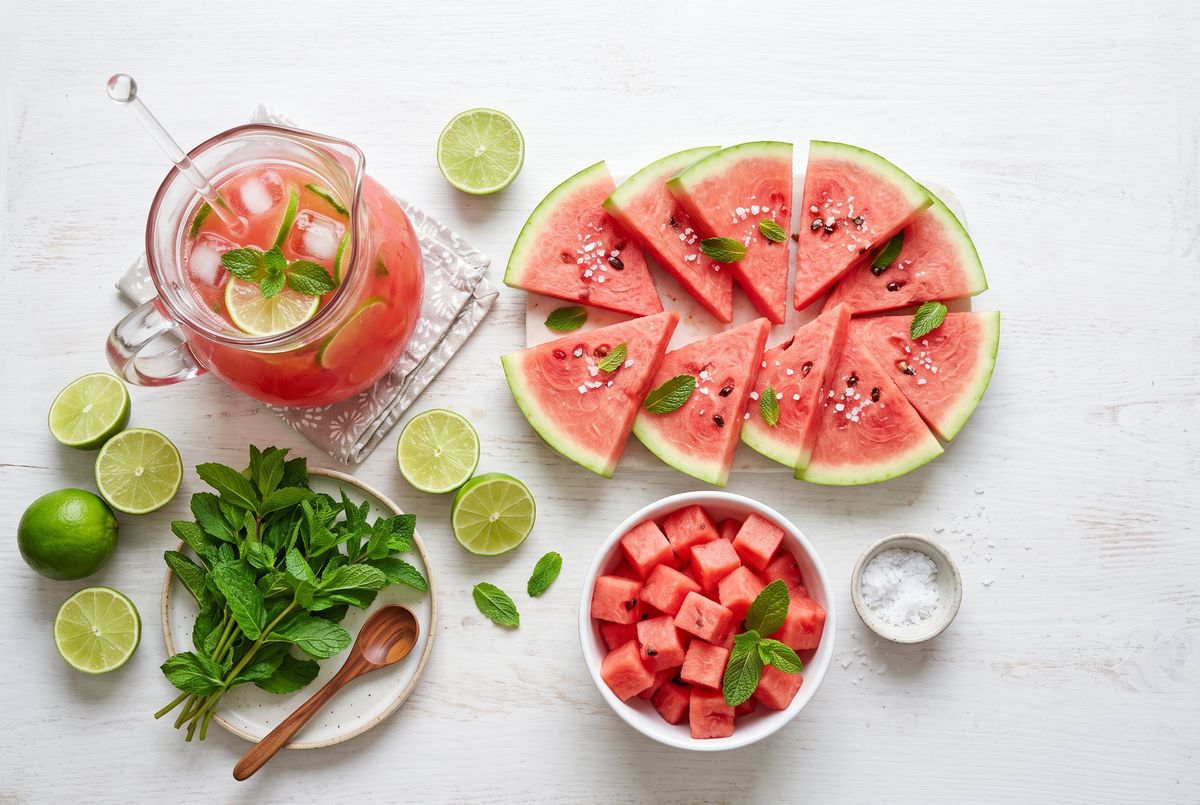
Ingredients · serves 4
- 6 cups cubed seedless watermelon (about 2 lb), chilled
- Juice of 2 limes, plus wheels to serve
- 1 cup cold water or sparkling water
- A 1-inch knob of fresh ginger, grated (optional)
- A handful of fresh mint
- Ice
Method
- Blend the watermelon until completely smooth — no need to strain unless you want it crystal clear.
- Stir in the lime juice, water and grated ginger. Chill at least 30 minutes.
- Pour over ice, add a lime wheel and a slap of mint, and serve cold.
Getting the most from it
Blend the whole fruit rather than running it through a juicer. Watermelon is mostly water and natural sugar, and juicing throws away the flesh and fiber that would otherwise come along, leaving something closer to sweetened water. Buy a melon that feels heavy for its size, with a creamy yellow patch where it sat on the ground. Cube and chill it the night before — cold melon blends smoother and needs no added sweetener.
Nutrition Facts
Calculated for one serving from USDA FoodData Central values for the ingredients above. An estimate, not a lab analysis.
How this was calculated. Each ingredient was converted to grams, matched to a food in USDA FoodData Central (SR Legacy, April 2018), summed, and divided by 4 servings. Cooking losses, draining and the real size of a handful all move these numbers, so treat them as a good estimate rather than a measurement. Added sugars count honey, maple syrup and table sugar only; sugar from whole fruit is not an added sugar.
- Watermelon, raw
- Lime juice, raw
- Ginger root, raw
24 PubMed citations
Meta-analyses of randomized trials show that beetroot juice and dietary nitrate lower blood pressure—about 5 mmHg…
25 PubMed citations
In human trials, Pycnogenol has improved flow-mediated dilation and other measures of endothelial function in people…
22 PubMed citations
In human trials, hesperidin or hesperidin-rich orange juice has improved endothelial function and postprandial…
The research behind this recipe
Primary sources for the claims above. Effects reported in these papers describe the compound or the dietary pattern studied — not this specific dish.
More nitric oxide & blood flow recipes
 Nitric oxide
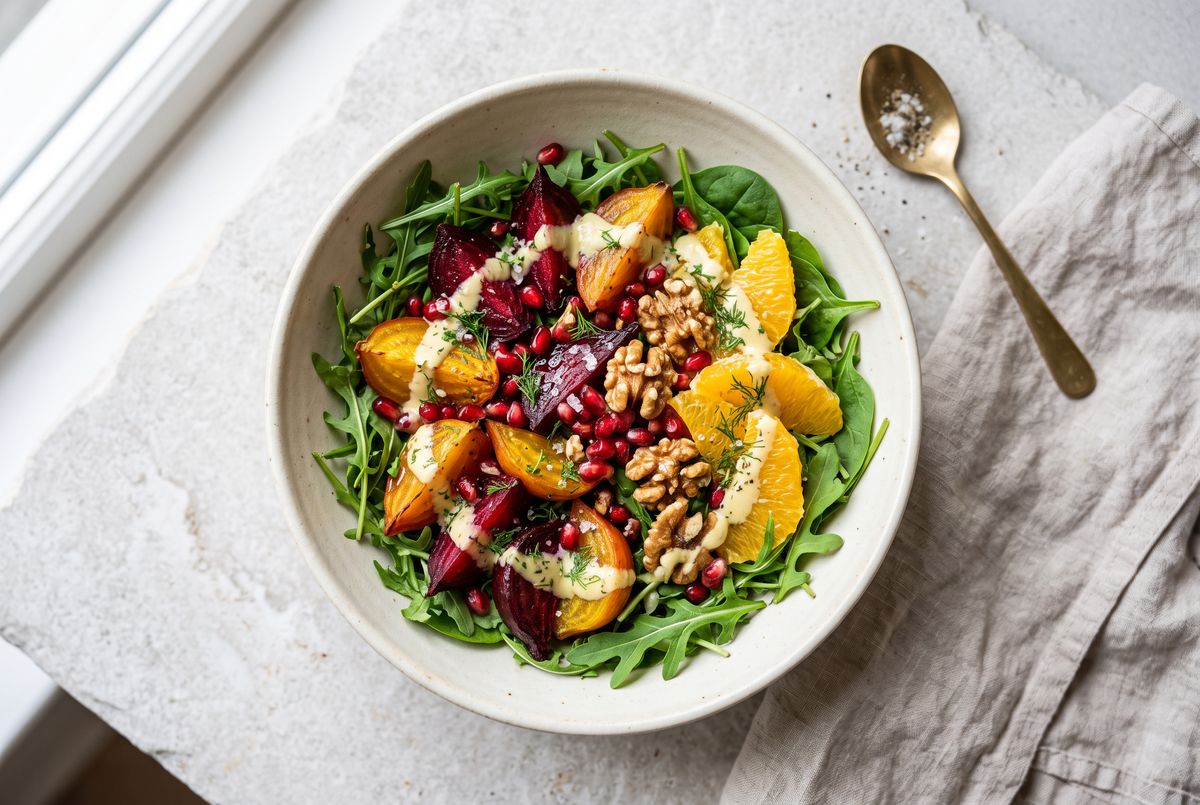
Beetroot and arugula are two of the richest dietary sources of nitrate — the raw material your body converts into nitric oxide…
 Nitric oxide
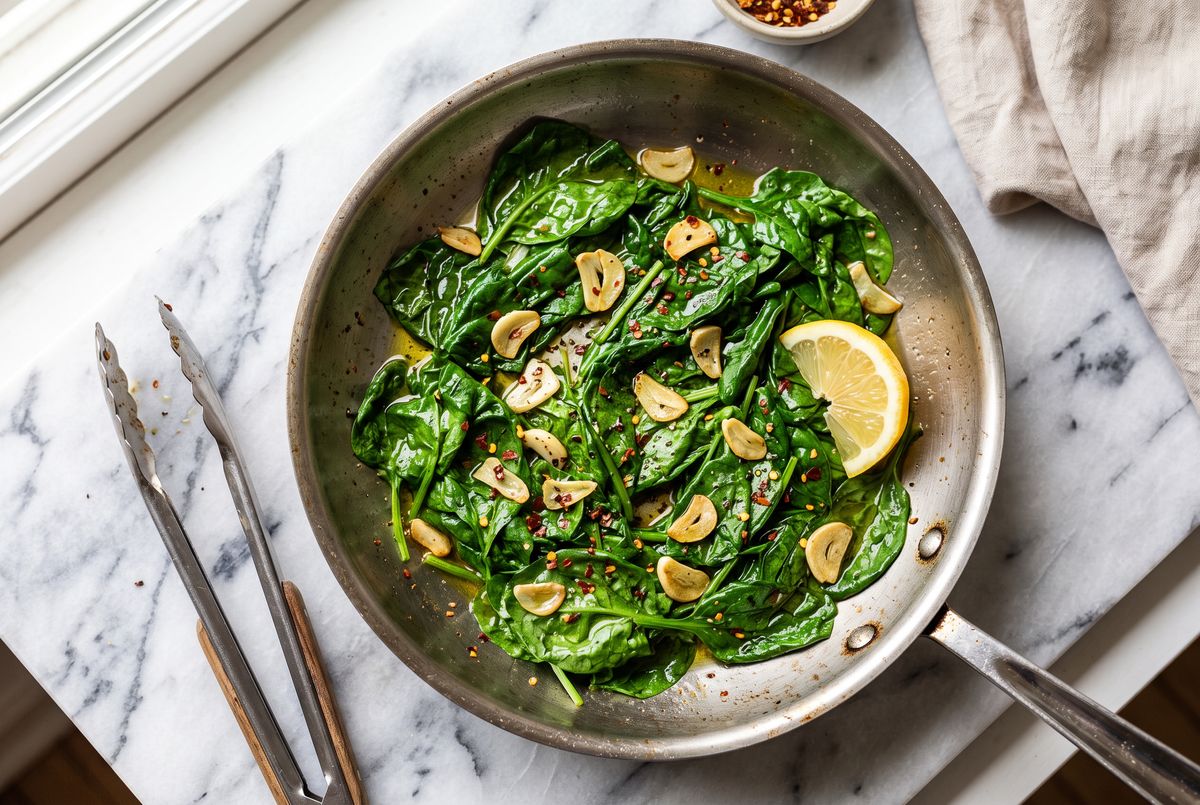
Spinach sits alongside arugula and beets at the top of the dietary-nitrate list, and a controlled trial found nitrate-rich…
 Nitric oxide
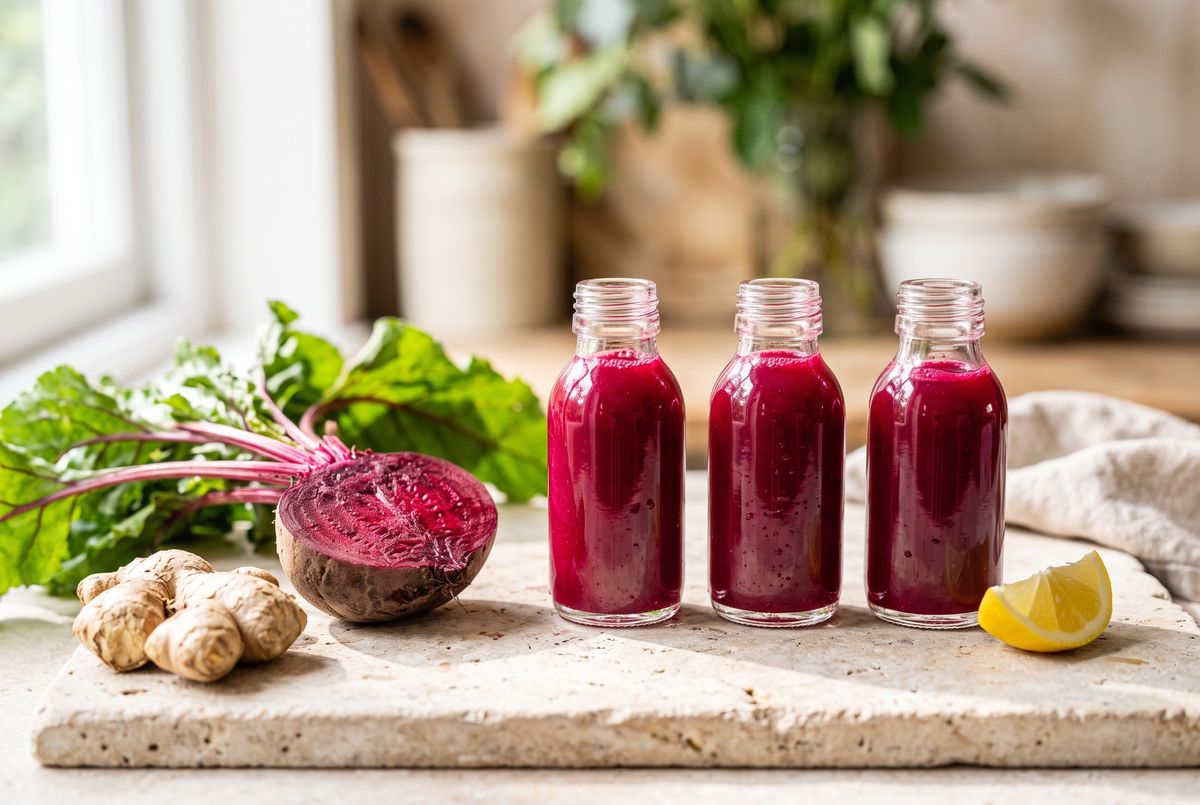
A small, concentrated hit of beet juice about two hours before training — the timing and dose most closely matching the nitrate…
Keep reading
Nitric oxideBeetroot & dietary nitrateBlood pressureDietary fiberThe supplement guideResearch mapPathway universe