Blood Orange, Fennel & Olive Salad
A Sicilian classic that stacks three vascular polyphenols on one plate — citrus hesperidin, red-onion quercetin and olive-oil hydroxytyrosol — and comes together in under twenty minutes.
- Mechanism
- Polyphenols
- Cited studies
- 4
- Course
- Salad
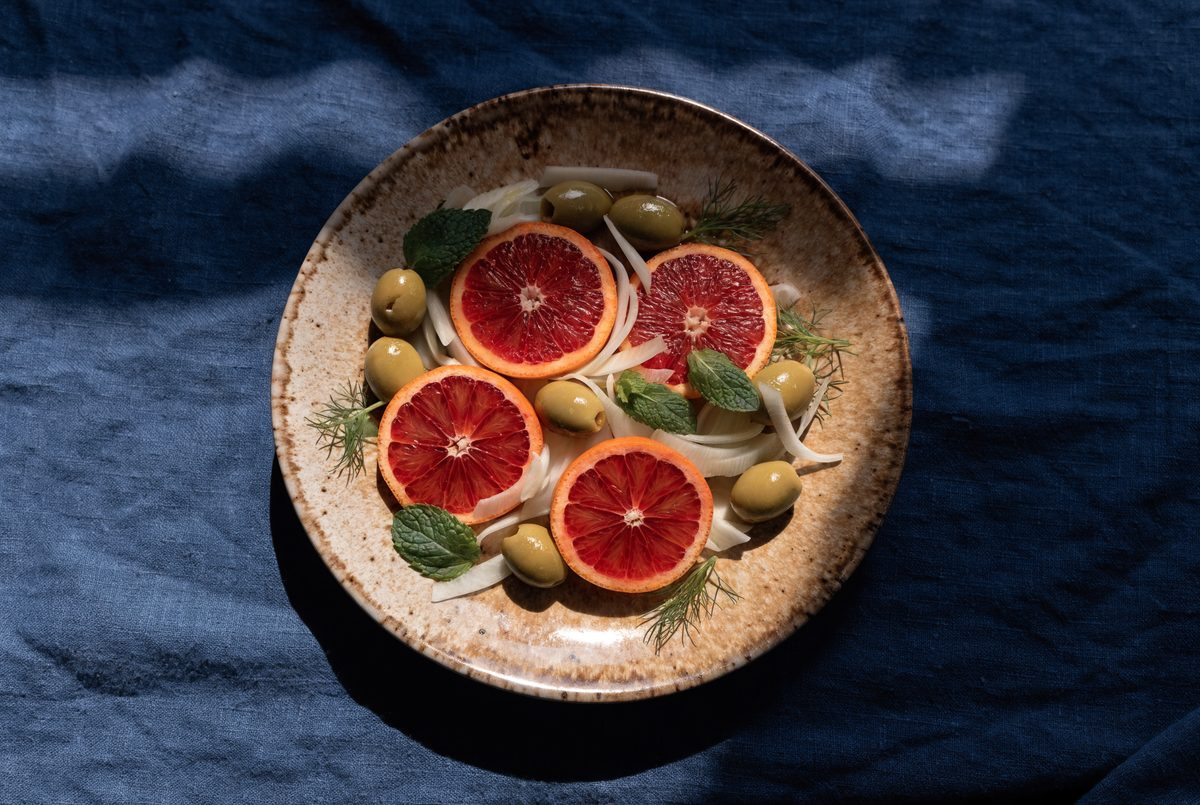
Blood oranges carry hesperidin, the flavanone with some of the more direct human evidence in the citrus world: in a randomized crossover study, both orange juice and isolated hesperidin lowered diastolic blood pressure and improved endothelial function in healthy middle-aged men (American Journal of Clinical Nutrition, 2011). At population scale, women in the Nurses' Health Study with the highest flavanone intake — overwhelmingly from citrus — had a 19 percent lower risk of ischemic stroke (Stroke, 2012). The crossover trial was small and the cohort is observational, so the fair reading is a consistent vascular signal rather than a settled fact.
The rest of the plate is the Mediterranean pattern in miniature. The extra-virgin olive oil that dresses it is the same intervention that, added to a Mediterranean diet, reduced major cardiovascular events by about 30 percent in the PREDIMED trial (New England Journal of Medicine, 2018). Thin-sliced red onion is a leading food source of quercetin, though the randomized blood-pressure evidence used supplement doses around 500 mg daily (Journal of the American Heart Association, 2016) — several onions' worth. Anthocyanins, incidentally, are what make a blood orange bleed.
Why this works
Blood oranges supply hesperidin plus anthocyanins that ordinary oranges lack. Fennel brings crunch, anethole, and fiber for pennies. Castelvetrano olives and a generous pour of extra-virgin olive oil add hydroxytyrosol and oleocanthal — and the fat matters functionally, since carotenoids and some polyphenols absorb better with it. Red onion contributes quercetin concentrated in its outer layers, and mint ties citrus and anise together. No cooking means no thermal losses to account for.
How to make it
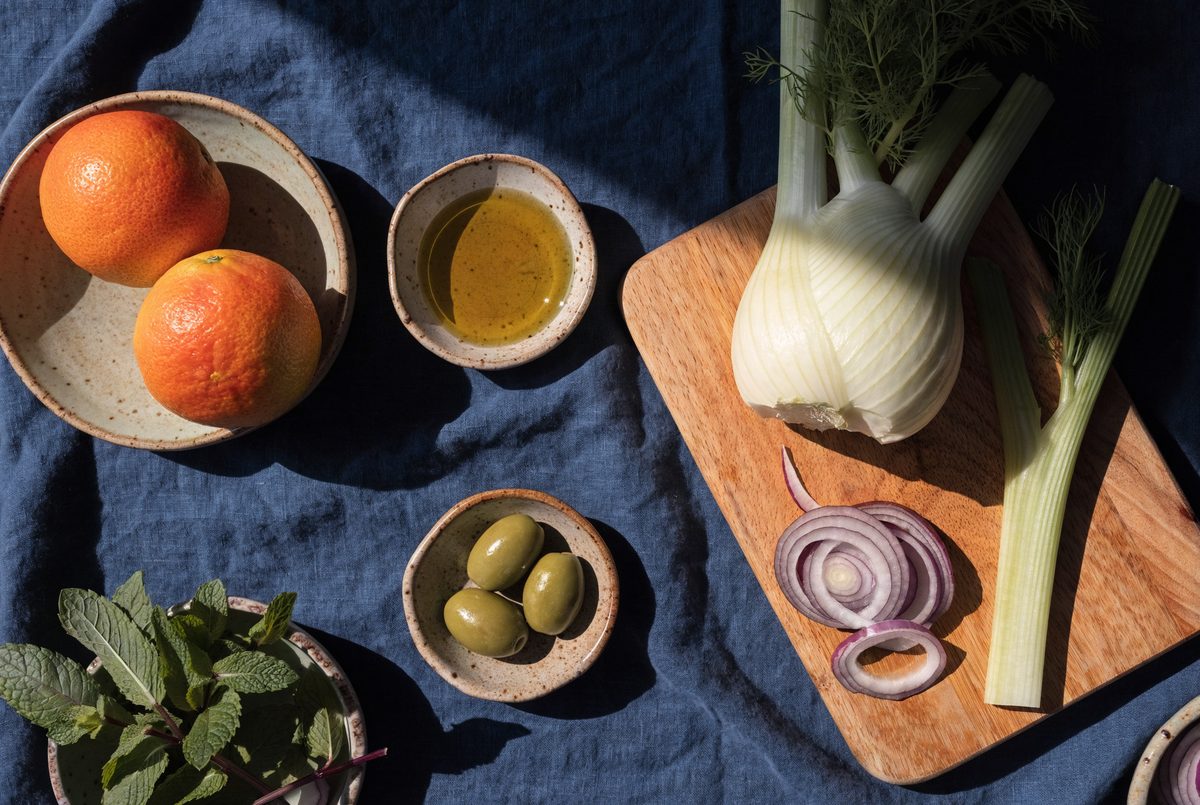
- Slice half a red onion into thin half-moons and soak in cold water for 10 minutes to soften the bite.
- Shave 1 fennel bulb as thinly as you can — a mandoline helps — and hold it in ice water; reserve the fronds.
- Cut the peel and pith from 3 blood oranges and slice into rounds, working over a bowl to catch the juice.
- Layer orange rounds, drained fennel, and onion on a platter; scatter 80 g torn Castelvetrano olives over the top.
- Whisk the reserved orange juice with 3 tablespoons extra-virgin olive oil and a pinch of salt; spoon it over everything.
- Rest 10 minutes, then finish with mint leaves and fennel fronds.
Serves 4 as a side. In Sicily this accompanies rich fish; it does the same job next to roast salmon or sardines.
22 PubMed citations
In human trials, hesperidin or hesperidin-rich orange juice has improved endothelial function and postprandial…
25 PubMed citations
Meta-analyses of randomized trials indicate quercetin produces a small blood-pressure reduction—on the order of 2–3…
19 PubMed citations
In human trials, standardized olive leaf extract has most consistently produced modest reductions in systolic and…
The research behind this recipe
Primary sources for the claims above. Effects reported in these papers describe the compound or the dietary pattern studied — not this specific dish.
More antioxidant defence & polyphenols recipes
 Nrf2 pathway
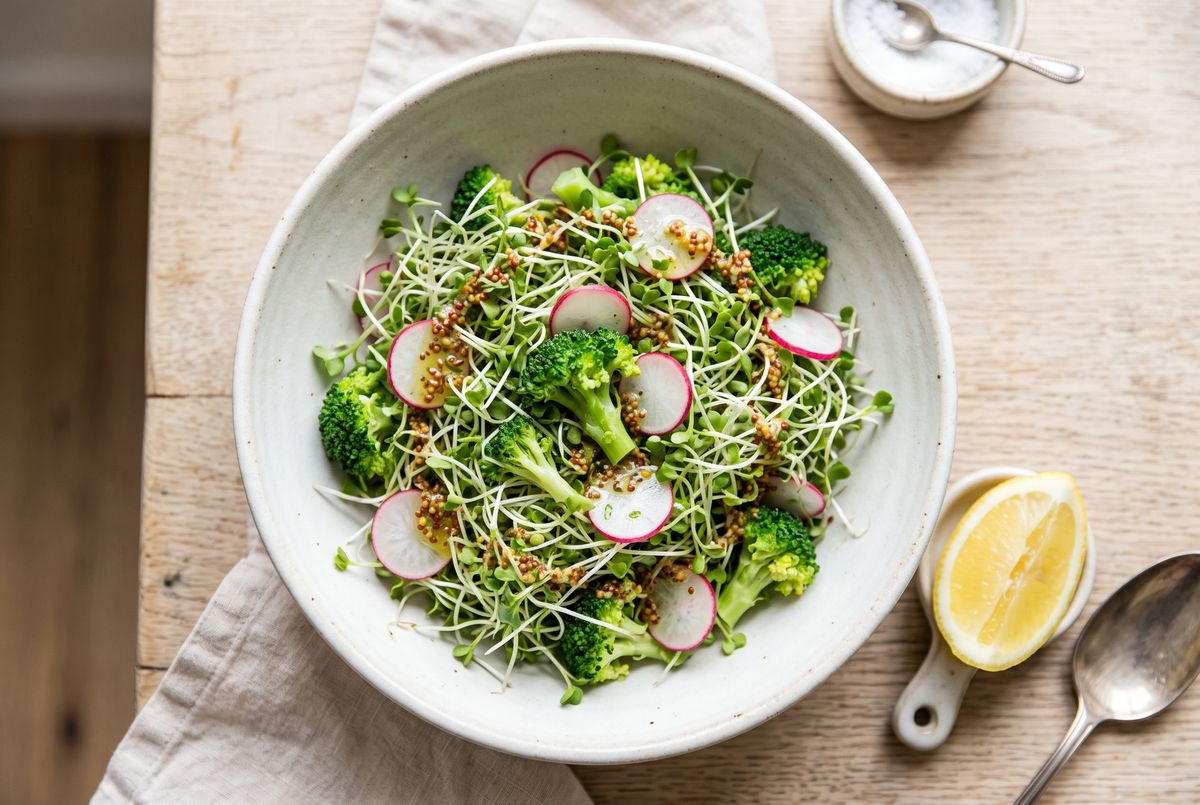
Broccoli sprouts carry many times the sulforaphane precursor of mature broccoli — and a little mustard restores the enzyme that…
 Polyphenols
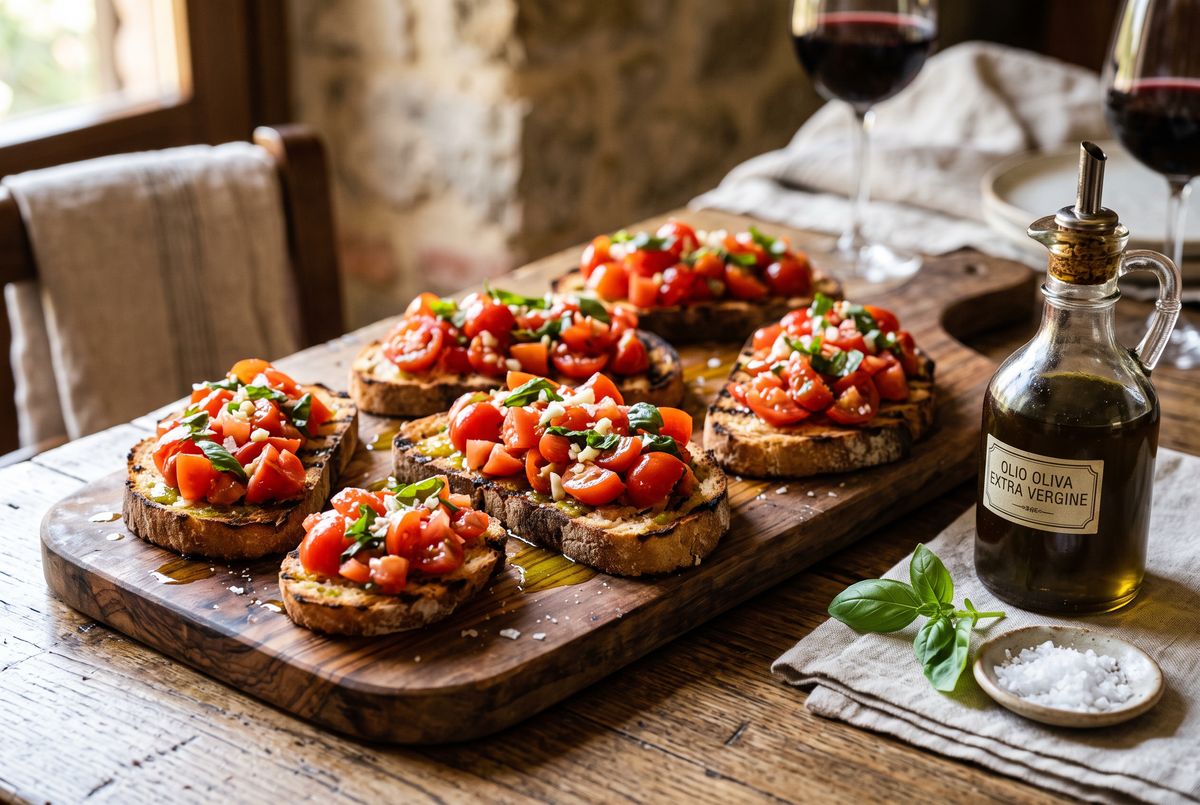
The peppery bite at the back of a good extra-virgin olive oil is the polyphenol content announcing itself — and this is the dish…
 Mushrooms
Mushrooms are effectively the only meaningful dietary source of ergothioneine, an amino acid your body has a dedicated…
Keep reading
Blood pressureThe endotheliumQuercetinDietary fiberThe supplement guideResearch mapPathway universe