Matcha–Blueberry Polyphenol Smoothie
Matcha's EGCG, blueberry anthocyanins, flaxseed ALA and a banana–spinach potassium base in one glass — a breakfast built from the foods that cohort studies of healthy aging keep circling back to.
- Mechanism
- Polyphenols
- Cited studies
- 4
- Course
- Drink
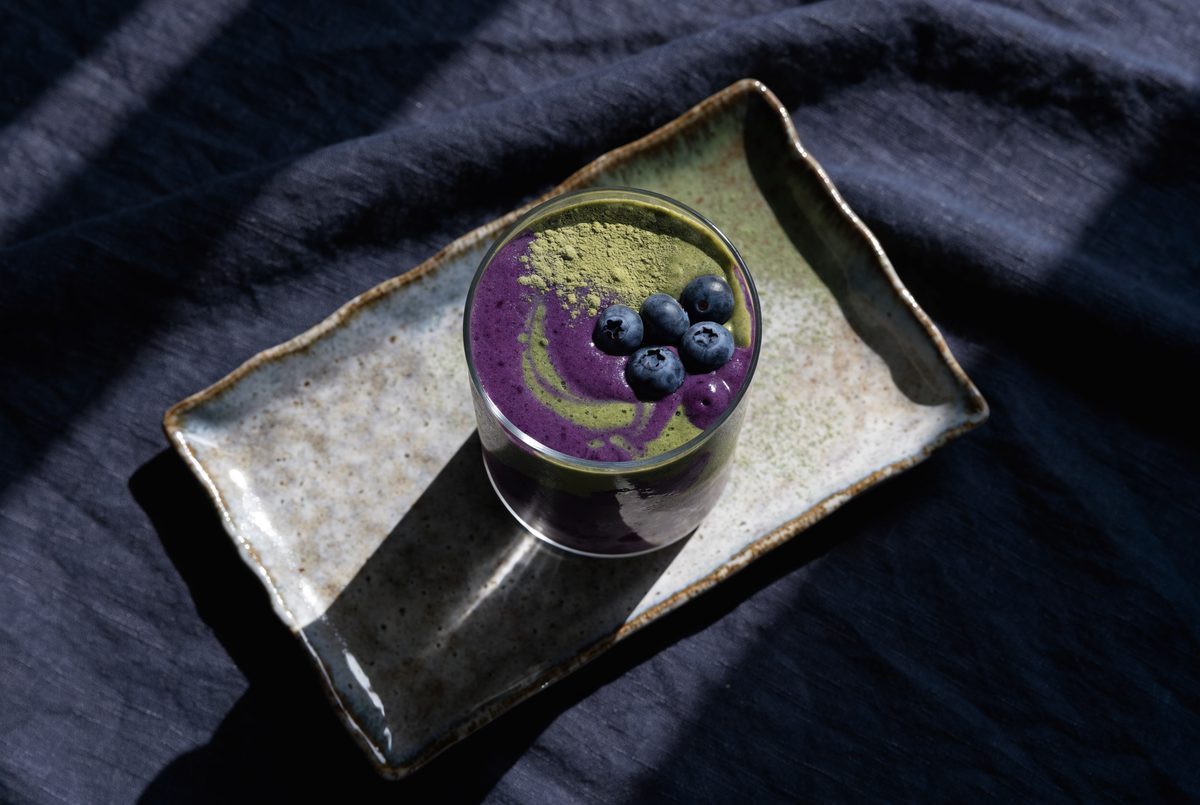
Matcha is powdered whole green-tea leaf, so you drink the leaf rather than an infusion of it — which is why a serving delivers more EGCG than most steeped cups. The headline green-tea evidence is observational: in the Ohsaki cohort of more than 40,000 Japanese adults, those drinking five or more cups daily had lower cardiovascular and all-cause mortality over 11 years of follow-up (JAMA, 2006). Cohorts cannot prove the tea did the work — heavy tea drinkers differ in many other ways — but the association was dose-dependent and survived adjustment.
The blueberry evidence runs from tiny trials to large cohorts. A pilot in nine older adults with early memory decline reported improved recall after 12 weeks of daily wild blueberry juice (Journal of Agricultural and Food Chemistry, 2010) — encouraging, and nine people. Ground flaxseed brings ALA, where a meta-analysis found higher intake was associated with modestly lower cardiovascular risk (American Journal of Clinical Nutrition, 2012). The banana-and-spinach base leans on potassium, and a meta-analysis of trials found that raising potassium intake lowered blood pressure and went with lower stroke risk (BMJ, 2013). None of this makes a smoothie medicine; it makes it a sensible breakfast.
Why this works
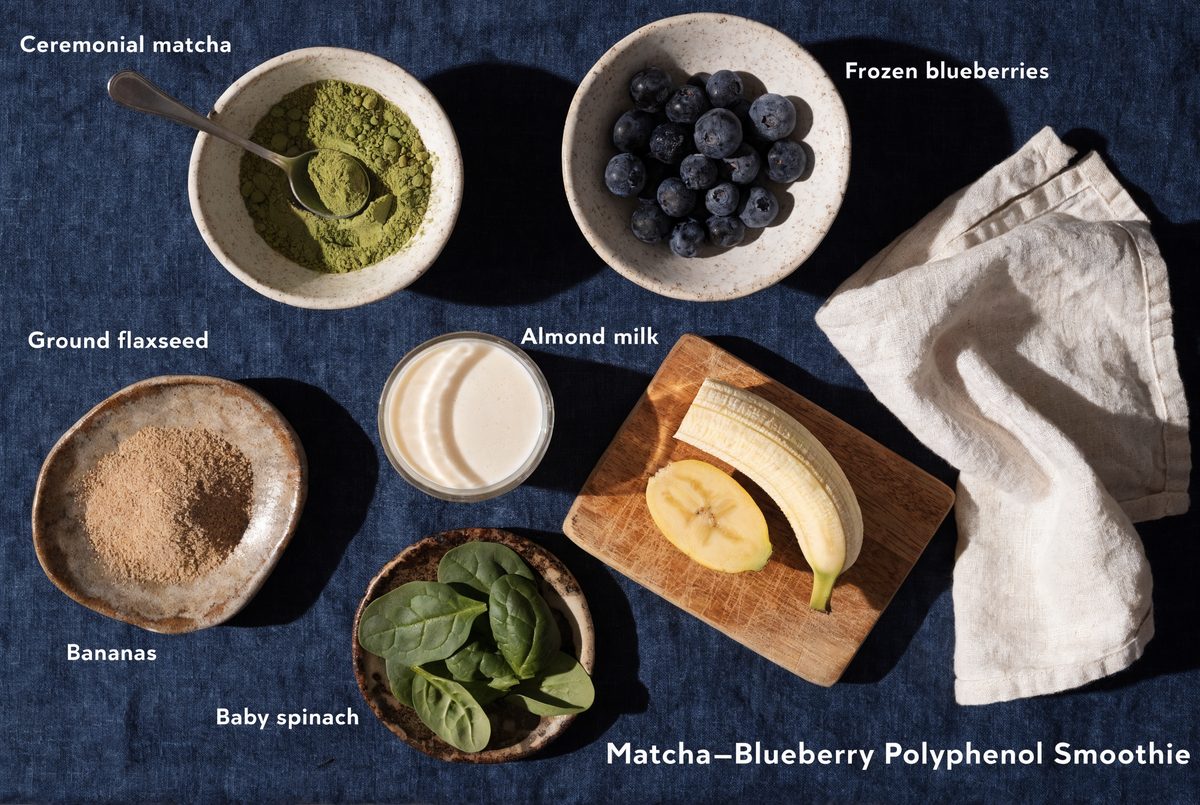
Ceremonial matcha supplies EGCG and enough L-theanine to smooth out its own caffeine. Frozen blueberries carry anthocyanins in the skins — freezing does not destroy them and makes the texture creamy. Ground flaxseed matters because whole flax passes through undigested; grinding exposes the ALA and the fiber. Banana and baby spinach each add potassium (spinach also adds folate and a little dietary nitrate), and unsweetened almond milk keeps the whole thing light enough to drink before a walk.
How to make it
- Sift 1 teaspoon matcha into 50 ml warm (not boiling) water and whisk until smooth — this prevents clumps that a blender will not fix.
- Add the matcha to a blender with 150 g frozen blueberries, 1 ripe banana, 1 tablespoon ground flaxseed, a large handful of baby spinach, and 250 ml unsweetened almond milk.
- Blend on high 45–60 seconds until completely smooth; add almond milk a splash at a time if too thick.
- Taste — a ripe banana usually carries the sweetness; add a teaspoon of honey only if needed.
- Pour over the back of a spoon into a tall glass for the layered look, and finish with a few blueberries and a light dusting of matcha.
Serves 1 generously. Drink it fresh — the anthocyanin color and the matcha both dull within the hour.
20 PubMed citations
For weight and metabolic syndrome, meta-analyses of randomized trials indicate that green tea catechins produce small…
23 PubMed citations
The best-supported clinical use of ALA is for symptomatic diabetic peripheral neuropathy: randomized trials and…
The research behind this recipe
Primary sources for the claims above. Effects reported in these papers describe the compound or the dietary pattern studied — not this specific dish.
More antioxidant defence & polyphenols recipes
 Nrf2 pathway
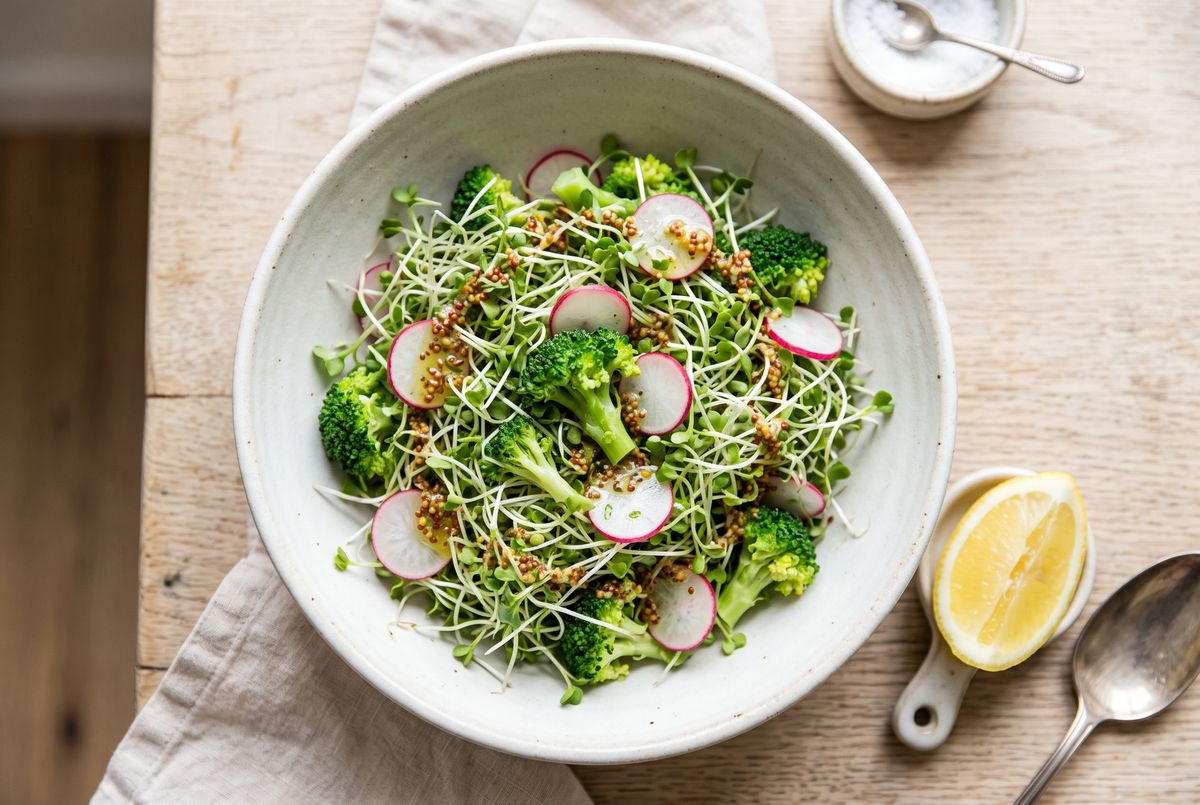
Broccoli sprouts carry many times the sulforaphane precursor of mature broccoli — and a little mustard restores the enzyme that…
 Polyphenols
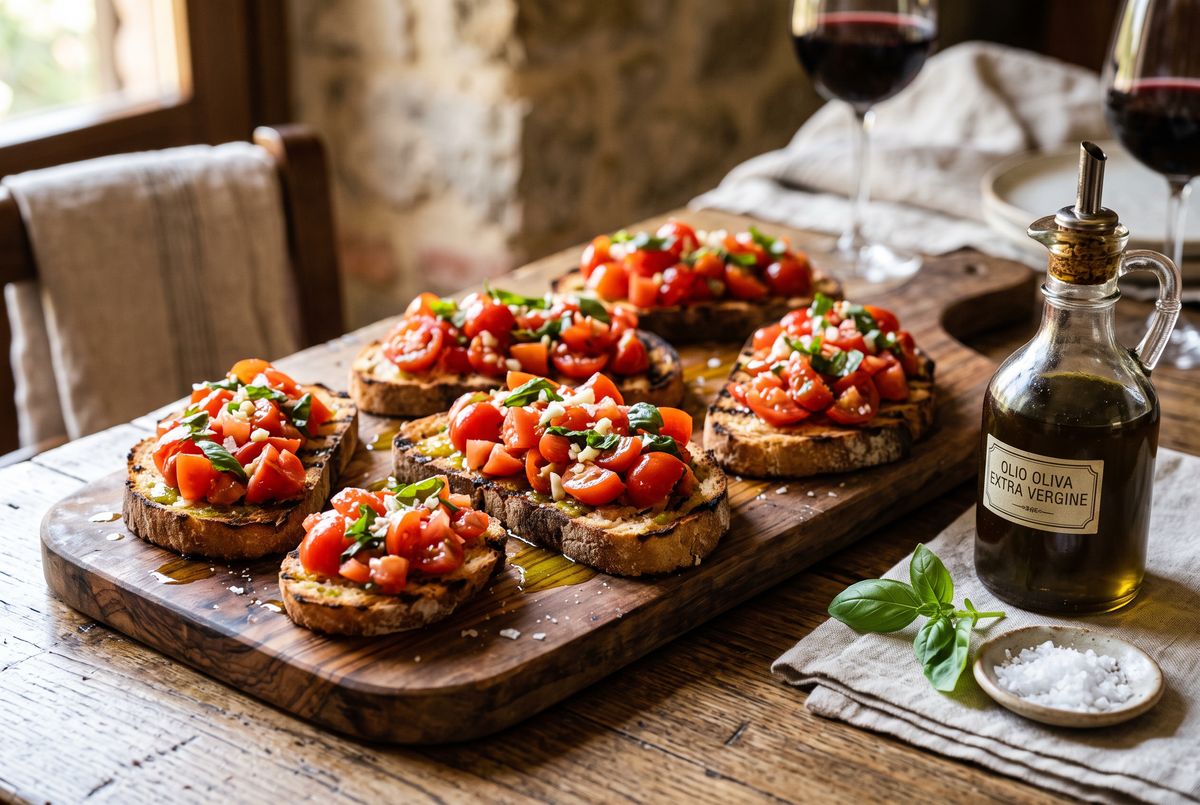
The peppery bite at the back of a good extra-virgin olive oil is the polyphenol content announcing itself — and this is the dish…
 Mushrooms
Mushrooms are effectively the only meaningful dietary source of ergothioneine, an amino acid your body has a dedicated…
Keep reading
Blood pressureDietary fiberAlpha-lipoic acidMethylfolateThe supplement guideResearch mapPathway universe