Seared Tuna with Olive Tapenade
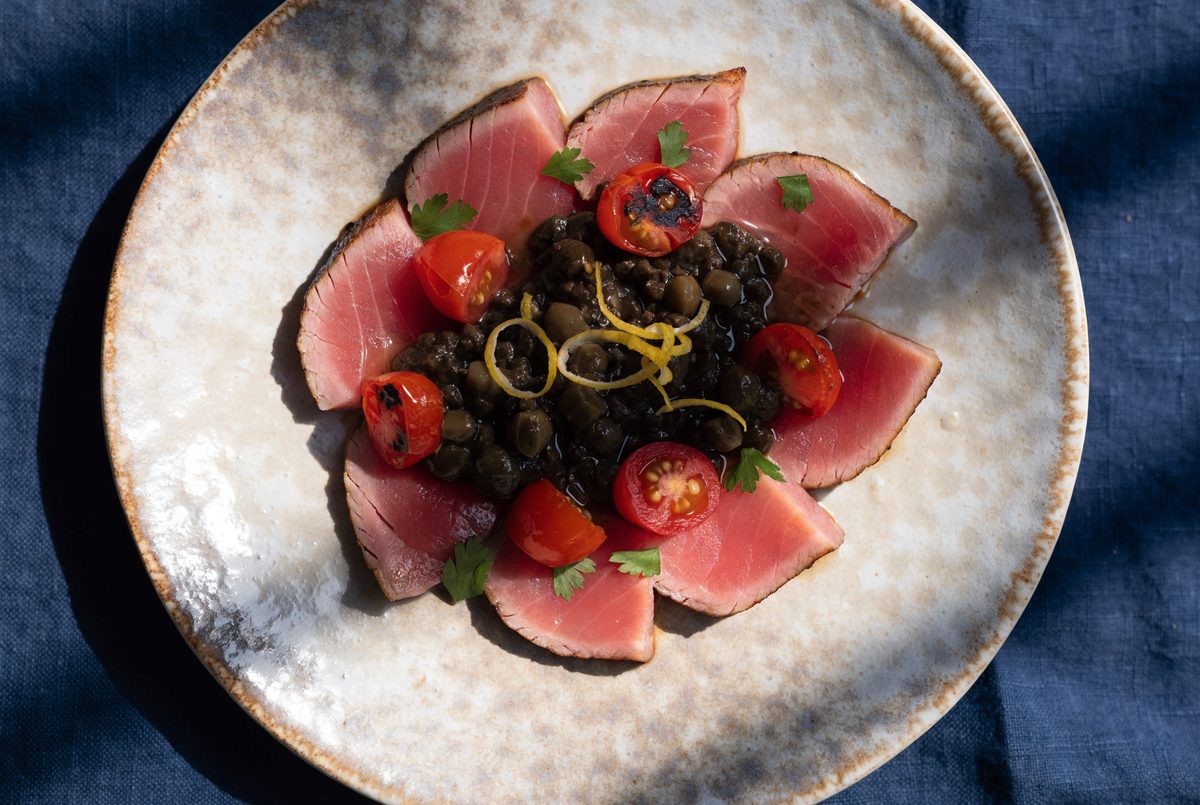
Rare ahi under a kalamata-caper tapenade: marine omega-3s meet the hydroxytyrosol and oleocanthal that give real extra-virgin olive oil its peppery bite, in a 20-minute Mediterranean plate.
- Mechanism
- Polyphenols
- Cited studies
- 4
The peppery sting at the back of your throat from good extra-virgin olive oil is oleocanthal, a compound found to inhibit the same COX enzymes as ibuprofen (Nature, 2005). That was a pharmacology observation, not a clinical outcome — but the olive-oil story does have outcome data: in the PREDIMED trial, a Mediterranean diet supplemented with extra-virgin olive oil cut major cardiovascular events by roughly 30 percent versus a low-fat control (New England Journal of Medicine, 2018). The trial was republished after enrollment irregularities were corrected, and the result held.
The fish half of the plate rests on one of nutrition's better-quantified trade-offs. A benefit-risk analysis concluded that modest intake of oily fish — one to two servings a week — was associated with a 36 percent lower risk of coronary death, outweighing contaminant concerns for most adults (JAMA, 2006). Ahi tuna is moderate in mercury, which is a reason to make this a weekly dish rather than a daily one. The capers are among the densest food sources of quercetin, though a meta-analysis found blood-pressure effects at supplement doses of 500 mg a day (Journal of the American Heart Association, 2016) — far beyond what a spoonful of capers provides.
Why this works
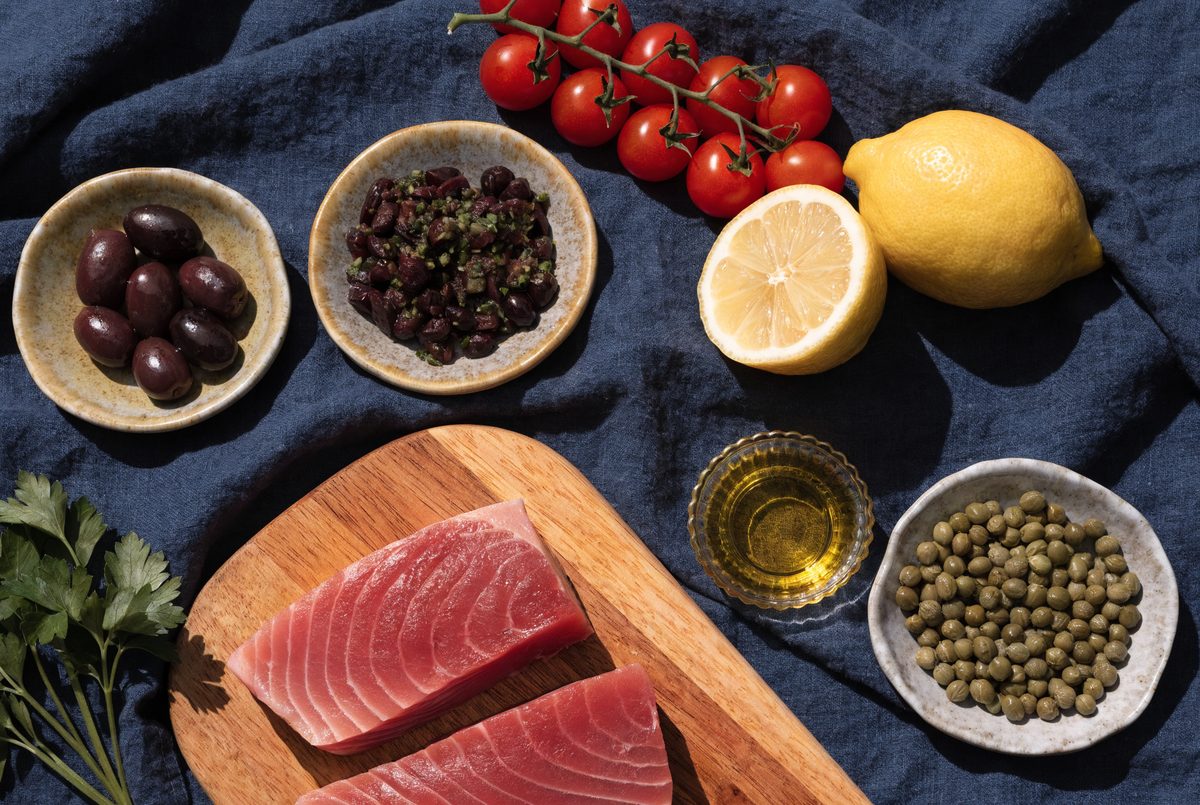
Ahi tuna brings EPA and DHA with a steak-like texture that takes a hard sear. Kalamata olives and unfiltered extra-virgin olive oil supply hydroxytyrosol and oleocanthal — the tapenade is essentially a concentrated dose of olive phenolics. Capers add quercetin and brine. Cherry tomatoes blister into a sweet counterpoint and add lycopene, and lemon and parsley keep a rich plate tasting clean. Searing rare keeps the omega-3s from the prolonged high heat that degrades them.
How to make it
- Pulse 100 g pitted kalamata olives, 2 tablespoons rinsed capers, 3 tablespoons extra-virgin olive oil, a small garlic clove, and lemon zest into a coarse tapenade. Do not add salt — the olives carry it.
- Blister 200 g cherry tomatoes in a hot dry skillet 3–4 minutes until split; set aside.
- Pat two 200 g ahi steaks very dry, rub lightly with oil, and season with pepper.
- Sear in a ripping-hot pan 60–90 seconds per side for a rare center; rest 2 minutes.
- Slice against the grain, spoon over the tapenade and tomatoes, and finish with parsley, lemon zest, and a thread of your best olive oil.
Serves 2. A shaved-fennel or arugula salad on the side keeps the meal in Mediterranean territory.
19 PubMed citations
In human trials, standardized olive leaf extract has most consistently produced modest reductions in systolic and…
22 PubMed citations
Across large randomized trials and meta-analyses, marine omega-3s reliably reduce serum triglycerides (roughly 15% at…
22 PubMed citations
In prospective cohort studies and pooled analyses spanning dozens of cohorts, higher blood levels of EPA + DHA have…
The research behind this recipe
Primary sources for the claims above. Effects reported in these papers describe the compound or the dietary pattern studied — not this specific dish.
More antioxidant defence & polyphenols recipes
 Nrf2 pathway
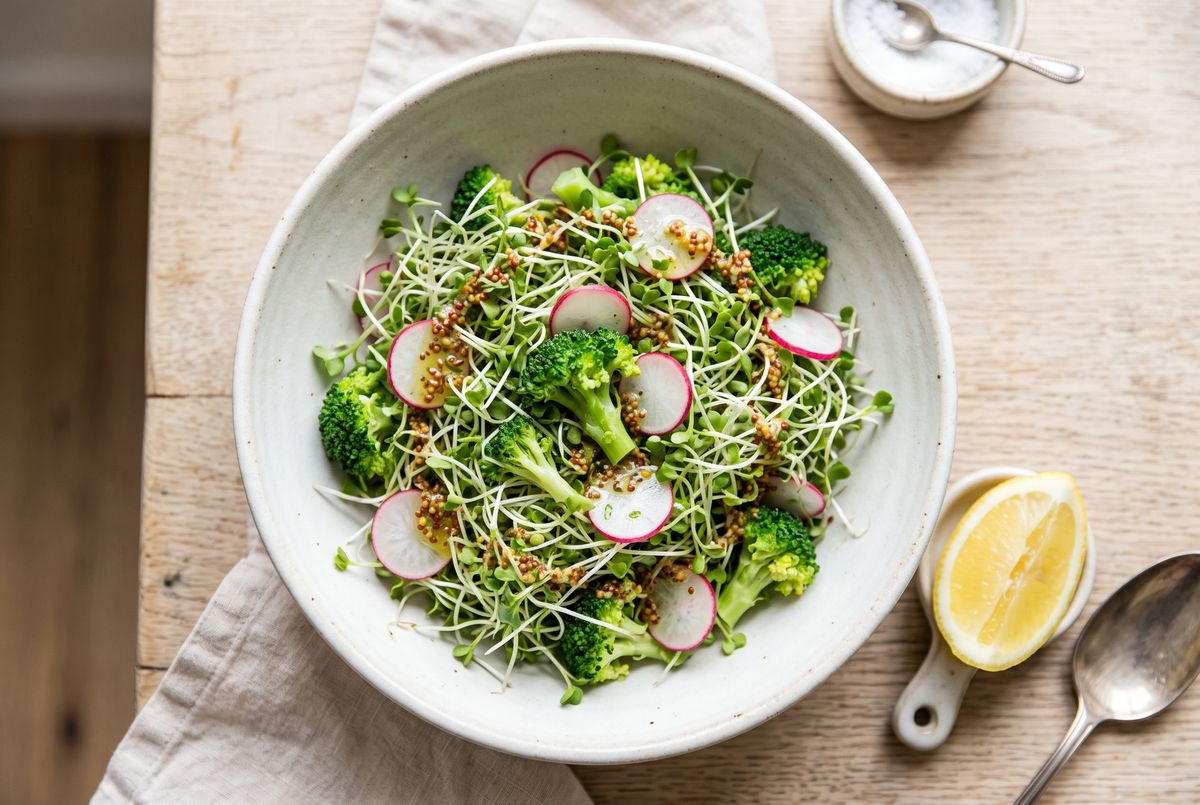
Broccoli sprouts carry many times the sulforaphane precursor of mature broccoli — and a little mustard restores the enzyme that…
 Polyphenols
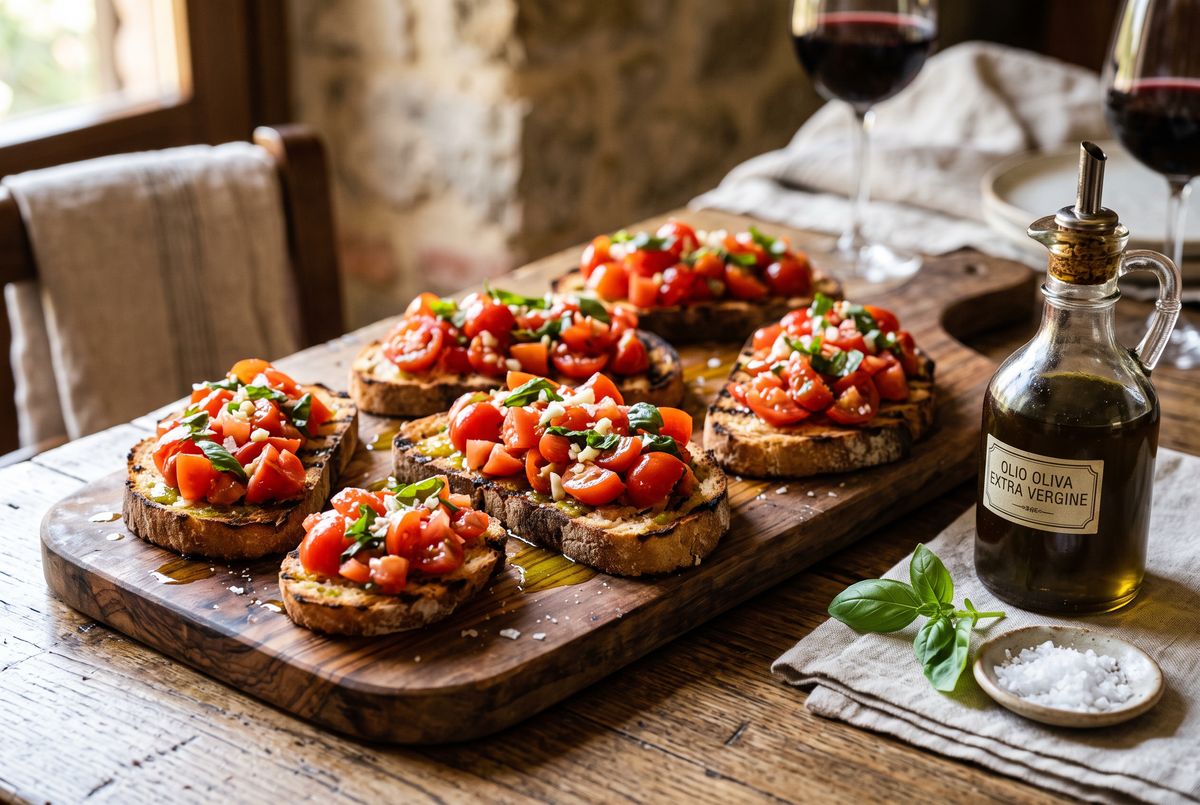
The peppery bite at the back of a good extra-virgin olive oil is the polyphenol content announcing itself — and this is the dish…
 Mushrooms
Mushrooms are effectively the only meaningful dietary source of ergothioneine, an amino acid your body has a dedicated…
Keep reading
Omega-3QuercetinOmega-3: the evidenceOmega-3 and AgingThe supplement guideResearch mapPathway universe