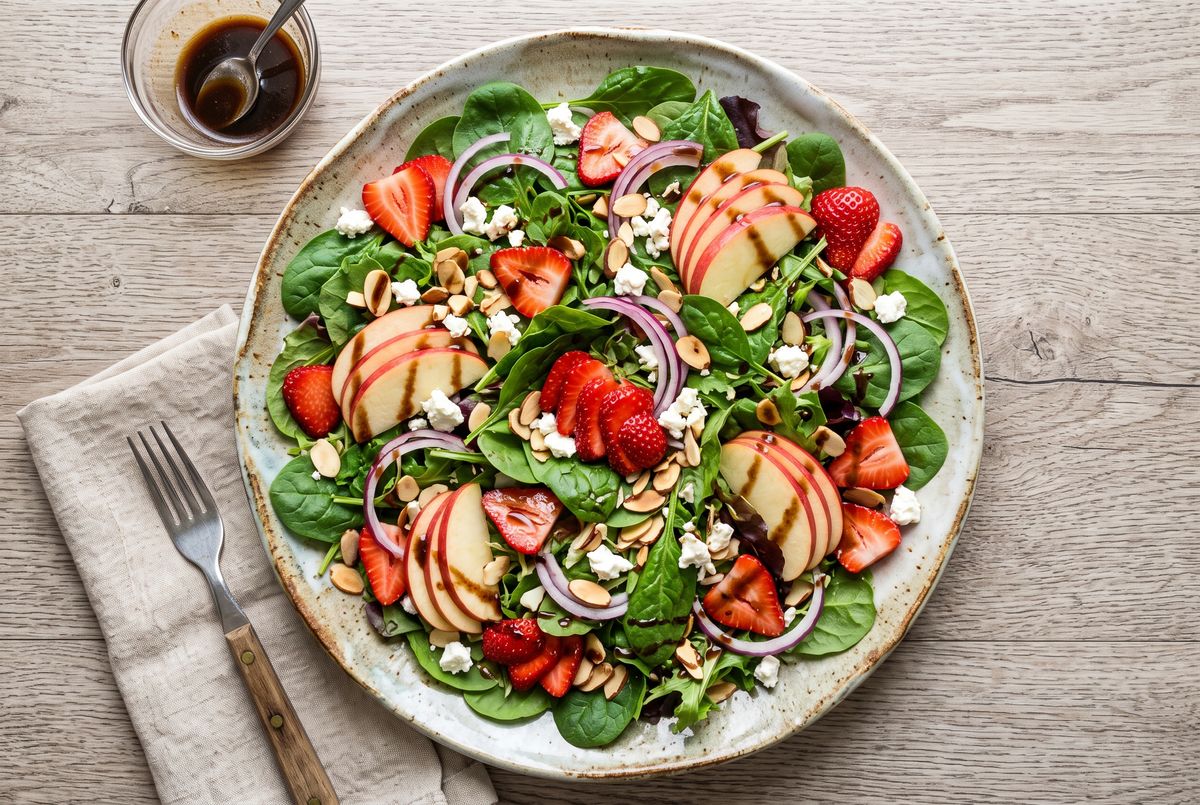
Strawberry, Persimmon & Arugula Fisetin Salad
Strawberries are the best common food source of fisetin, the flavonoid that cleared senescent cells in aged mice — here with persimmon, nitrate-rich arugula, walnuts, and goat cheese.
- Mechanism
- Senolytics
- Cited studies
- 4
- Course
- Salad
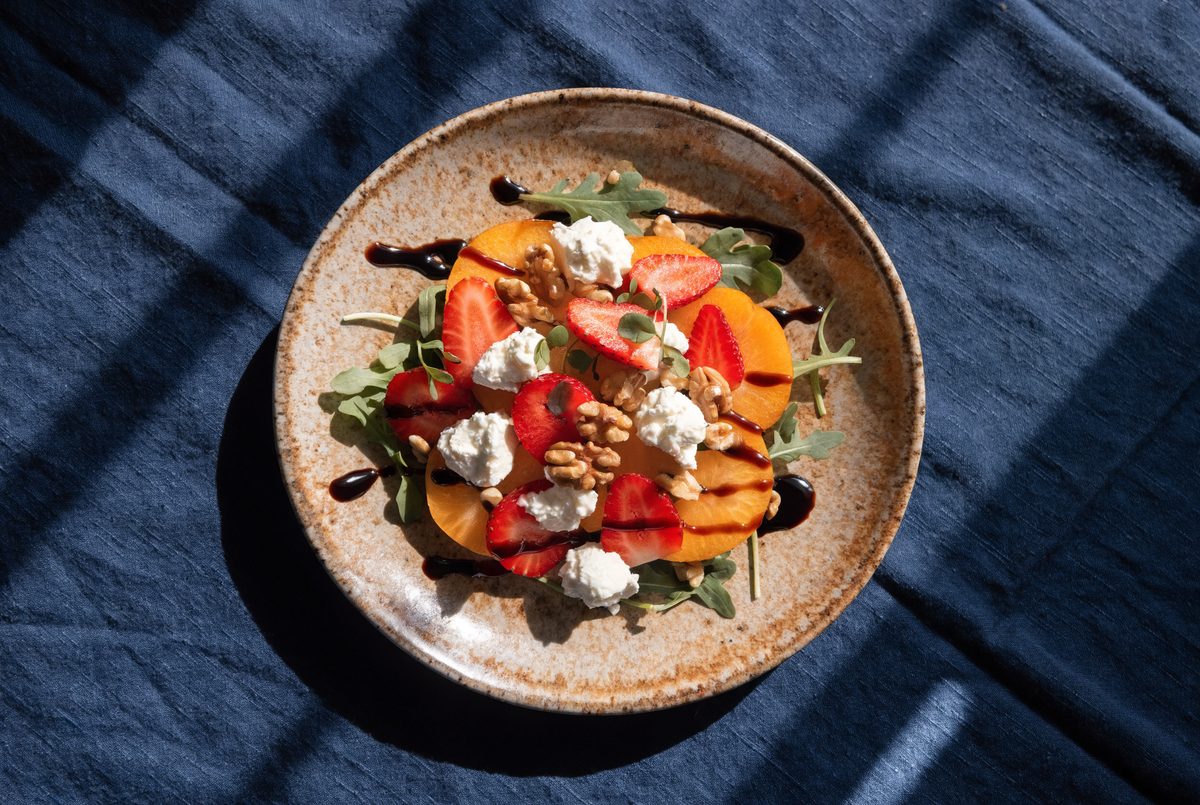
Strawberries contain more fisetin than any other common food, with persimmons among the runners-up. Fisetin's claim to fame is a screening study (EBioMedicine, 2018) in which it outperformed nine other flavonoids at killing senescent cells, then reduced senescence markers and extended remaining lifespan in mice — even when treatment began at an age roughly equivalent to a 75-year-old human. The senolytic idea itself traces to the paper that coined the term (Aging Cell, 2015), which identified quercetin — abundant in the red onion here — as one of the first two senolytic compounds. The necessary honesty: those mice received doses far beyond what fruit provides, and no trial has yet shown that food-level fisetin clears senescent cells in people. Human fisetin trials are running; until they read out, this is a hypothesis you can eat.
The rest of the bowl rests on steadier ground. A meta-analysis of randomized trials (The Journal of Nutrition, 2013) found that inorganic nitrate and beetroot juice lowered blood pressure, and arugula is one of the most nitrate-dense greens you can buy. Walnuts have a meta-analysis of 13 trials (The American Journal of Clinical Nutrition, 2009) showing improved LDL and total cholesterol when they replace other fats — and they bring ellagitannins, the precursors your gut microbes convert to urolithin A.
Why this works
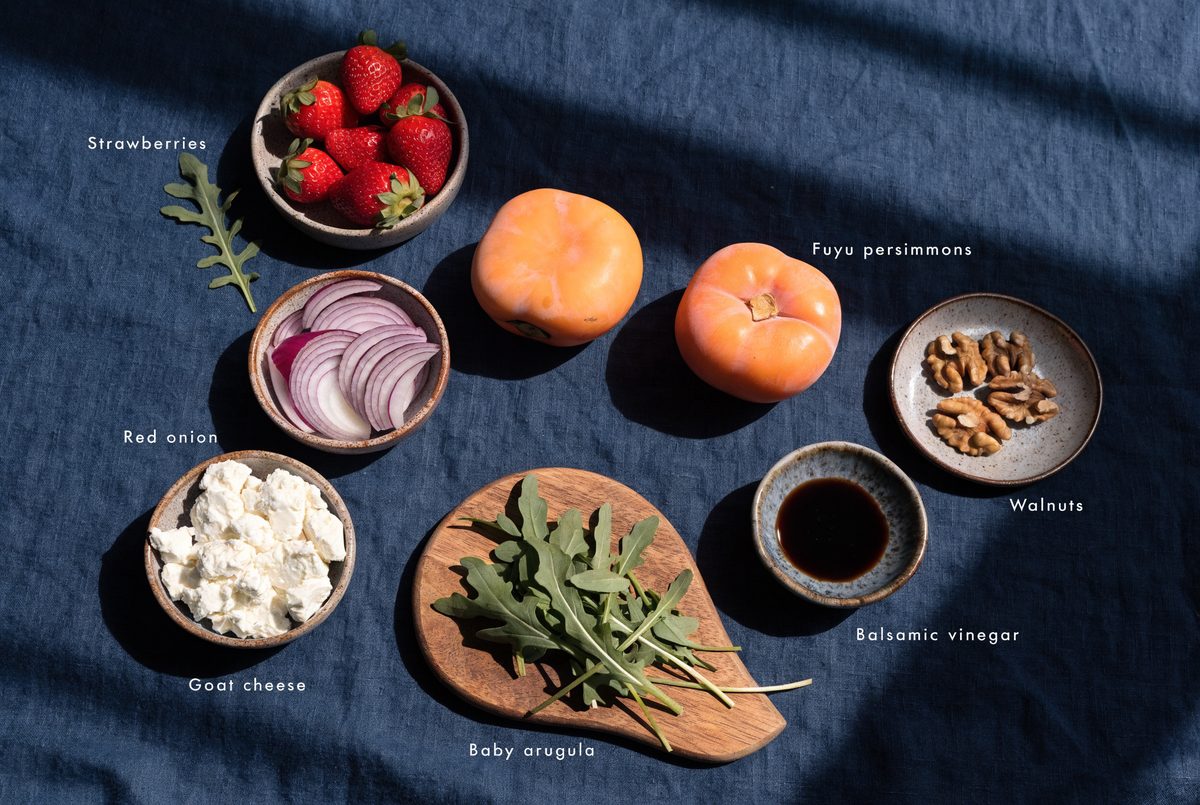
Strawberries and Fuyu persimmons stack the two best fisetin foods in one bowl. Baby arugula carries the dietary nitrate. Red onion adds quercetin, fisetin's trial partner in the senolytic literature. Walnuts contribute ALA and ellagitannins, goat cheese brings fat that helps carotenoid absorption and makes the salad feel like dinner, and balsamic with olive oil ties it together.
How to make it
- Whisk 3 tablespoons of extra-virgin olive oil with 1 tablespoon of balsamic vinegar, a half-teaspoon of Dijon if you like, salt, and pepper.
- Toast a half-cup of walnuts in a dry pan 3–4 minutes until fragrant; cool and roughly crack.
- Toss 100 g of baby arugula with most of the dressing.
- Hull and slice 250 g of strawberries; peel and slice 2 Fuyu persimmons into thin wedges; shave a quarter of a red onion paper-thin.
- Layer fruit and onion over the arugula, crumble 80 g of goat cheese on top, and scatter the walnuts.
- Finish with the remaining dressing and coarse black pepper.
Serves 2 as a light main or 4 as a side. Fuyu persimmons should be firm — treat them like an apple, not like the custardy Hachiya sort.
25 PubMed citations
Because senescent cells accumulate with age and contribute to frailty, vascular dysfunction, inflammation, and…
25 PubMed citations
Meta-analyses of randomized trials indicate quercetin produces a small blood-pressure reduction—on the order of 2–3…
24 PubMed citations
Meta-analyses of randomized trials show that beetroot juice and dietary nitrate lower blood pressure—about 5 mmHg…
The research behind this recipe
Primary sources for the claims above. Effects reported in these papers describe the compound or the dietary pattern studied — not this specific dish.
More cellular housekeeping: autophagy, mitophagy & senescent cells recipes
 Autophagy
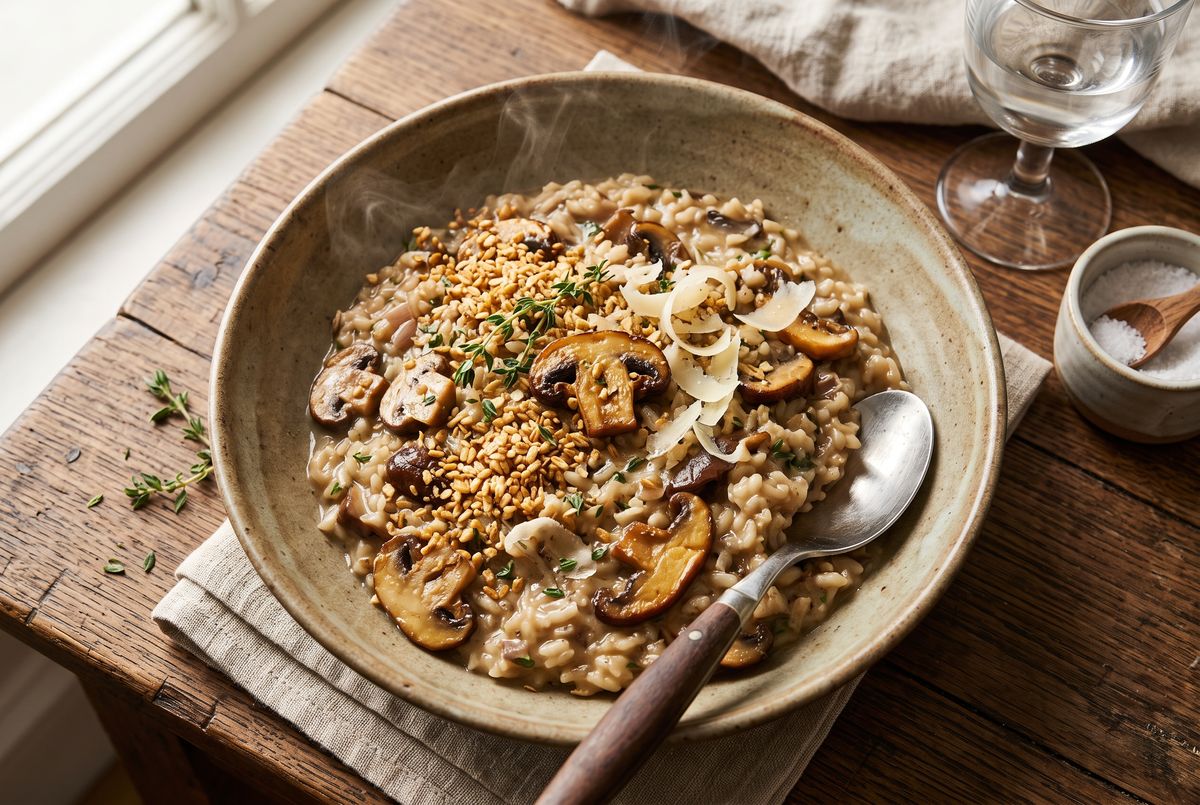
Wheat germ is the densest common food source of spermidine, the polyamine tied to autophagy — and it toasts into risotto like a…
 Mitophagy
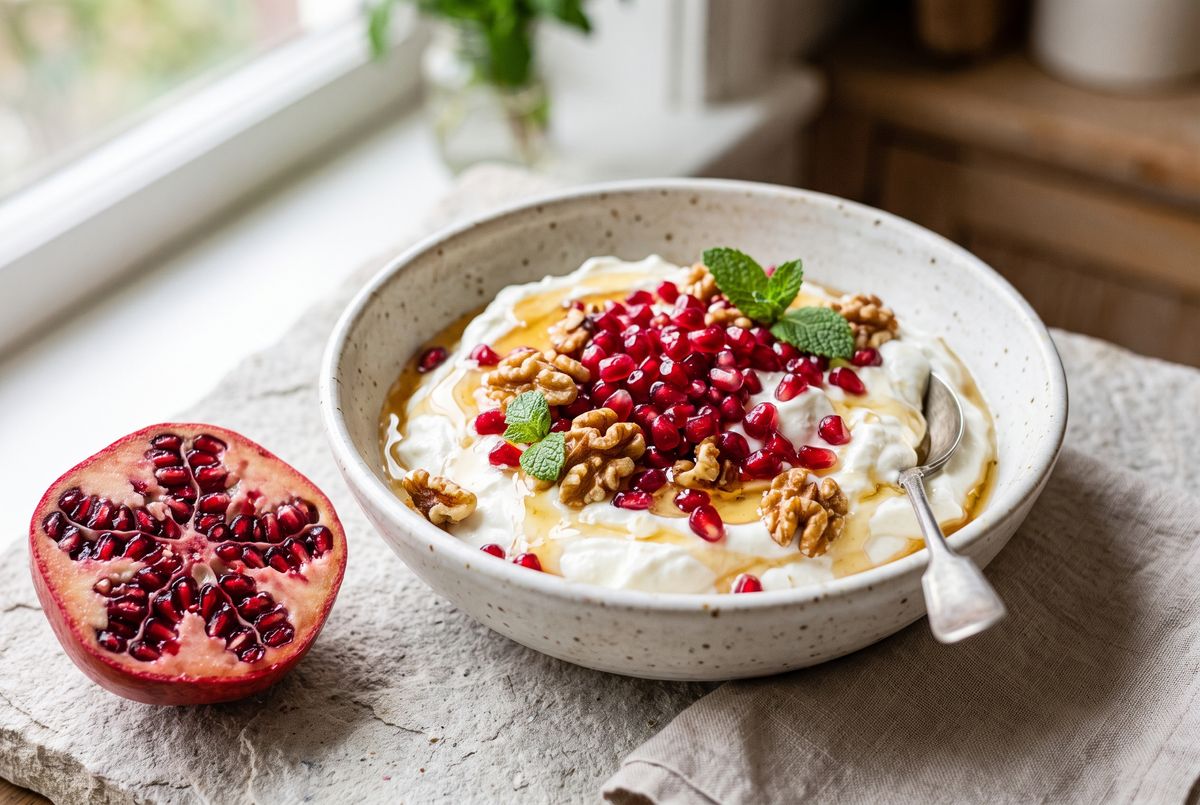
You cannot eat urolithin A directly — your gut bacteria make it from the ellagitannins in pomegranate and walnuts, and only some…
 Senolytics
Strawberries are the leading dietary source of fisetin, the flavonoid at the center of senolytic research — though food amounts…
Keep reading
Beetroot & dietary nitrateBlood pressureUrolithin AFisetinUrolithin A: the evidenceSenolytics: the evidenceUrolithin A (Mitopure) and MuscleThe supplement guideResearch mapPathway universe