Aged Cheddar & Broccoli Soup
Aged cheddar is a sleeper spermidine source and broccoli brings glucoraphanin; a pinch of mustard powder stirred in off the heat helps regenerate the sulforaphane a long simmer would otherwise destroy.
- Mechanism
- Autophagy
- Cited studies
- 4
- Course
- Soup
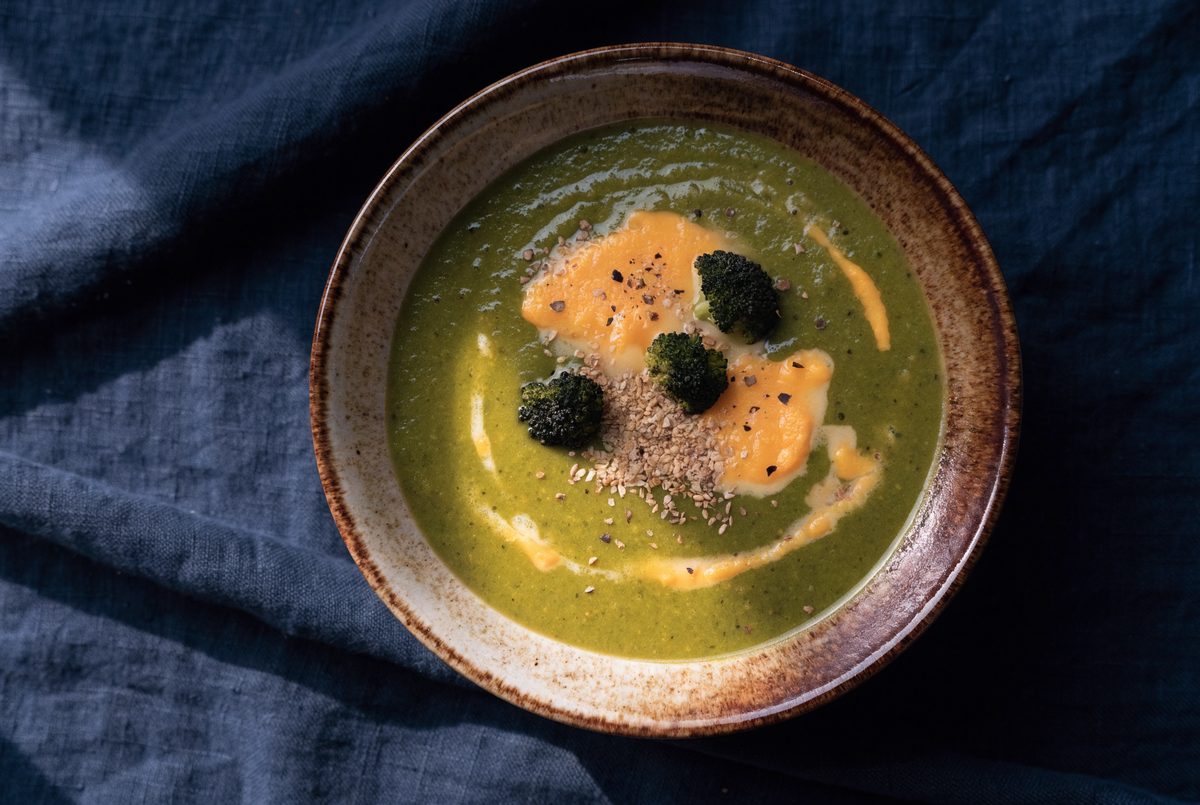
Cheese and broccoli is grandmother food, but both halves have modern literatures. Aged cheddar ranks among the higher spermidine foods on published tables — polyamine content climbs as a cheese ripens — and spermidine is the autophagy-inducing polyamine whose higher dietary intake tracked with lower all-cause mortality over 20 years of the Bruneck study (The American Journal of Clinical Nutrition, 2018). A prominent review argues spermidine behaves like a caloric-restriction mimetic (Science, 2018), though that framing still leans mostly on animal data — and cheese brings sodium and saturated fat along for the ride, which is a good argument for treating it as the flavoring here rather than the base.
Broccoli supplies glucoraphanin, the precursor of sulforaphane, the most-studied dietary activator of the Nrf2 cellular-defense pathway; three-day broccoli sprouts made the compound famous (Proceedings of the National Academy of Sciences, 1997), but mature broccoli carries a meaningful dose too. The catch is that myrosinase, the enzyme that converts glucoraphanin into sulforaphane, does not survive a long simmer — which is why this recipe stirs in mustard powder, itself a myrosinase source, off the heat. Garlic and leeks earn their place separately: a meta-analysis of randomized trials found garlic preparations modestly lowered blood pressure, mainly in people who started out hypertensive (BMC Cardiovascular Disorders, 2008).
Why this works
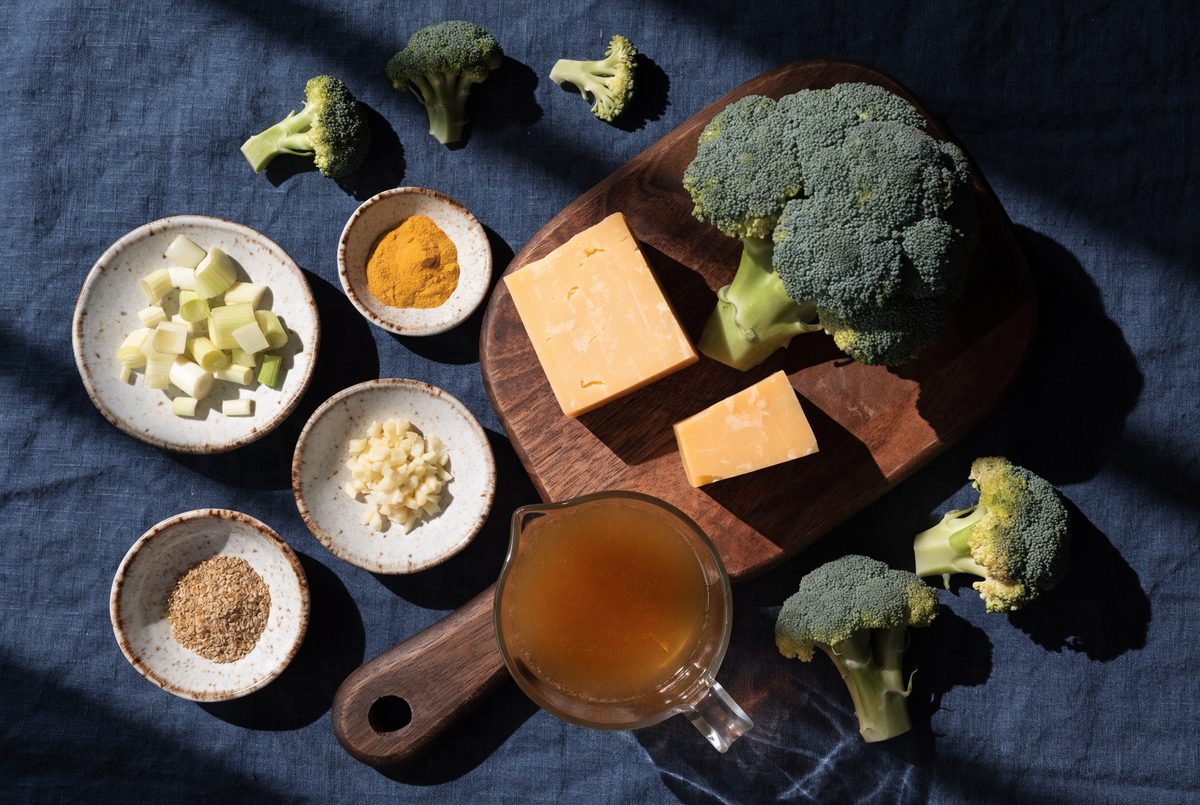
Broccoli is simmered just until tender so the glucoraphanin survives, and the mustard powder added after blending supplies fresh enzyme to convert it. Aged cheddar melts in off the heat — high heat would split it anyway — carrying the spermidine and most of the pleasure. Leeks and garlic contribute allicin precursors and prebiotic fructans, and a toasted wheat-germ crumb on top quietly doubles down on spermidine while standing in for croutons.
How to make it
- Char a handful of small broccoli florets in a dry skillet until spotted black; set aside for garnish.
- Sweat 2 sliced leeks and 3 chopped garlic cloves in olive oil with a pinch of salt until soft, about 8 minutes, without browning.
- Add 600 g chopped broccoli (stems included) and 1 liter vegetable stock; simmer 8–10 minutes, until just tender and still green.
- Blend until velvety, then let the soup cool below a boil.
- Off the heat, whisk in 120 g grated aged cheddar and 1 teaspoon mustard powder until smooth; season with black pepper.
- Toast 3 tablespoons wheat germ in a dry pan with a pinch of salt for the crumb.
- Serve bowls topped with the charred florets, wheat-germ crumb and more pepper.
Serves 4. Reheat gently — boiling a cheese soup breaks it, and it wastes the mustard powder's enzyme work.
22 PubMed citations
In model organisms (yeast, worms, flies and mice) spermidine induces autophagy and extends lifespan, and in rodents it…
19 PubMed citations
Human trials indicate that concentrated broccoli-sprout sulforaphane can modestly lower fasting blood glucose and…
The research behind this recipe
Primary sources for the claims above. Effects reported in these papers describe the compound or the dietary pattern studied — not this specific dish.
More cellular housekeeping: autophagy, mitophagy & senescent cells recipes
 Autophagy
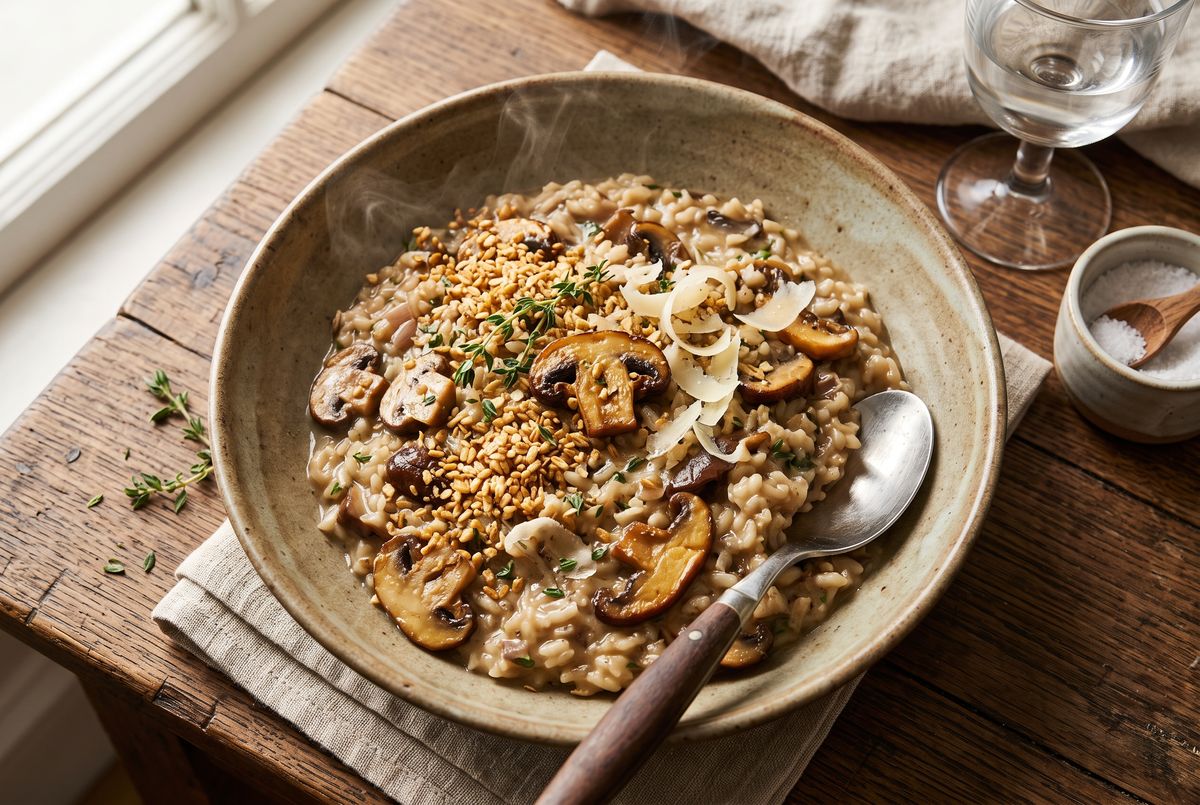
Wheat germ is the densest common food source of spermidine, the polyamine tied to autophagy — and it toasts into risotto like a…
 Mitophagy
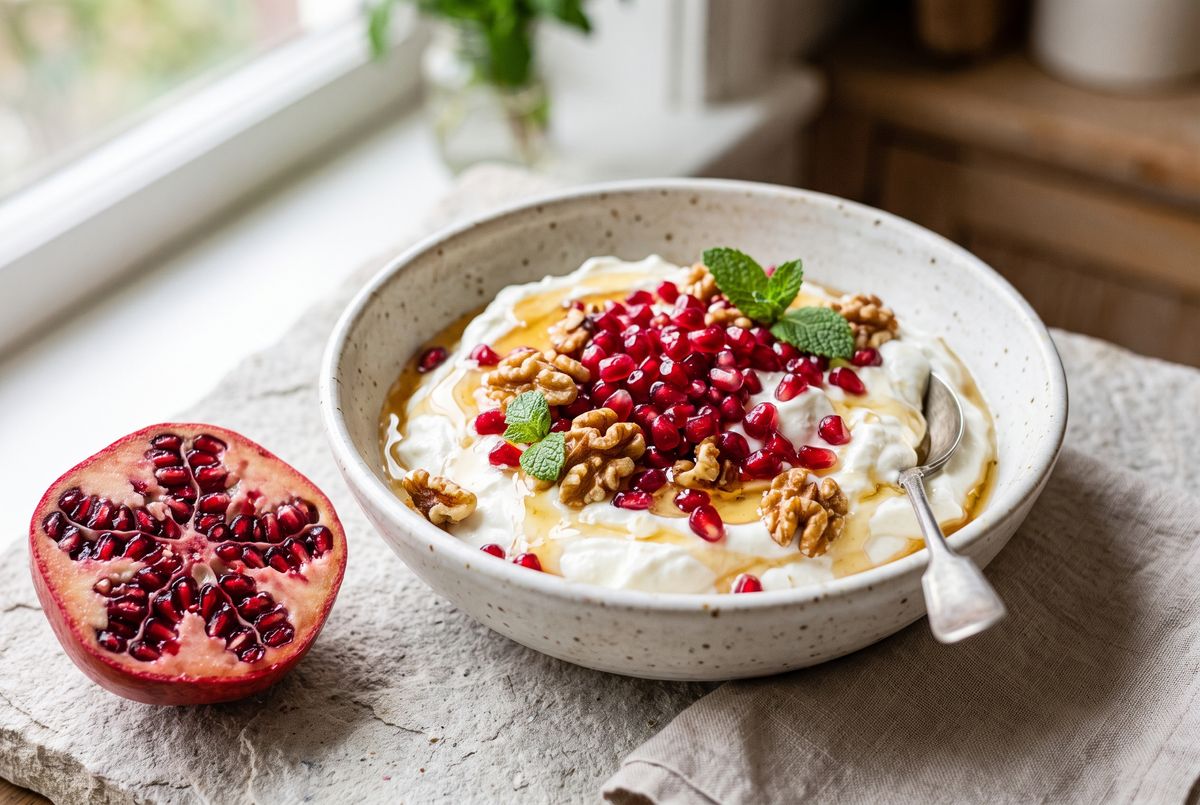
You cannot eat urolithin A directly — your gut bacteria make it from the ellagitannins in pomegranate and walnuts, and only some…
 Senolytics
Strawberries are the leading dietary source of fisetin, the flavonoid at the center of senolytic research — though food amounts…
Keep reading
Blood pressureAutophagySpermidineNrf2Spermidine: the evidenceSulforaphane: the evidenceSulforaphane and Nrf2The supplement guideResearch mapPathway universe