Raspberry–Walnut Urolithin Overnight Oats
Raspberries, walnuts, and pomegranate — three ellagitannin sources — over beta-glucan oats soaked in kefir. A make-ahead breakfast assembled from ingredients with actual randomized-trial records.
- Mechanism
- Mitophagy
- Cited studies
- 5
- Course
- Breakfast
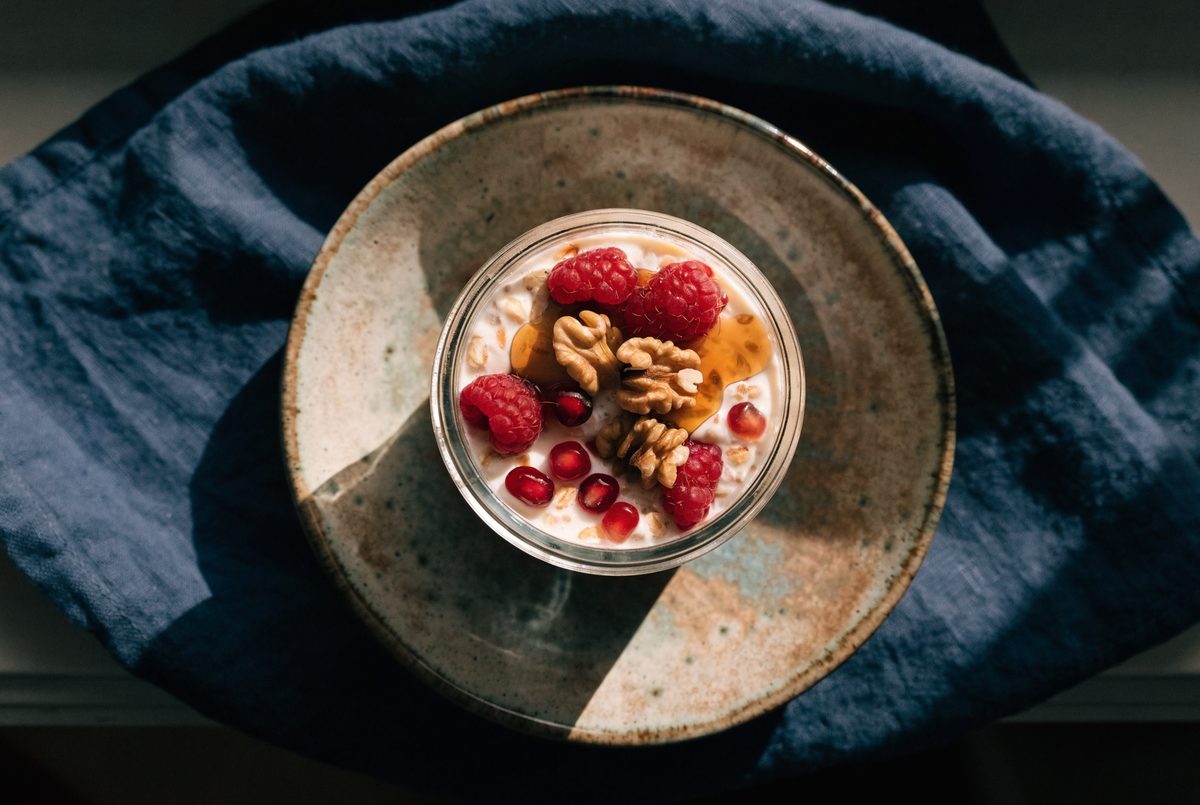
Raspberries, walnuts, and pomegranate sit at the top of most ellagitannin tables, which makes this jar a deliberate bet on urolithin A — the gut-bacterial metabolite that promotes mitochondrial recycling. The best human data so far comes from supplements, not breakfast: in a randomized trial in adults aged 65 to 90, purified urolithin A improved muscle endurance measures and some mitochondrial biomarkers over four months, though it did not move the primary six-minute-walk outcome relative to placebo (JAMA Network Open, 2022). Whether food-dose ellagitannins in urolithin producers accomplish anything similar has simply not been tested.
The base of the jar carries better-established cargo. Oat beta-glucan lowered LDL cholesterol by roughly 0.25 mmol/L at around 3 g per day in a meta-analysis of 28 randomized trials (American Journal of Clinical Nutrition, 2014) — one of the most reproducible effects in nutrition. And in a small but careful Stanford trial, a diet high in fermented foods like the kefir used here increased gut microbiome diversity and lowered a panel of inflammatory markers over ten weeks (Cell, 2021), with the usual caveat that 36 participants is a starting point, not a verdict.
Why this works
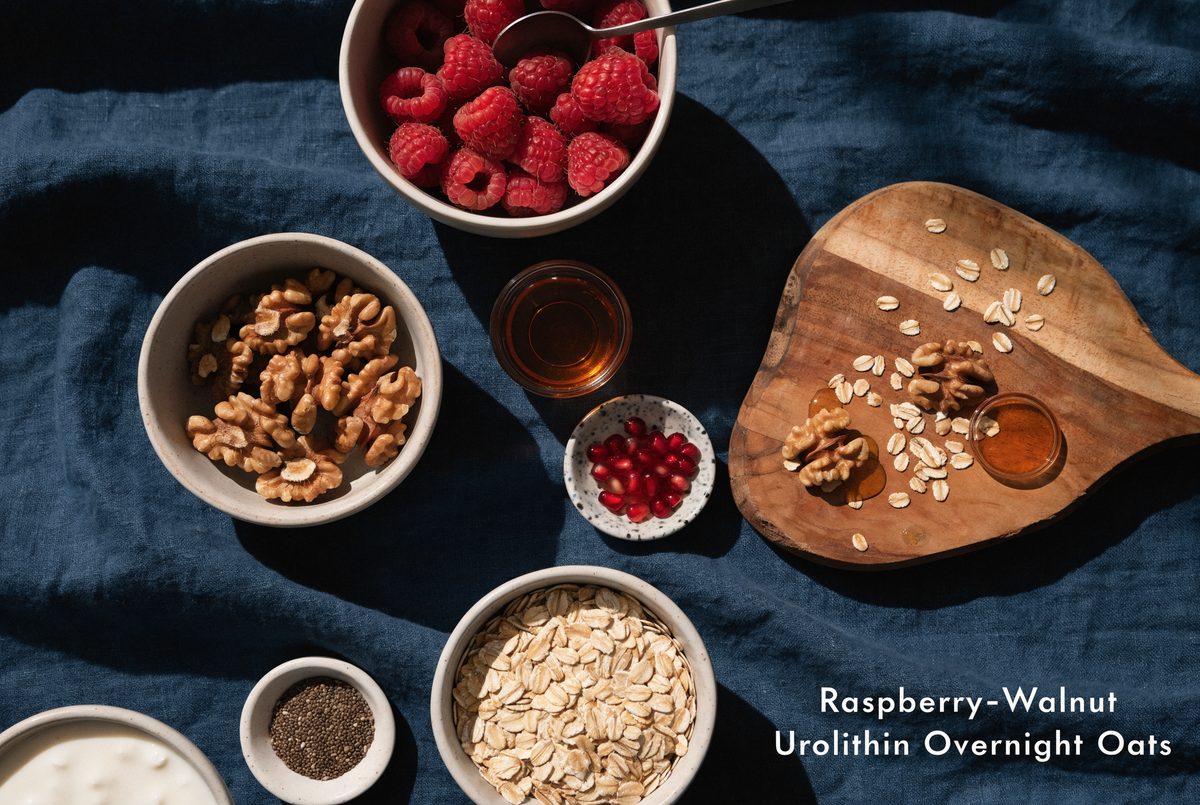
Rolled oats supply the beta-glucan dose the cholesterol trials used — about a cup gets you close to 3 g. Kefir replaces milk as the soaking liquid, adding live cultures and a lactic tang. Raspberries, crushed so they bleed into the oats, plus walnuts and pomegranate seeds stack three different ellagitannin sources; walnuts also bring ALA omega-3s, and nut intake around a handful a day tracked with lower all-cause mortality in a dose-response meta-analysis (BMC Medicine, 2016). Chia seeds thicken the jar and contribute magnesium, which modestly lowered blood pressure in a meta-analysis of randomized trials (Hypertension, 2016). Honey is there because a breakfast you abandon after a week does nothing for longevity; a small drizzle buys adherence cheaply.
How to make it
- In a jar, stir together 80 g rolled oats, 1 tablespoon chia seeds, and a pinch of salt.
- Pour in 200 ml plain kefir and stir until nothing is dry; the mix should look loose.
- Crush a handful of raspberries with a fork and fold them through in streaks.
- Seal and refrigerate at least 4 hours, ideally overnight.
- In the morning, top with toasted walnuts, pomegranate seeds, more raspberries, and a drizzle of honey.
Makes 1 large or 2 modest servings; keeps 2 days in the fridge, so build a pair.
20 PubMed citations
In human research, urolithin A supplementation is safe and bioavailable and improves markers of mitochondrial health.…
25 PubMed citations
In human research, the ellagitannin-derived metabolite urolithin A has improved muscle strength, endurance, and…
23 PubMed citations
The best-supported clinical use of ALA is for symptomatic diabetic peripheral neuropathy: randomized trials and…
The research behind this recipe
Primary sources for the claims above. Effects reported in these papers describe the compound or the dietary pattern studied — not this specific dish.
More cellular housekeeping: autophagy, mitophagy & senescent cells recipes
 Autophagy
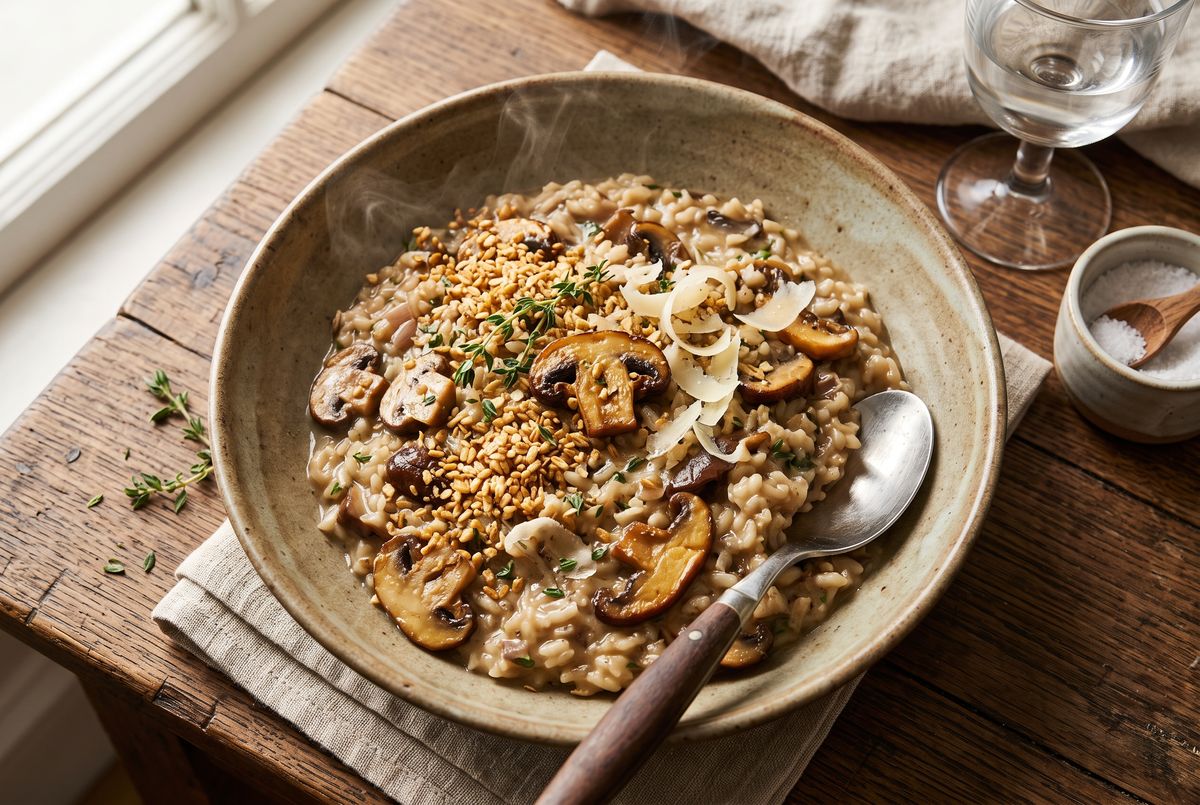
Wheat germ is the densest common food source of spermidine, the polyamine tied to autophagy — and it toasts into risotto like a…
 Mitophagy
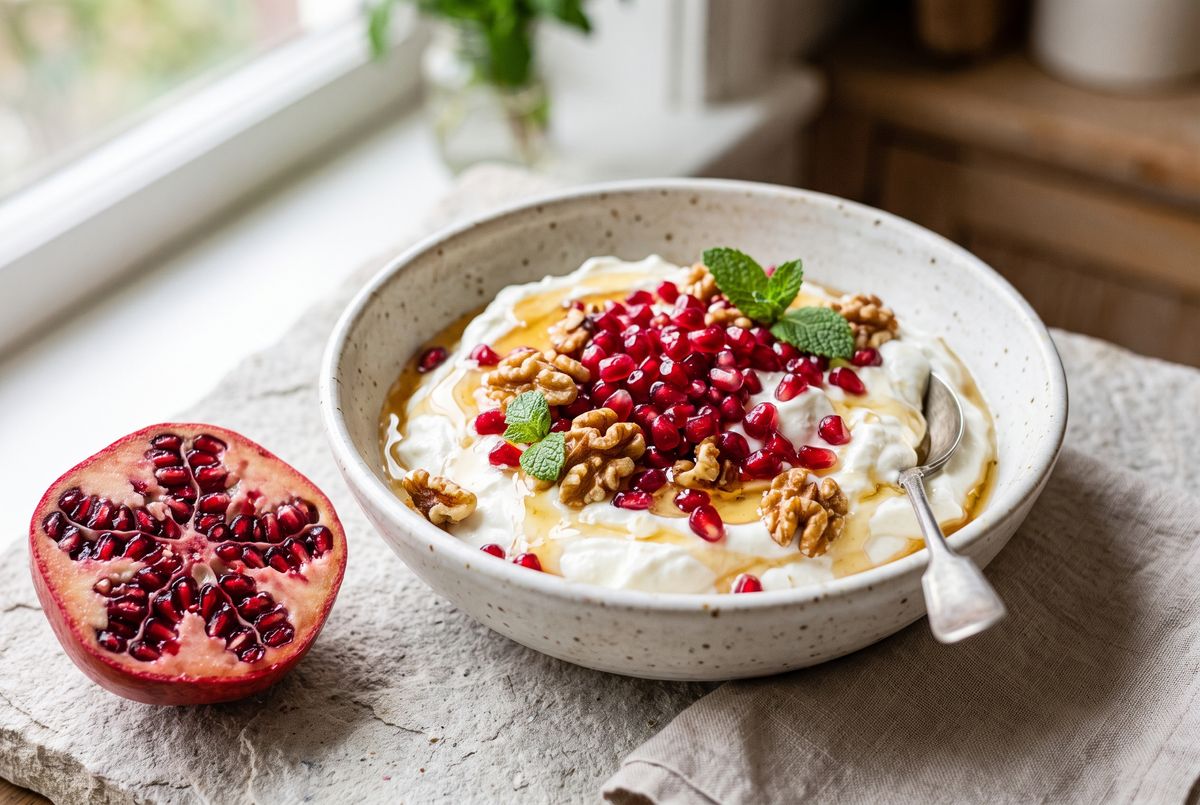
You cannot eat urolithin A directly — your gut bacteria make it from the ellagitannins in pomegranate and walnuts, and only some…
 Senolytics
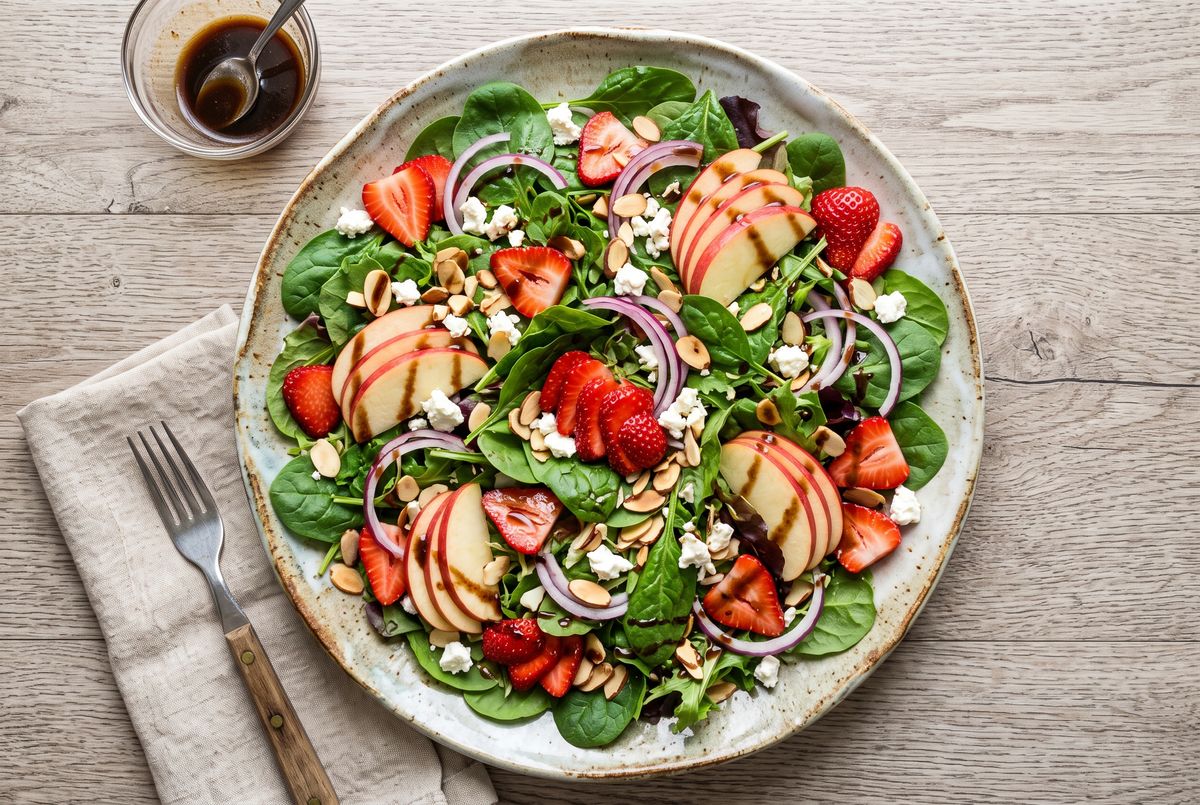
Strawberries are the leading dietary source of fisetin, the flavonoid at the center of senolytic research — though food amounts…
Keep reading
Blood pressureUrolithin AMitochondriaOmega-3Urolithin A: the evidenceOmega-3: the evidenceUrolithin A (Mitopure) and MuscleThe supplement guideResearch mapPathway universe