Potassium-Rich Sweet Potato & Red Lentil Stew
Sweet potatoes and lentils are two of the best potassium-per-dollar foods in the store — and potassium is the mineral most consistently tied to lower blood pressure.
- Mechanism
- Blood pressure
- Yield
- serves 4
- Ingredients
- 9
- Steps
- 4
- Cited studies
- 4
- Course
- Soup
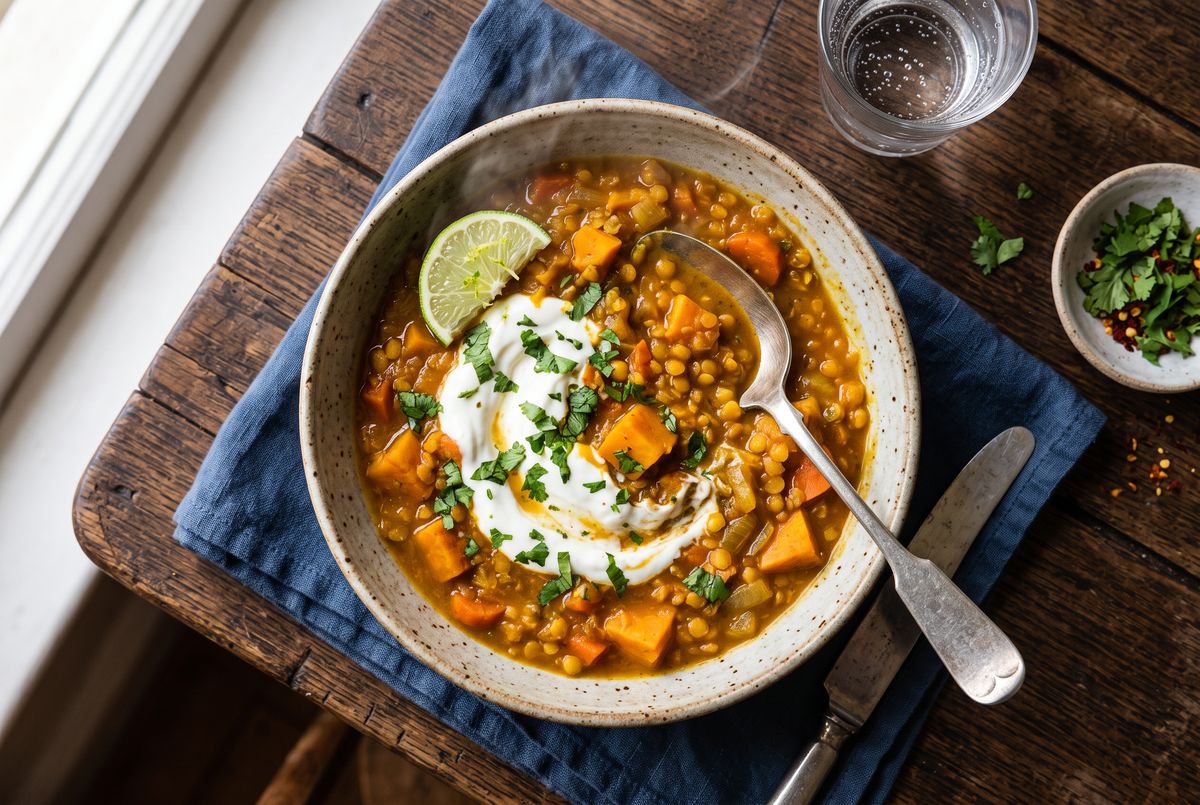
Potassium is the mineral most consistently tied to lower blood pressure, and sweet potatoes and red lentils are two of the best sources per dollar in the store. In systematic reviews and meta-analyses, higher potassium intake was associated with lower blood pressure and with reduced stroke risk (BMJ, 2013). Those are associations from population data rather than proof of cause.
Stronger evidence exists for whole dietary patterns than for single nutrients: the DASH trial, a controlled feeding study, showed that a diet built around vegetables and fruit lowered blood pressure substantially (New England Journal of Medicine, 1997). Lentils also contribute viscous soluble fiber, which a meta-analysis of randomized trials links to modest blood-pressure reduction (Nutrition, Metabolism and Cardiovascular Diseases, 2018). A stew is not a treatment — it sits alongside whatever your doctor has you doing.
Why this works
Each part is doing a job. Sweet potato and red lentils supply the potassium and give the stew its body — the lentils collapse as they cook, so you get thickness without cream or flour. The lentils are also the soluble-fiber contribution, and a useful folate source, which diets light on legumes and greens often run short of (Food and Nutrition Bulletin, 2008). Onion, garlic, ginger, cumin and turmeric build the savory depth that salt would otherwise have to provide, and coconut milk rounds the edges. The lime and cilantro at the end are the real seasoning: acid is what makes a low-salt dish taste finished.
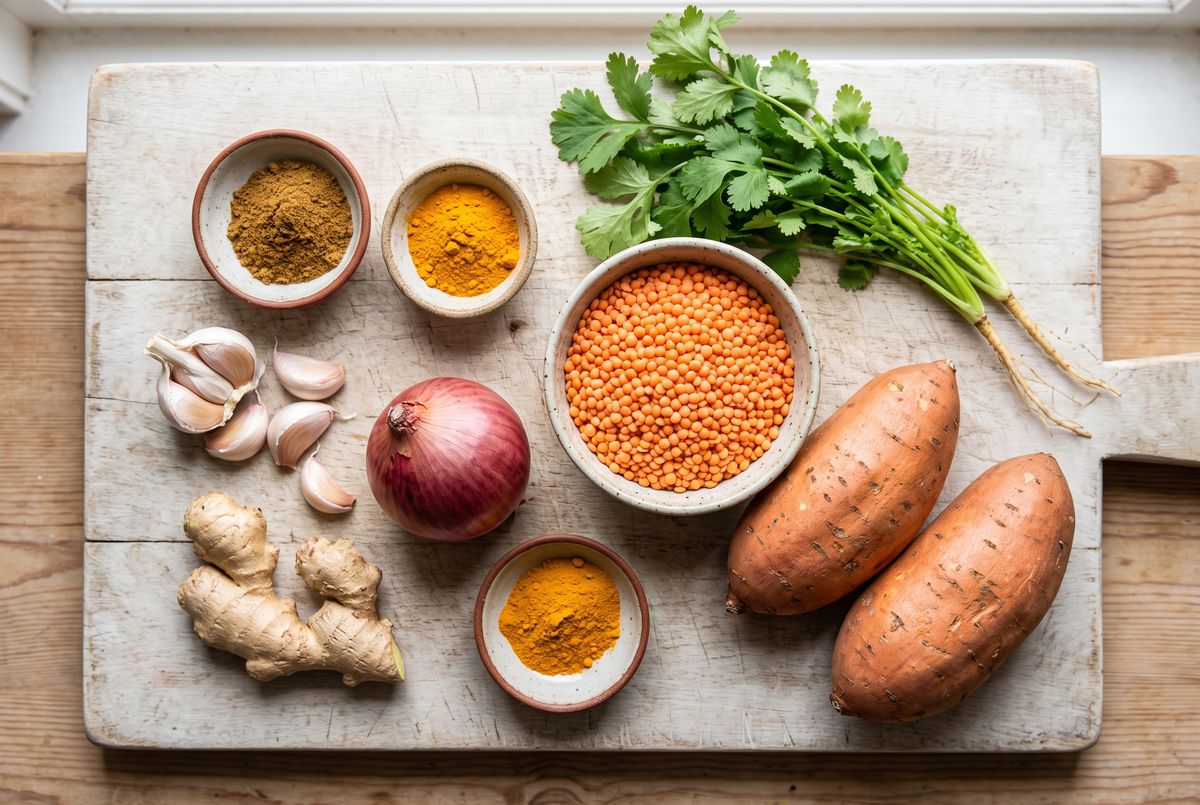
Ingredients · serves 4
- 2 medium sweet potatoes (about 1½ lb), peeled and cubed
- 1 cup dry red lentils, rinsed
- 1 onion, diced
- 4 cloves garlic, minced
- 1 tbsp grated fresh ginger
- 2 tsp ground cumin, 1 tsp turmeric, ½ tsp cinnamon
- 4 cups low-sodium vegetable stock
- ½ cup coconut milk
- Juice of 1 lime, a big handful of cilantro
Method
- Soften the onion in a little oil over medium heat, 5 minutes, then add the garlic, ginger and spices and cook 1 minute more until fragrant.
- Add the sweet potato, lentils and stock. Simmer 20–25 minutes until the lentils collapse and the potato is tender.
- Stir in the coconut milk and mash lightly for body.
- Finish off the heat with lime juice and cilantro — the acid is what makes it taste seasoned without salt.
Getting the most from it
Check the stock label before anything else — in a dish like this, that carton is usually where most of the sodium hides, and a low-sodium version costs the same. Cook the stew through, then taste it before you reach for the salt; often the lime and the spices have already done the work. Rinse the red lentils until the water runs clear, and buy firm sweet potatoes with no soft spots.
Nutrition Facts
Calculated for one serving from USDA FoodData Central values for the ingredients above. An estimate, not a lab analysis.
How this was calculated. Each ingredient was converted to grams, matched to a food in USDA FoodData Central (SR Legacy, April 2018), summed, and divided by 4 servings. Cooking losses, draining and the real size of a handful all move these numbers, so treat them as a good estimate rather than a measurement. Added sugars count honey, maple syrup and table sugar only; sugar from whole fruit is not an added sugar.
- Sweet potato, raw, unprepared (Includes foods for USDA's Food Distribution Program)
- Lentils, raw
- Onions, raw
- Garlic, raw
- Ginger root, raw
- Spices, cumin seed
- Spices, turmeric, ground
- Spices, cinnamon, ground
- Soup, vegetable broth, ready to serve
- Nuts, coconut milk, canned (liquid expressed from grated meat and water)
- Lime juice, raw
21 PubMed citations
Randomized trials and meta-analyses indicate that inulin-type fructans reliably increase stool frequency and improve…
19 PubMed citations
In small randomized trials, magnesium-L-threonate improved composite cognition versus placebo in older adults with…
21 PubMed citations
In human trials, both L-5-MTHF and folic acid raise blood folate and lower total homocysteine, an amino acid whose…
The research behind this recipe
Primary sources for the claims above. Effects reported in these papers describe the compound or the dietary pattern studied — not this specific dish.
More blood pressure & the potassium-forward plate recipes
 Blood pressure
In randomized trials, hibiscus (sour tea) produced small but real drops in blood pressure. This tart, caffeine-free cooler pairs…
 Blood pressure
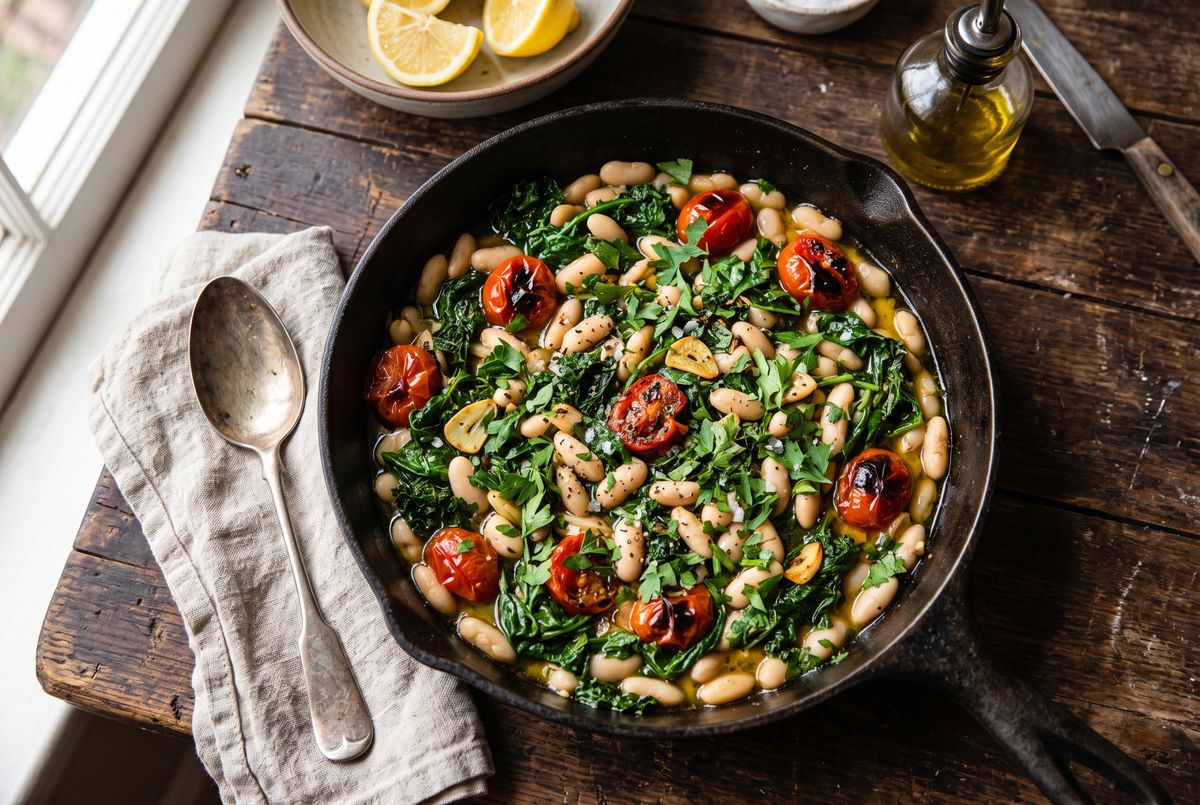
Raw-crushed garlic plus potassium-rich beans and leafy greens — a savory, 20-minute skillet aimed squarely at healthy blood…
 Blood pressure
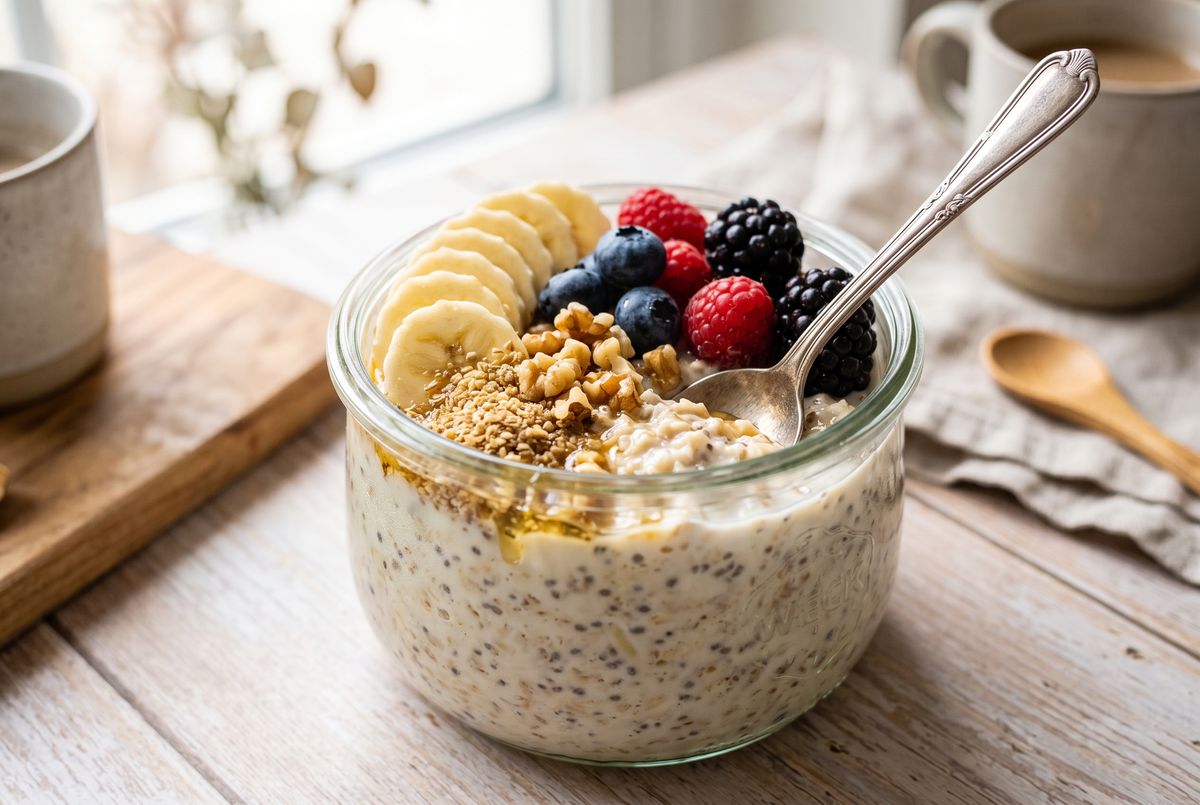
Oat beta-glucan, potassium from banana, and ground flaxseed — three foods with randomized-trial support for lower blood…
Keep reading
Blood pressureInulinDietary fiberMagnesiumThe supplement guideResearch mapPathway universe