Beef Phở on Bone Broth
Beef sirloin is one of the densest food sources of creatine, and the long-simmered bone-broth base adds glycine — one bowl that touches the two compounds the muscle-aging literature keeps circling.
- Mechanism
- Muscle & strength
- Cited studies
- 5
- Course
- Soup
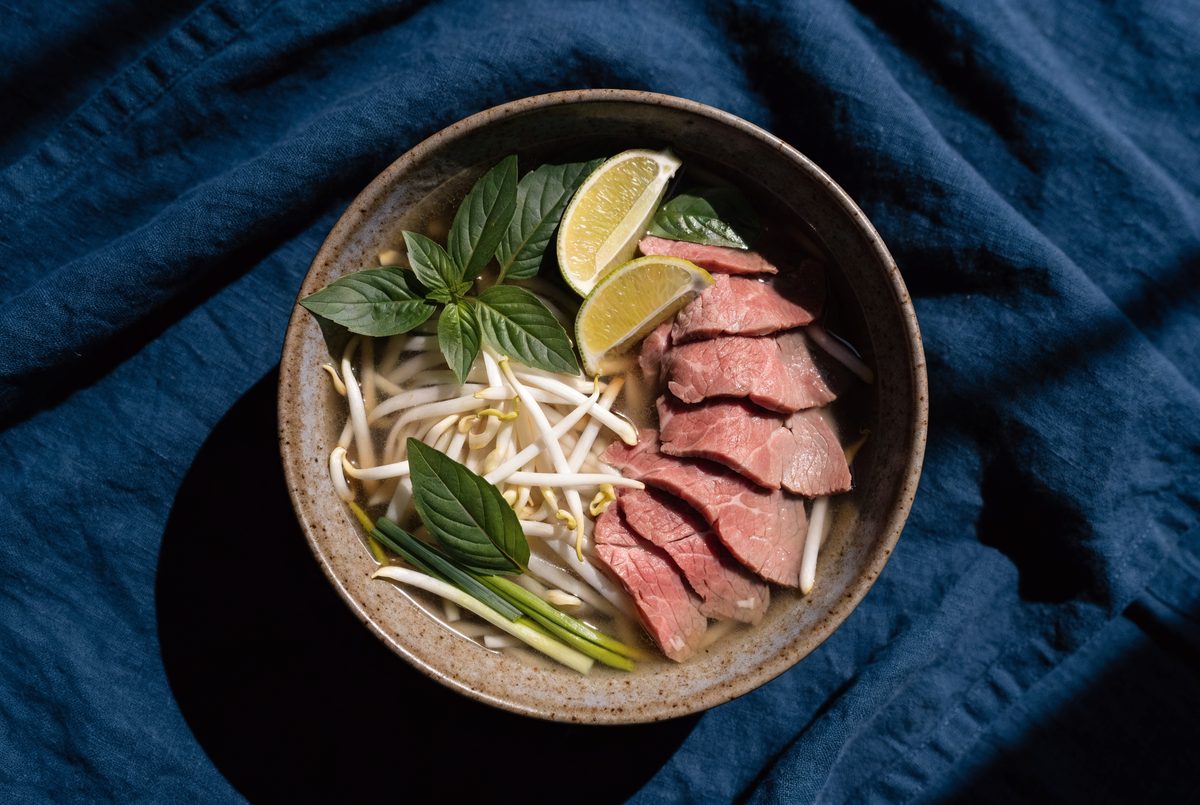
Beef is one of the densest food sources of creatine — roughly 4–5 g per kilogram of raw muscle meat — and creatine is arguably the best-evidenced compound in all of sports nutrition. The International Society of Sports Nutrition's position stand (Journal of the International Society of Sports Nutrition, 2017) concludes that it safely increases strength and lean mass when paired with training, and a meta-analysis in adults over fifty (Open Access Journal of Sports Medicine, 2017) found creatine plus resistance training added about a kilogram more lean tissue than training alone. The honest caveat is dose: those trials used 3–5 g of supplemental creatine daily, and even a generous bowl of phở supplies well under a gram. Food gives you steady low-level intake; it does not replicate supplement trials.
The broth is the second story. Long-simmered bones release gelatin, which is roughly one-third glycine — an amino acid a metabolic analysis (Journal of Biosciences, 2009) argues humans cannot synthesize in the amounts collagen turnover ideally requires, though that is a biochemical argument rather than an outcome trial. Ginger is one of the few kitchen spices with a systematic review of randomized trials behind it (British Journal of Anaesthesia, 2000) — for nausea, admittedly, not for aging — and beef adds zinc, which sits at the center of immune-cell function and tends to drift low with age (Molecular Medicine, 2008).
Why this works
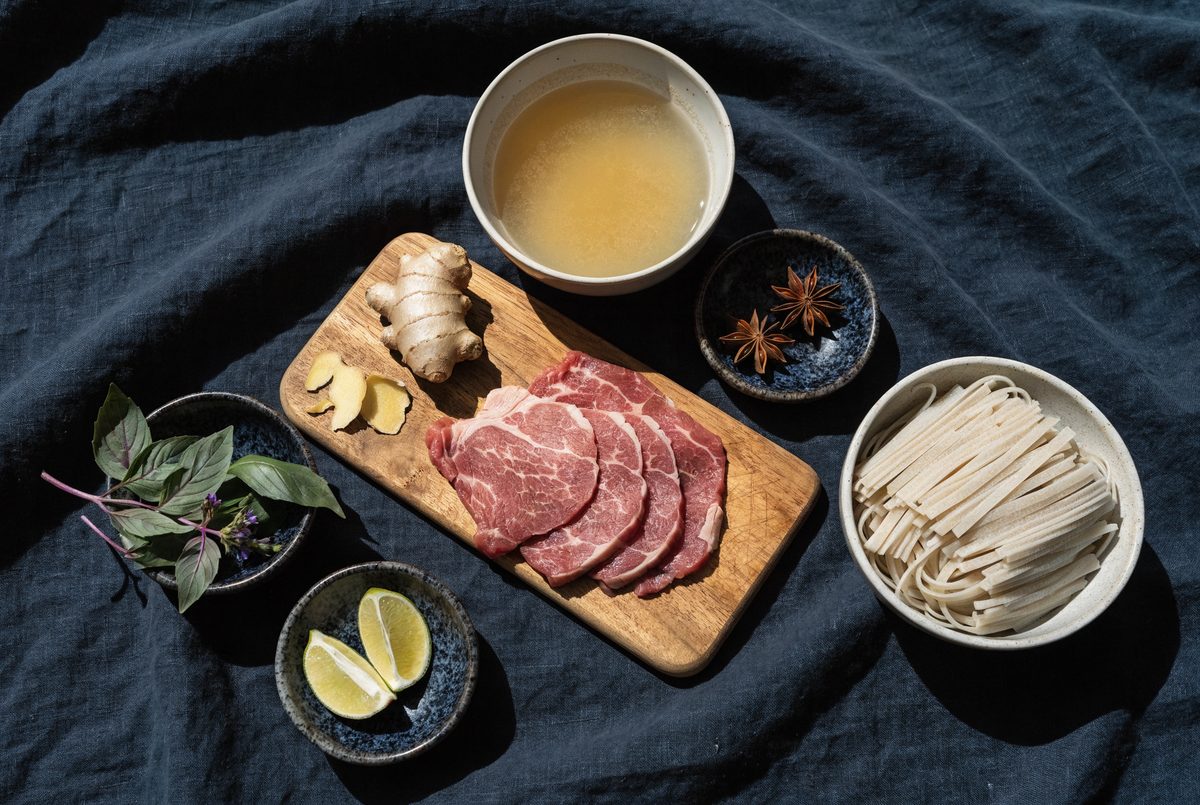
Beef sirloin, sliced paper-thin and cooked by the broth itself, keeps its creatine in the bowl — creatine is water-soluble and leaches into cooking liquid, which in a soup you drink anyway. Beef bone broth supplies the glycine-and-proline backbone of gelatin. Fresh ginger contributes gingerols, its principal bioactive family, and charring it first deepens flavor without eliminating them. Star anise and Thai basil are there for the phở's soul, and lime adds vitamin C, which modestly helps the iron absorption from the beef.
How to make it
- Char a halved onion and a 5 cm piece of ginger under the broiler until blackened in spots, about 8 minutes.
- Simmer 1.5 litres beef bone broth with the charred aromatics, 3 star anise, a cinnamon stick, and a tablespoon of fish sauce for 20–25 minutes, then strain.
- Freeze 300 g beef sirloin for 15 minutes, then slice it as thinly as you can manage.
- Soak or cook rice noodles according to the packet and divide between two deep bowls.
- Lay the raw beef slices over the noodles and ladle the boiling broth directly over — it cooks them to rosy in seconds.
- Finish with Thai basil, bean sprouts, lime wedges, and sliced chile if you like heat.
Serves two generously. The broth is the point — drink all of it.
23 PubMed citations
Across meta-analyses and randomized trials, creatine monohydrate combined with resistance training modestly increases…
18 PubMed citations
Small human trials report that about 3 g of glycine before bedtime improves subjective sleep quality and reduces…
16 PubMed citations
In small clinical trials, mostly pilot and open-label studies plus one randomized placebo-controlled trial of 24 older…
The research behind this recipe
Primary sources for the claims above. Effects reported in these papers describe the compound or the dietary pattern studied — not this specific dish.
More muscle, connective tissue & minerals recipes
 Muscle & strength
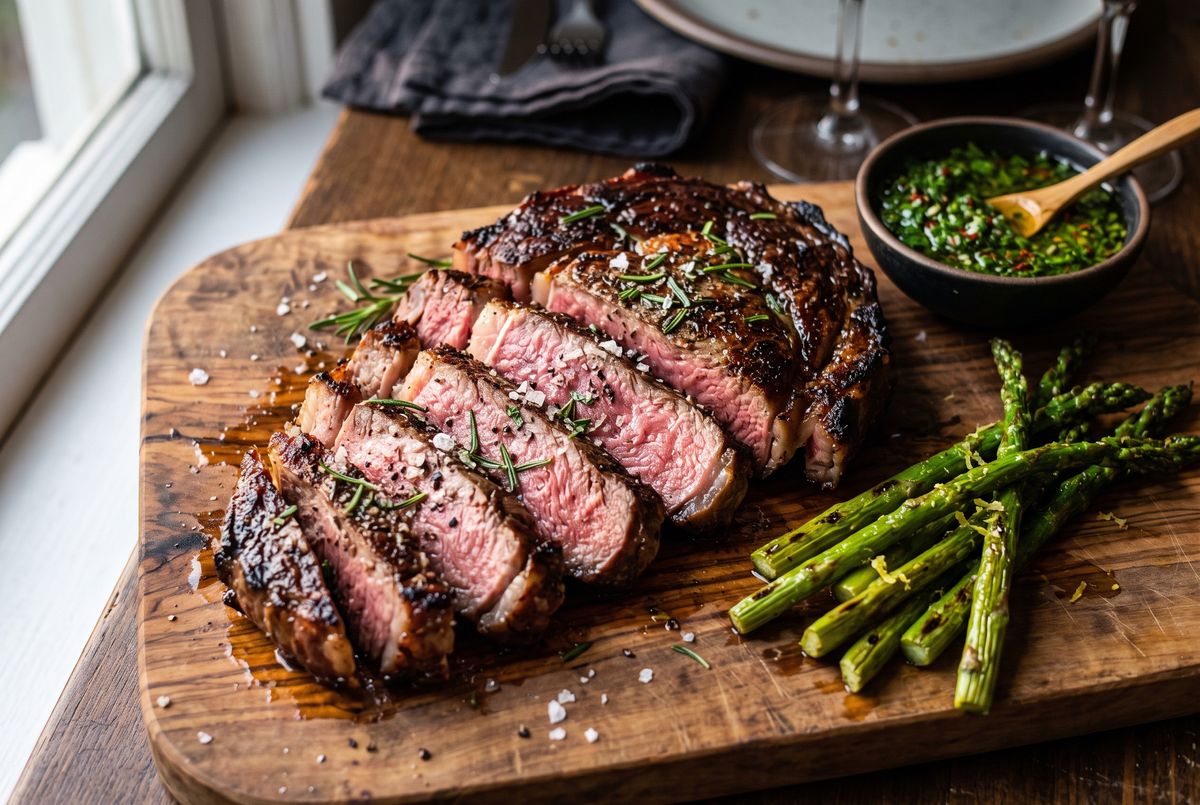
Red meat and fish are the only meaningful dietary sources of creatine — roughly a gram per pound of raw meat, and cooking costs…
 Collagen & glycine
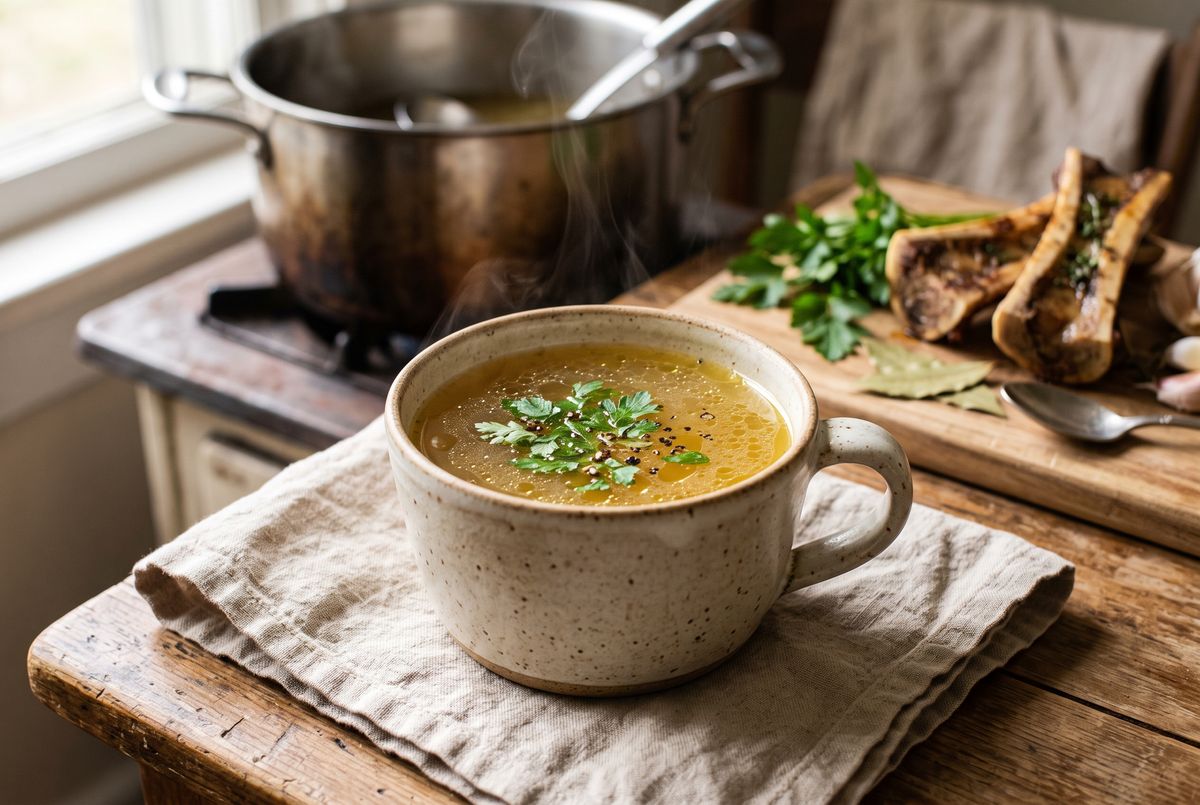
Gelatin is roughly a third glycine — the amino acid we eat least of relative to how much our connective tissue needs.
 Taurine
Shellfish are the densest food source of taurine — the amino acid whose age-related decline drew serious attention in 2023.
Keep reading
CreatineCollagenGlycineVitamin CCreatine: the evidenceCreatine for Healthy AgingThe supplement guideResearch mapPathway universe