Golden Cauliflower Shawarma Plates
Turmeric bloomed in olive oil with plenty of black pepper — the absorption pairing from a classic piperine study — on hot-roasted cauliflower with live-culture garlic yogurt, quick-pickled onions and warm pita.
- Mechanism
- Nrf2 pathway
- Cited studies
- 5
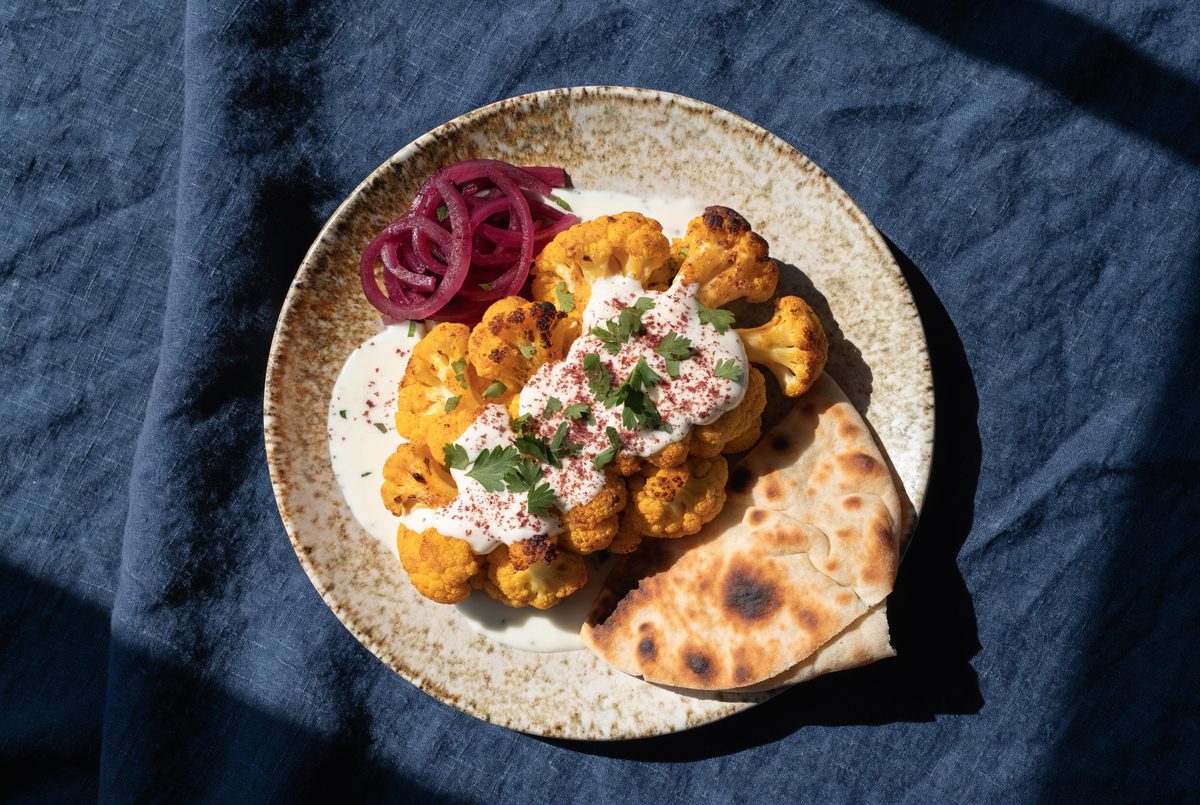
Turmeric's active fraction, the curcuminoids, is among the most-studied of all food polyphenols. A review of the human trials reports reasonably consistent reductions in inflammatory markers and arthritis symptoms (Foods, 2017) — but those trials used concentrated extracts at gram doses, far beyond what any dinner delivers, and curcumin on its own is famously poorly absorbed. The workaround comes from a small but much-cited pharmacokinetic study in which co-administering piperine, the pungent alkaloid in black pepper, increased curcumin's bioavailability in human volunteers by roughly 2000% (Planta Medica, 1998). This recipe takes the hint literally: the turmeric blooms in olive oil with a heavy hand of cracked pepper before the cauliflower ever sees the oven.
Cauliflower is a crucifer, cousin to the broccoli sprouts whose extraordinary glucosinolate content launched the sulforaphane field (Proceedings of the National Academy of Sciences, 1997) — its own glucosinolate load is smaller, but it is in the family. The garlic yogurt earns two citations: garlic preparations modestly lowered blood pressure in a meta-analysis of randomized trials, chiefly in hypertensives (BMC Cardiovascular Disorders, 2008), and fermented dairy belongs to the food class that increased microbiome diversity and lowered inflammatory markers in a ten-week Stanford randomized study (Cell, 2021). The quick-pickled onions, for honesty's sake, are vinegar work rather than fermentation — they are here for acid and crunch.
Why this works
Turmeric, black pepper and olive oil form the absorption trio — curcumin is fat-soluble, piperine slows its breakdown — applied to a sheet pan instead of a capsule. Roasting cauliflower hot gets browning and sweetness without turning it to mush. The garlic yogurt stays cold and off the heat so its live cultures and freshly formed allicin survive, whole-wheat pita adds fiber, and parsley and pickled red onion cut through the spice with freshness and acid.
How to make it
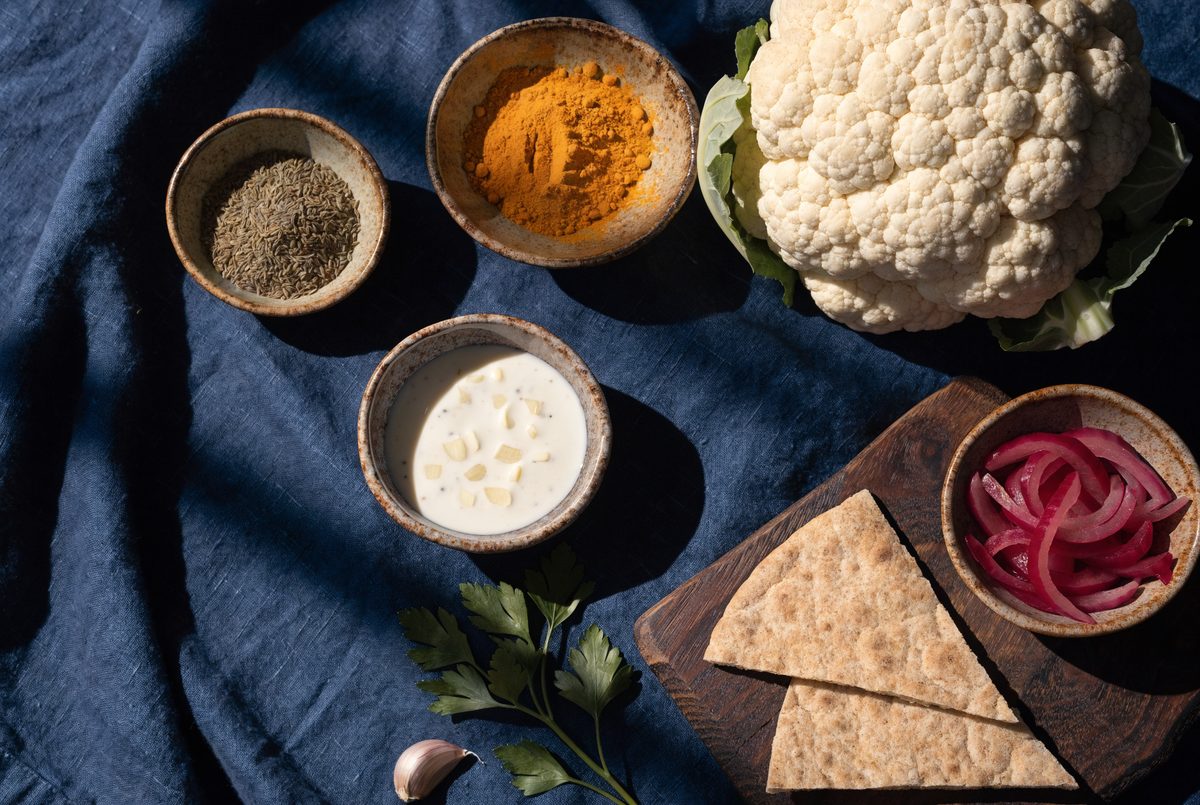
- Slice half a red onion thin and submerge in red-wine vinegar with a pinch of sugar and salt; set aside at least 15 minutes.
- Whisk 3 tablespoons olive oil with 2 teaspoons ground turmeric, 2 teaspoons cumin, 1 teaspoon coarsely cracked black pepper and 1 teaspoon salt.
- Toss 1 large head of cauliflower, cut into thick florets, in the spiced oil and roast at 220°C for 25–30 minutes until deeply browned at the edges.
- Meanwhile crush 2 garlic cloves, rest them 10 minutes, and stir into 1 cup plain whole-milk yogurt with a squeeze of lemon and a pinch of salt.
- Warm the pitas in the oven's last 2 minutes.
- Assemble: a thick smear of garlic yogurt, a pile of cauliflower, drained pickled onions, torn parsley and a dusting of sumac if you have it.
Serves 3–4. Keep the yogurt cold until plating — it is carrying the live cultures, and it tastes better that way anyway.
24 PubMed citations
Meta-analyses of randomized controlled trials generally find that curcumin/turmeric supplementation lowers CRP, IL-6…
19 PubMed citations
Human trials indicate that concentrated broccoli-sprout sulforaphane can modestly lower fasting blood glucose and…
The research behind this recipe
Primary sources for the claims above. Effects reported in these papers describe the compound or the dietary pattern studied — not this specific dish.
More antioxidant defence & polyphenols recipes
 Nrf2 pathway
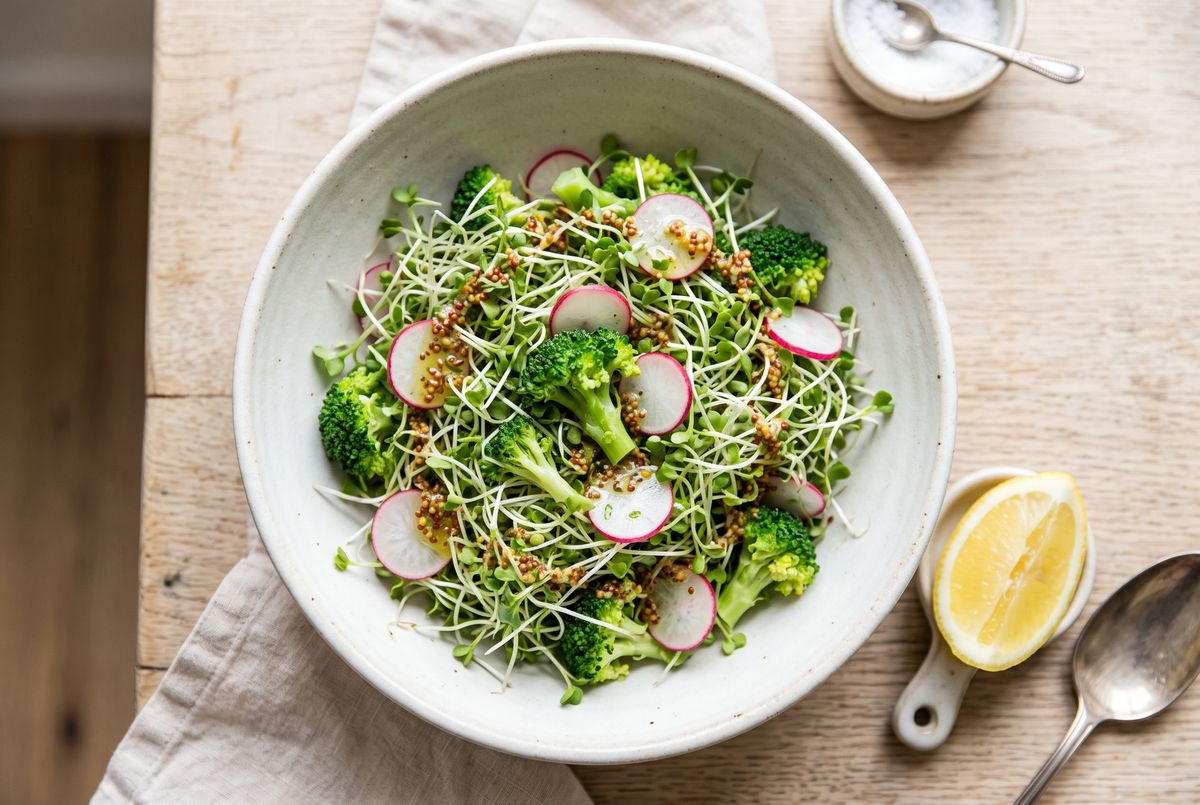
Broccoli sprouts carry many times the sulforaphane precursor of mature broccoli — and a little mustard restores the enzyme that…
 Polyphenols
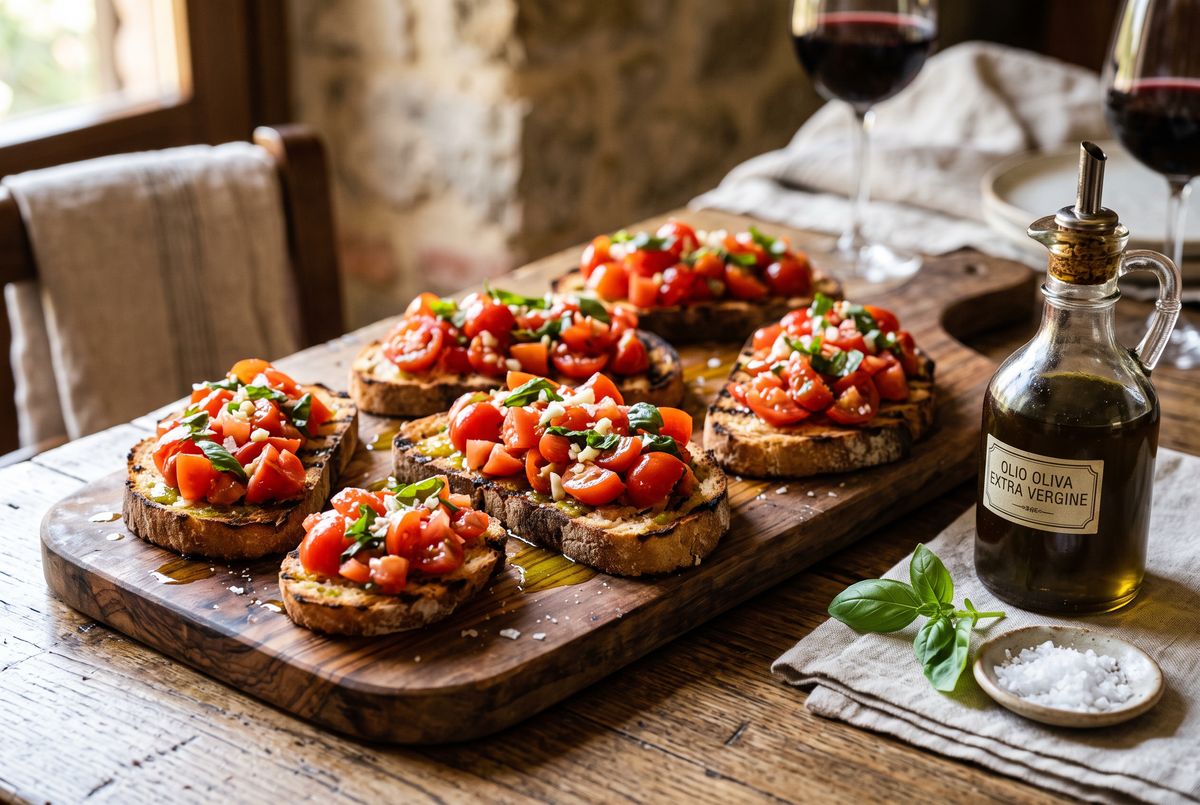
The peppery bite at the back of a good extra-virgin olive oil is the polyphenol content announcing itself — and this is the dish…
 Mushrooms
Mushrooms are effectively the only meaningful dietary source of ergothioneine, an amino acid your body has a dedicated…
Keep reading
Blood pressureSulforaphaneThe microbiomeDietary fiberSulforaphane: the evidenceSulforaphane and Nrf2The supplement guideResearch mapPathway universe