Black Bean & Quinoa Magnesium Bowl
Black beans, quinoa, pepitas, and avocado each rank among the best food sources of magnesium — a mineral cohort studies keep linking to lower diabetes and cardiovascular risk. One bowl, most of a day's worth.
- Mechanism
- Magnesium
- Cited studies
- 4
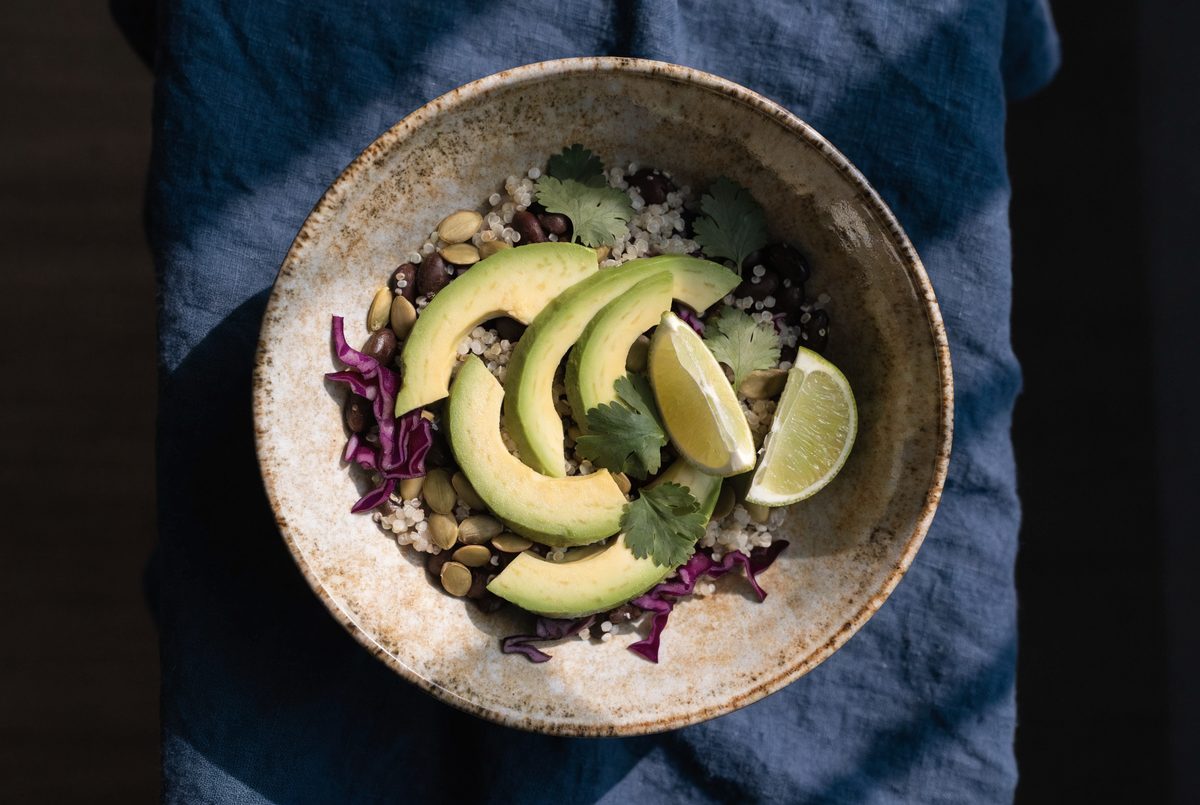
Magnesium is the quiet workhorse of this bowl: a cofactor in more than 300 enzymatic reactions, and a nutrient that intake surveys consistently show large fractions of adults under-consuming. The observational case for eating more of it is unusually consistent. A dose-response meta-analysis of prospective cohorts (BMC Medicine, 2016) found that each additional 100 mg per day of dietary magnesium was associated with lower risks of stroke, heart failure, type 2 diabetes, and all-cause mortality, and an earlier meta-analysis (Diabetes Care, 2011) reported the same inverse magnesium-diabetes gradient. Cohort data cannot prove the mineral is doing the work — magnesium-rich diets are heavy in beans, greens, seeds, and whole grains, which travel with other healthy habits — but the direction rarely wavers.
The bowl's second engine is fiber. A commissioned series of systematic reviews and meta-analyses (The Lancet, 2019) found the best outcomes — lower mortality, coronary disease, and type 2 diabetes — at intakes of 25 to 29 g a day, a level most people never reach; black beans alone contribute about 15 g per cup, much of it the fermentable kind gut bacteria actually use. Avocado layers on potassium, which a systematic review (BMJ, 2013) linked to lower blood pressure and stroke risk. This is pattern evidence, supportive rather than curative — but the pattern is exactly what this bowl is.
Why this works
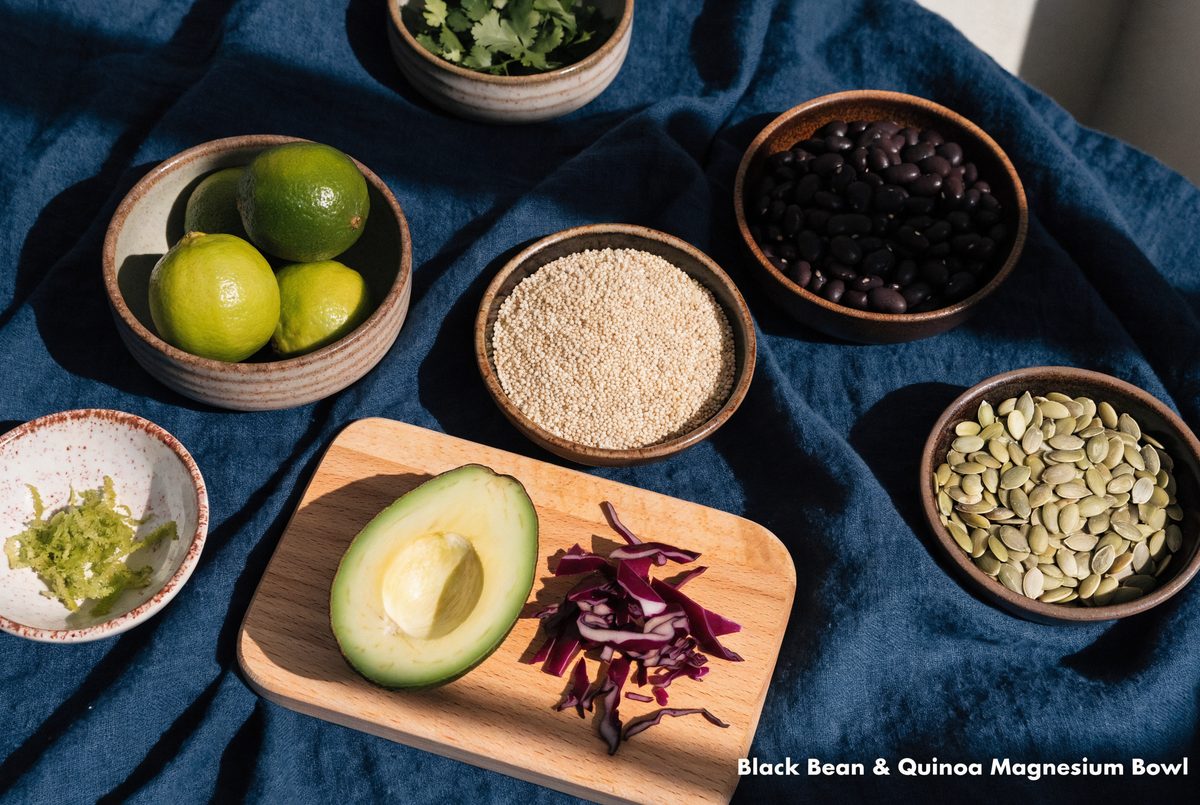
Black beans and quinoa are both top-tier magnesium sources — about 120 mg and 118 mg per cooked cup — and together form a complete protein; quinoa adds betaine as well. Pumpkin seeds are the densest magnesium food in the supermarket, at roughly 150 mg per ounce. Avocado brings potassium and the fat that makes the bowl satiating. Red cabbage adds crunch and polyphenol pigments, and lime and cilantro keep the whole thing tasting like dinner rather than a supplement stack.
How to make it
- Cook 1 cup quinoa in 1¾ cups salted water, about 15 minutes; fluff and let it steam off the heat.
- Warm 2 cups cooked black beans (or a drained 15-oz can plus a splash of their liquid) with ½ teaspoon ground cumin and a pinch of salt.
- Toast ⅓ cup pepitas in a dry skillet until they pop, 2–3 minutes.
- Toss 2 cups shredded red cabbage with the juice of 1 lime and a pinch of salt to soften slightly.
- Build bowls: quinoa, beans, cabbage, and half a sliced avocado each; shower with pepitas and cilantro and finish with more lime.
Serves 3–4 and keeps well unassembled for lunches. A spoonful of yogurt or hot sauce is entirely within the spirit of the evidence.
19 PubMed citations
In small randomized trials, magnesium-L-threonate improved composite cognition versus placebo in older adults with…
19 PubMed citations
Pooled analyses of randomized trials indicate oral magnesium lowers blood pressure by a small amount—about 2 mmHg in a…
21 PubMed citations
Randomized trials and meta-analyses indicate that inulin-type fructans reliably increase stool frequency and improve…
The research behind this recipe
Primary sources for the claims above. Effects reported in these papers describe the compound or the dietary pattern studied — not this specific dish.
More muscle, connective tissue & minerals recipes
 Muscle & strength
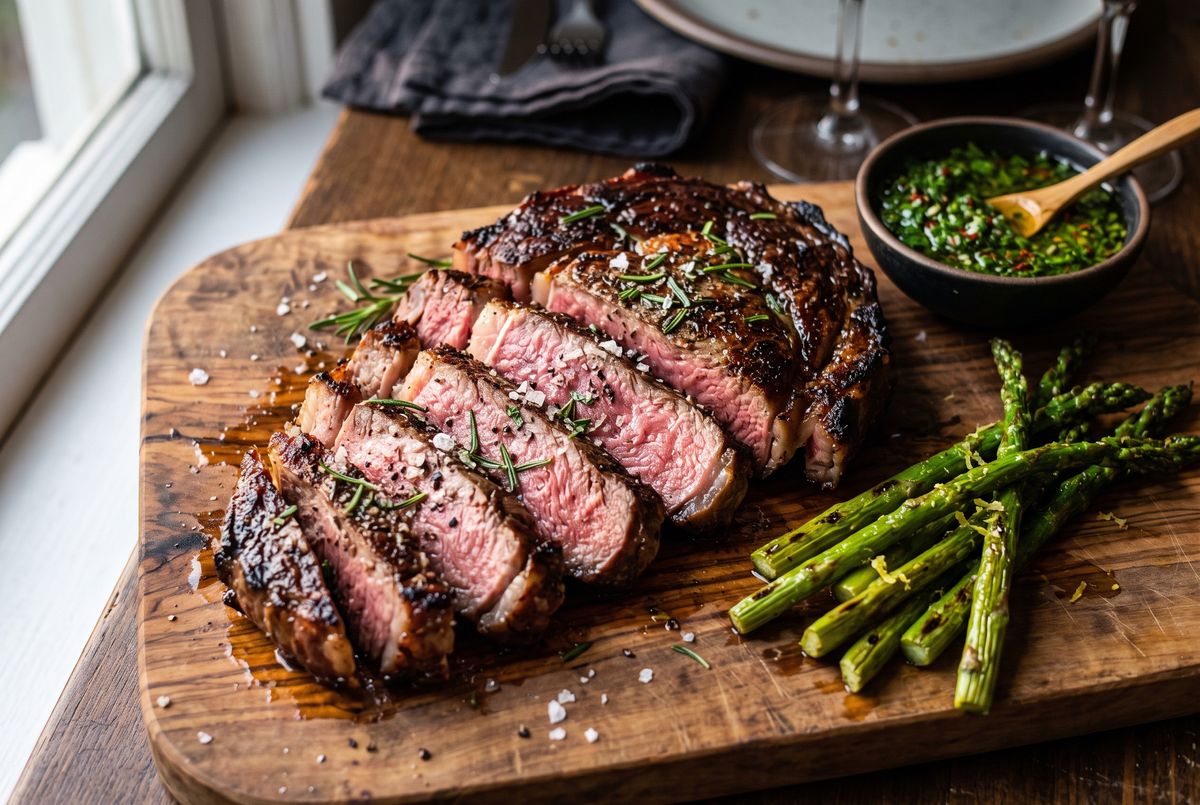
Red meat and fish are the only meaningful dietary sources of creatine — roughly a gram per pound of raw meat, and cooking costs…
 Collagen & glycine
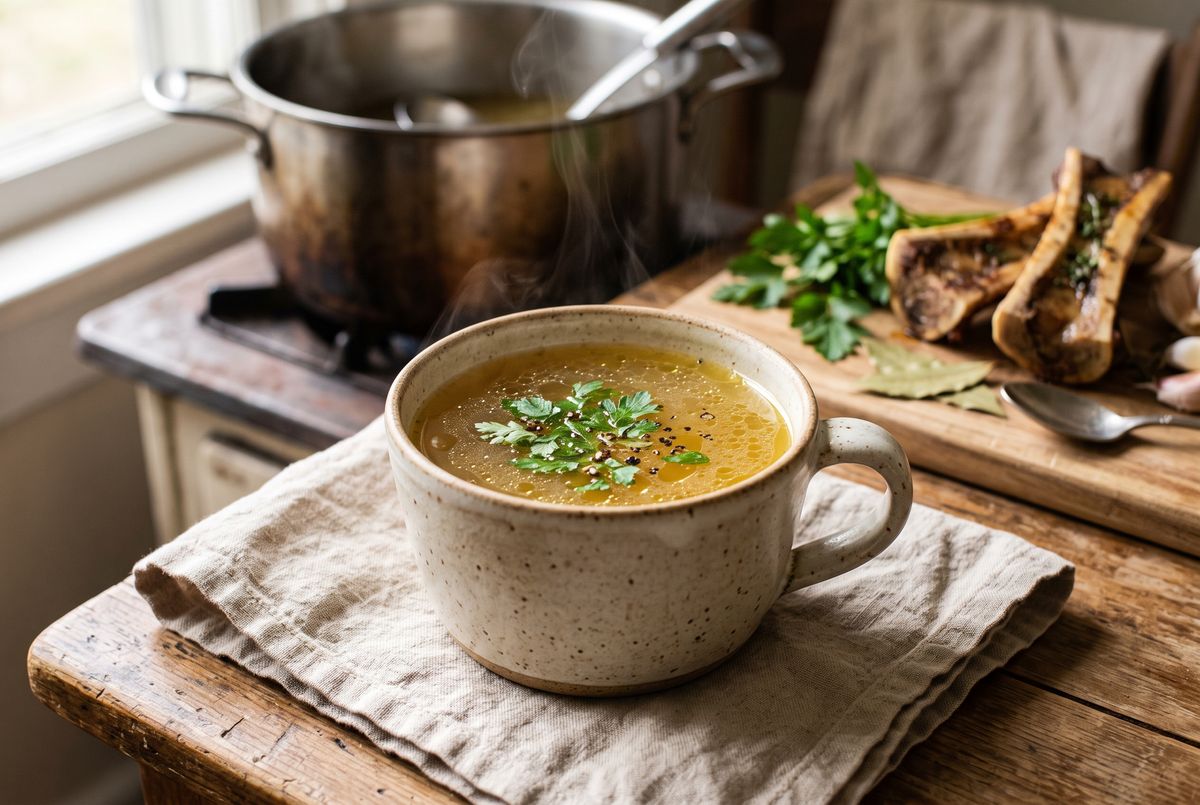
Gelatin is roughly a third glycine — the amino acid we eat least of relative to how much our connective tissue needs.
 Taurine
Shellfish are the densest food source of taurine — the amino acid whose age-related decline drew serious attention in 2023.
Keep reading
Blood pressureInulinDietary fiberMagnesiumThe supplement guideResearch mapPathway universe