The Nitric-Oxide Power Bowl: Roasted Beets, Arugula & Pomegranate
Beetroot and arugula are two of the richest dietary sources of nitrate — the raw material your body converts into nitric oxide, the molecule that relaxes and widens blood vessels.
- Mechanism
- Nitric oxide
- Yield
- serves 2
- Ingredients
- 6
- Steps
- 4
- Cited studies
- 5
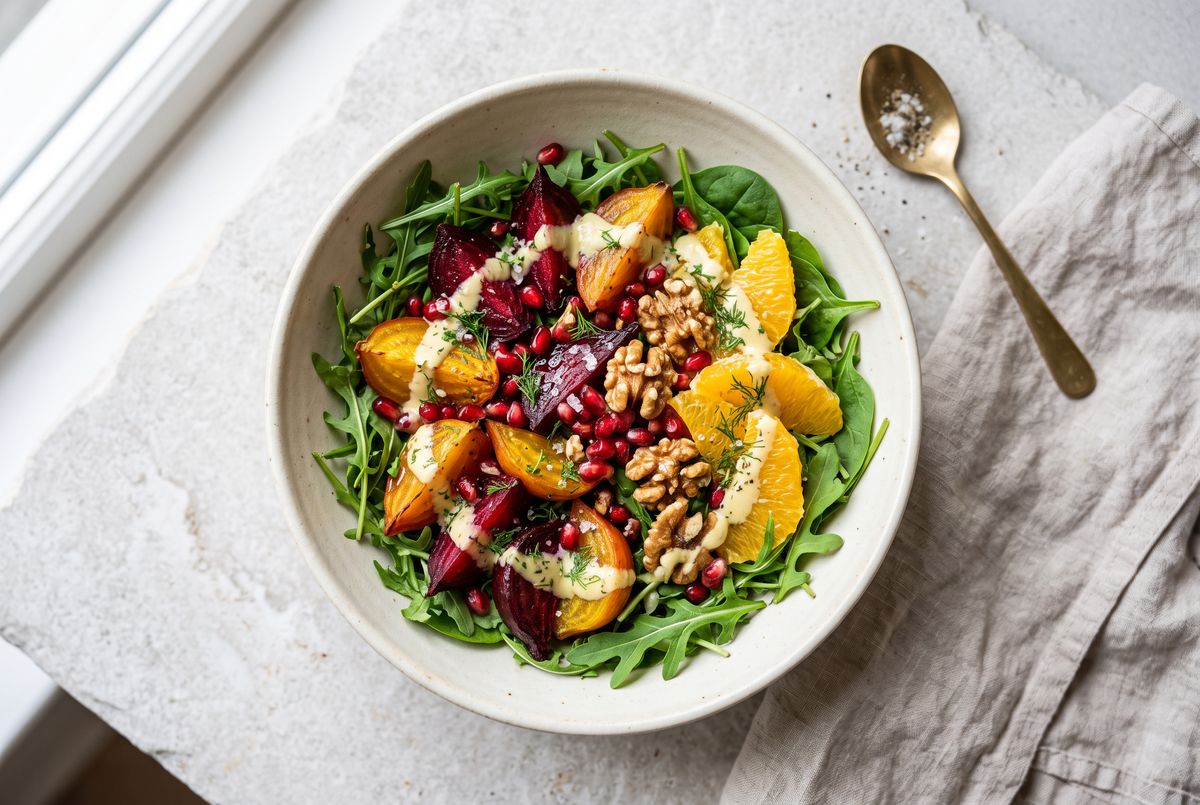
Nitric oxide (NO) is a tiny molecule your blood vessels make to relax and widen — improving blood flow and helping to lower blood pressure. You can nudge your body to make more of it through food, because leafy greens and beetroot are loaded with dietary nitrate. Friendly bacteria on your tongue turn that nitrate into nitrite, which your body then converts into nitric oxide (the nitrate–nitrite–NO pathway).
Beetroot and arugula happen to be two of the most nitrate-dense foods there are, which is exactly why this bowl is built around them. In randomized trials, beetroot juice produced measurable drops in blood pressure — acutely in healthy adults and, in one placebo-controlled study, a sustained reduction of roughly 8/4 mmHg in people with hypertension.
Why this bowl works
The beets and arugula supply the nitrate. The orange adds vitamin C, which helps protect nitric oxide from breaking down. Pomegranate and walnuts bring polyphenols and healthy fats, and a little raw garlic in the dressing adds its own vessel-friendly compounds. Roasting the beets (rather than boiling) keeps the nitrate in the food instead of leaching it into cooking water, and eating the arugula raw does the same.
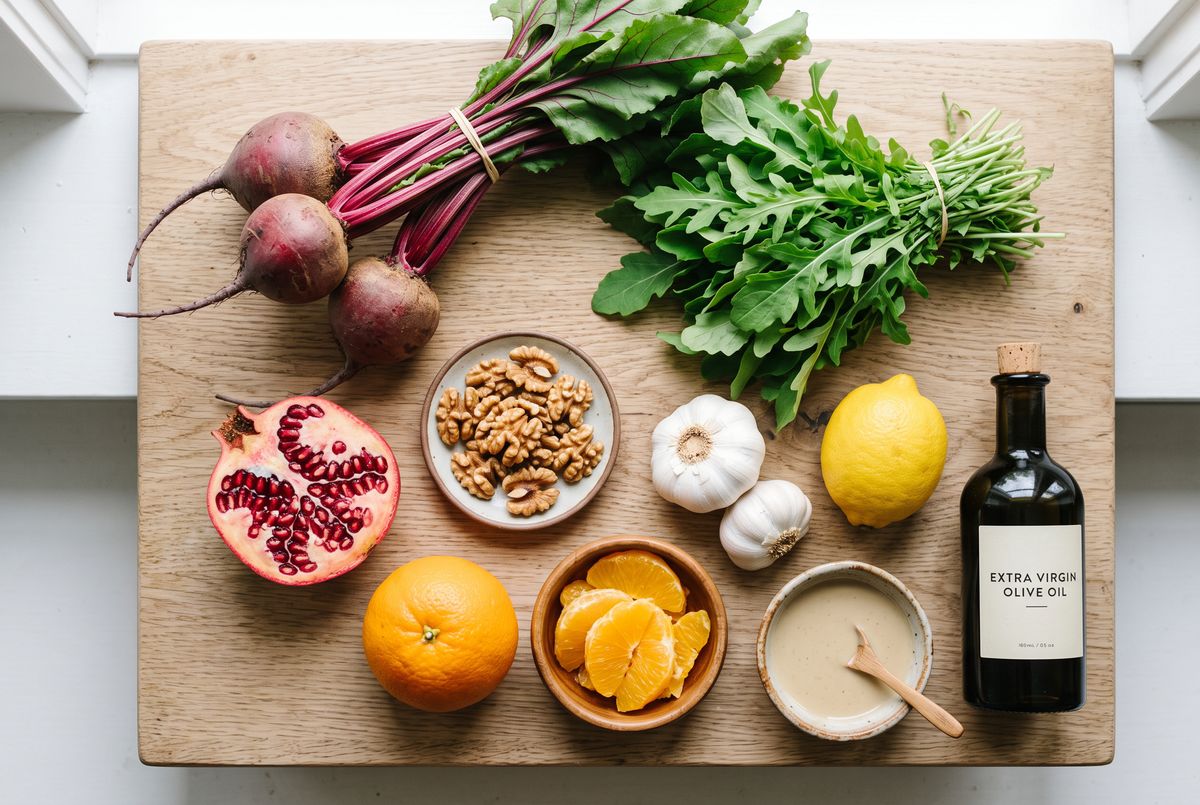
Ingredients · serves 2
- 3 medium beets (~350 g), scrubbed — a mix of red and golden if you can
- 4 packed cups arugula (baby or wild arugula is highest in nitrate)
- ½ cup pomegranate arils
- ⅓ cup walnut halves, lightly toasted
- 1 orange, cut into segments
- Dressing: 2 tbsp tahini, juice of ½ lemon, 1 small garlic clove (grated), 1 tbsp extra-virgin olive oil, 1–2 tsp water, salt & pepper
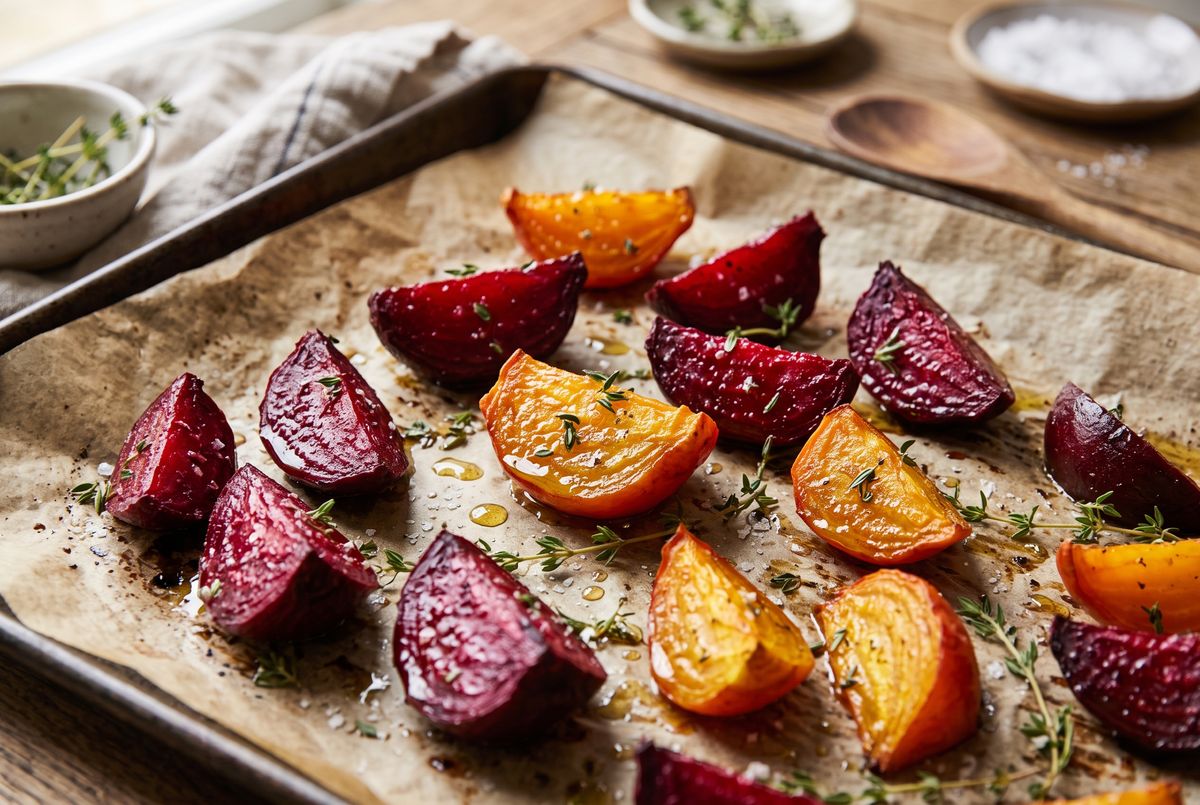
Method
- Heat the oven to 425°F (220°C). Wrap the whole beets in foil (or cut into wedges and toss with a little oil) and roast 40–55 minutes until tender. Cool, peel and cut into wedges.
- Toast the walnuts in a dry pan for 3–4 minutes until fragrant.
- Whisk the dressing: tahini, lemon juice, grated garlic, olive oil and enough water to make it pourable; season.
- Build a bed of arugula, pile on the beets, orange, pomegranate and walnuts, then drizzle with the garlic-tahini dressing and finish with black pepper.
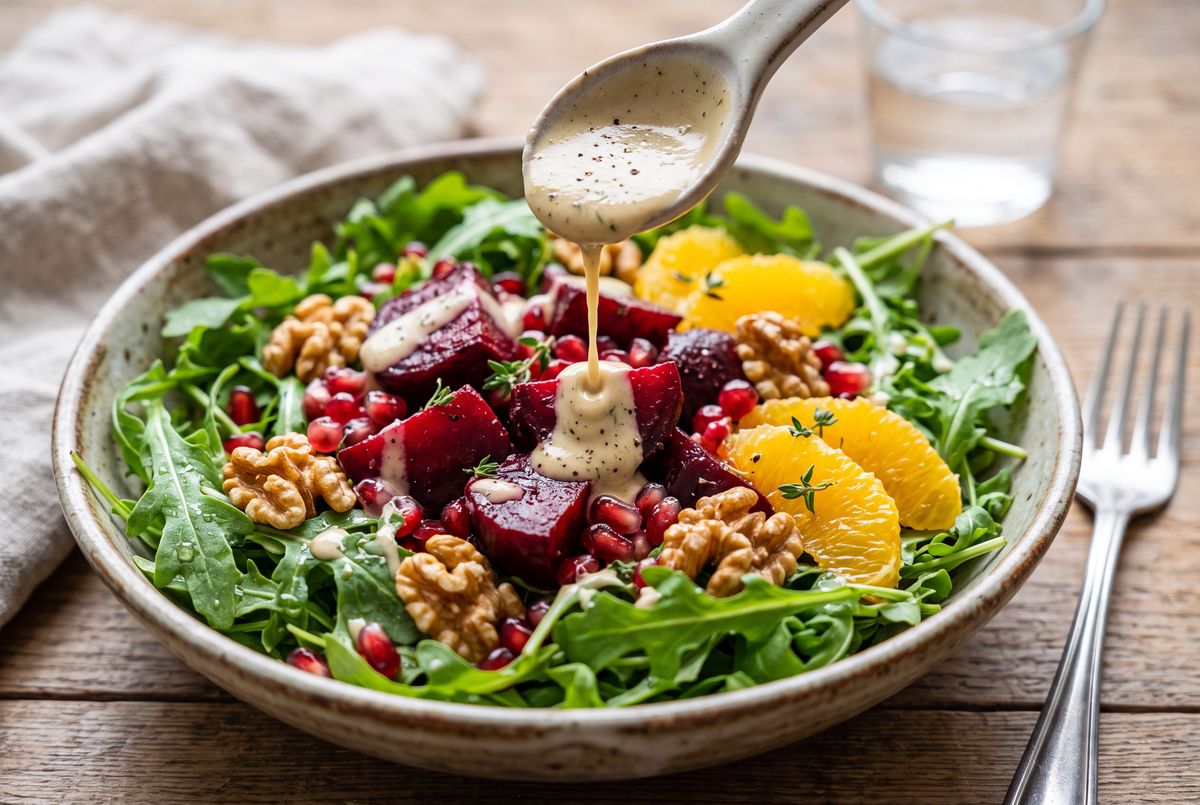
Get the most nitric oxide from it
Two small habits protect the effect: add the vitamin-C-rich orange (and eat the arugula raw), and avoid antibacterial mouthwash around mealtimes — it wipes out the very mouth bacteria that start the nitrate-to-nitrite conversion. Beetroot can also turn urine or stool pink, which is harmless.
Nutrition Facts
Calculated for one serving from USDA FoodData Central values for the ingredients above. An estimate, not a lab analysis.
How this was calculated. Each ingredient was converted to grams, matched to a food in USDA FoodData Central (SR Legacy, April 2018), summed, and divided by 2 servings. Cooking losses, draining and the real size of a handful all move these numbers, so treat them as a good estimate rather than a measurement. Added sugars count honey, maple syrup and table sugar only; sugar from whole fruit is not an added sugar.
- Beets, raw
- Arugula, raw
- Pomegranates, raw
- Nuts, walnuts, english
- Oranges, raw, all commercial varieties
- Seeds, sesame butter, tahini, from roasted and toasted kernels (most common type)
- Lemon juice, raw
- Garlic, raw
- Oil, olive, salad or cooking
24 PubMed citations
Meta-analyses of randomized trials show that beetroot juice and dietary nitrate lower blood pressure—about 5 mmHg…
25 PubMed citations
In human research, the ellagitannin-derived metabolite urolithin A has improved muscle strength, endurance, and…
20 PubMed citations
In human research, urolithin A supplementation is safe and bioavailable and improves markers of mitochondrial health.…
The research behind this recipe
Primary sources for the claims above. Effects reported in these papers describe the compound or the dietary pattern studied — not this specific dish.
More nitric oxide & blood flow recipes
 Nitric oxide
Watermelon is the richest everyday food source of L-citrulline — the amino acid your body converts into L-arginine, the raw…
 Nitric oxide
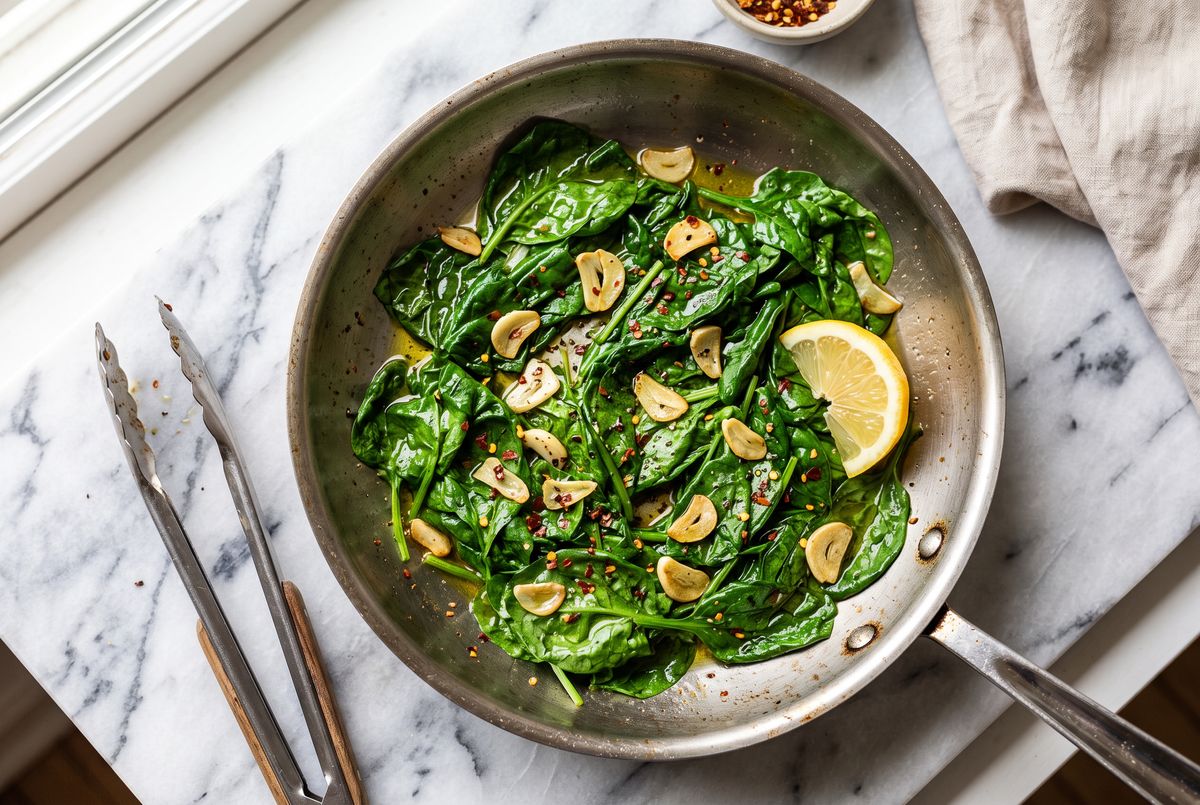
Spinach sits alongside arugula and beets at the top of the dietary-nitrate list, and a controlled trial found nitrate-rich…
 Nitric oxide
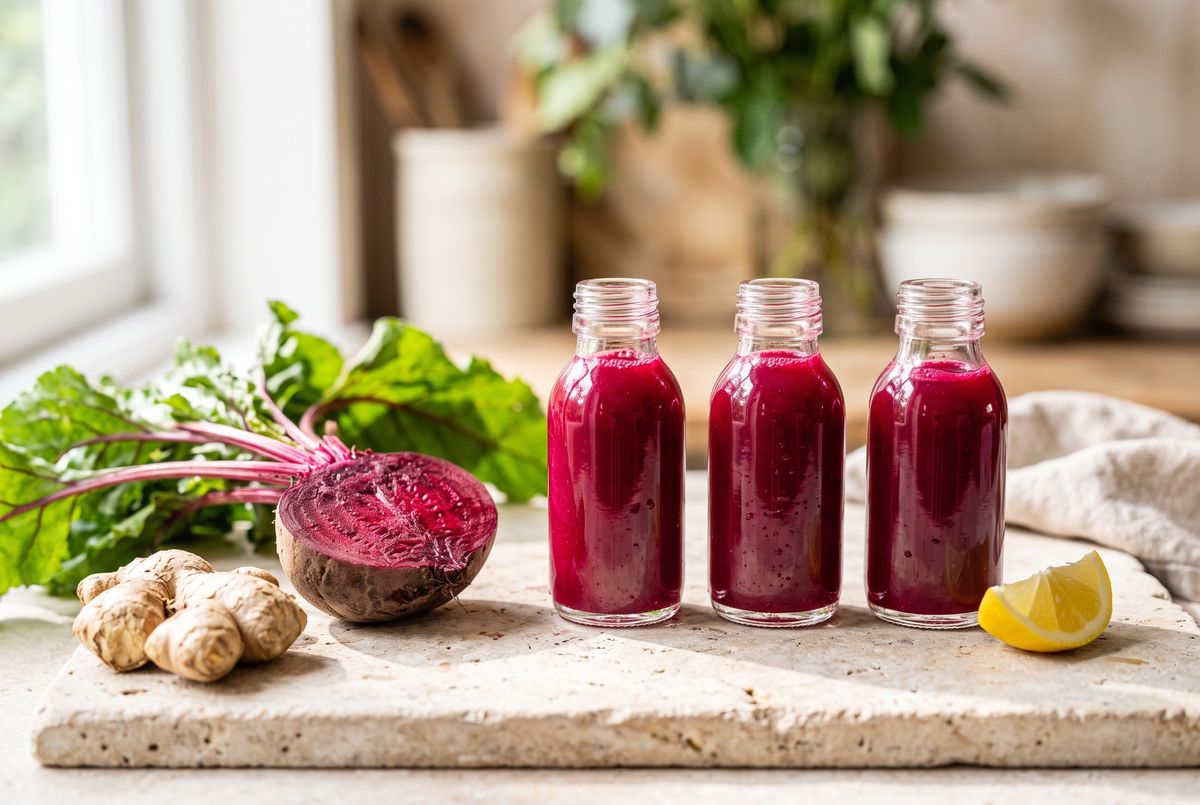
A small, concentrated hit of beet juice about two hours before training — the timing and dose most closely matching the nitrate…
Keep reading
Nitric oxideBeetroot & dietary nitrateBlood pressureUrolithin AUrolithin A: the evidenceUrolithin A (Mitopure) and MuscleThe supplement guideResearch mapPathway universe